Otawara Yatai Festival
大田原市屋台まつり
A spring festival dating to the Edo period features nine elaborately decorated floats paraded through city streets accompanied by traditional music.

〒 324-0056How to get there
西那須野Utsunomiya Line67 min walk from the station
The Otawara Float Festival, one of Otawara City’s proud traditions, is held every spring. This festival traces its origins to the Edo period, when seven “toban-cho” duty neighbourhoods paraded ornate wheeled floats (yatai) as part of the Otawara Shrine’s grand festival. Today, the festival has grown to feature nine magnificent floats, each belonging to a local neighbourhood association. Adorned with exquisite carvings of flowers, birds, and mythological beasts, the floats create a truly spectacular sight as they parade through the streets.
The festival takes place over two days. On the first evening, the yoimatsuri (eve festival) is held near the Kanadoro intersection, where all nine floats gather for the dramatic buttsuke - a thrilling competition of festival music performed as floats are drawn up nearly side by side.
The following day is the honmatsuri (main festival). During the day, the floats parade from the Yamaji Shoten intersection to the Kanadoro and Shinmei-cho intersections, filling the festival plaza with excitement and energy. In the evening, the floats return once more to the Kanadoro intersection for another buttsuke, where the powerful taiko drums and flutes bring the festival to its climax.
9 Neighbourhoods – 9 Floats
Each neighbourhood is represented by its own float. Each float has special features and a unique design with deep meaning, often depicting historical events, Japanese mythology, or famous personalities. Each float is accompanied by a local group of musicians and has its own special music theme and performance, uniquely representing the neighbourhood.
Aramachi neighbourhood’s float is famous for its radiant carvings. Dating back to the late Edo period, the float features black-lacquered pillars, gold-leaf fittings, and vividly coloured carvings of the twelve zodiac animals. A dragon clutching a jewel crowns the roof, while damask panels depict Nasu no Yoichi - a famous samurai who participated in the Genpei War - and the fan target..
Okubocho’s float was built in 1860. It showcases Baifuku-sennin, an immortal holding a war fan, atop a rare paulownia-and-phoenix motif.
Bukemachi’s float is a newly built float. Completed in 2007, it features Gongsun Sheng from "Water Margin", accompanied by a dragon at his feet.
Kamicho’s float has over a century of history. Dating to 1849, its detachable dragon head and glass-eyed carvings are distinctive.
Teramachi’s float is painted in vivid vermilion and incorporates wood from a ginkgo tree that was toppled in 1958.
Shimocho’s float is characterised by vivid vermilion and magnificent carvings. Built in 1818, it displays a single-piece dragon, a carved turtle, and decorative doors featuring flowers and birds.
Nakamachi’s original float was destroyed during the Boshin War; the current one was built in 1919. Its carvings include a tama-tori dragon (from the legend of Tamatori-hime), waves, plovers, peonies, chrysanthemums, and large side panels depicting carp.
Sakaecho’s float is distinguished by balanced and delicate carvings. Created in 1947 and rebuilt in 2011, it features Fujin and Raijin on the front doors, along with dragons, cranes, turtles, and lions.
Motomachi’s float, dating back to the Edo period and acquired in 1982, displays peonies, lions, a dragon, and a carp climbing a waterfall, symbolising ambition.
Getting There

Planning a trip? Fit this into a trip and Oni plans the rest around it.
You might also like

Furusato Miya Matsuri
This Utsunomiya summer festival brings residents together for parades, traditional performances, and displays of local culture.
1–2 Aug 2027Exact date not confirmed yetUtsunomiya · Tochigi
Kanuma Autumn Festival
An autumn festival held in October with origins tracing to a 1608 rainmaking ritual, featuring 27 ornately carved musical floats from the Edo period.
10–11 Oct 2027Exact date not confirmed yetKanuma · Tochigi
Yamaage Festival
Karasuyama's largest festival combines a nationally designated folk performance tradition with outdoor Kabuki dance, organized rotationally by six local districts.
24–26 Jul 2027Exact date not confirmed yetNasukarasuyama · Tochigi
Ashikaga Flower Park
The park features wisteria in pink, purple, and white, a walkable wisteria tunnel, rose and tulip gardens, and nightly illuminations recognized among Japan's Three Great Illuminations.
Ashikaga · Tochigi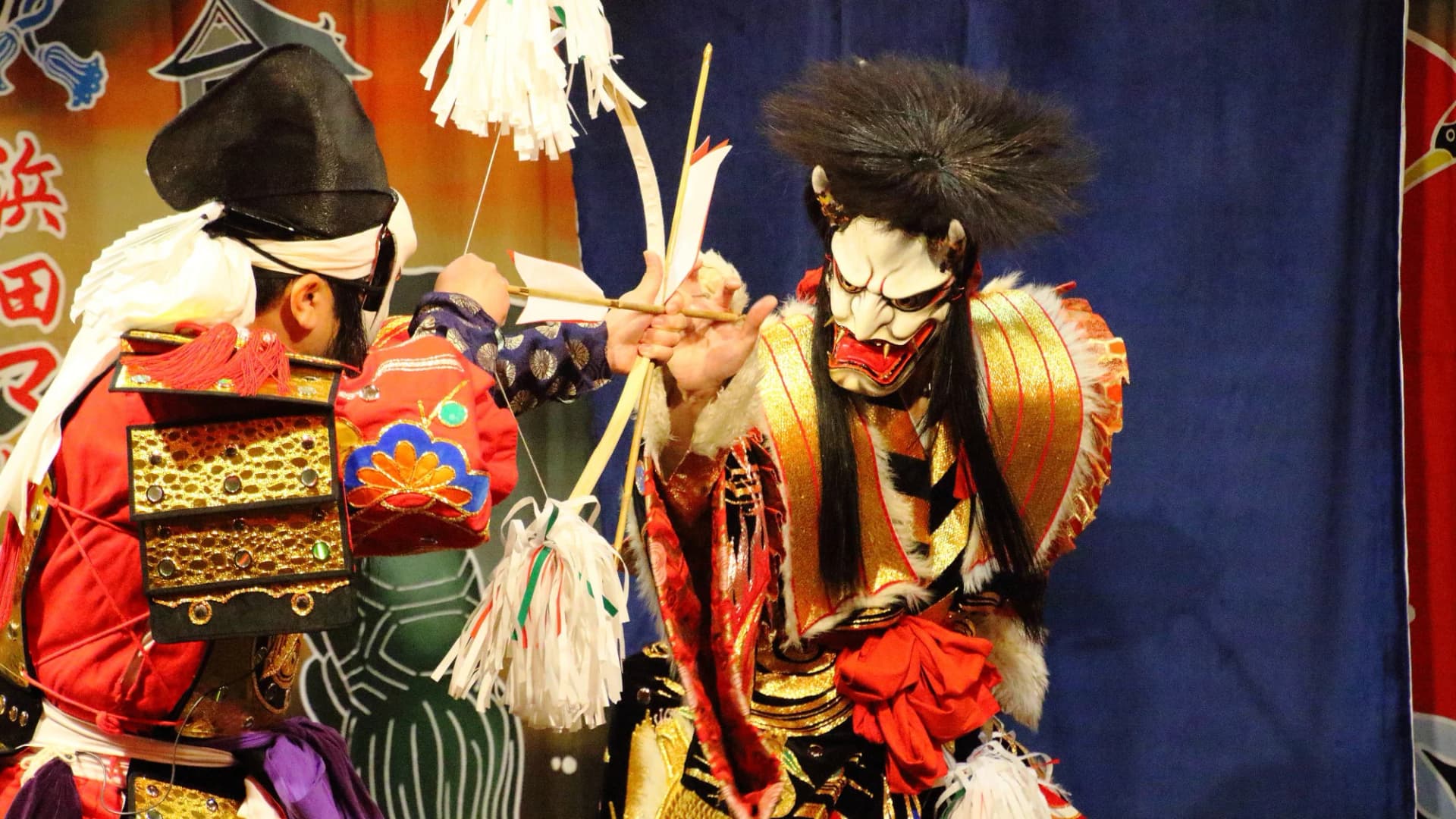
Iwami Kagura
Each autumn in western Shimane, shrine stages host Iwami Kagura – sacred dances performed through the night, from ceremonial pieces to a battle with a serpent.
Shimane · Chugoku
Ninja+Kabuki Tokyo
This nonverbal stage experience blends traditional kabuki and taiko drumming to tell a mythological tale of rival ninja, opening in August 2024.
Tokyo