

Sanja Matsuri
三社祭
Sanja Matsuri is one of Tokyo's largest traditional festivals, honouring enshrined figures through mikoshi processions and an Intangible Folk Cultural Property ritual dance.

Sanja Matsuri is one of Tokyo’s largest and most lively traditional festivals, held each year in Asakusa on the Friday, Saturday, and Sunday centered on the third Saturday of May. Organised by Asakusa Shrine and supported by its 44 parish neighbourhoods, the festival draws around 1.8 million visitors over three days and is a defining event of early summer in the city.
The festival honours three men — Hinokuma Hamanari, Hinokuma Takenari, and Hajino Nakatomo — who are enshrined as deities at Asakusa Shrine for their role in the founding of nearby Senso-ji. Although historically connected to the Buddhist temple, Sanja Matsuri is conducted as a Shinto festival centred on shrine rituals and mikoshi (portable shrine) processions.
Festivities begin on the first day with a large ceremonial parade featuring musical floats, traditional chants, local dances, and geisha-led performances. A highlight is the Binzasara Mai, a ritual dance designated as a Tokyo Intangible Folk Cultural Property, performed to pray for agricultural abundance, protection from illness, and community prosperity.
On the second day, a formal shrine ceremony is followed by the neighborhood mikoshi procession, during which about 100 portable shrines from the parish districts gather at Asakusa Shrine, receive purification rites, and are carried through their local areas.
The final day centres on the procession of the three main shrine mikoshi — Ichinomiya, Ninomiya, and Sannomiya — which are carried from early morning through Asakusa before returning to the shrine in the evening. The energetic handling of the mikoshi reflects traditional beliefs in invigorating the spiritual power of the deities and bringing blessings to the community.
You might also like

Sanno Matsuri
Sanno Matsuri, held annually in June at Hie Shrine, ranks among Japan's three great festivals and was historically viewed by Tokugawa shoguns, earning the title Festival of the Realm.
7–17 Jun 2027Tokyo
Fukagawa Matsuri
One of Tokyo's three greatest Shinto festivals, this mid-August celebration centers on water-splashing processions with portable shrines through the city.
15 Aug 2027Tokyo
Kanda Festival
A festival held at Kanda Shrine in Tokyo dating back to the 17th century, featuring processions of participants in Heian-period clothing and sacred ceremonies.
13–15 May 2027Tokyo
Ninja+Kabuki Tokyo
This nonverbal stage experience blends traditional kabuki and taiko drumming to tell a mythological tale of rival ninja, opening in August 2024.
Tokyo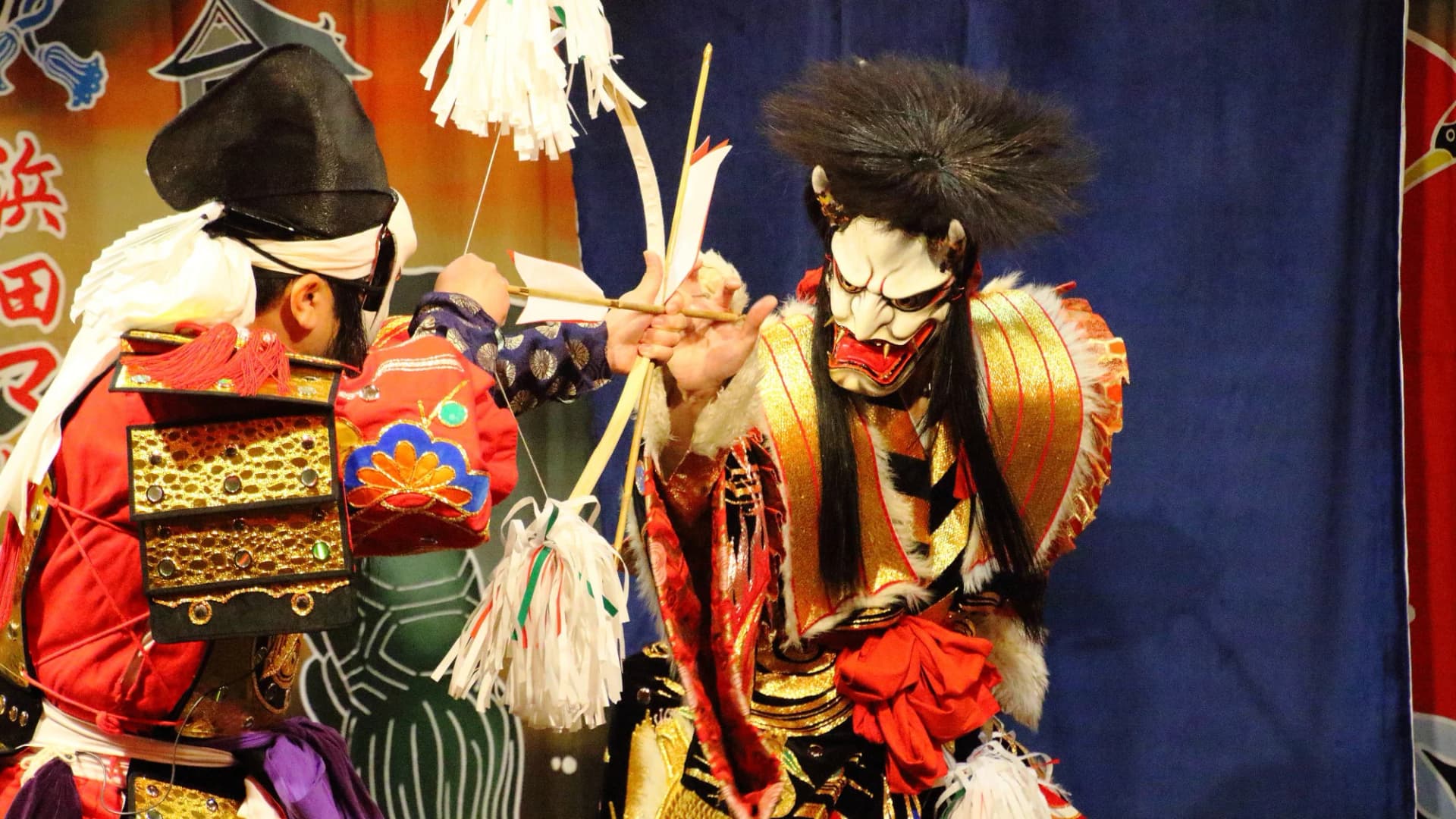
Iwami Kagura
Each autumn in western Shimane, shrine stages host Iwami Kagura – sacred dances performed through the night, from ceremonial pieces to a battle with a serpent.
Shimane · Chugoku
Kibitsu Jinja
Major Okayama shrine dedicated to Kibitsuhiko-no-Mikoto, a legendary prince credited with defeating an ogre and bringing peace to the region, foundations of the Momotaro folktale.
Okayama