

Suhoteisai Festival
数方庭祭
A rare Yamaguchi ritual festival said to date back over 1,800 years, with seven nights of dances around the Oni-ishi stone, towering banners, and lantern-topped poles.

This unusual ritual festival is sometimes described as one of Japan’s most distinctive traditional events. According to local tradition, its origins date back more than 1,800 years to the reign of Emperor Chuai, and it is associated with a legendary battle at Toyoura-no-miya (Toyoura Palace). The festival is said to commemorate the imperial victory and to honour those who died in the conflict.
Legend recounts that after the enemy leader was defeated, imperial forces celebrated by dancing around his remains, an act believed to be the origin of the ritual known as Suhotei. The enemy’s head was buried at the site and marked with a stone, later called the “Oni-ishi” (Demon Stone) because the face was said to resemble that of a demon. Subsequent departures for and returns from military campaigns were also marked by dances around this stone.
In modern times, the festival has been designated an Intangible Cultural Property of Yamaguchi Prefecture. Over a period of seven nights, participants gather each evening to perform ritual dances around the Oni-ishi. Men carry tall nobori banners, while women carry bamboo poles decorated with lanterns known as kiriko. The dances are accompanied by the sounds of gongs and drums and are conducted as a formal Shinto ritual. Some of the banners can reach approximately 30 meters in length and weigh up to 100 kilograms, requiring significant strength and training to handle.
You might also like

Kurakake Castle Festival
A castle festival features an armored warrior procession, parades, and traditional performances including taiko drumming and Shinto kagura dance.
16 Nov 2026Iwakuni · Yamaguchi
Shinkawa Market Festival
This downtown festival features food and craft stalls, agricultural products, and family activities rooted in Ube City's late 18th-century market traditions.
5 May 2027Ube · Yamaguchi
Atsukishinmei Festival
Fire-lit pillars adorned with sacred paper stand on beaches as the community performs ceremonial dances twice daily, seeking protection from illness and calamity.
11 Feb 2027Yanai · Yamaguchi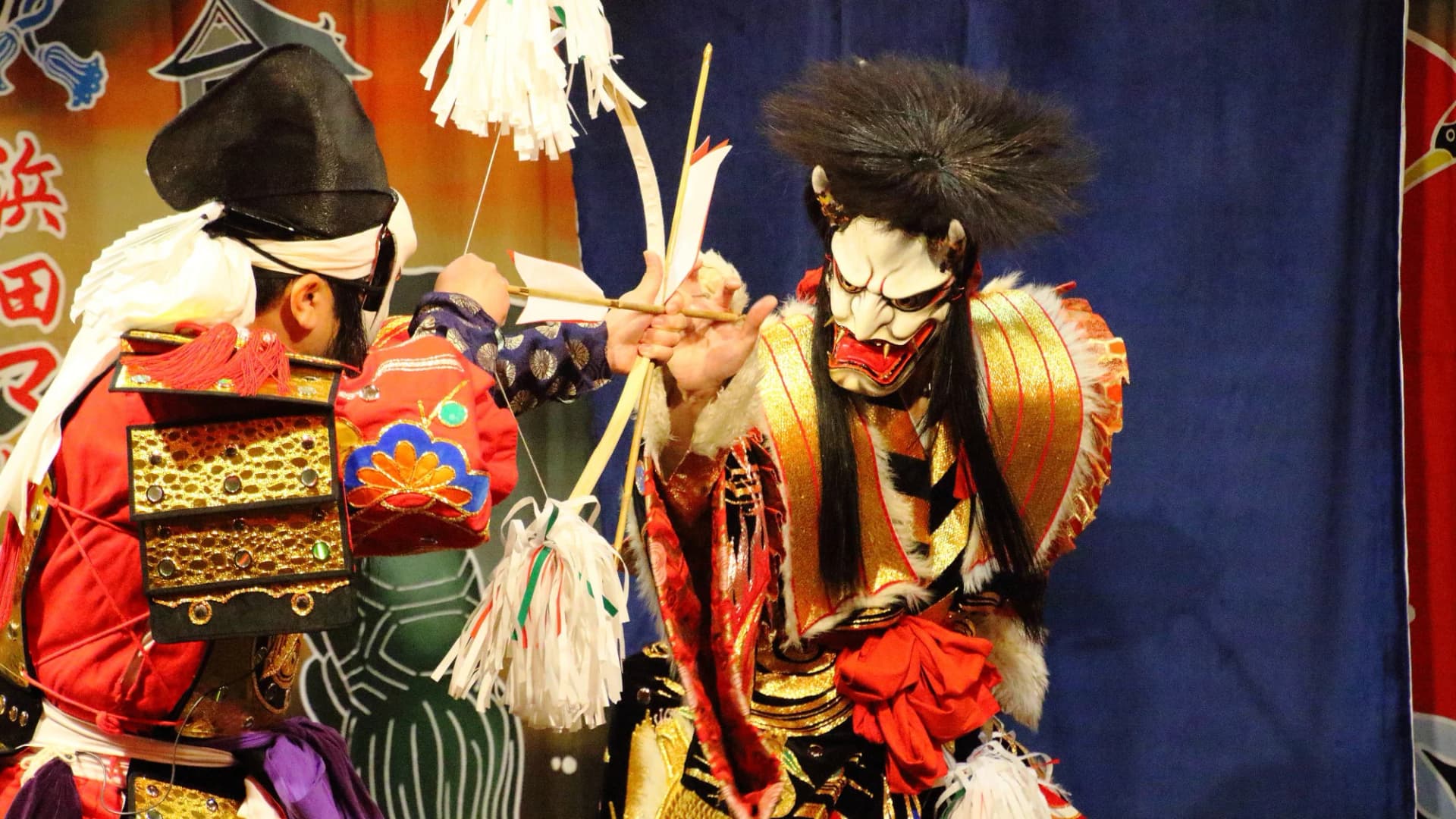
Iwami Kagura
Each autumn in western Shimane, shrine stages host Iwami Kagura – sacred dances performed through the night, from ceremonial pieces to a battle with a serpent.
Shimane · Chugoku
Kibitsu Jinja
Major Okayama shrine dedicated to Kibitsuhiko-no-Mikoto, a legendary prince credited with defeating an ogre and bringing peace to the region, foundations of the Momotaro folktale.
Okayama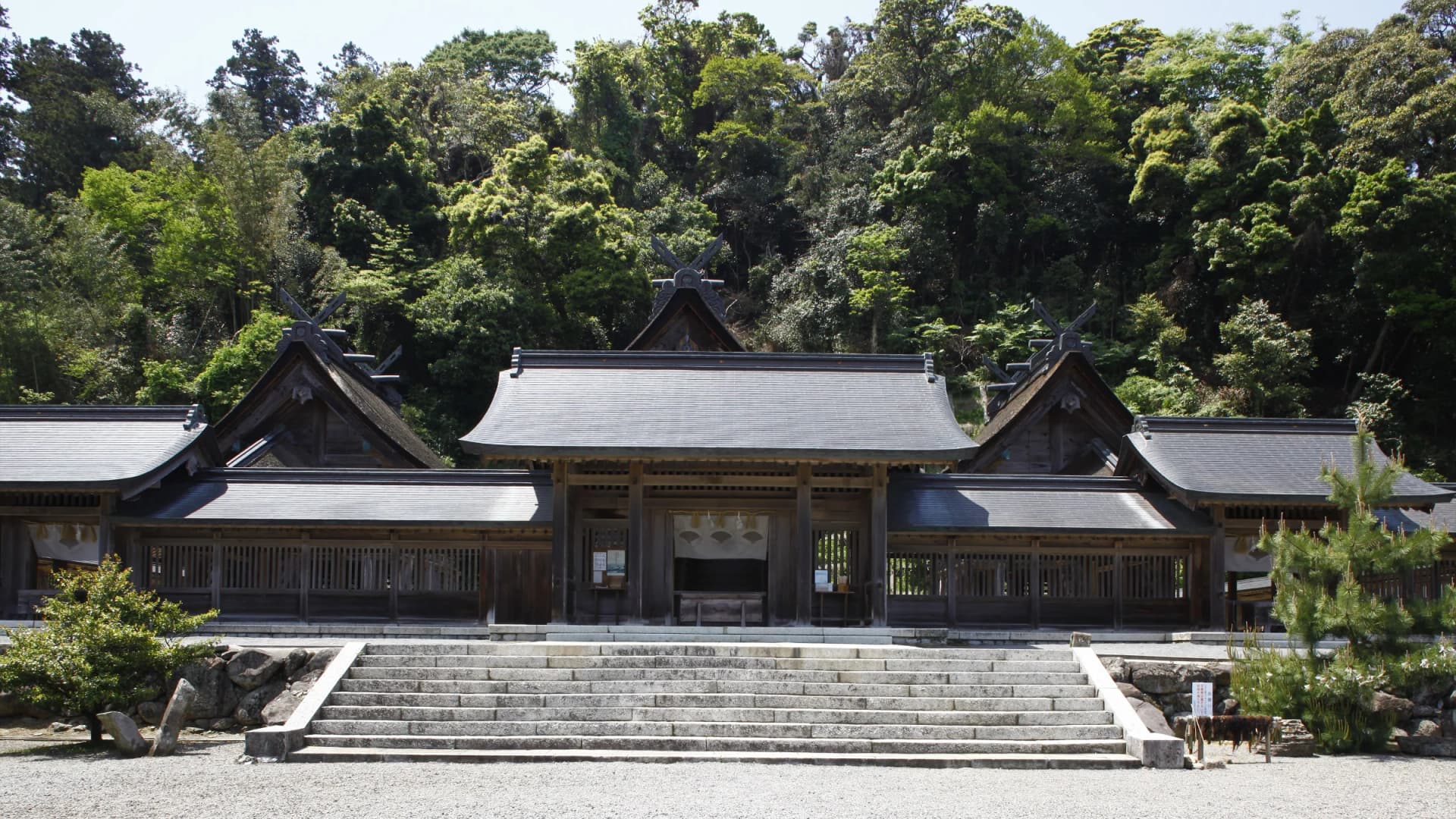
Sada Shrine
Sada Shrine near Matsue: a rare sanctuary of three halls side by side, the gods gathering each November to remember Izanami, and the UNESCO-listed Sada Shinno dance.
Matsue · Shimane