

Akama Shrine
赤間神宮
Shinto shrine honoring Antoku, an emperor who died during the Battle of Dan-no-ura in 1185, with a gate designed after the legendary underwater palace of the Dragon God.
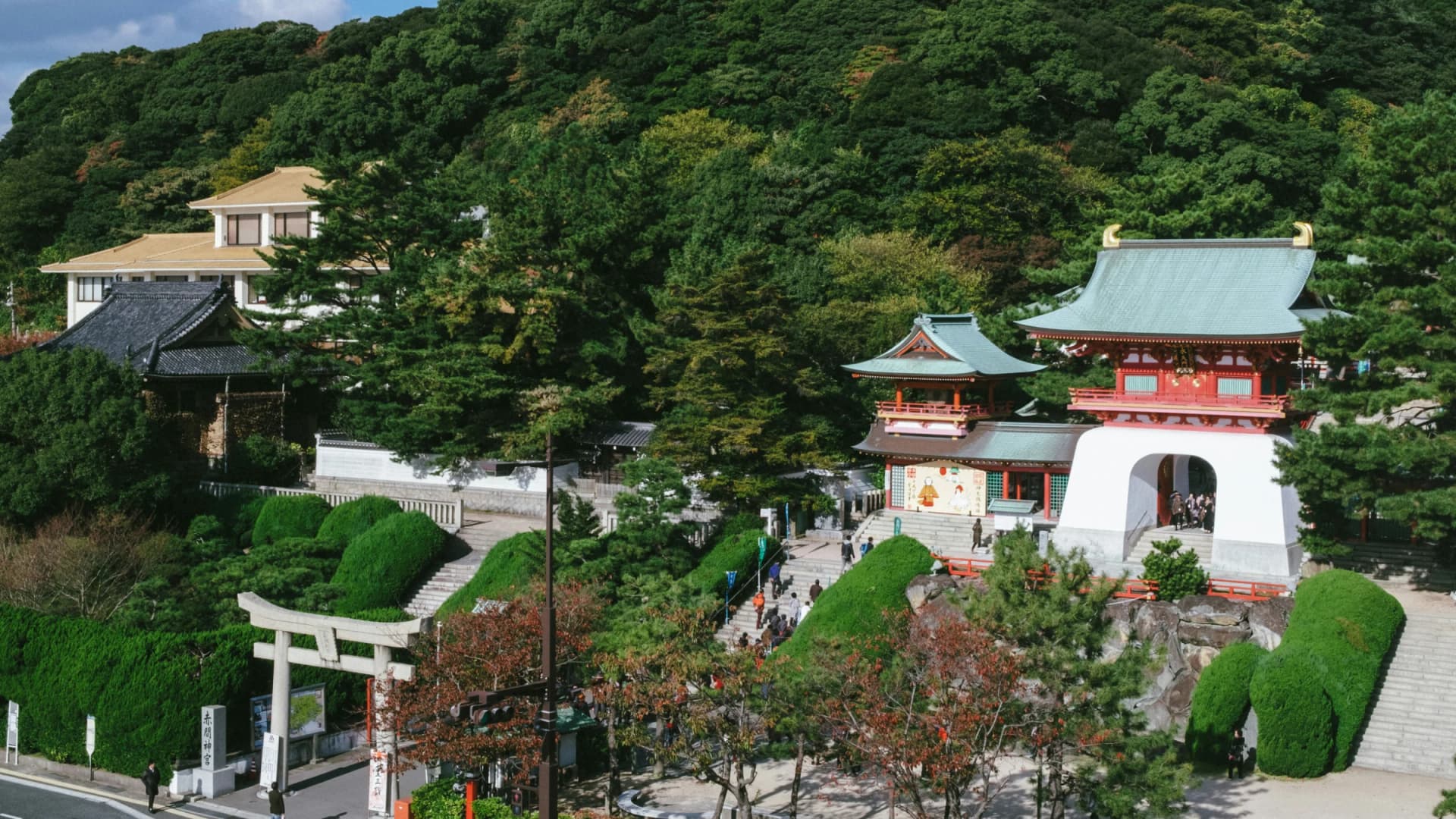
Akama Shrine (Akama Jingu), overlooking the Kanmon Straits in Shimonoseki, Yamaguchi Prefecture, is dedicated to Emperor Antoku, the 81st emperor of Japan, who died here as a child more than 800 years ago.
In 1185, the Kanmon Straits were the setting for the Battle of Dan-no-ura, the final clash of the Genpei War between the Minamoto and Taira (Heike) clans. As the once-powerful Taira faced defeat, their warriors and court ladies threw themselves into the sea. Among them was Emperor Antoku, then just eight years old. According to legend, his grandmother, Nii-no-Ama (Taira no Tokiko), took the young emperor in her arms and, telling him that a capital awaited them beneath the waves, entered the water with him. The tragedy is famously recounted in The Tale of the Heike.
To console the spirit of the child emperor, the imperial court ordered a mausoleum and memorial hall built above his grave. Tended first by nuns and later by priests, the site became a temple known as Amidaji, which drew the devotion of emperors, shoguns, and powerful lords over the centuries.
Following the Meiji-era separation of Shinto and Buddhism, Amidaji was abolished and the site reconstituted as a shrine. It was formally established as Akama-gu in 1875 and elevated and renamed Akama Jingu in 1940. The shrine buildings were destroyed by fire during the Second World War in 1945, and the postwar reconstruction was long and difficult, culminating in the distinctive palace-style complex seen today.
The Suiten-mon Gate
The shrine's most striking feature is the Suiten-mon, its vermilion-and-white main gate, completed in 1958. Its design draws on the poetic image of an undersea palace (ryugu) evoked in Nii-no-Ama's farewell verse – the idea that a capital lay beneath the waves – making it a rare example of "dragon palace"-style shrine architecture. Overlooking the scenic Kanmon Straits, the gate was designated a Registered Tangible Cultural Property in 2018.
Each year, the shrine holds the Sentei Festival in early May, honouring the child emperor and the Taira dead.
Upcoming events at this place

Senteisai festival (Akama-jingu Shrine)
A shrine festival in Shimonoseki honors Emperor Antoku through traditional Shinto rituals, offerings, and cultural performances commemorating the young ruler's tragic death.
2–4 May 2027 · Dates not yet confirmedYamaguchiYou might also like

Iminomiya Shrine
Western Japan's oldest shrine with an 1,800-year legacy, built where Emperor Chūai's palace stood and his spirit was enshrined by Empress Jingū.
Shimonoseki · Yamaguchi
Hōfu Tenmangū
Established in 904, this shrine honors Tenjin, the deified scholar and poet Sugawara no Michizane, whose unique single-building design houses all major sanctuaries.
Hofu · Yamaguchi
Furukuma Shrine
A Tenman-gu Shrine in Yamaguchi City founded in 1373, it enshrines Sugawara no Michizane and was relocated in 1618 by the Mōri clan.
Yamaguchi
Morioka Fall Festival
One of Iwate's most enduring celebrations, this autumn festival originated as prayers for harvest, now featuring ornate floats and traditional parades.
14–16 Sep 2026Morioka · Iwate
Kanamara Matsuri "Festival of the Steel Phallus"
An annual Shinto festival at Kanayama Shrine in Kawasaki featuring distinctive phallic imagery in decorations and parades while raising funds for HIV research.
5 Apr 2027Kawasaki · Kanagawa
Hanamaki Festival
This centuries-old festival features over 100 mikoshi shrines and floats, with the Shishi-Odori deer dance and sacred Kagura-Gongenmai performance.
11–13 Sep 2027Hanamaki · Iwate