

The Aomori Nebuta Festival
青森ねぶた祭
Aomori's most iconic summer festival features glowing nebuta floats and energetic haneto dancers who leap through illuminated parades and water processions.

The Aomori Nebuta Festival is one of Japan’s most iconic summer events, drawing crowds from around the world. While its exact origins remain unclear, it is widely believed to have developed from the lantern floating custom of the Tanabata Festival, introduced from China during the Nara period. Over time, this tradition blended with local customs in the Tsugaru region, such as ancestral spirit send-offs and regional folk practices.
The original Tanabata Festival, held on the night of July 7, involved floating lanterns down rivers or into the sea along with symbolic impurities, in hopes of securing good health and protection from illness. These lanterns were referred to as nebuta, and the act became known as nebuta-nagashi ("nebuta floating"). The modern marine procession (Kaijo Unko) on August 7, where illuminated floats are paraded on the water, is a powerful remnant of this ancient practice. It coincides with the Aomori Fireworks Festival, creating a breathtaking finale.
A central part of the festival’s energy comes from the haneto - dancers whose name means “jumping person” (跳人). True to their name, haneto hop and shout “Rassera!” as they dance alongside the massive floats. One of the festival’s most inviting features is that anyone can join as a haneto, so long as they wear the proper costume, which can be purchased or rented locally.
You might also like

Morioka Fall Festival
One of Iwate's most enduring celebrations, this autumn festival originated as prayers for harvest, now featuring ornate floats and traditional parades.
14–16 Sep 2026Morioka · Iwate
Namahage Sedo Festival
A renowned winter festival recreates the Namahage tradition where demon-like figures visit shrines and homes, recognized as one of Japan's three strangest festivals.
13–15 Feb 2027Oga · Akita
Sanja Matsuri
Sanja Matsuri is one of Tokyo's largest traditional festivals, honouring enshrined figures through mikoshi processions and an Intangible Folk Cultural Property ritual dance.
15–17 May 2027Tokyo
Uto Shrine
Guardian shrine of Aomori dedicated to the Three Goddesses of Munakata, featuring grounds with a sacred spring and historic remains including haiku stones by Matsuo Basho.
Aomori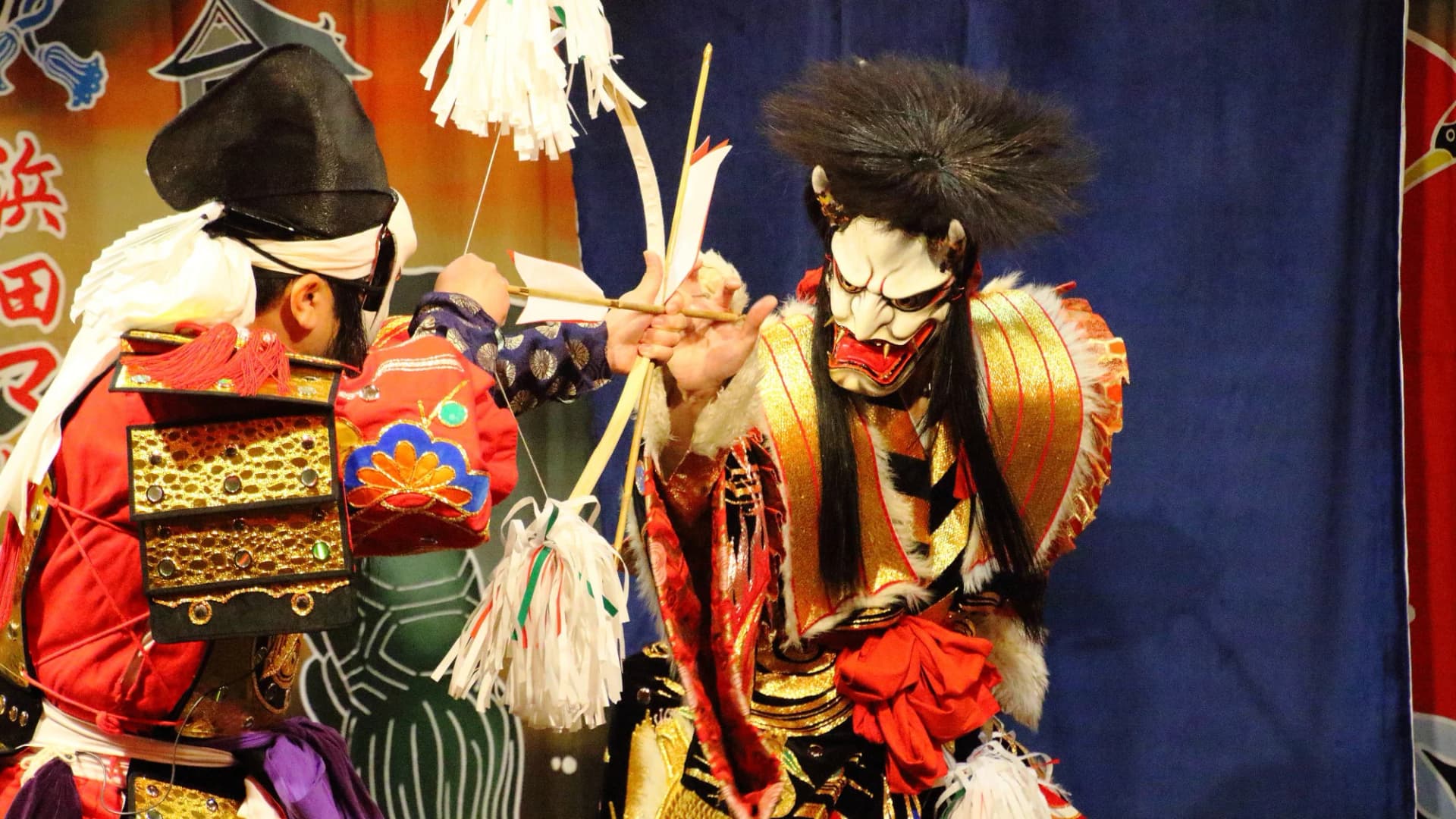
Iwami Kagura
Each autumn in western Shimane, shrine stages host Iwami Kagura – sacred dances performed through the night, from ceremonial pieces to a battle with a serpent.
Shimane · Chugoku
Ninja+Kabuki Tokyo
This nonverbal stage experience blends traditional kabuki and taiko drumming to tell a mythological tale of rival ninja, opening in August 2024.
Tokyo