Yamashiro Daidengaku Festival
山代大田楽
The Yamashiro Daidengaku Festival revives the ancient dengaku dance form rooted in Shintoism, through performances by local talents and renowned actors in period costumes.

〒 922-0243How to get there
加賀温泉Hokuriku Shinkansen · IR Ishikawa Railway Line59 min walk from the station
The Yamashiro Daidengaku Festival celebrates the ancient performing art of dengaku in Yamashiro Onsen. This traditional dance form, deeply rooted in Shintoism, flourished between the 12th and 16th centuries before fading from practice. The festival represents a contemporary revival of this historical art, brought back to life under the guidance of master Nomura Mannojo.
The festival features a diverse ensemble of performers, including local talents and renowned actors, all adorned in exquisite period attire. Through their performances, audiences witness the resurrection of a dance tradition that once played a significant role in Japanese cultural and religious life, now preserved and celebrated for modern generations to experience and appreciate.
The Program
Hi-ire / Yu-ire no Gi (Fire and Hot Spring Rite): The festival begins with a ritual involving sacred fire and hot spring water from Yamashiro, establishing the space for the performances.
Koshin (Procession: Outbound): Over 140 performers dressed in traditional costumes enter the venue, playing instruments and wearing flower-adorned hats.
Karasu Kenbai (Crow Sword Dance): A dance inspired by the Yatagarasu crow from local legend.
Warabe Bangaku (Children’s Bangaku): A Bangaku performance performed by local children, arranged in pairs performing coordinated movements.
Yugake Bangaku: Adult dancers wearing crow masks perform while waving bamboo branches dipped in hot spring water.
Ugaku (Rabbit Dance): A dance representing rabbits, incorporating a distinctive stepping pattern called usagi-ashi. The dance is associated with agricultural prayers.
O no Mai (King’s Dance): A performer in crimson robes and a long-nosed mask dances to flute and drum accompaniment, performing a ritual purification.
Shishimai (Lion Dance): Performers in yellow and green lion costumes dance to rhythmic accompaniment.
Sojo (Formal Invocation): The troupe leader, dressed in white robes and an elder’s cap, recites a formal invocation to mark the arrival of the troupe.
Dan-agari: Performers reappear, playing instruments as the performance continues.
Chigo Mai (Children’s Sacred Dance): Children perform a dance scattering multicoloured flowers, symbolically cleansing the performance space.
Sodengaku (Grand Dengaku): A sequence of dances, acrobatics, and juggling accompanied by traditional instruments, culminating with performers scattering symbolic treasures.
Rappu (Free Dance): Performers and audience members participate in spontaneous dancing together.
Koshin (Procession: Return): The troupe departs, concluding the festival.
Getting There

You might also like

Okuma Kabuto Festival
Nanao's festival honors samurai heritage through a dramatic parade of locals dressed in full armor and helmets, accompanied by traditional music and dance performances.
20 Sep 2027Nanao · Ishikawa
Wajima Taisai Festivals
Ornate lacquered lanterns parade through Wajima's four districts, symbolizing the path for visiting deities, accompanied by taiko drums and portable shrine processions.
22–25 Aug 2027Wajima · Ishikawa
The Spring Takayama Festival
A spring festival in Takayama showcases ornate floats with mechanical dolls and centuries-old craftsmanship, illuminated by lanterns during evening processions.
14–15 Apr 2027Takayama · Gifu
Kibitsu Jinja
Major Okayama shrine dedicated to Kibitsuhiko-no-Mikoto, a legendary prince credited with defeating an ogre and bringing peace to the region, foundations of the Momotaro folktale.
Okayama
Jozankei Shrine
A Shinto shrine in Sapporo's Jozankei hot spring resort area, dedicated to the god of hot springs and healing, surrounded by nature and autumn foliage.
Sapporo · Hokkaido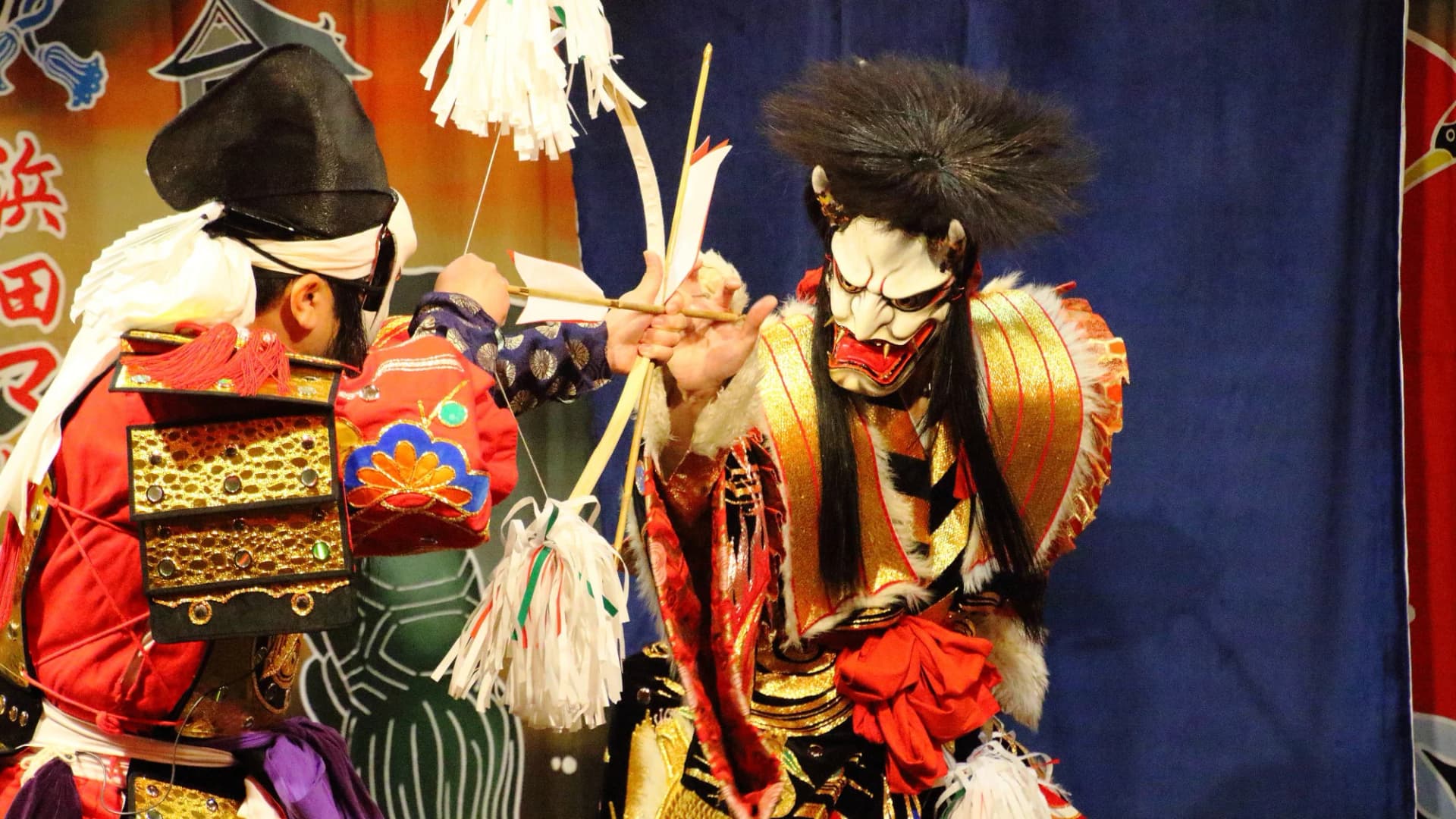
Iwami Kagura
Each autumn in western Shimane, shrine stages host Iwami Kagura – sacred dances performed through the night, from ceremonial pieces to a battle with a serpent.
Shimane · Chugoku