

Yosakoi Festival
よさこい祭り
Every August, Kochi erupts into dance: thousands of performers surging through the streets with clacking naruko, in a carnival that reinvents itself year after year.
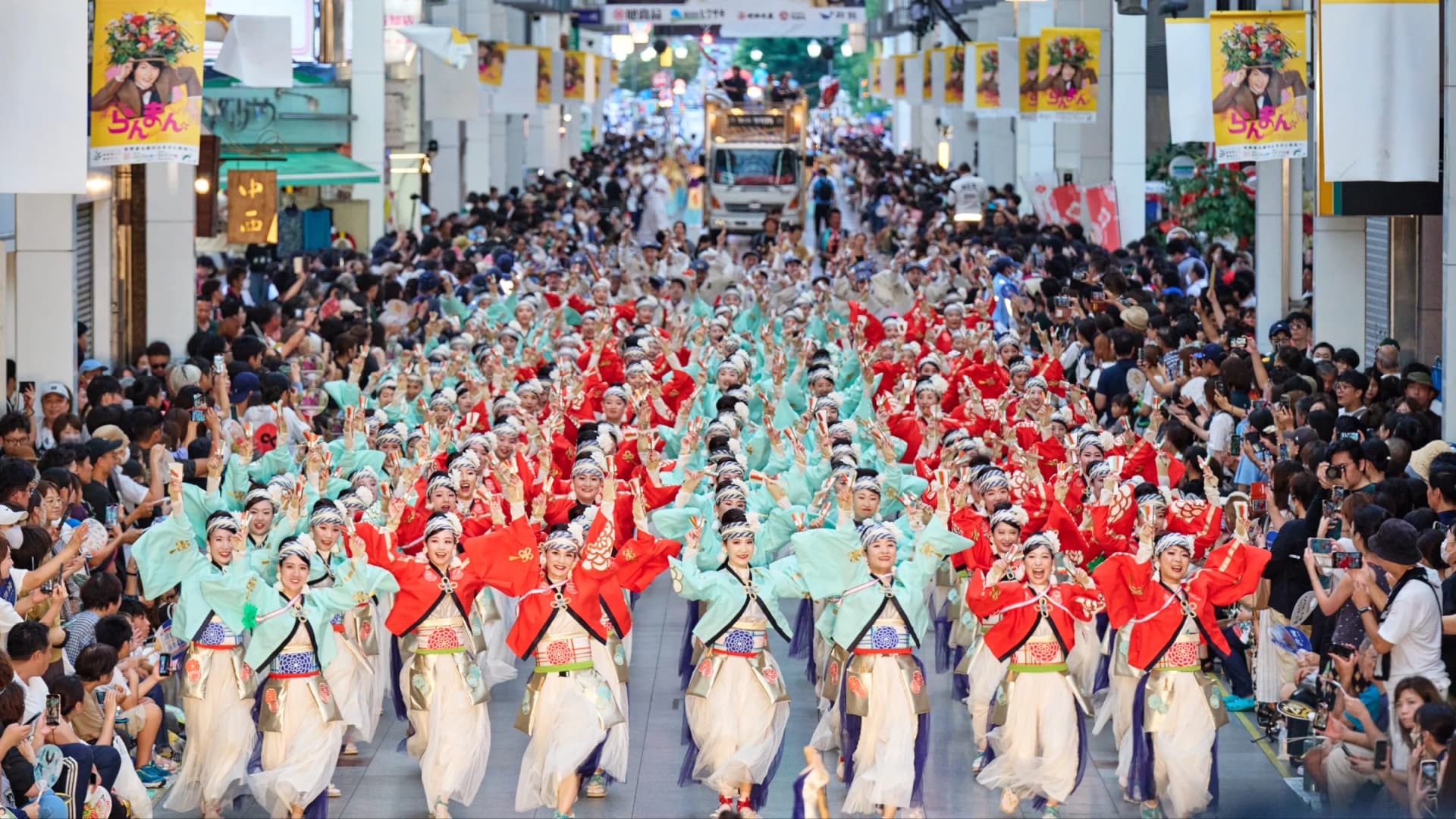
Every August, the streets of Kochi City erupt into one of Japan's most exuberant summer festivals. The Yosakoi Festival fills the city over four days with around 18,000 dancers, who surge through the streets in vivid, ever-changing costumes, each clutching naruko – small wooden clappers that rattle in unison as they move. Loud, colourful, and relentlessly inventive, it's often called the carnival of Tosa, the old name for the Kochi prefecture.
The festival was born out of hard times. In 1954, with the postwar economy still fragile, the Kochi Chamber of Commerce launched it to lift spirits, pray for the city's health and prosperity, and draw shoppers back to the streets in the summer lull. The first edition had just 750 dancers in 21 teams; today it draws nearly 200 teams and has spawned Yosakoi-style festivals across Japan and beyond.
What keeps it fresh is how loosely it's defined. There are really only two rules: dancers must carry naruko and move forward, and each team's music must contain a snatch of the traditional "Yosakoi Naruko Odori" melody. Everything else is open – so alongside classical Japanese dance you'll see samba, rock, hip-hop, and jazz; costumes ranging from happi coats to carnival and ethnic styles; and live bands or DJ boots mounted on the jigatasha, the elaborately decorated floats that lead each team and blast its music. The result is a festival that reinvents itself every year and never repeats itself.
The action unfolds across some sixteen competition and performance sites scattered around the city – from the main stage on Otesuji, the festival's heart, broadcast live on TV, to a wooden arcade where the clappers echo, a stage beneath Kochi Castle, and long shopping streets the dancers work from end to end. The four days run from an eve-festival and fireworks through two days of main competition to a finale and national championship, when top teams and entrants from around Japan dance it out together.
You might also like

Sanja Matsuri
Sanja Matsuri is one of Tokyo's largest traditional festivals, honouring enshrined figures through mikoshi processions and an Intangible Folk Cultural Property ritual dance.
15–17 May 2027Tokyo
Wajima Taisai Festivals
Ornate lacquered lanterns parade through Wajima's four districts, symbolizing the path for visiting deities, accompanied by taiko drums and portable shrine processions.
22–25 Aug 2027Wajima · Ishikawa
Namahage Sedo Festival
A renowned winter festival recreates the Namahage tradition where demon-like figures visit shrines and homes, recognized as one of Japan's three strangest festivals.
13–15 Feb 2027Oga · Akita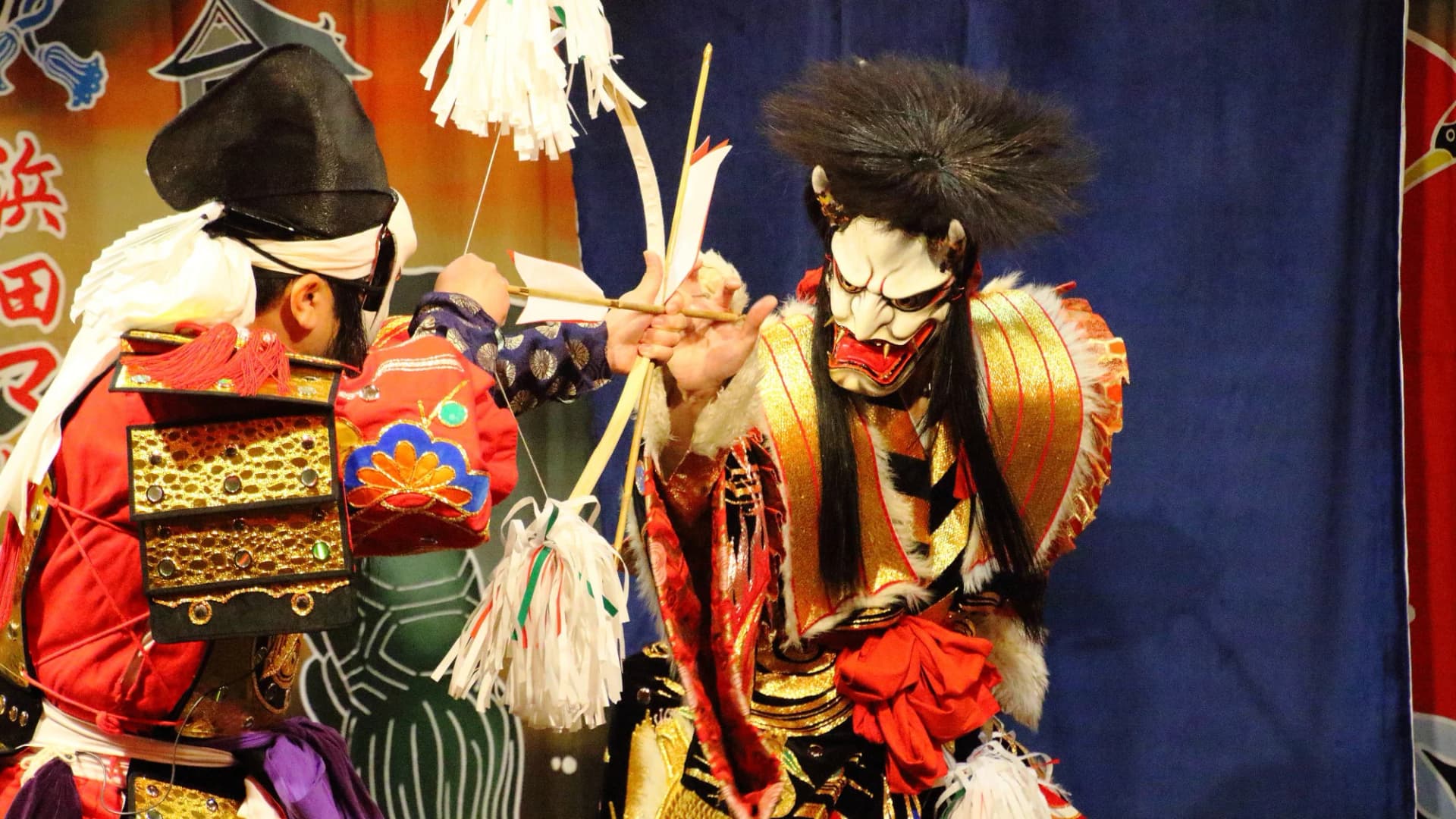
Iwami Kagura
Each autumn in western Shimane, shrine stages host Iwami Kagura – sacred dances performed through the night, from ceremonial pieces to a battle with a serpent.
Shimane · Chugoku
Ninja+Kabuki Tokyo
This nonverbal stage experience blends traditional kabuki and taiko drumming to tell a mythological tale of rival ninja, opening in August 2024.
Tokyo
Isaniwa Shrine
A Shinto shrine in Matsuyama with roots in a visit by Emperor Chuai and Empress Jingu to Dogo Onsen, enshrining multiple emperors as cultural treasures.
Matsuyama · Ehime