Daihoji Temple
大寶寺
The forty-fourth temple of the Shikoku pilgrimage and its halfway point, standing among old trees at 579 metres in the mountains of Ehime.
〒 791-1205How to get there
見奈良207 min walk from the station
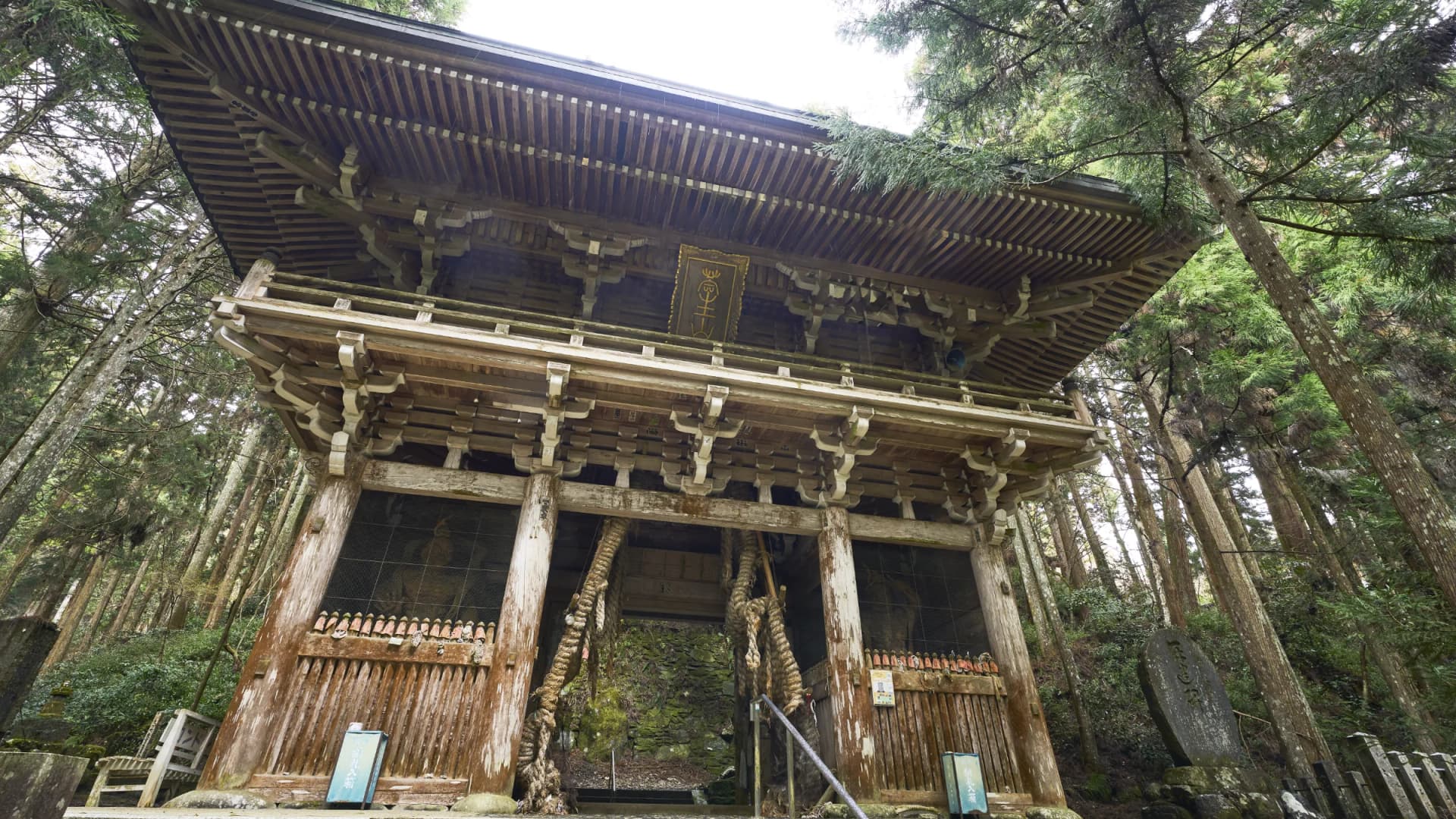
Daihoji stands at 579 metres among the mountains of Kumakogen, in grounds thick with old trees. It is the forty-fourth of the eighty-eight temples of the Shikoku pilgrimage, and the exact middle of the circuit, which is why pilgrims call it the halfway temple. Its main image is the eleven-headed Kannon.
The stretch that leads to it is one of the hard ones: about 80 kilometres from the temple before it, over passes, and more than twenty hours of walking.
History
The story begins with a monk from Baekje, in what is now Korea, who carried an image of the eleven-headed Kannon into these mountains and left it there.
It was found long afterwards, in 701, by two hunter brothers from Aki, who came upon it in the sedge grass and built a hut to house it. Word reached the emperor Monmu, who ordered a temple built on the spot and named it after the era then running.
Kobo Daishi, the monk who founded the Shingon school, came about 120 years later, in 822. He performed esoteric rites here, fixed the temple as the middle station of the Shikoku circuit, and moved it from the Tendai school to the Shingon.
Fire destroyed the temple, every hall of it, in 1152. What rebuilt it was an illness: the retired emperor Go-Shirakawa prayed here for his recovery, and when he was well again he paid for the halls, appointed his younger sister as head of the temple and made it an imperial place of prayer. He also gave the temple a board inscribed in his own hand with Sugoazan, the mountain name that Japanese temples carry in front of their own, and it is still kept there. At its height 48 lesser halls stood on the mountain.
It burned again in the wars of the late sixteenth century and was restored by the lord of Matsuyama, and it became a prayer temple of that house. A third fire took it in 1874.
In the grounds
A gilt bronze figure of Kannon was dug out of the mountain in 1934. It had been buried at the root of a tree of perhaps a thousand years, under about 130 stones, each carrying a single character of the Lotus Sutra.
There is also a mound raised for the poet Basho, put up when the service was held for the thirty-third anniversary of his death.
Getting There

Planning a trip? Fit this into a trip and Oni plans the rest around it.
You might also like

Kongobu-ji (Koyasan)
Mount Koya is a sacred temple complex where the entire mountain is treated as one unified holy domain dedicated to Shingon Esoteric Buddhism.
Koya · Wakayama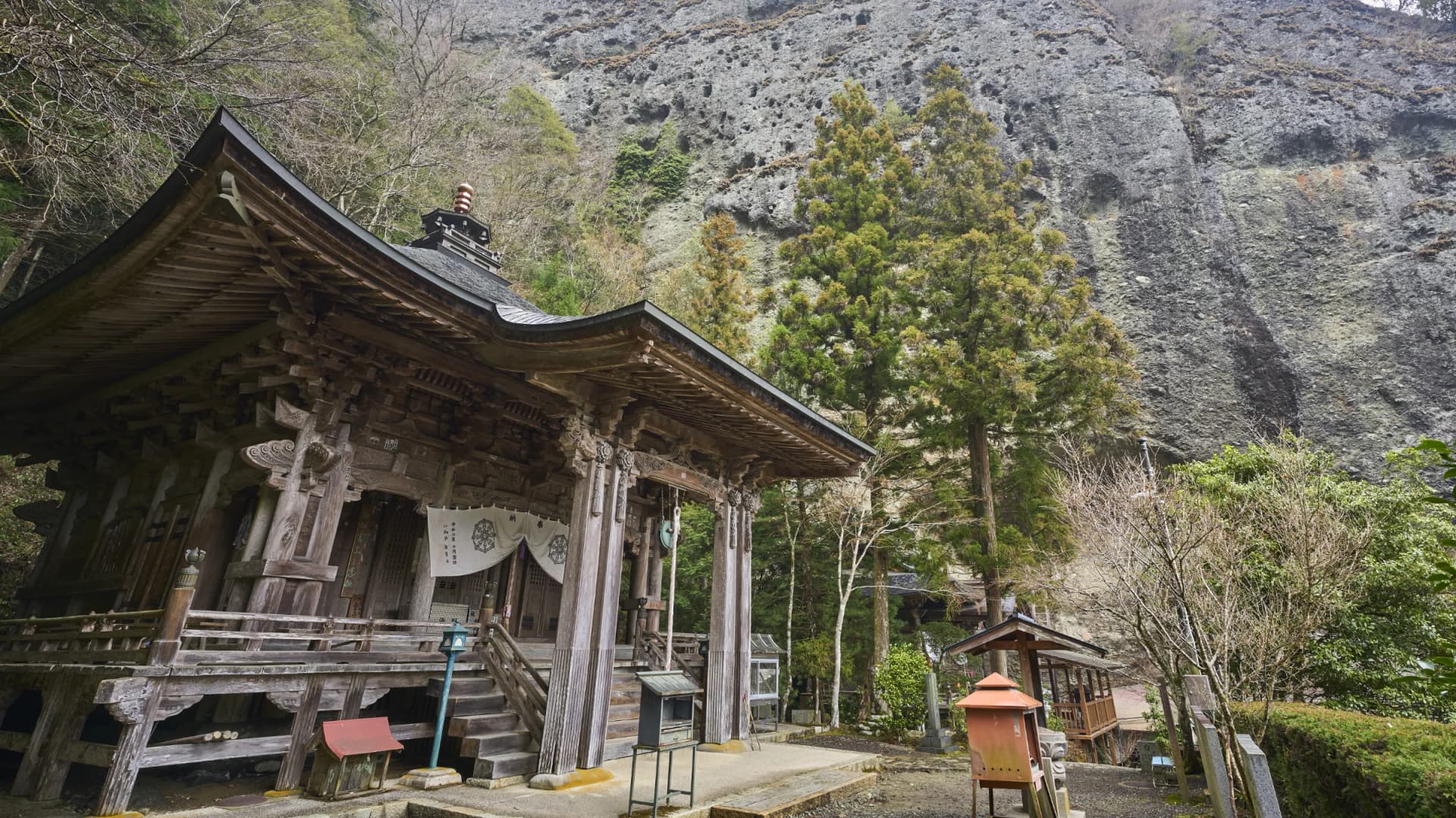
Iwayaji Temple
The forty-fifth temple of the Shikoku pilgrimage, built against cliffs in the mountains of Ehime, where the mountain itself is the object of worship.
Kumakogen · Ehime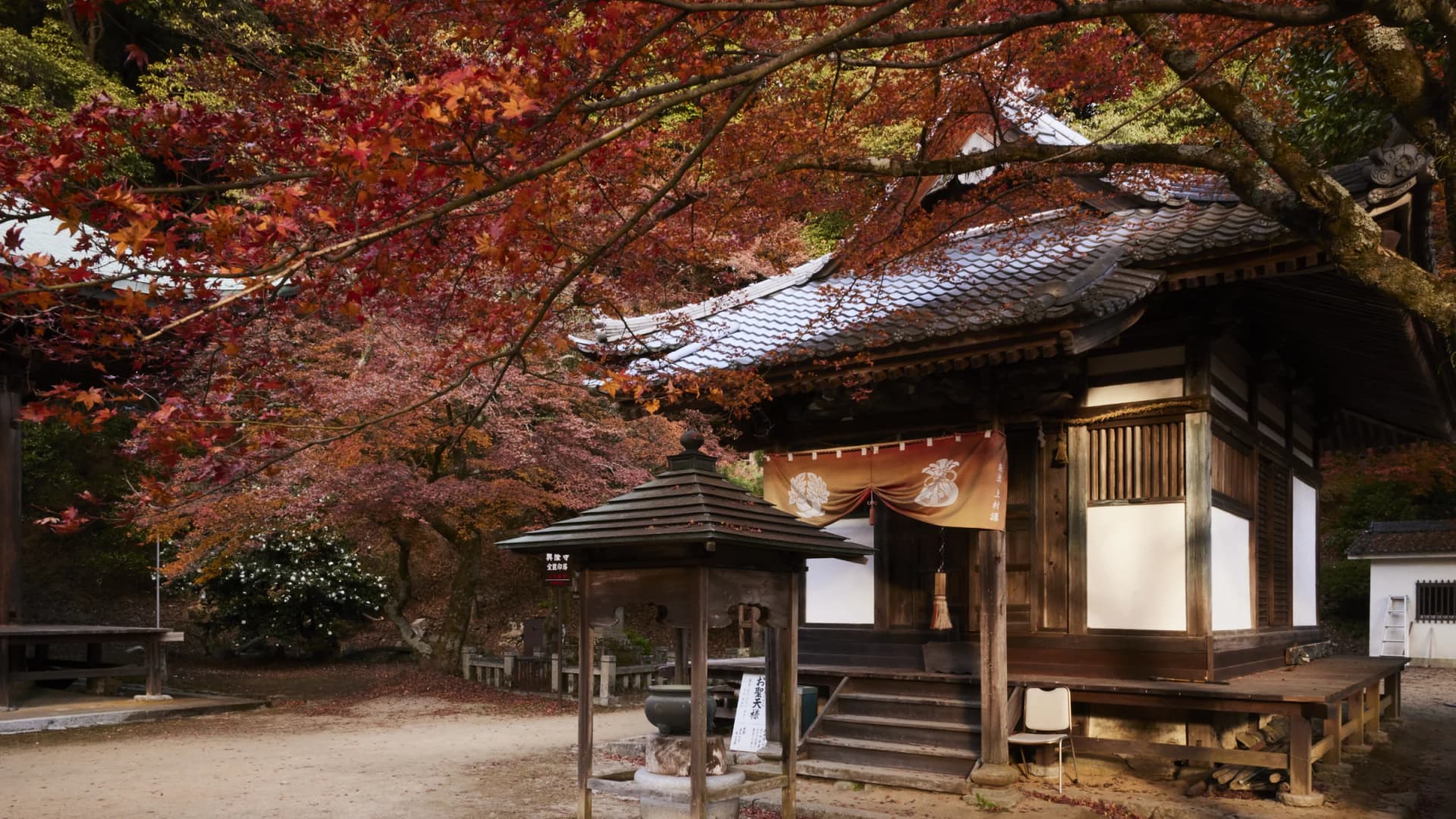
Nishiyama Koryuji
A mountain temple in Saijo, Ehime, founded in 642, reached by a long approach under maples, with a main hall that is an Important Cultural Property.
Saijo · Ehime
Special Exhibition: Kobo Daishi Kukai — Treasures of Koyasan and the Spread of the Faith
An exhibition at the Kyushu National Museum on Kukai, who brought esoteric Buddhism from Tang China, with treasures of Koyasan and of western Japan.
24 Apr – 20 Jun 2027Dazaifu · Fukuoka
Hyakusaiji Temple and the Buddhist Art of Omi
An autumn exhibition in Shiga where the hidden image of Hyakusaiji, an eleven-headed Kannon of the 8th century, leaves the temple for the first time.
26 Sep – 6 Dec 2026Koka · Shiga
Matsuyama Dogo Autumn Festival
Ancient shrine festival featuring portable shrines carried through Matsuyama's districts in ritual performances believed to enhance spiritual power.
5–7 Oct 2027Exact date not confirmed yetMatsuyama · Ehime