

Iinuma Kannon
飯沼観音
A temple at the eastern edge of Kanto, founded around an image of Kannon that fishermen are said to have drawn from the sea one glowing night in 728.
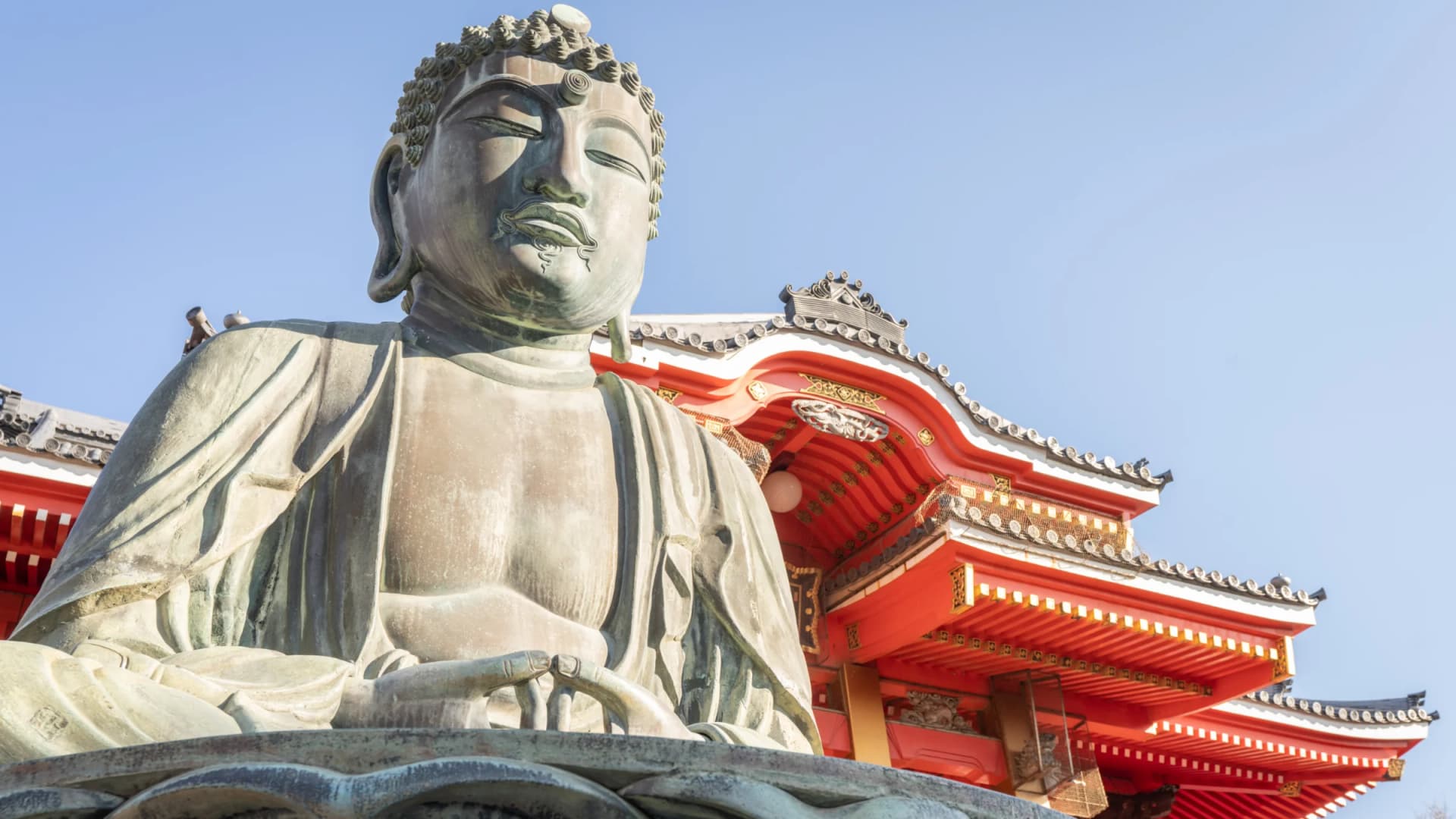
The temple's formal name is Enpuku-ji, but it has been known as Iinuma Kannon for centuries, and that is what people still call it. It is the 27th stop on the Bando pilgrimage, a circuit of thirty-three Kannon temples across eastern Japan.
History
The founding story is dated to 728. Choshi's fishing had failed when the sea off the bay was seen one night to be glowing. Two fishermen, from opposite shores, dreamed the same dream telling them to cast their net at the light; when they did, they brought up an image of the eleven-headed Kannon with an agate held under its arm. Both took orders and built a hut for it.
Gyoki and Kukai, two of the great figures of early Japanese Buddhism, both attach themselves to what followed. Gyoki is said to have had a cabinet made for the image, which proved slightly too small – until he prayed, so the story goes, and the figure bowed its head and stepped inside. Kukai, arriving a century later, is credited with finding the statue still just as it had come out of the sea, and giving it a pedestal and a halo. The temple that grew around it was rebuilt grandly in 1578, expanded in 1773, and burned in the Pacific War, so what stands now is largely postwar.
Pilgrims walking the Bando circuit had little choice but to stay the night here. The temple before this one is a long way west, and the next is another fifty kilometres on, so Choshi became a stopping place, and the streets around the Kannon grew up to serve the people passing through. The shopping district and the entertainment quarter still sit where they did, and the main hall stands among the restaurants rather than apart from them.
The 18th of each month is the temple's day, and the old market has been revived on it.
The Grounds
The Kannon-do is the main hall. Its principal image is the eleven-headed Kannon of the legend, kept hidden from visitors, though the ceiling above is worth looking up at – painted in 1995 by people from the town, mapping the great Kannon pilgrimage circuits of Japan.
Outside stands the five-storey pagoda, finished in 2009 and now the symbol of the town, opening to visitors on the 8th and 18th of the month in fair weather. The great Buddha is far older: a seated Amida in bronze, 5.4 metres tall, cast in 1711, its lotus pedestal inscribed with the names of tens of thousands of donors, with strafing marks on one knee from the war. Easy to walk past is a survey marker stone set in 1872 by a Dutch engineer working for the Meiji government, which served as the origin point for river surveying in Japan and is now a designated Civil Engineering Heritage Site.
All this is only half the temple. It was one precinct until an air raid in July 1945 burned nearly everything; in the rebuilding, a road was driven through the middle, leaving the honbo – the priests' quarters and administrative centre – two hundred metres south. The honbo holds the treasures: among them an embroidered image of the Buddha's death, made in Kyoto in 1669 and now a Prefectural Cultural Property, displayed each February, and a ship's figurehead in the form of a foreign woman, taken from a vessel once crewed by the father of the writer Kunikida Doppo and credited locally with curing women's ailments. In the garden stands a stone carved with a haiku written in 1841, which runs roughly: "cuckoo – Choshi, the far edge of the country". It has become the line Choshi is known by.
You might also like
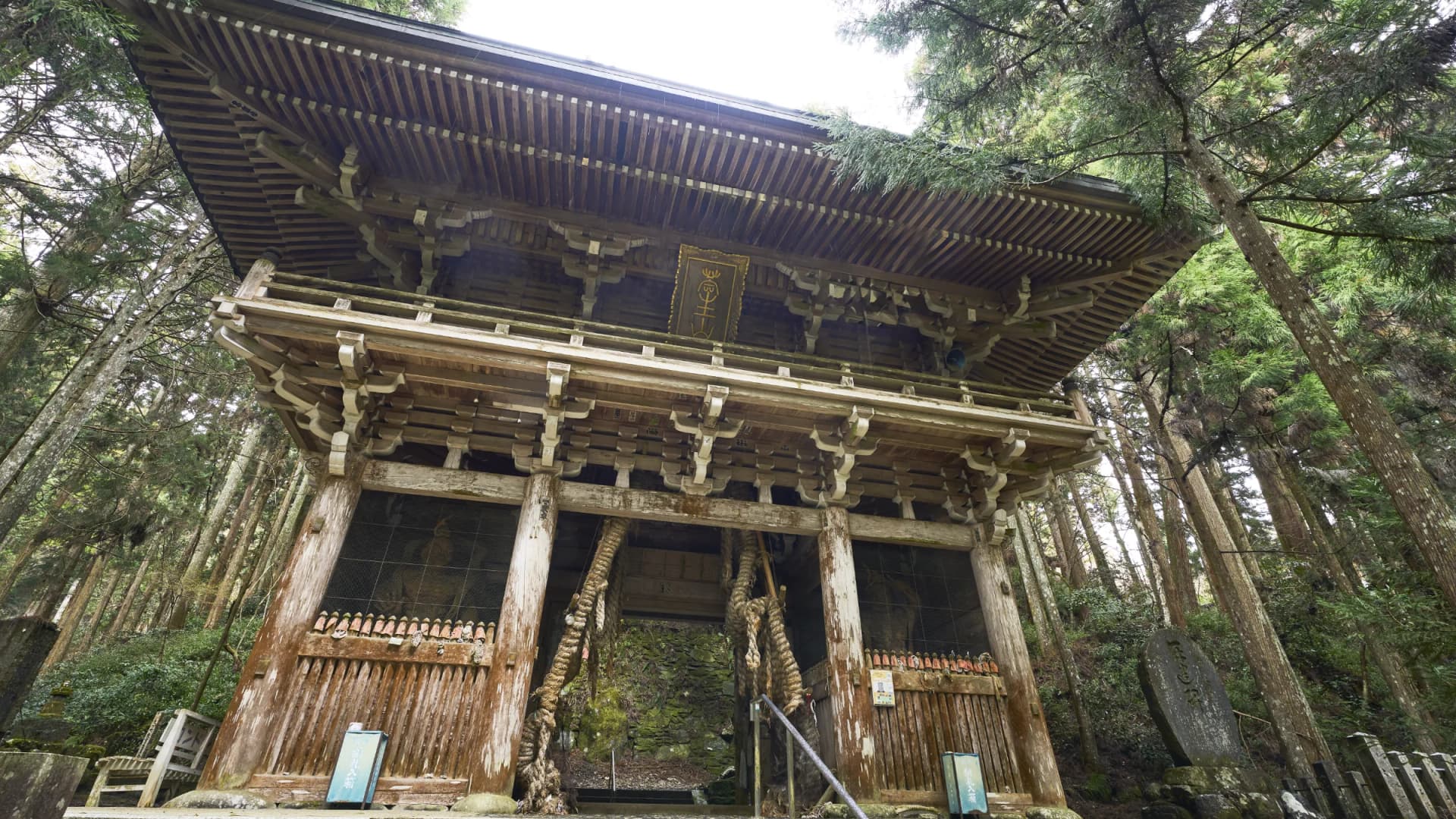
Daihoji Temple
The forty-fourth temple of the Shikoku pilgrimage and its halfway point, standing among old trees at 579 metres in the mountains of Ehime.
Kumakogen · Ehime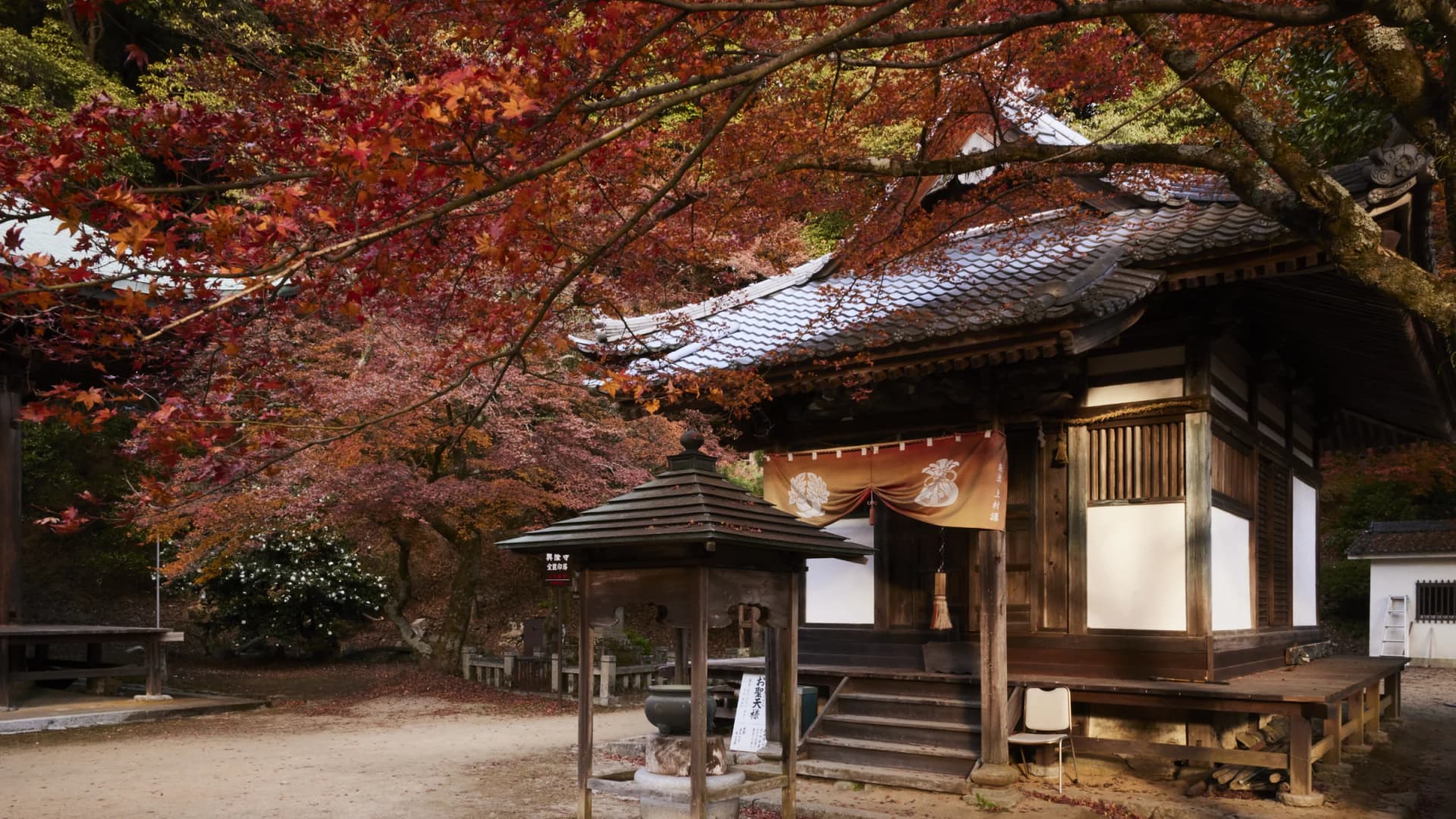
Nishiyama Koryuji
A mountain temple in Saijo, Ehime, founded in 642, reached by a long approach under maples, with a main hall that is an Important Cultural Property.
Saijo · Ehime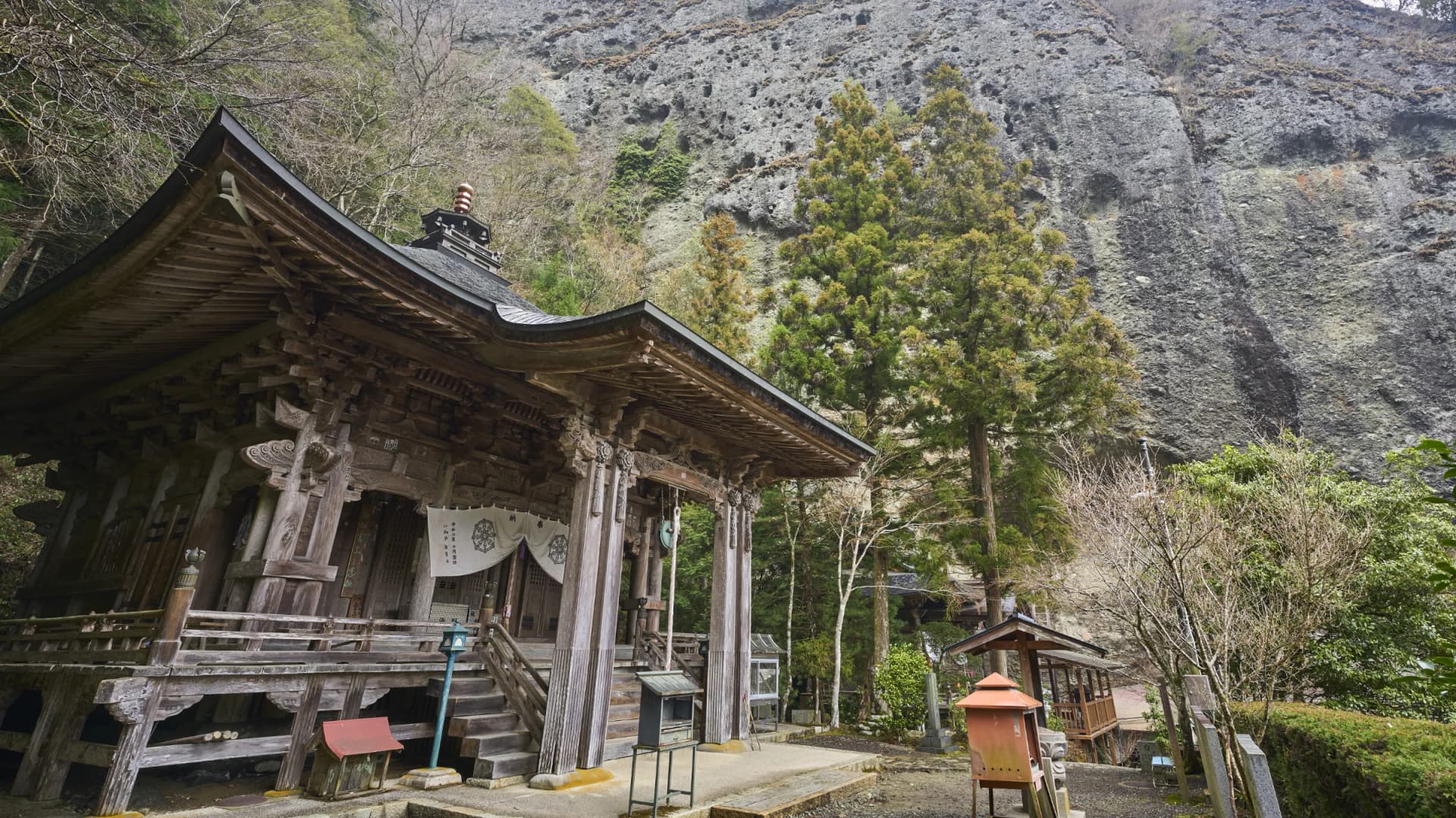
Iwayaji Temple
The forty-fifth temple of the Shikoku pilgrimage, built against cliffs in the mountains of Ehime, where the mountain itself is the object of worship.
Kumakogen · Ehime
Special Exhibition: Kobo Daishi Kukai — Treasures of Koyasan and the Spread of the Faith
An exhibition at the Kyushu National Museum on Kukai, who brought esoteric Buddhism from Tang China, with treasures of Koyasan and of western Japan.
24 Apr – 20 Jun 2027Dazaifu · Fukuoka
Mamada no Jaga Maita
Before the rice-planting season, children parade enormous painted serpents through town while chanting, immersing them in a pond as part of a centuries-old rainmaking ritual.
5 May 2027Oyama · Tochigi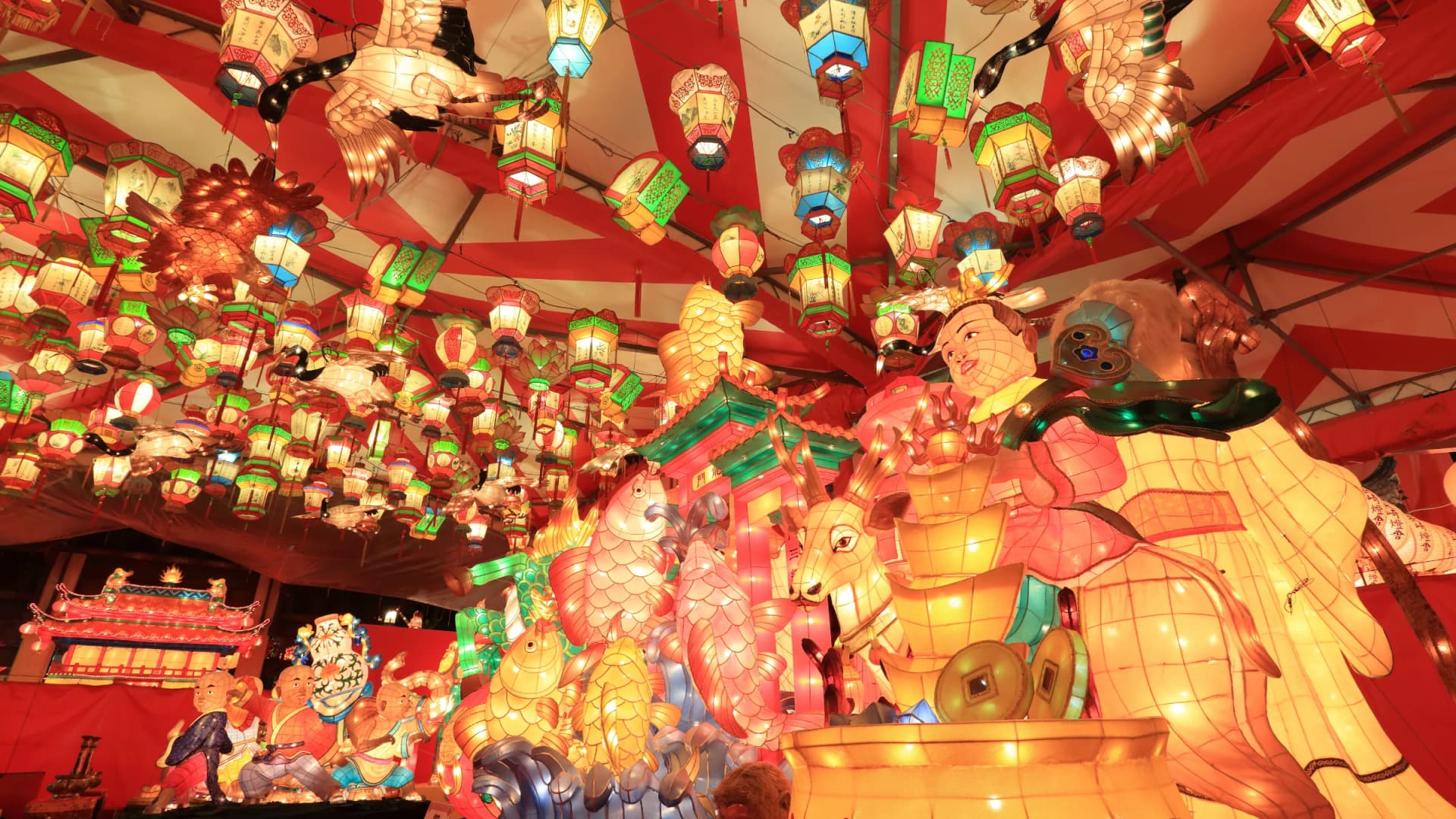
Nagasaki Lantern Festival
The festival illuminates Nagasaki's streets with around 15,000 Chinese lanterns, some reaching 10 metres, celebrating Lunar New Year traditions.
6–23 Feb 2027Nagasaki