

Sakura Autumn Festival
佐倉の秋祭り
Each October the old castle town of Sakura fills with towering doll floats, portable shrines and Edo-descended music for three days of procession.
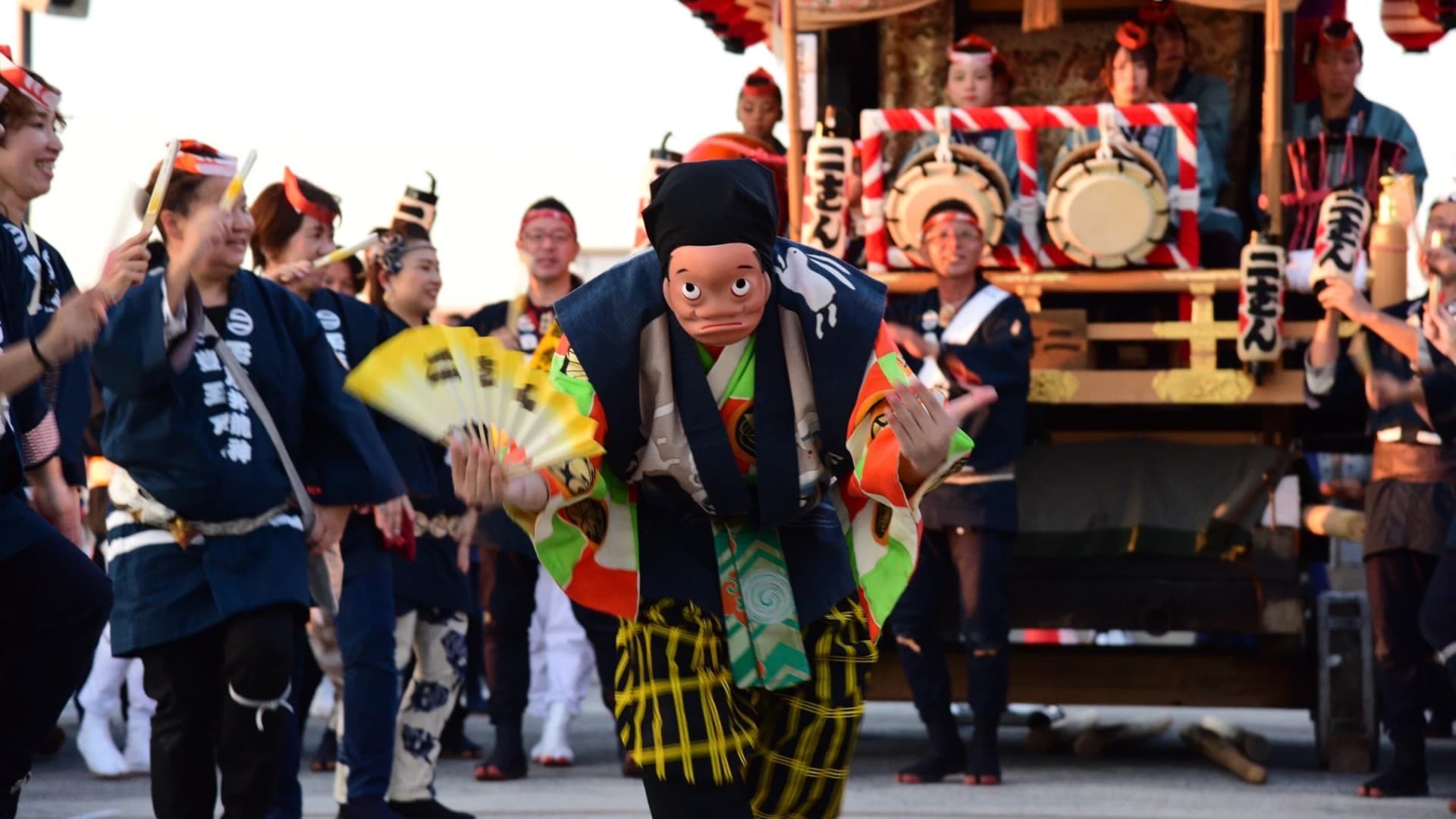
For three days each October, at Sakura Autumn Festival, the old castle town of Sakura fills with the sound of flutes and drums as a long procession of floats and portable shrines is hauled through its narrow, dog-legged streets..
The festival grew out of the rites of Makata Shrine, held in thanks for the year's harvest. When Sakura Castle was built in the early Edo period, Makata Shrine – standing just outside the castle's main gate – became the guardian shrine of the domain, and its festival flourished under the patronage of successive lords.
Its present shape dates to the Meiji era. Seven towns of Sakura's Shinmachi district bought seven doll floats from the Nihonbashi area of Tokyo. Through the following decades each parish district built its own dancing float, and today the festival is held jointly by four shrines – Makata, Atago, Shinmei and Hachiman – on the second Friday, Saturday and Sunday of October, with the parish districts of all four joining a single procession through the streets around Shinmachi.
The Floats
Two kinds of float take part. The dashi are the tall doll floats, each crowned with a figure that serves as a marker for the descending deity. The dolls themselves are designated Cultural Properties of the city, made by celebrated Edo and Meiji craftsmen, and many depict characters from Noh drama – a fashion among ordinary townspeople of the period. During the festival they are put on display where visitors can see them close up.
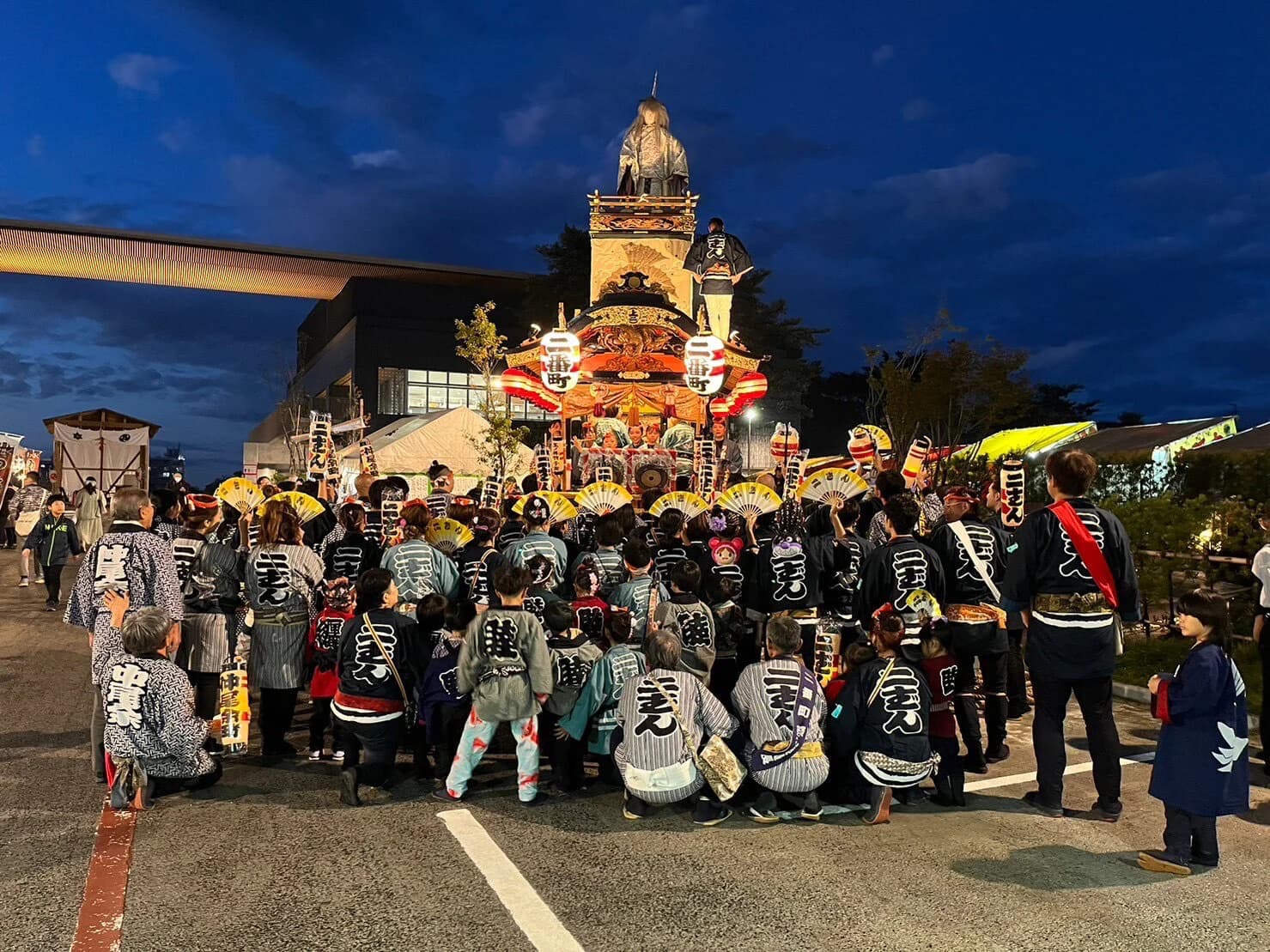
These floats carry an ingenious piece of engineering. A rope-and-pulley mechanism allows the whole upper section to be raised and lowered, because in Edo the floats had to pass beneath the gates of Edo Castle during the great shogunal festivals. There are no castle gates to negotiate in Sakura, but the mechanism is still in constant use – for power lines and shop signs.
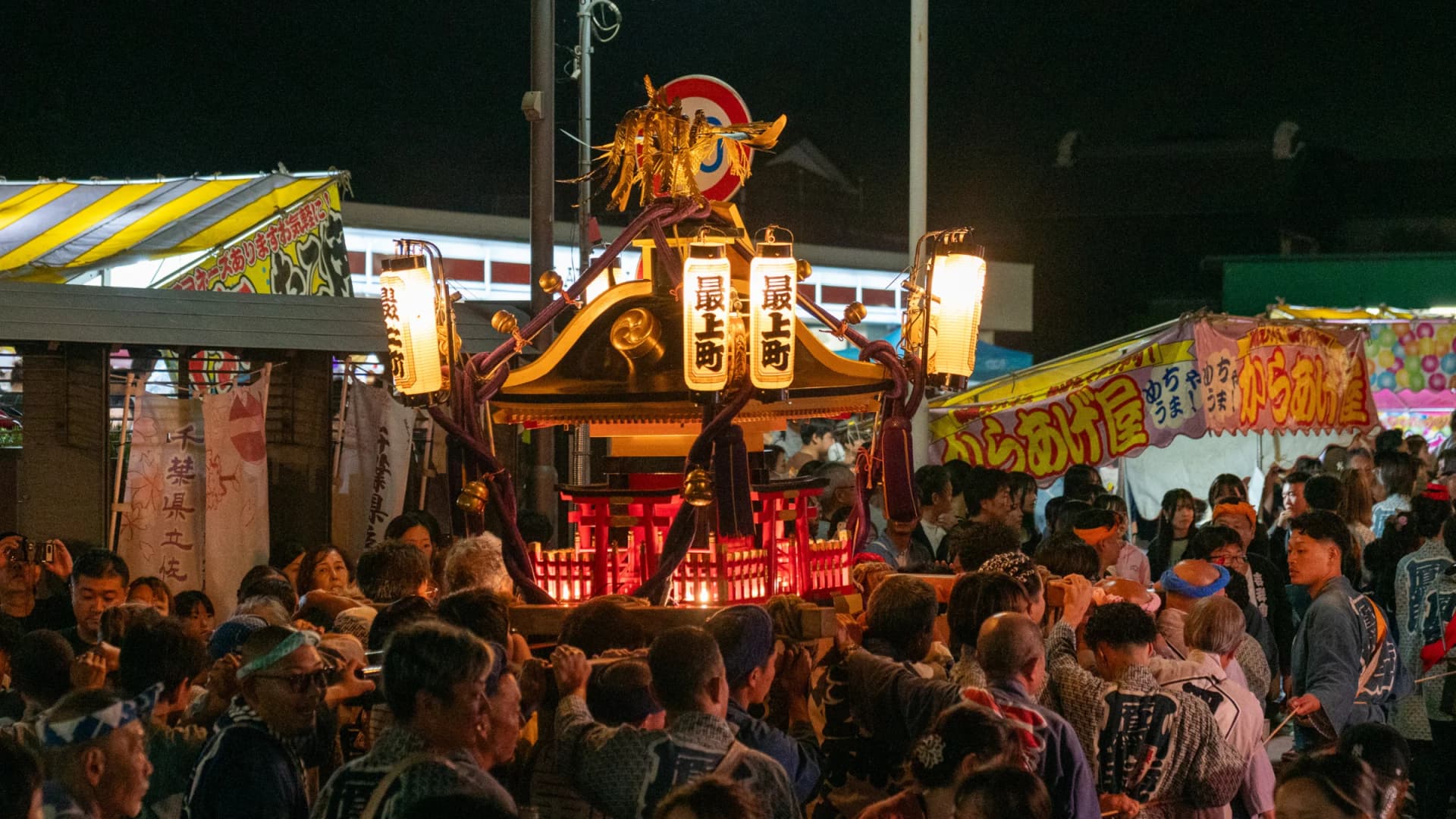
The omikisho are dancing floats with gabled roofs. Their upper section rotates: when passing a district office or receiving a gift, the float is turned to face forward for music and dancing, and at intersections it may be spun round and round with its lanterns swinging.
The Great Portable Shrine
Makata Shrine's portable shrine is among the largest in Chiba, made in 1721 by ten craftsmen brought from Edo, who worked on it for eight months at enormous cost. It is carried on just two poles through the tight streets by a local young men's association in white robes, accompanied by lanterns from each district.
Watch what happens when it reaches a district. The waiting parishioners hold themselves in a posture of reverence; the great shrine is thrust high overhead to a rhythmic call, then its front end is rested on the railing of a dancing float.
Sakura Bayashi
The festival music descends from the Kasai tradition of Edo and comprises five standard pieces. There is also ninba, which adds a drum and dance – and it is to this that the crowd shouts "essa no korasa essassa" as the floats are pulled along, a call heard nowhere else in Japan. The preservation society formed in 1960 and the music was designated an Intangible Cultural Property of Sakura City in 1971.
You might also like

Ohara Hadaka Festival
The 'Naked Festival' features mikoshi carried into the sea, a boisterous parade through town, and shrines tossed high against fireworks and songs of joy.
23–24 Sep 2026Isumi · Chiba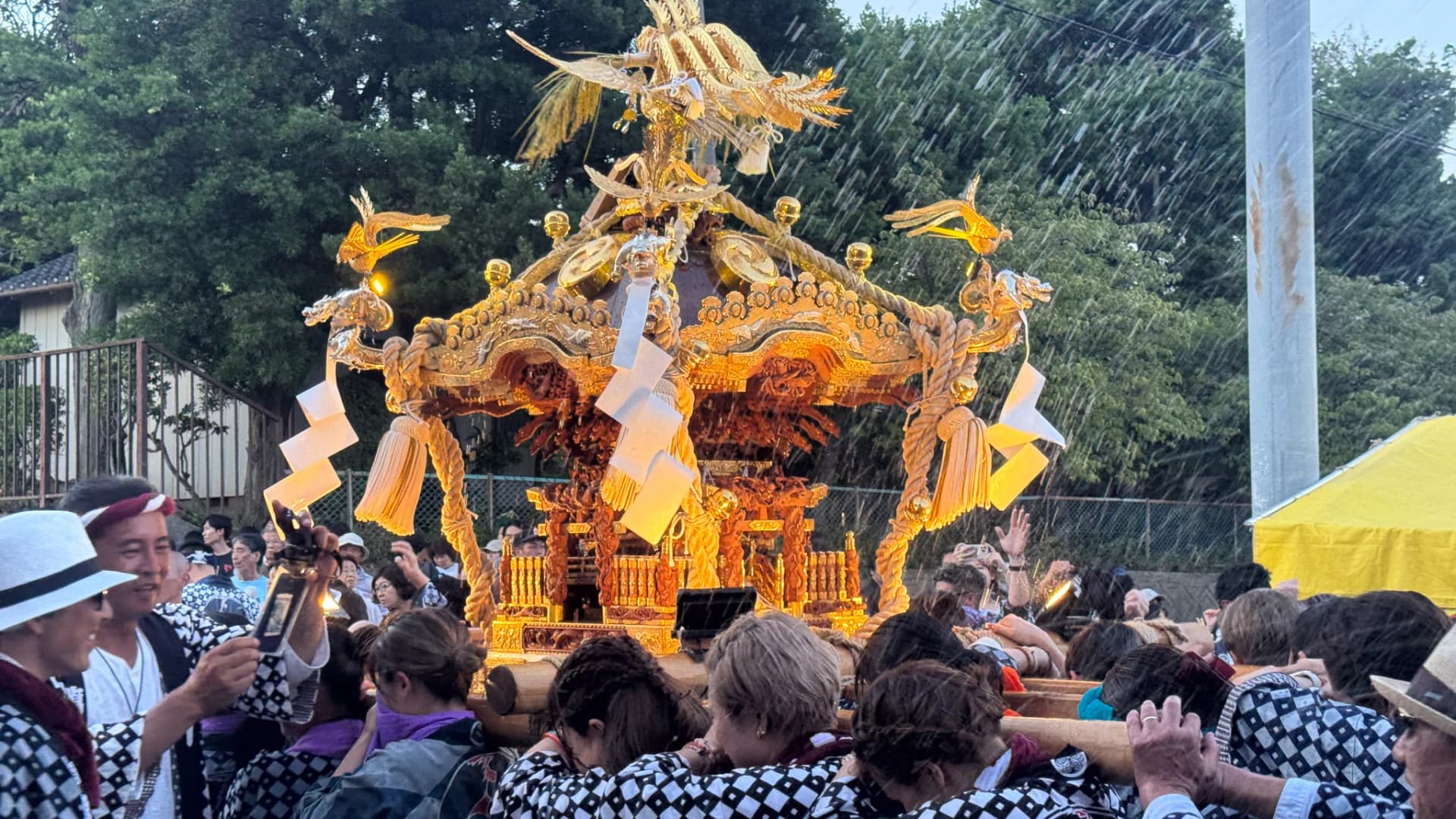
Yaegaki Shrine Gion Festival
Every 4–5 August, ten neighbourhoods of Yokaichiba send mikoshi through the streets while crowds throw water over them. A Chiba festival nearly 500 years old.
4–5 Aug 2027Sosa · Chiba
Furusato Miya Matsuri
This Utsunomiya summer festival brings residents together for parades, traditional performances, and displays of local culture.
1–2 Aug 2027Utsunomiya · Tochigi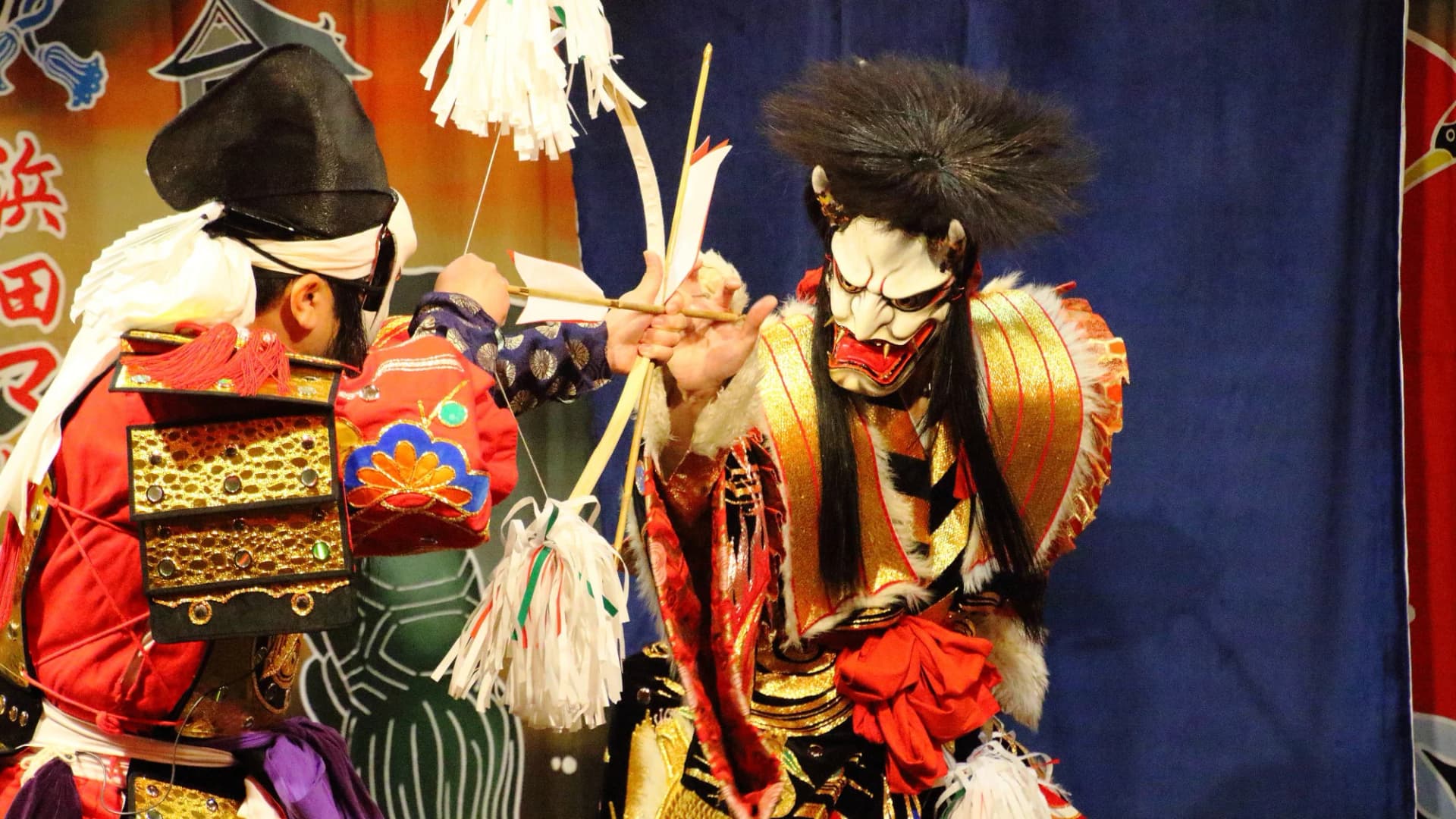
Iwami Kagura
Each autumn in western Shimane, shrine stages host Iwami Kagura – sacred dances performed through the night, from ceremonial pieces to a battle with a serpent.
Shimane · Chugoku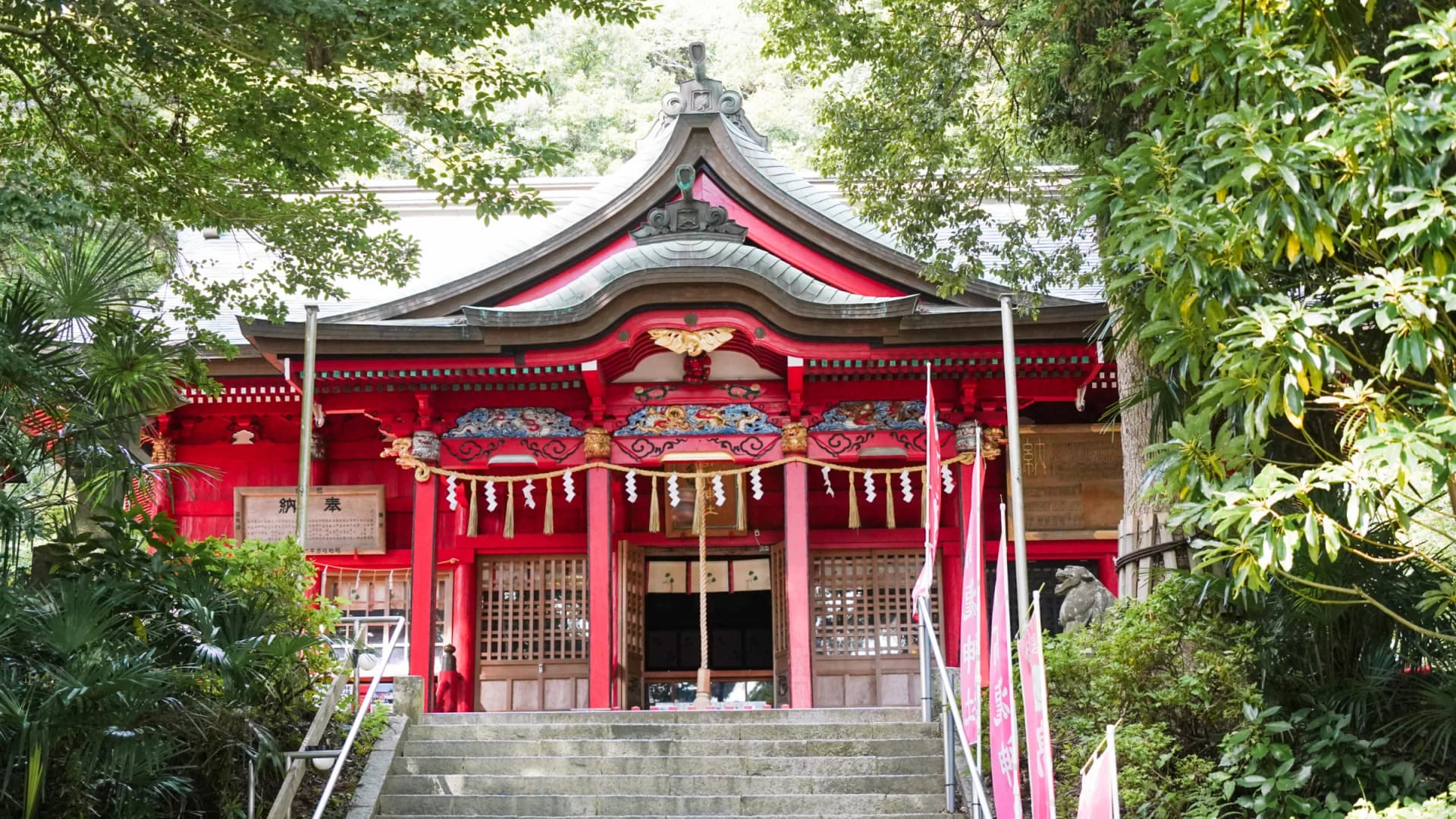
Takataki Shrine
A shrine in Ichihara with an unusual tradition: expectant mothers borrow a small purse left unstitched at the base, for an easy birth.
Ichihara · Chiba
Ninja+Kabuki Tokyo
This nonverbal stage experience blends traditional kabuki and taiko drumming to tell a mythological tale of rival ninja, opening in August 2024.
Tokyo