Kikuchi Castle
鞠智城
The site of a seventh-century mountain fortress in Kumamoto, built against invasion from the mainland, with four buildings reconstructed.
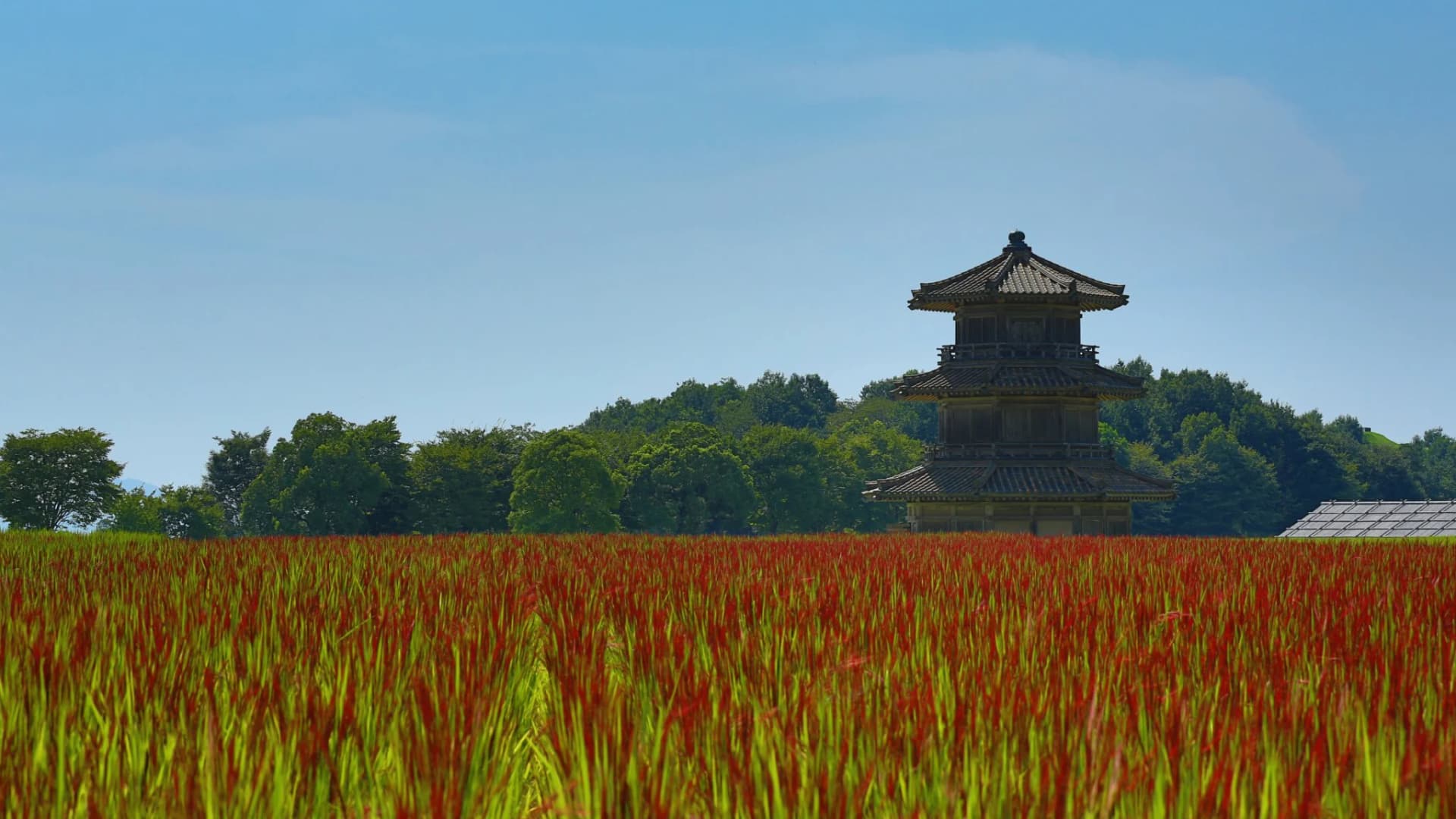
Kikuchi Castle stood on a ridge on the border of what are now Yamaga and Kikuchi. It was a fortress of the seventh century, and the site covers 55 hectares with a perimeter of three and a half kilometres. Nothing of the original stands, but four of its buildings have been rebuilt on their excavated foundations.
In 663 a Japanese fleet was destroyed at Hakusukinoe, on the Korean peninsula, by the combined forces of Tang China and Silla. The court expected an invasion to follow, and set about fortifying western Japan.
Kikuchi Castle was one of the forts raised in that period, on the pattern of the mountain fortresses of the Korean peninsula. It is thought to have supplied and supported Dazaifu, the seat of government for Kyushu, rather than standing as a front line itself. It appears in the Shoku Nihongi and other court histories, and the site was made a National Historic Site in 2004.
Excavation began in 1967 and has turned up the remains of 72 buildings, along with a reservoir and earth ramparts.
Four have been rebuilt. The octagonal tower is the one that stands out: two octagonal buildings were found here, each rebuilt once, a plan not known from any other ancient fortress in Japan, though there is something similar at Iseong Sanseong in Korea. The reconstruction is 15.8 metres high and roofed with 76 tonnes of tile. It is taken to have been a drum tower, for keeping time and for watching the country around.
The others are a granary, raised off the ground against damp and fitted with rat guards, and a barracks 26 metres long with plank roof and earth floor, where the frontier guards would have lived together.
You might also like
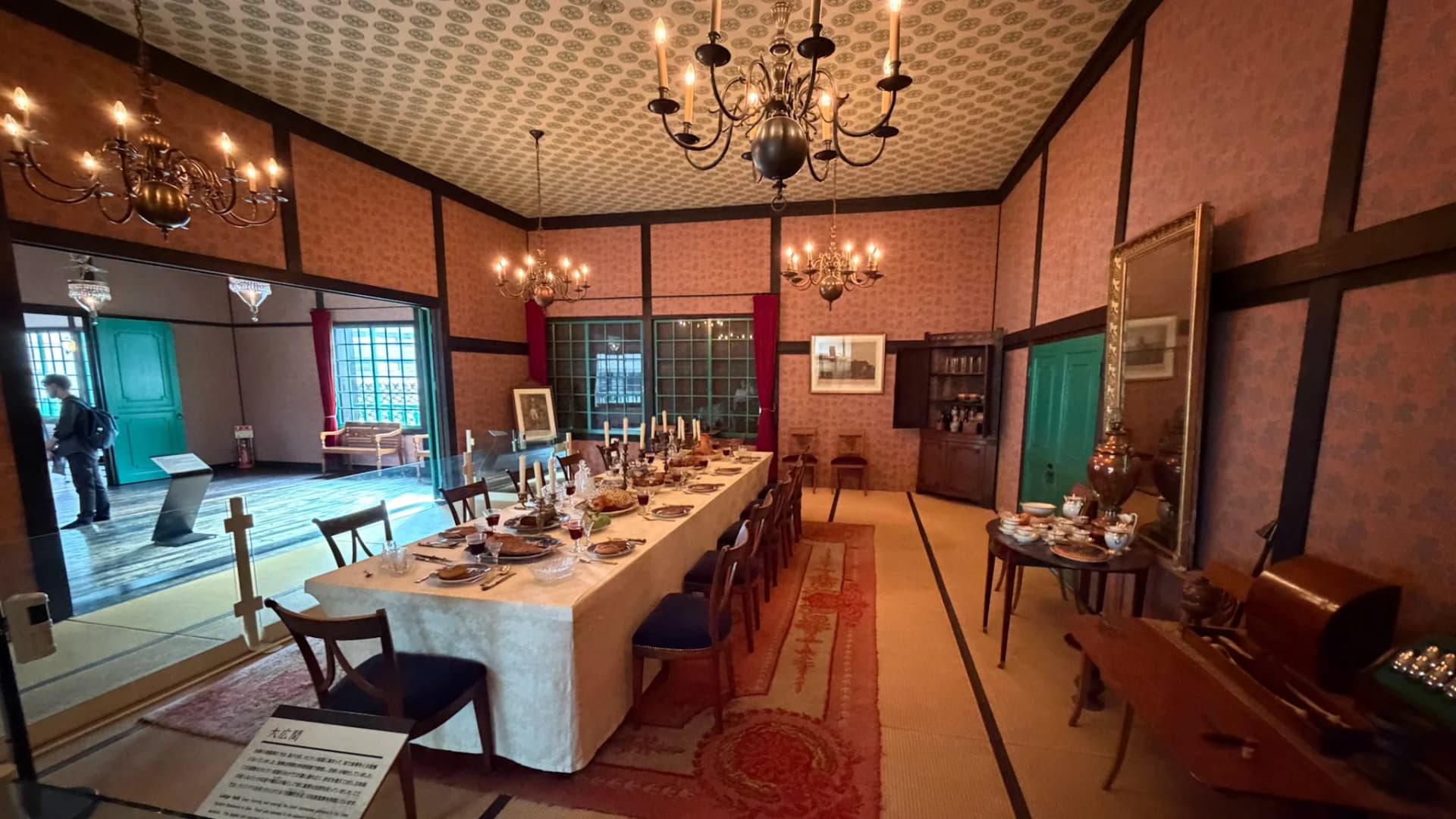
Dejima
The fan-shaped island in Nagasaki that was Japan's only opening to the West for more than two centuries, now rebuilt street by street.
Nagasaki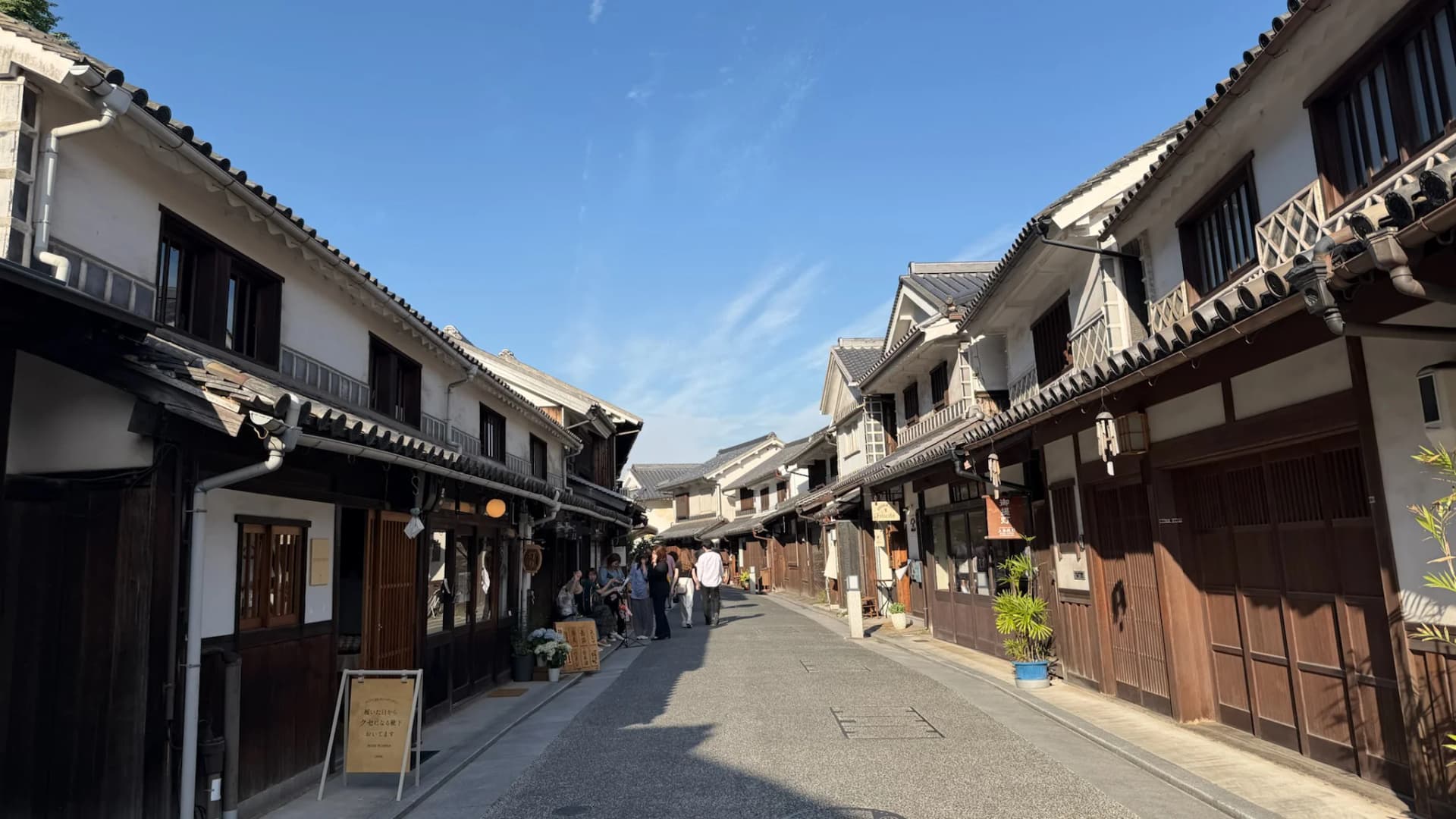
Kurashiki Bikan Historical Quarter
A quarter of white-walled storehouses along a canal in Okayama, built on the rice trade and preserved since the 1960s.
Kurashiki · Okayama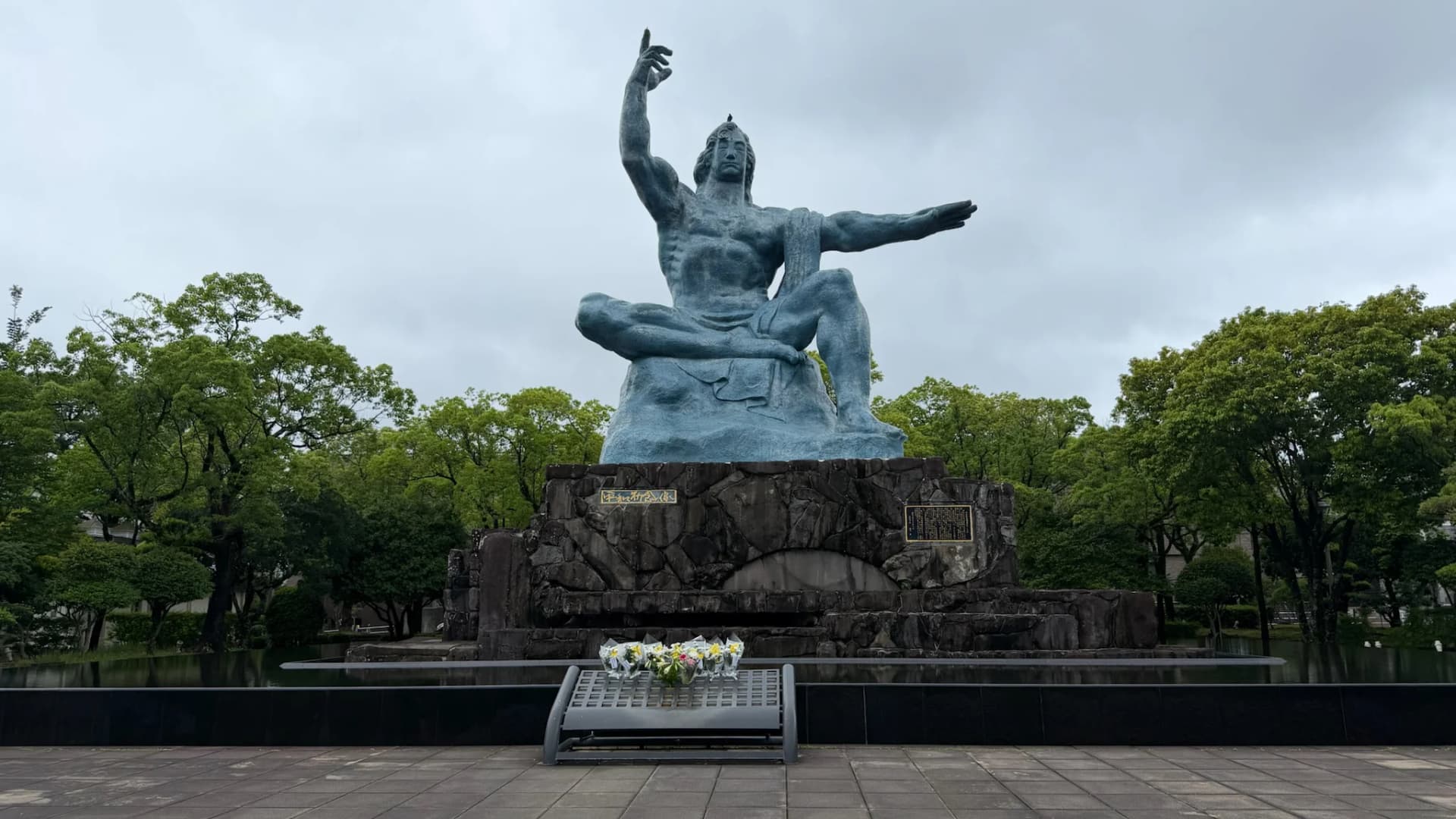
Nagasaki Peace Park
A memorial park near the Nagasaki hypocentre, built around the great bronze Peace Statue and peace monuments donated by nations around the world.
Nagasaki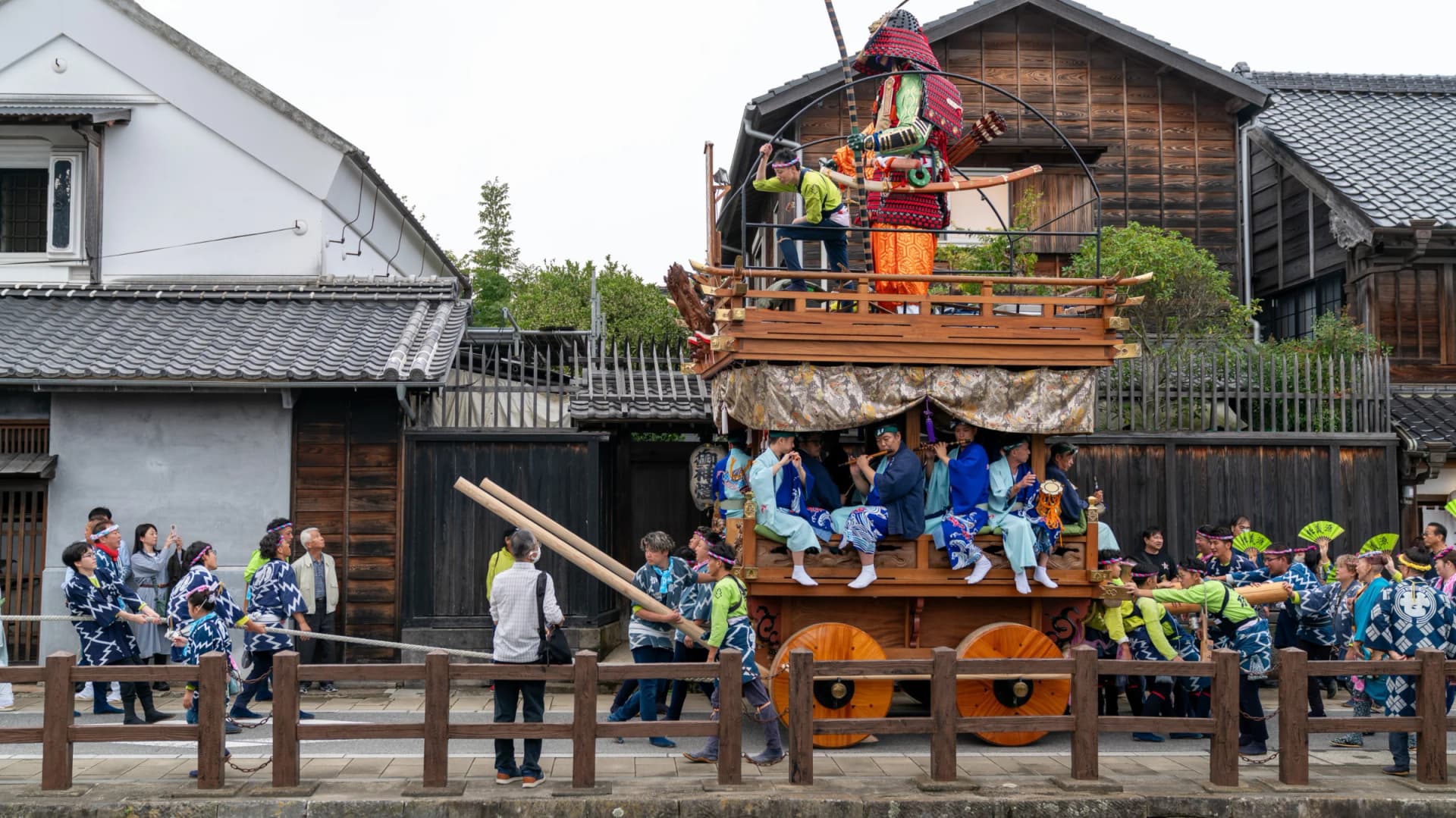
Sawara Grand Festival
Every July in Sawara, ten seven-metre floats crowned with giant dolls are spun through the streets of a preserved Edo-period merchant town, grazing the eaves.
10–12 Jul 2027Katori · Chiba
Yamaga Lantern Hyakka Hyakusai
This handmade winter festival transforms harvested bamboo into intricate lanterns that celebrate Yamaga's heritage as a traditional umbrella-producing town.
6–28 Feb 2027Yamaga · Kumamoto
Japan Game Awards 2026
Japan Game Awards 2026: "Pokemon Pokopia" takes the Grand Award, "Word Game" the Game Designers Award, and the Pokemon series a ministry honour for 30 years.
2026/09/15