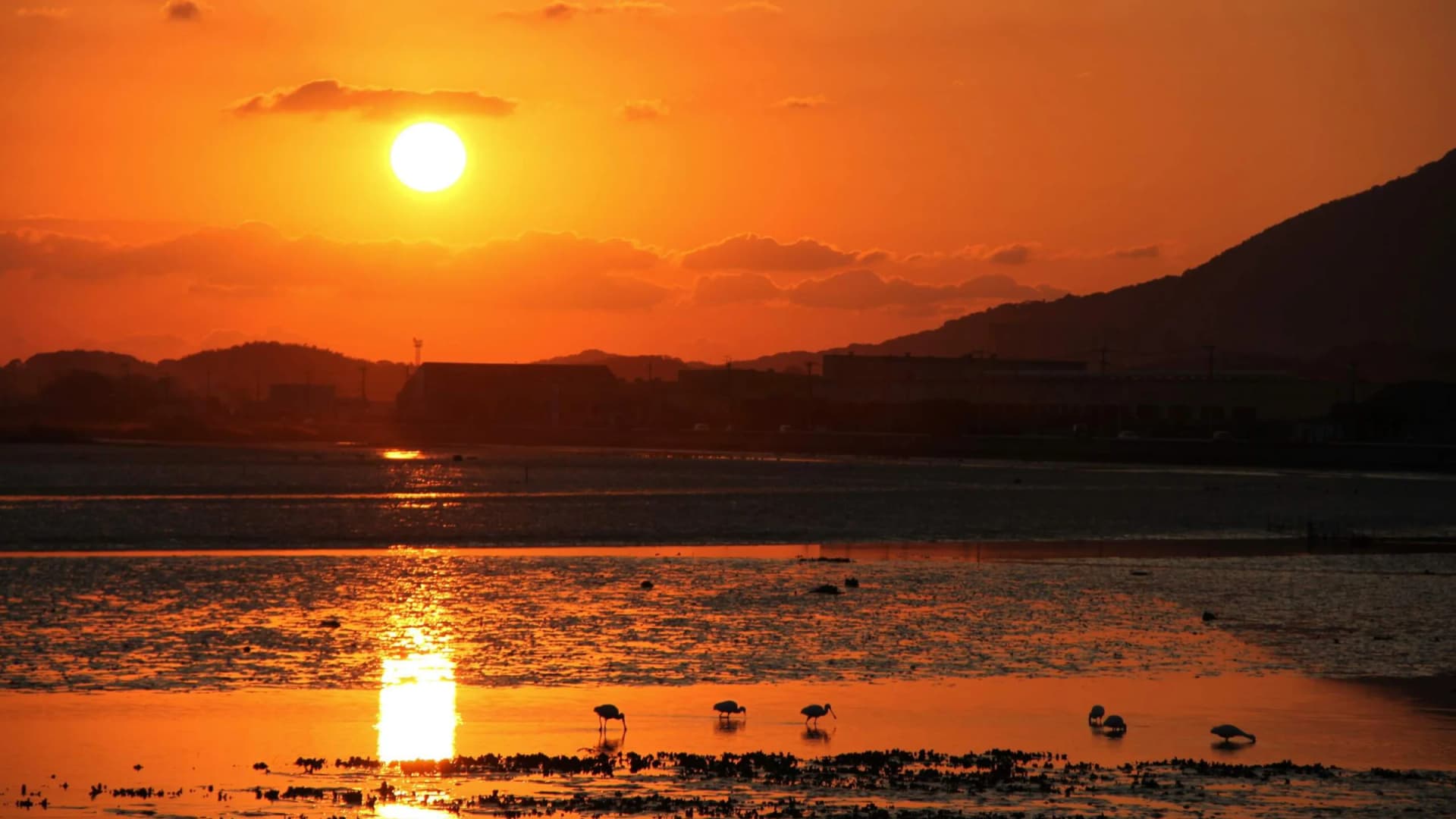
Dejima
出島
The fan-shaped island in Nagasaki that was Japan's only opening to the West for more than two centuries, now rebuilt street by street.
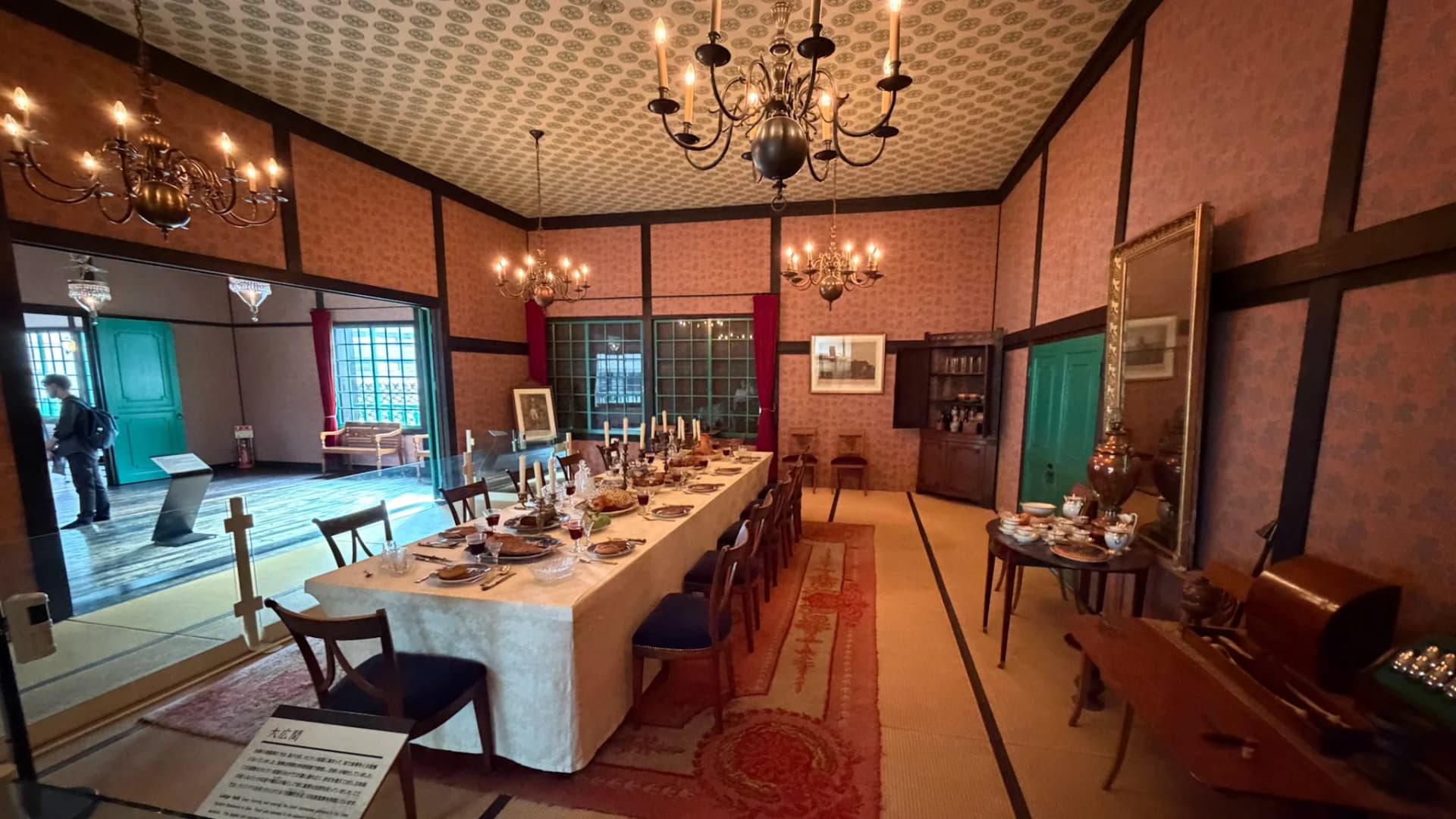
Dejima is a fan-shaped artificial island in the middle of Nagasaki. For more than two hundred years it was the only place in Japan where Europeans were allowed to live and trade, and almost everything the country learned of the West came through it. The island was swallowed by land reclamation a century ago, and has been rebuilt since.
Work began in 1634 and the island was finished in 1636. It was made to hold the Portuguese living in Nagasaki, so that they could trade without moving freely about the city.
That did not last. The Portuguese were banned from coming to Japan in 1639, and the island stood empty until 1641, when the Dutch trading factory was moved down from Hirado. The Dutch stayed for the next two hundred and eighteen years.
Through those years the country was closed, and Dejima was the single opening in it. Goods came in through this gate, and so did books, instruments, medicine and news. The physicians attached to the factory taught Japanese students what Europe knew, and what Japan learned of Western science before the country reopened came largely from this island.
The factory was closed in 1859, when Japan opened its ports, and the island became a consulate and then part of the foreign settlement.
Dejima stopped being an island in 1904, when harbour works and reclamation joined it to the shore and buried its outline in the growing city. The site was made a National Historic Site in 1922.
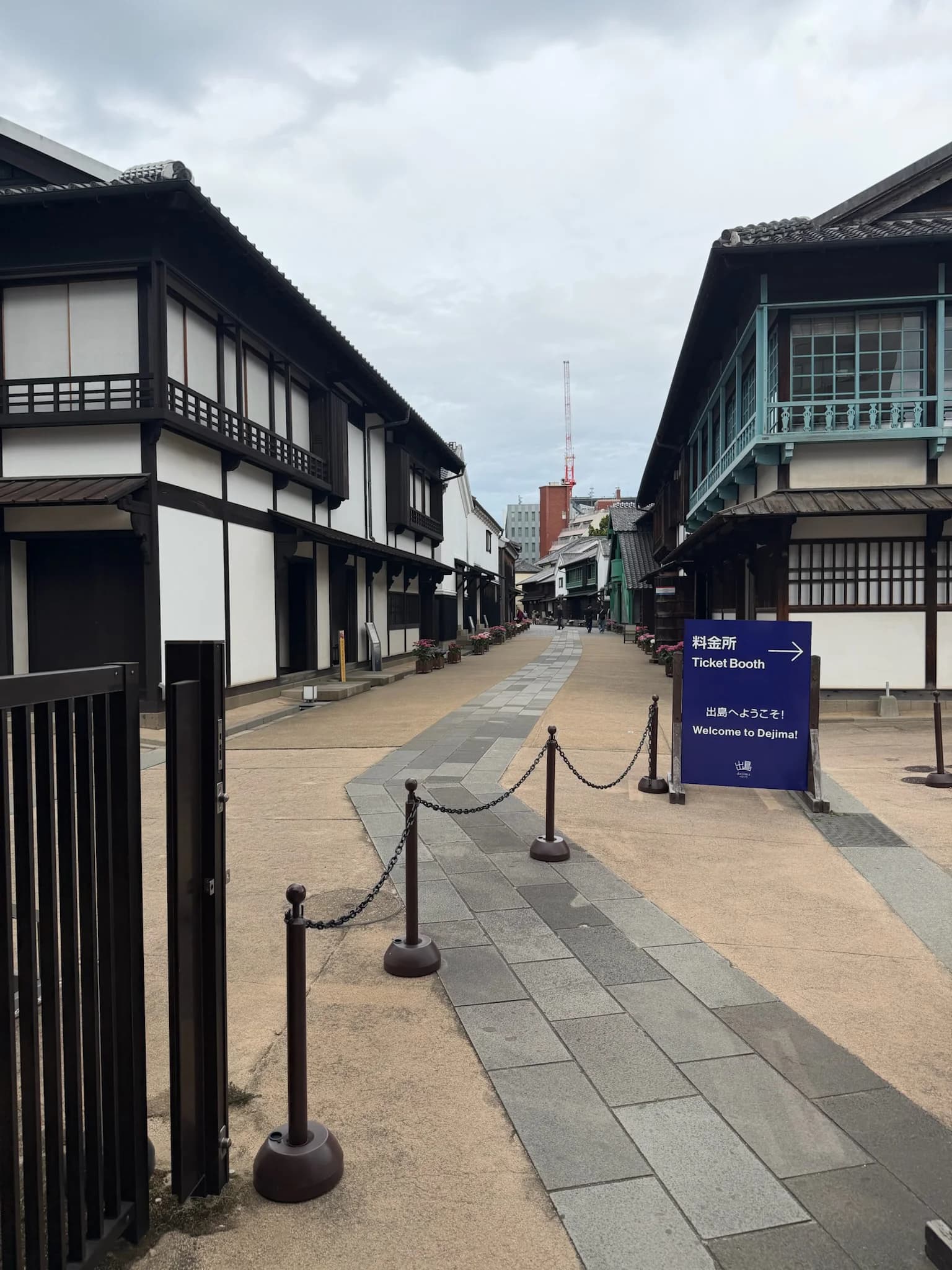
Reconstruction began in 1996 and has gone on in stages ever since. The warehouses, the chief factor's house and the deputy's house have been rebuilt on their excavated foundations, in the form they had around 1820, and the later buildings of the treaty-port years stand alongside them.
Places nearby

Nagasaki Shinchi Chinatown
This historic Chinatown in Nagasaki, among Japan's oldest, was established by Chinese traders in the late 16th century with traditional architecture and Chinese New Year festivities.
Nagasaki · Nagasaki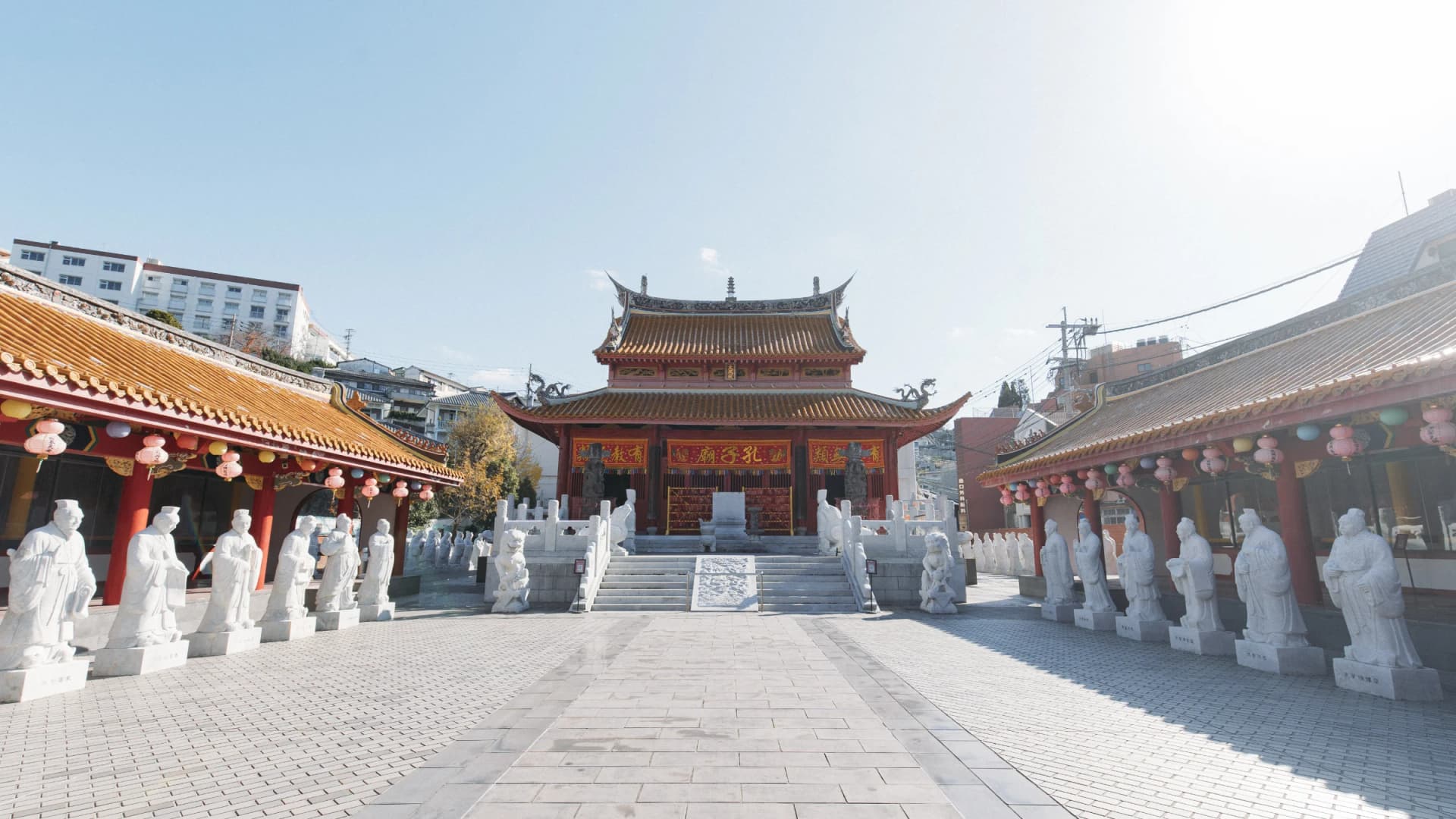
Nagasaki Confucius Shrine
The only Confucius temple in Japan built in full Chinese style, put up in 1893 by the Qing government and the Chinese community of Nagasaki.
Nagasaki · Nagasaki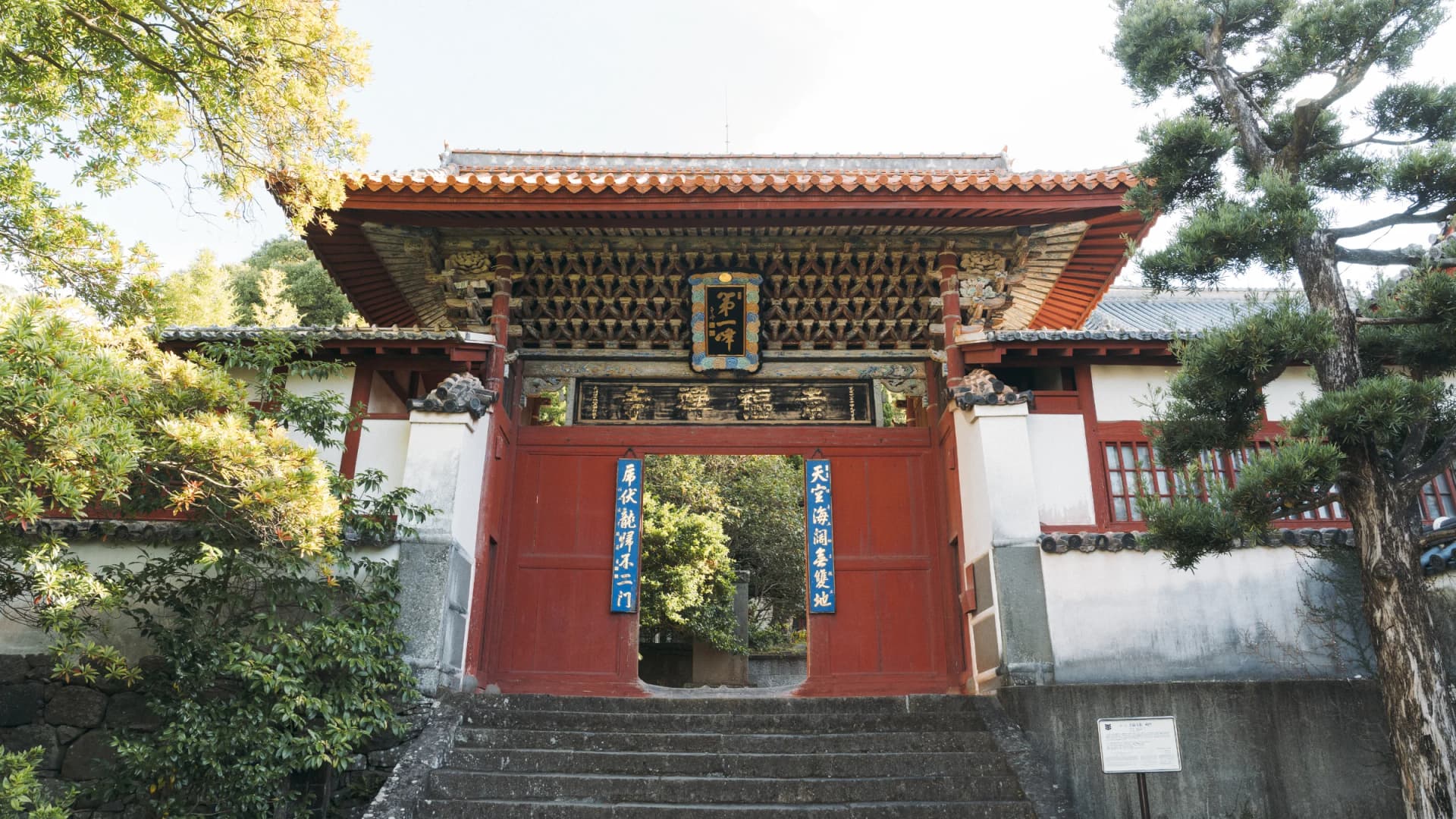
Sofukuji Temple
A Chinese temple in Nagasaki founded in 1629 by merchants from Fujian, with two buildings that are National Treasures.
Nagasaki · NagasakiYou might also like
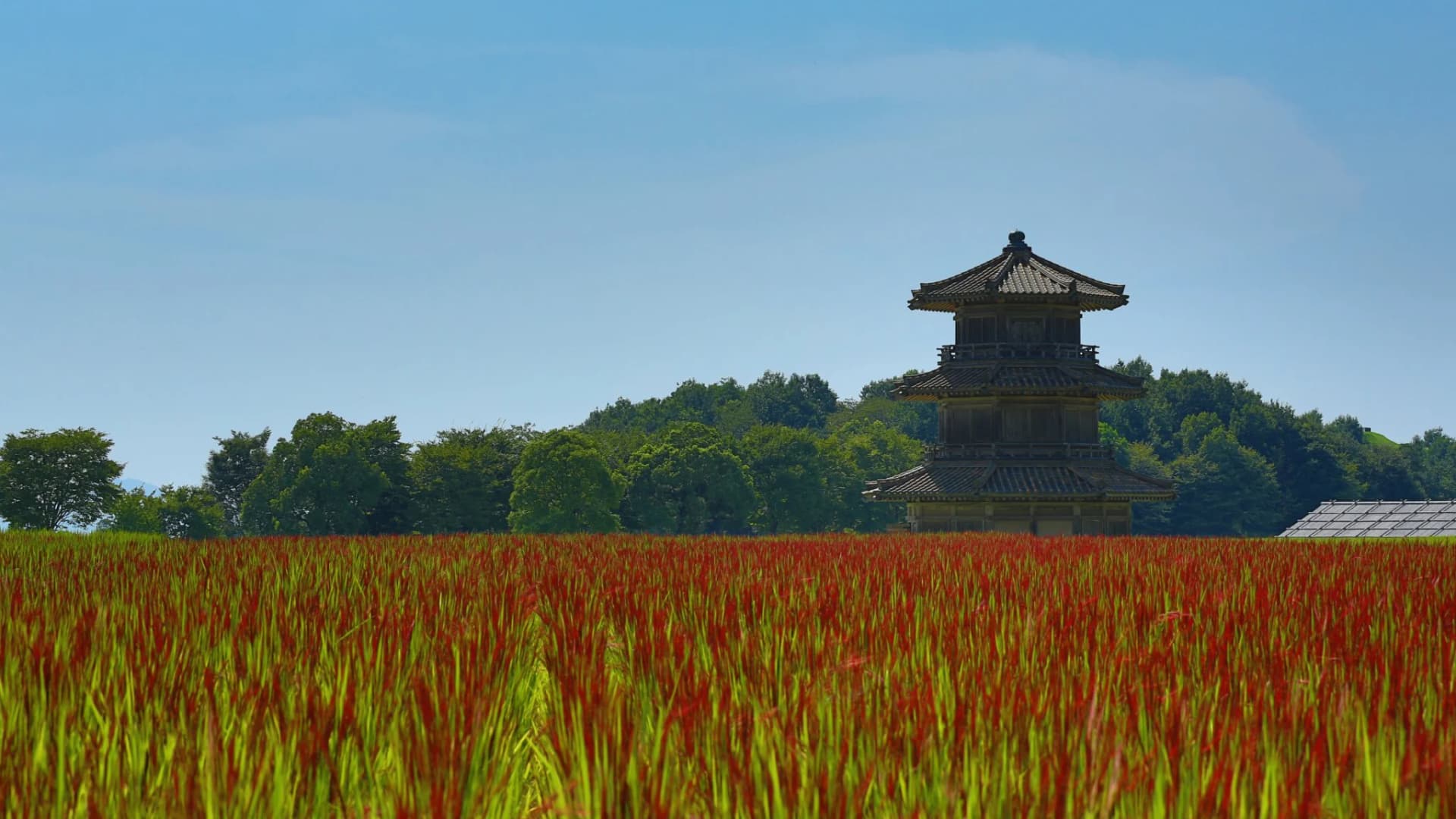
Kikuchi Castle
The site of a seventh-century mountain fortress in Kumamoto, built against invasion from the mainland, with four buildings reconstructed.
Yamaga · Kumamoto
Nara Prison Museum
A Meiji-era red-brick prison (1908) and one of the Five Great Prisons with its original layout intact, now a museum operated by Hoshino Resorts.
Nara
Morioka History and Culture Museum
Museum opened 2011 within Morioka Castle Ruins Park, treating the historic fort grounds as its primary exhibit while promoting the surrounding castle-town area.
Morioka · Iwate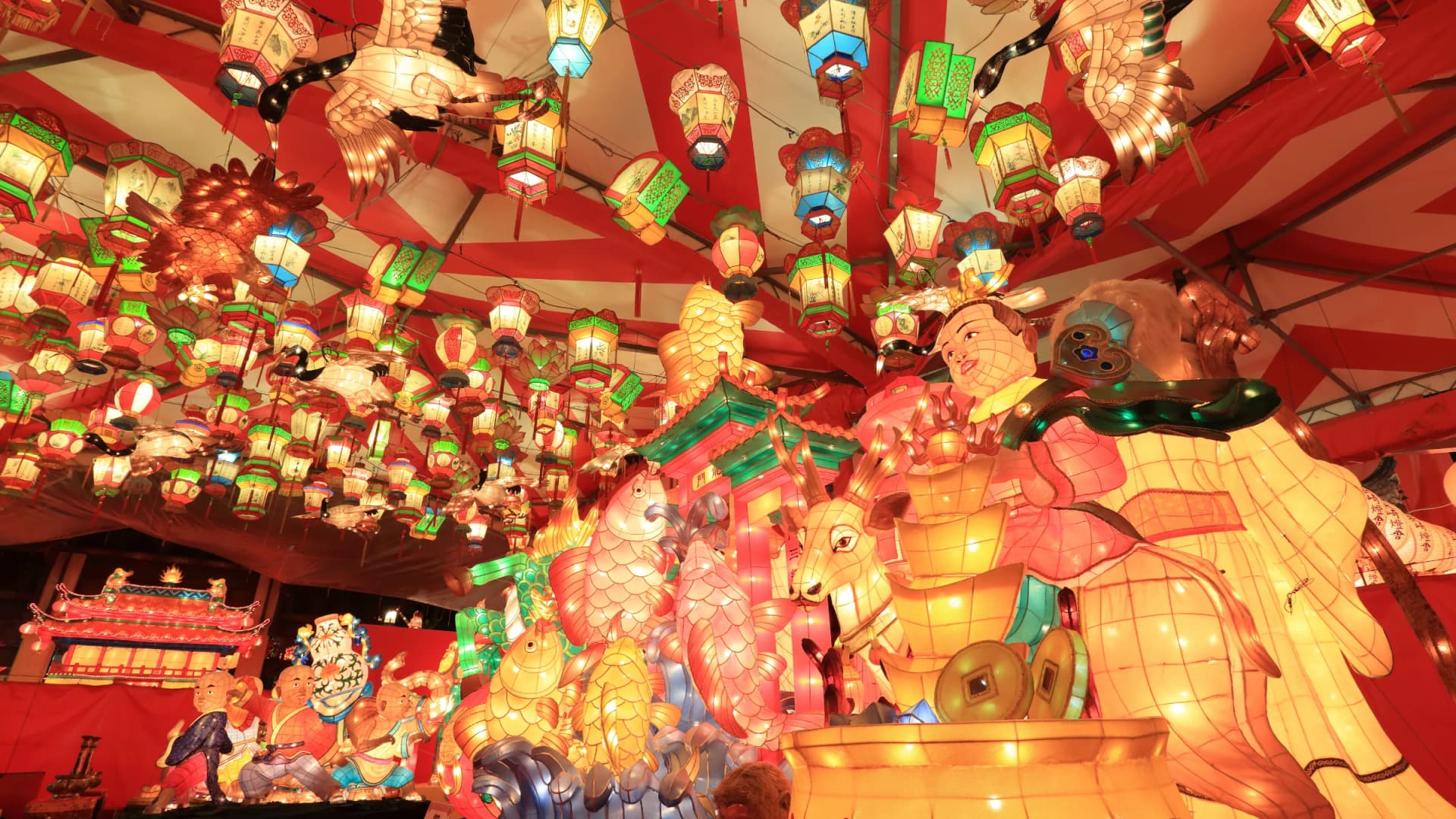
Nagasaki Lantern Festival
The festival illuminates Nagasaki's streets with around 15,000 Chinese lanterns, some reaching 10 metres, celebrating Lunar New Year traditions.
6–23 Feb 2027Nagasaki
Sengoku Chronicle: The Battle of Kawanakajima
A re-enactment on a river bed in Fuefuki, Yamanashi, where about seven hundred people in armour refight Takeda Shingen against Uesugi Kenshin.
8 Nov 2026Fuefuki · Yamanashi
Shingen-ko Festival
A historical reenactment festival in Kofu honors a 16th-century feudal lord with a large-scale procession featuring over 1,000 participants in period armor.
3–5 Apr 2027Kofu · Yamanashi