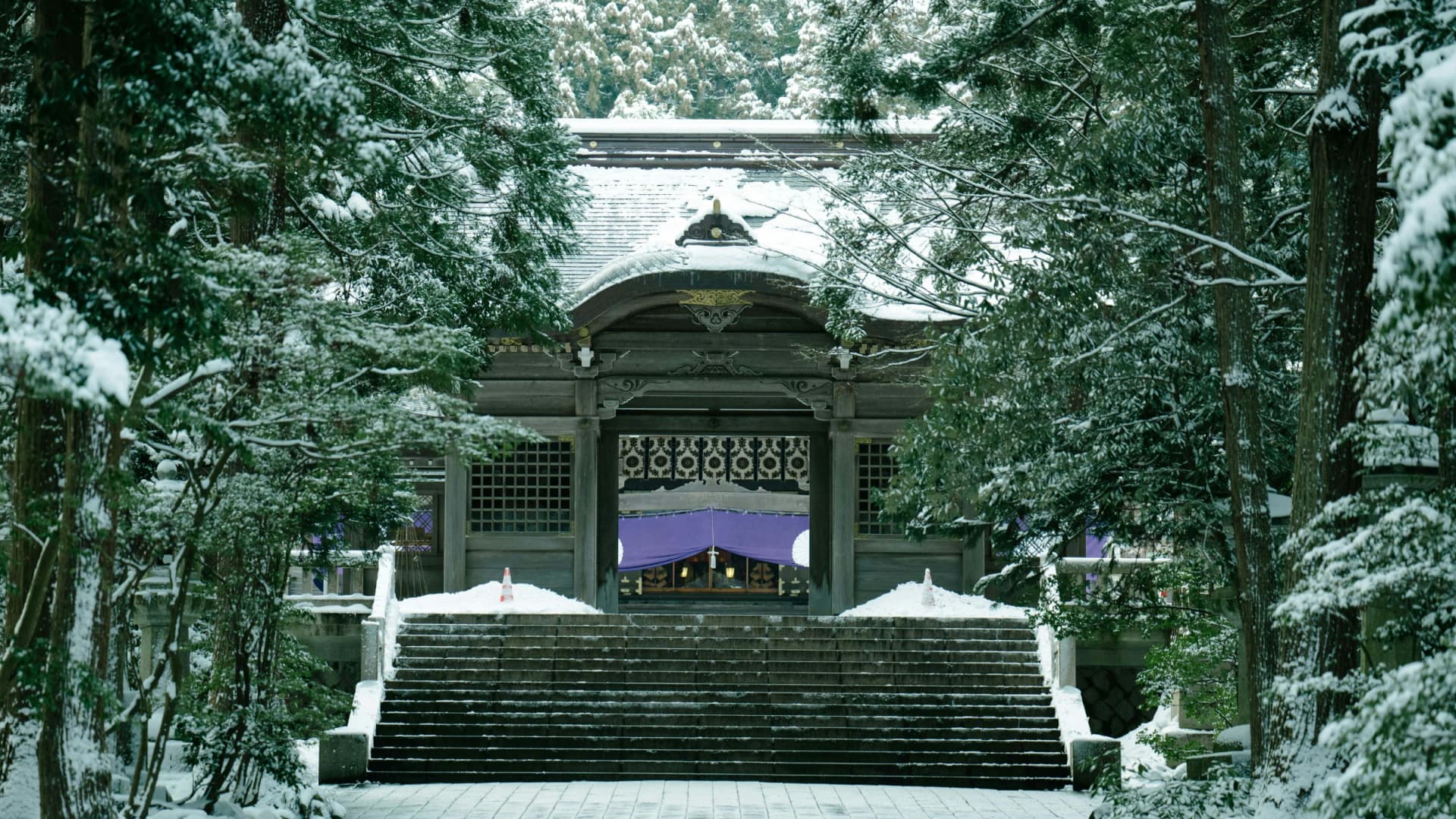
Mt. Haguro
羽黒山
The lowest of the three mountains of Dewa in Yamagata, climbed by a stone stair through old cedars, with a five-storey pagoda that is a National Treasure.
〒 997-0292How to get there
高屋Rikuu West Line151 min walk from the station
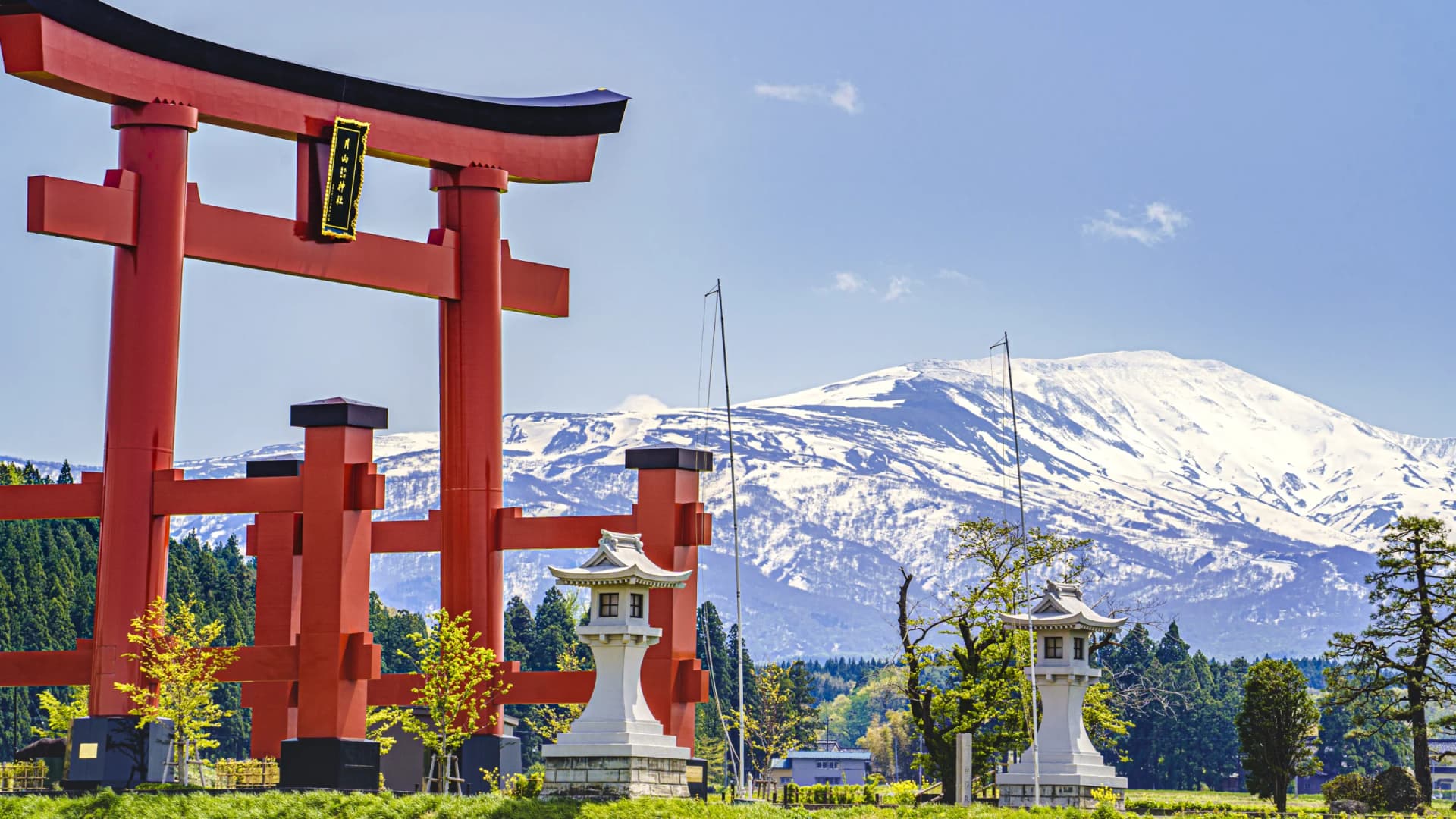
Mount Haguro stands at Tsuruoka in Yamagata Prefecture. With Gassan and Yudonosan it makes up the Dewa Sanzan, the three mountains of Dewa, which have been a centre of mountain religion for centuries and remain one.
Haguro is the lowest of the three and the one that can be reached all year. Its summit carries a hall in which the deities of all three mountains are enshrined together, so that those who cannot climb the others may still worship them.
Going round the three mountains in turn has long been called the journey of rebirth, a passage through death and return.
The discipline practised on them is Shugendo, which mixes Buddhist practice with Shinto worship and with older beliefs about mountains. When the Meiji government ordered the two religions separated, the three mountains were reorganised as Shinto shrines, each with its own deity: Ukanomitama at Haguro, Tsukuyomi at Gassan, and at Yudonosan three together, Oyamatsumi, Okuninushi and Sukunahikona. The Haguro school of Shugendo went on regardless, and has been carried on to this day.
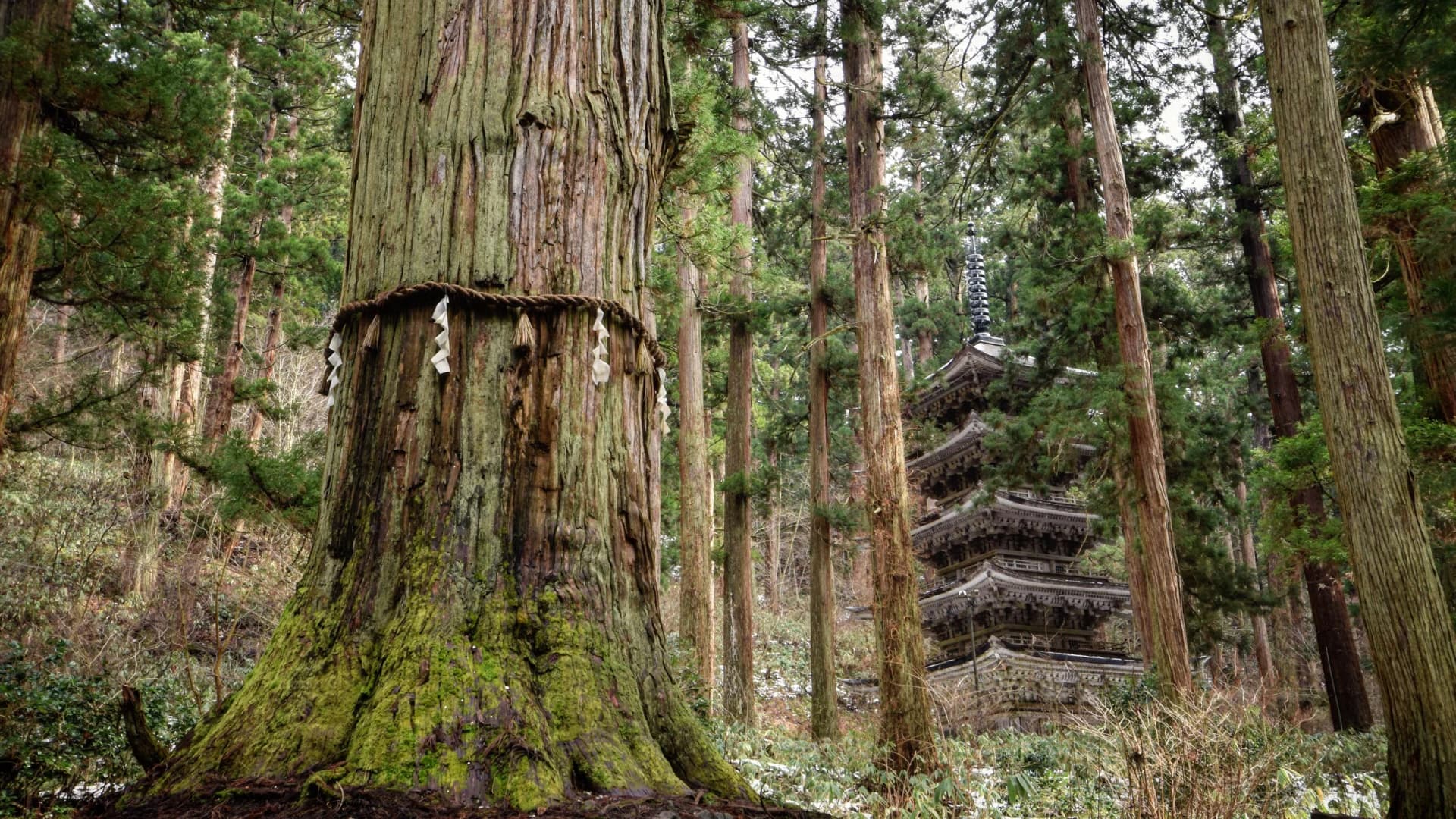
The path begins at the Zuishinmon gate, which marks the edge of the sacred ground; from here it runs unbroken over Gassan as far as Yudonosan. The gate came from the lord of a domain in Akita in the Genroku era and was originally a Buddhist gate with guardian kings; at the Meiji separation the figures were replaced and the name changed.
Below the gate the path drops to a river where pilgrims once stood in the water to purify themselves before climbing. A waterfall faces the bridge there. It is not natural: in 1654 the head of the mountain had water brought some eight kilometres from the foot of Gassan and dropped over the cliff.
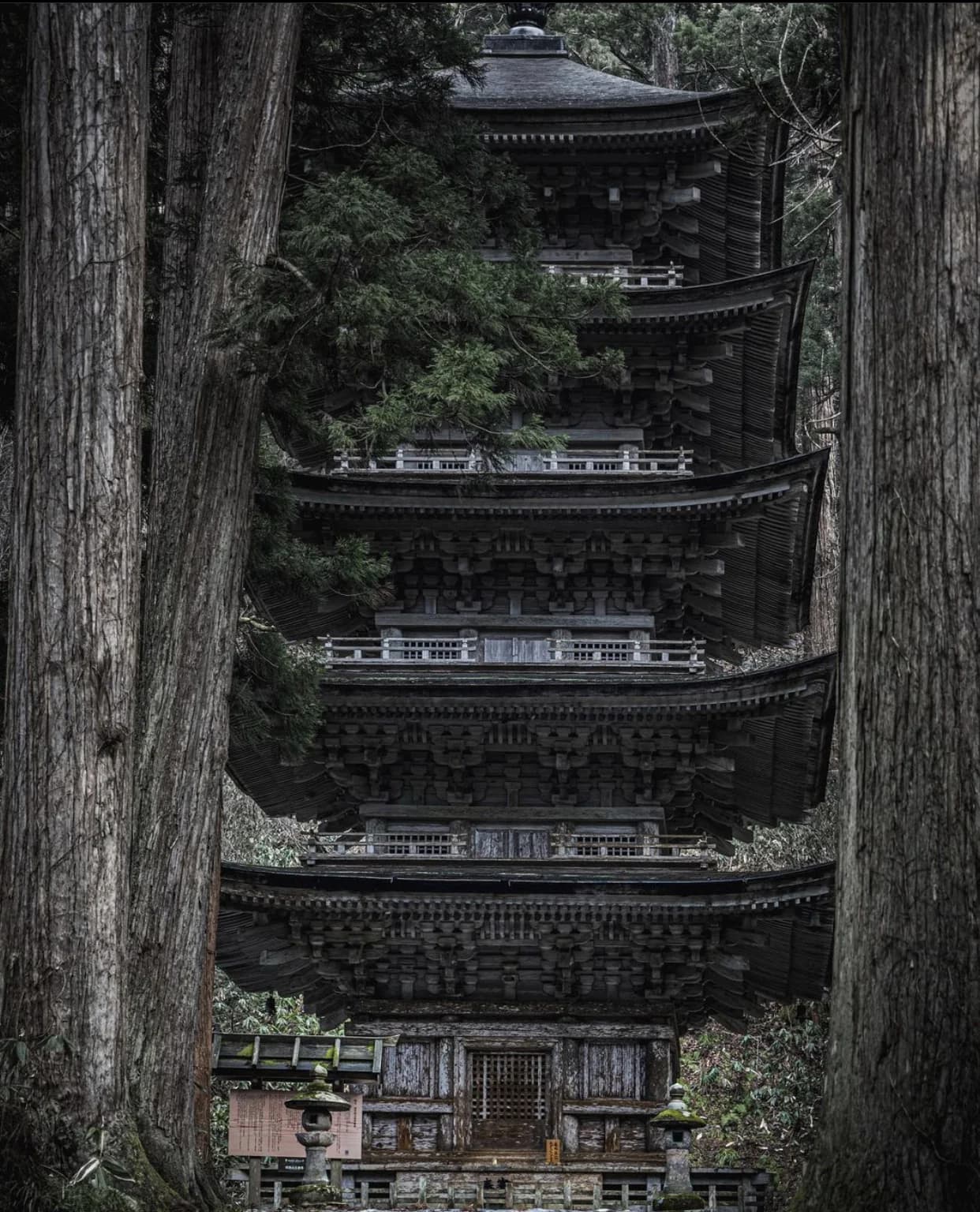
Then the climb begins, a stone stair through cedars. On the left at the foot of the first slope stands the five-storey pagoda, built of plain unpainted wood with shingled roofs. It is a National Treasure. The tower now standing is held to have been rebuilt about six hundred years ago by a lord of Shonai who was also the head of the mountain.
The village at the foot, Toge, was a settlement of mountain ascetics; in the Edo period 336 lodges stood along its street. Some still take pilgrims, behind gateposts hung with rope.
Thick ropes are also hung under the eaves. They are the ropes used in the winter rite in which a straw effigy of a demon is dragged out and burned, and a house that hangs one is said to keep demons away.
Getting There

You might also like
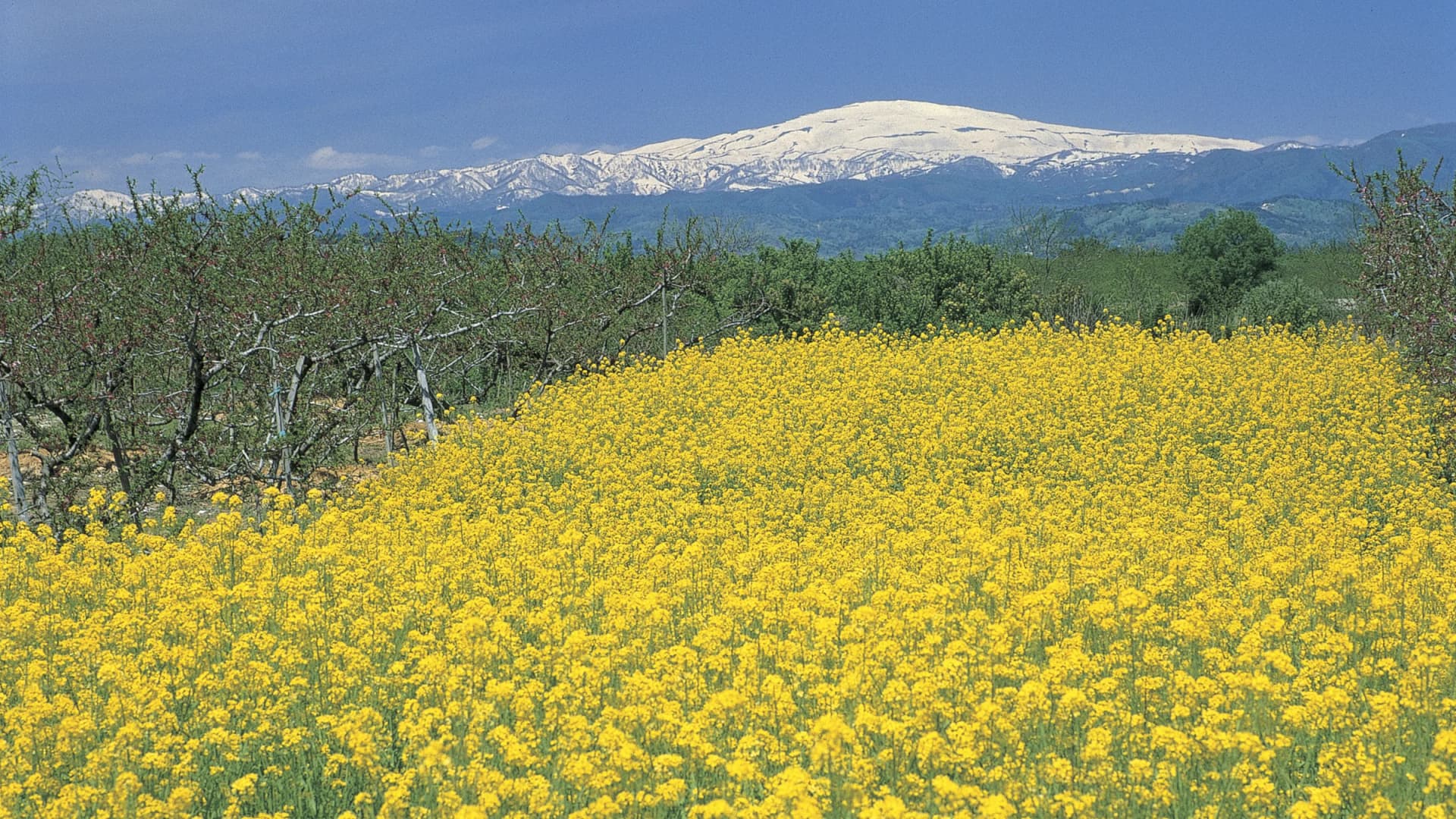
Mt. Gassan
The highest of the three mountains of Dewa in Yamagata, sacred to the moon god, with a shrine at the summit that opens only in high summer.
Tsuruoka · Yamagata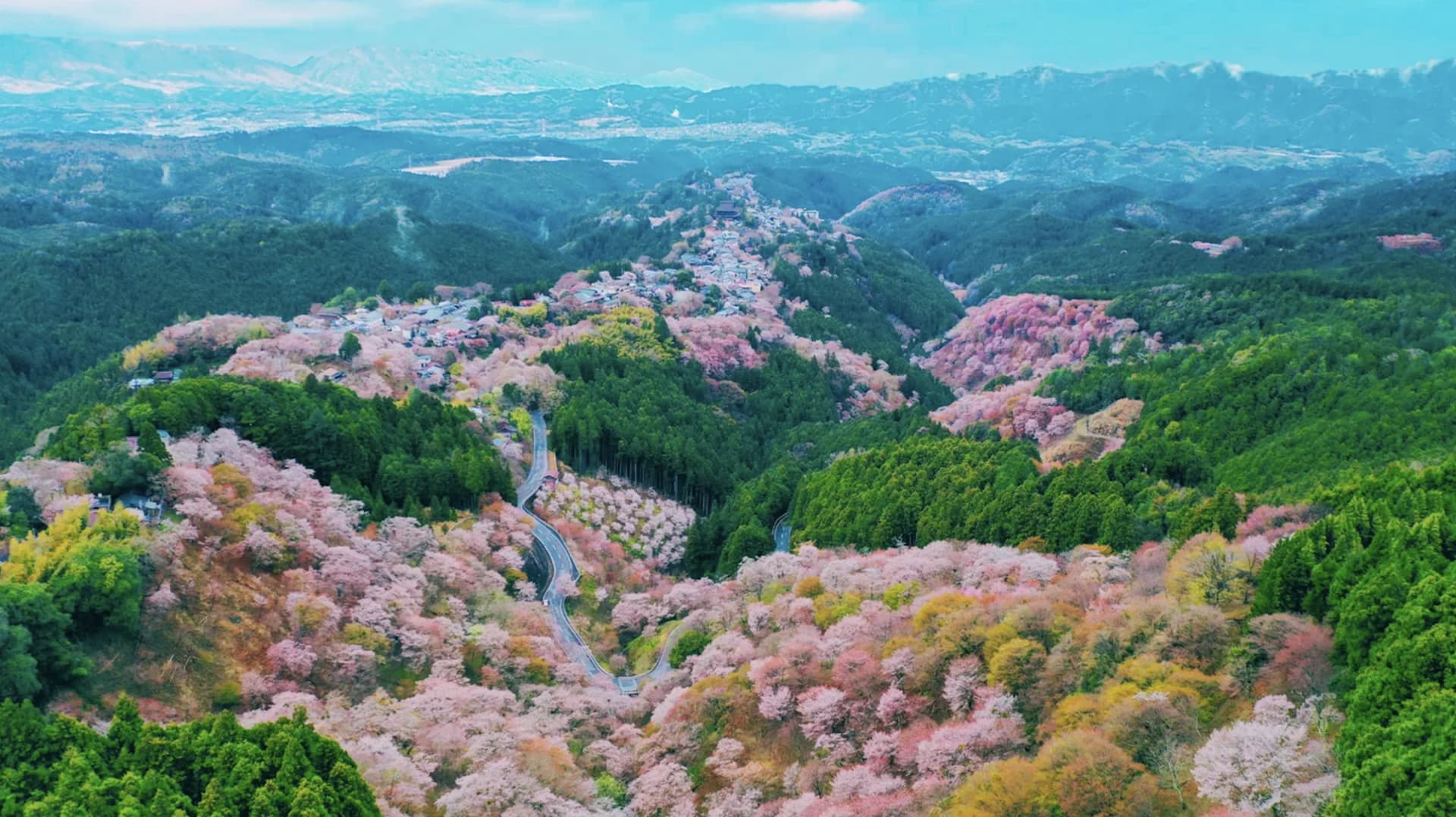
Cherry Blossoms at Mount Yoshino
About thirty thousand cherry trees on a mountainside in Nara, planted over centuries as offerings, which come into flower from the foot upward over a month.
Yoshino · Nara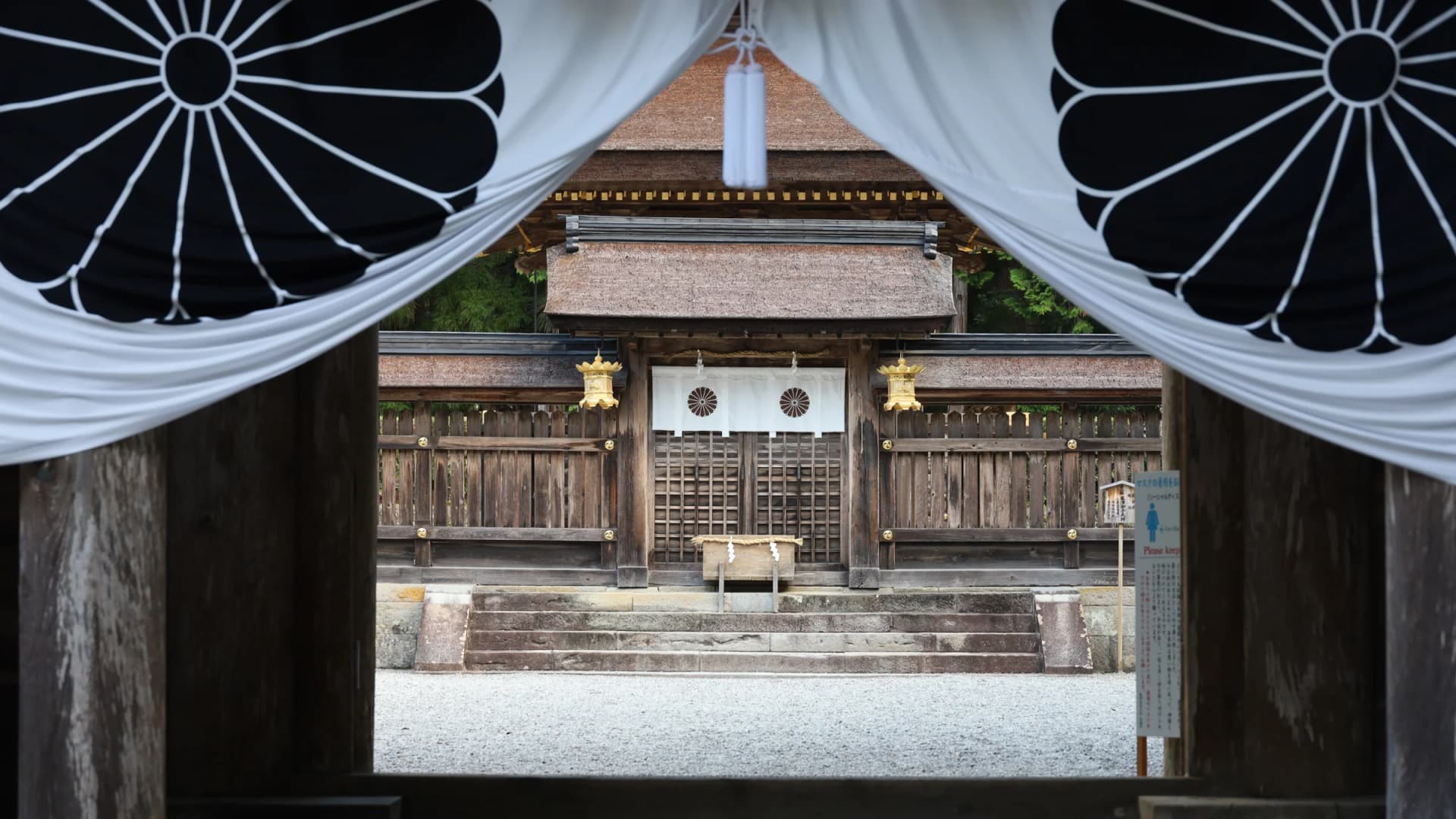
Kumano Hongu Taisha
Kumano Hongu Taisha, heart of the Kumano Sanzan, traces its origins to before Emperor Jinmu – where legend says three moons descended to found the shrine.
Tanabe · Wakayama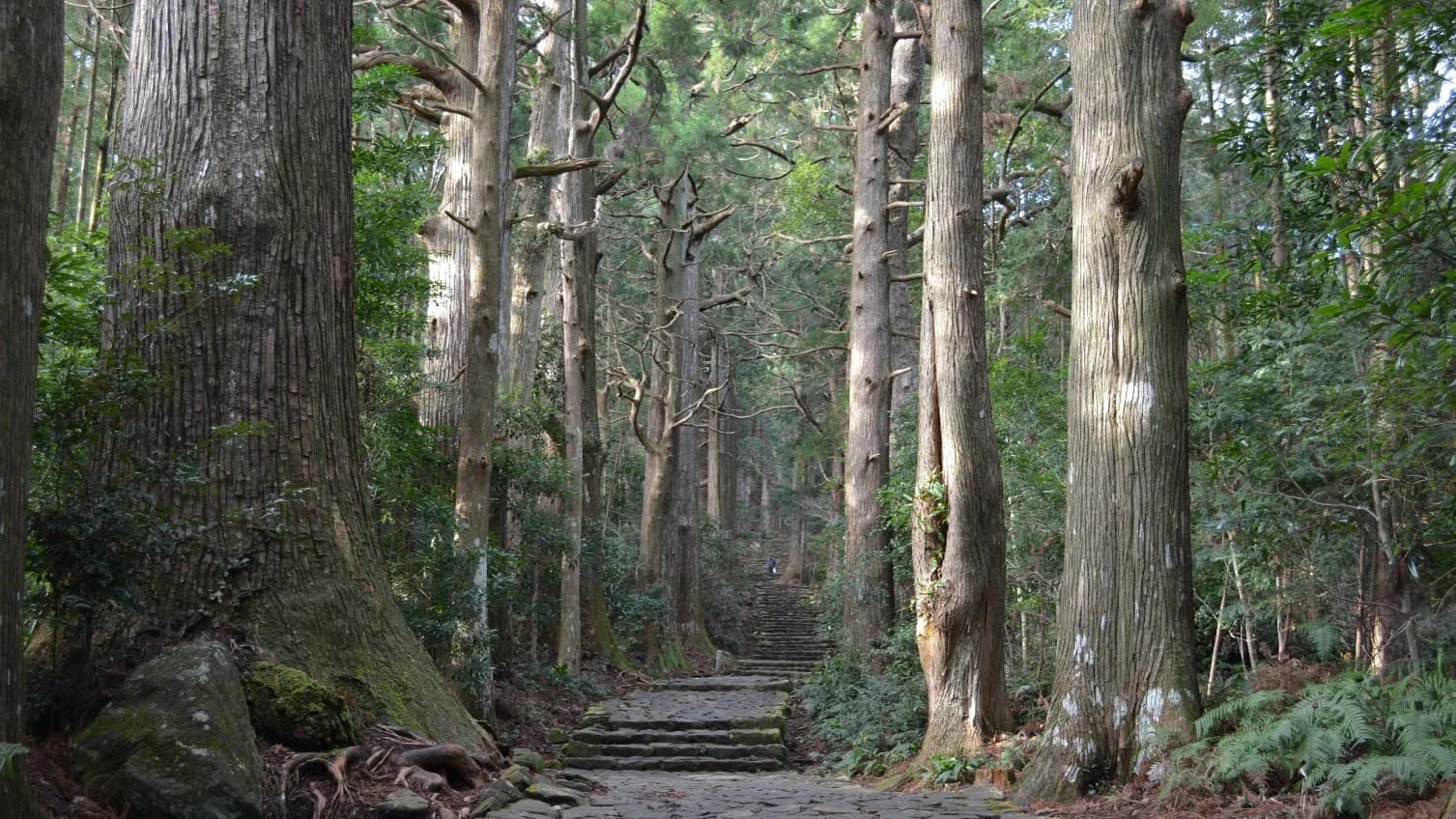
Kumano Kodo
For over a thousand years, the Kumano Kodo has led pilgrims through the mountains of Kii to the sacred Kumano Sanzan shrines – now a UNESCO World Heritage Site.
Wakayama · Kansai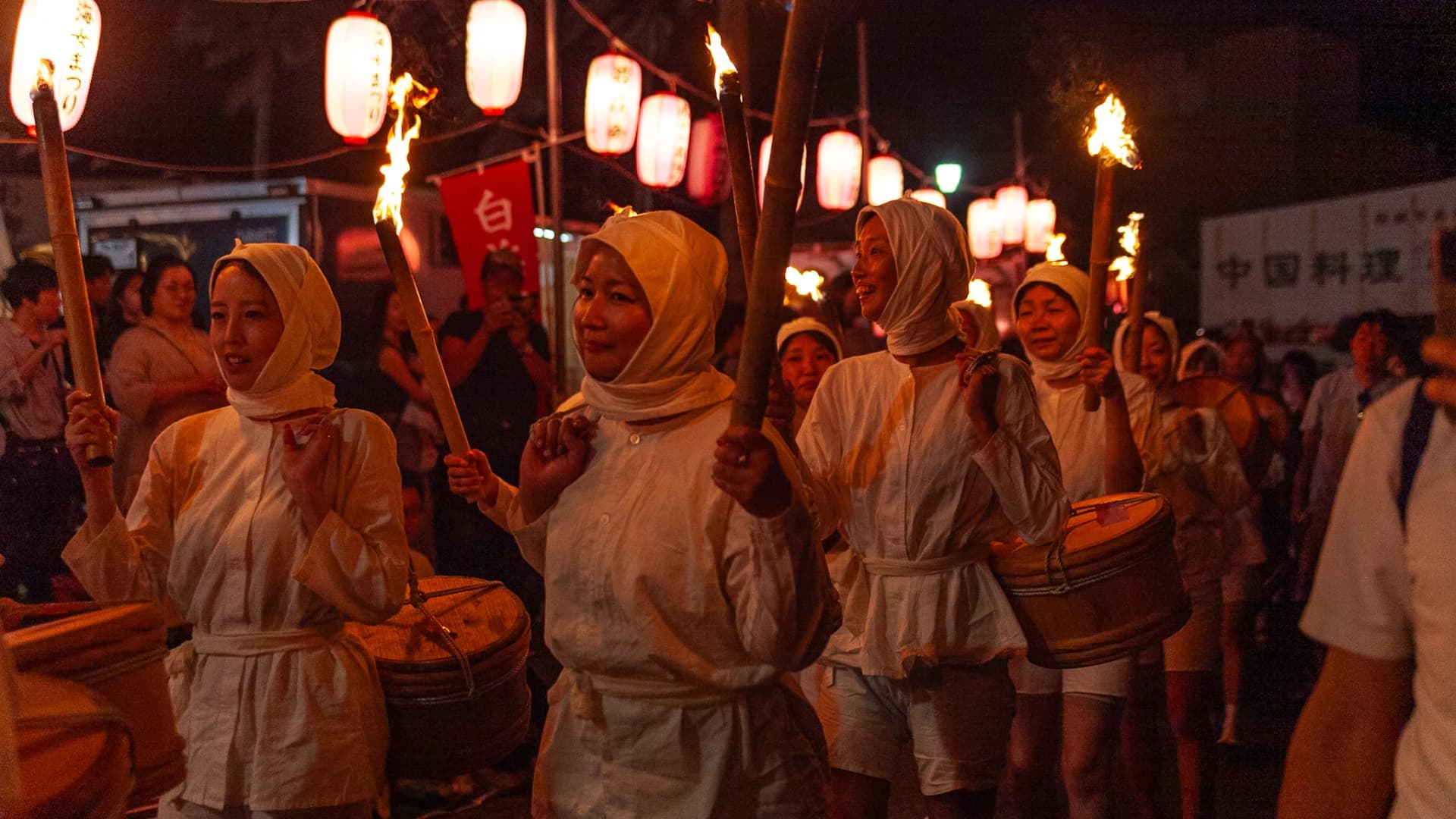
Shirahama Ama Festival
Every July at the tip of the Boso Peninsula, close to a hundred diving women in white carry burning torches into the dark sea beneath the Nojimazaki lighthouse.
18–19 Jul 2027 · Dates not yet confirmedMinamiboso · Chiba
Aodake Chochin Festival (Green Bamboo Lantern Festival)
A summer festival transforms a town with illuminated green bamboo lanterns, folk performances, and fireworks over Takahata.
16 Aug 2027 · Dates not yet confirmedTakahata · Yamagata