Sakurajima
桜島
An active volcano across the water from Kagoshima, 1,117 metres high, joined to the mainland by the lava of the 1914 eruption.
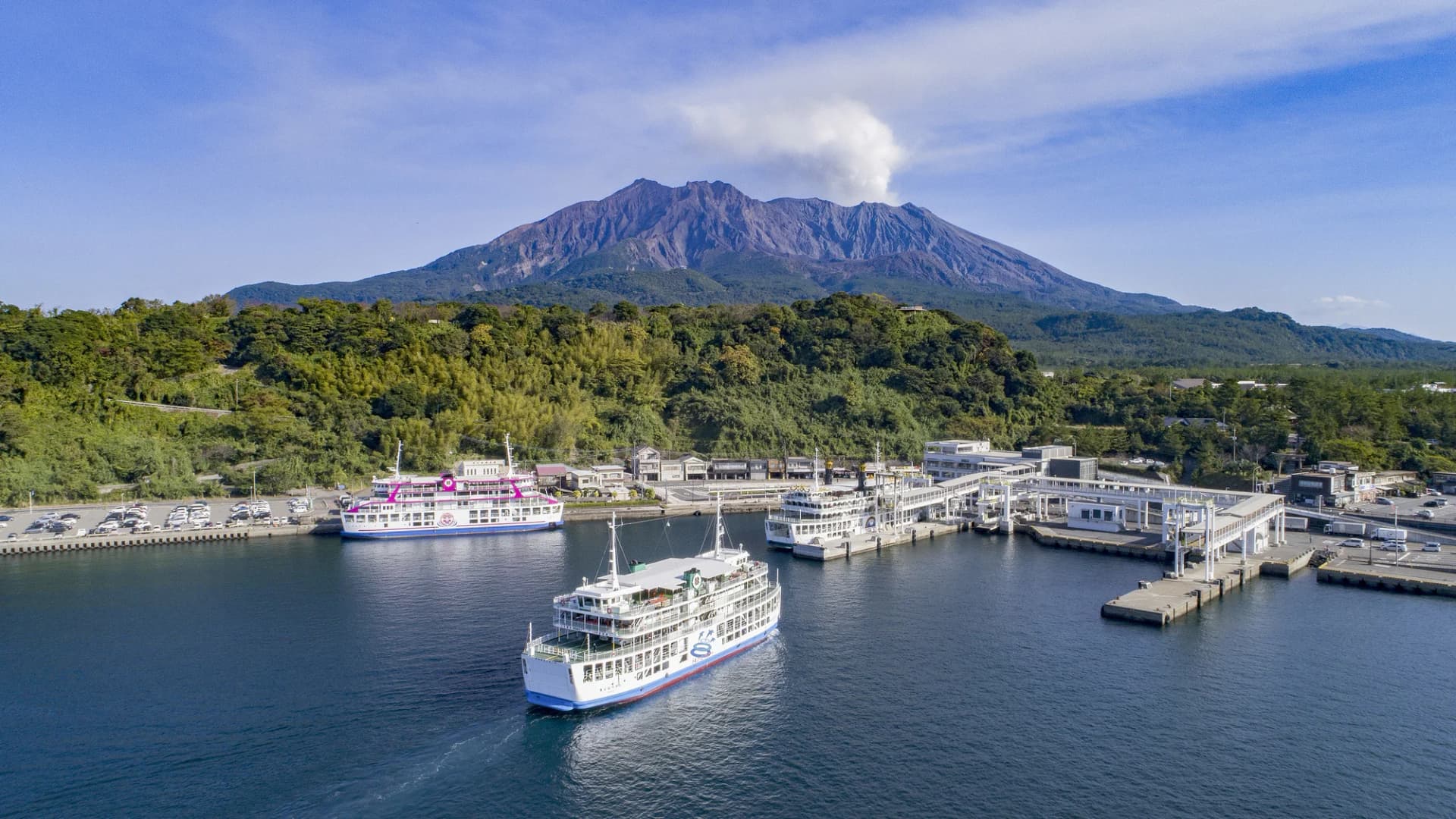
Sakurajima is an active volcano in Kinko Bay, four kilometres across the water from the centre of Kagoshima. It is 1,117 metres high, covers about 80 square kilometres, and erupts on most days of the year.
The bay itself was made by an eruption. About 29,000 years ago a very large one emptied the ground beneath the northern part of the bay, the surface fell in, and the hollow filled with seawater. Sakurajima began about three thousand years later at the southern edge of that hollow.
It is two volcanoes grown together, Kitadake in the north and Minamidake in the south. Kitadake stopped about 5,000 years ago. Minamidake has been erupting on and off ever since it began, and holds the two craters that are active now.
There have been seventeen large eruptions. The one in 1914 poured out enough lava to fill the strait on the eastern side, and what had been an island became part of the Osumi Peninsula. Smaller eruptions continue: in 2011 there were 996 explosions, more than in any year since records began.
About 3,500 people live on Sakurajima, and people have lived here since the Jomon period. The volcanic soil grows the Sakurajima daikon, a radish that can weigh as much as a small child, and the Sakurajima komikan, said to be the smallest mandarin in the world. Hot springs rise across the island. Ash falls on the houses and the fields as a matter of course.
Climbing has been forbidden since an accident in 1955. A stone marker at the old trailhead is all that is left of the route to the top, and the highest point open to visitors is the Yunohira lookout, at 373 metres.
What can be seen instead is the lava. Fields of it from the eruptions of 1471, 1779 and 1914 lie around the coast, with paths and lookouts across them. A road of about 36 kilometres runs round the island, and a bus service links the main viewpoints. A ferry crosses from Kagoshima in fifteen minutes.
You might also like

Ohara Festival
Mass dancing in vibrant costumes and powerful taiko drumming celebrate Kagoshima's regional identity in this southern Kyushu autumn festival.
2–3 Nov 2026Kagoshima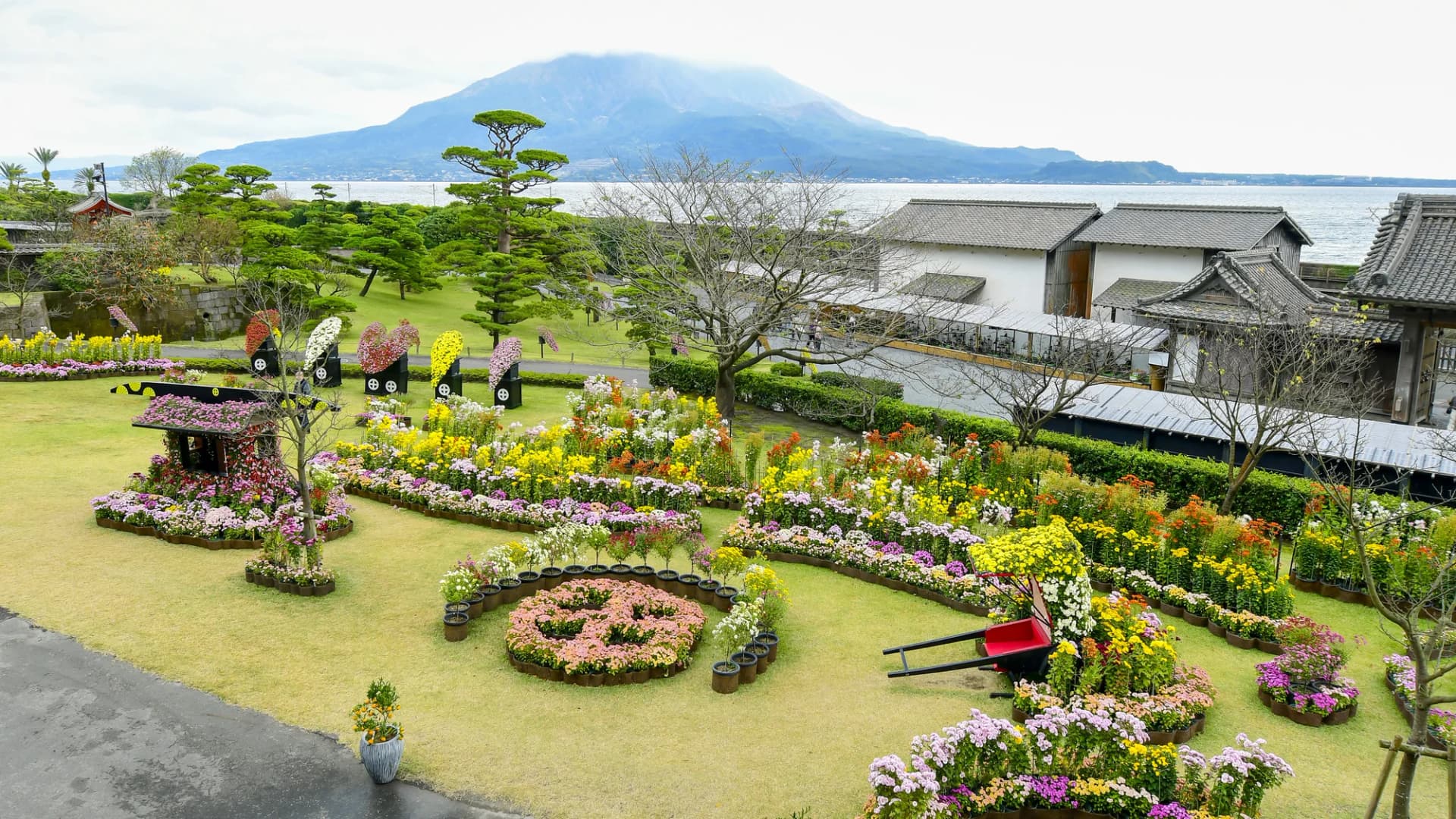
Sengan-en
The garden and villa of the Shimazu lords at Kagoshima, laid out in 1658 with Sakurajima and the bay borrowed as its scenery.
Kagoshima
Kagoshima Prefecture History and Art Center Reimeikan
A museum in Kagoshima that opened in 1983 and underwent a name change in 2020 to reflect its expanded focus on art and crafts, located on castle grounds.
Kagoshima
Io World Kagoshima City Aquarium
An aquarium showcasing marine life from Kagoshima's waters, including sharks, rays, dolphins, and sea lions, with interactive touch pools.
Kagoshima
Japan Game Awards 2026
Japan Game Awards 2026: "Pokemon Pokopia" takes the Grand Award, "Word Game" the Game Designers Award, and the Pokemon series a ministry honour for 30 years.
2026/09/15
Fukiage-hama Sand Festival
The Fukiage-hama Sand Festival transforms a Kagoshima beach into an art gallery of large-scale sculptures created by artists and volunteers, with cultural performances.
3–5 May 2027Minamisatsuma · Kagoshima