

Hofu Tenmangu Gojinko-sai Festival (Naked Monk Festival)
防府天満宮御神幸祭(裸坊祭)
This festival honors Tenjin, a tenth-century poet and administrator deified for his integrity, through a ritual dating back over a thousand years.

The Hofu Tenmangu Gojinko-sai Festival venerates Tenjin, the deified form of Sugawara no Michizane, a prominent historical figure, poet, and administrator from the 10th century. Michizane, who faced false accusations, was banished from the Kyoto court to Kyushu in 901, where he later passed away. His death was accompanied by numerous miracles in both Hofu and Kyoto, leading to the belief that he had transcended into a powerful deity. In 1004, an imperial envoy from Emperor Ichijo visited Hofu to conduct a solemn ritual, offering solace to Michizane's spirit and proclaiming his "innocence". Since then, the festival has been celebrated as a means of conveying the "message of innocence".
During the late Edo period, as devotion to Tenjin gained popularity among the general populace, common people also sought to partake in the ceremonies. To demonstrate their purity, they would cleanse themselves in the cold river waters before serving in a state of undress. This practice earned them the nickname "naked monks", eventually leading to the festival being referred to as the "Naked Monks Festival".
The primary procession, featuring a mikoshi (portable shrine) surrounded and carried by nearly unclothed participants, proceeds from the Tenmangu Shrine to the beachfront residence of the shrine. At the beach residence, a ceremonial ritual takes place, following the tradition of the Imperial Messenger Descent Festival, offering prayers to console Michizane's spirit for the "false accusation". Following the ritual, the procession returns to Hofu city and reaches the shrine, where Michizane's revitalised spirit is enshrined. Visitors have the opportunity to receive the deity's protection by passing beneath the Oajiro Koshi, a large portable shrine, during the "Oajiro Koshi Kuguri" ceremony.
You might also like

Morioka Fall Festival
One of Iwate's most enduring celebrations, this autumn festival originated as prayers for harvest, now featuring ornate floats and traditional parades.
14–16 Sep 2027Morioka · Iwate
Sanja Matsuri
Sanja Matsuri is one of Tokyo's largest traditional festivals, honouring enshrined figures through mikoshi processions and an Intangible Folk Cultural Property ritual dance.
15–17 May 2027Tokyo
Dogeza Festival
An October festival features a grand procession with a portable shrine led by samurai-clad participants, with local residents bowing in reverence along the streets.
15 Oct 2026Niimi · Okayama
Kibitsu Jinja
Major Okayama shrine dedicated to Kibitsuhiko-no-Mikoto, a legendary prince credited with defeating an ogre and bringing peace to the region, foundations of the Momotaro folktale.
Okayama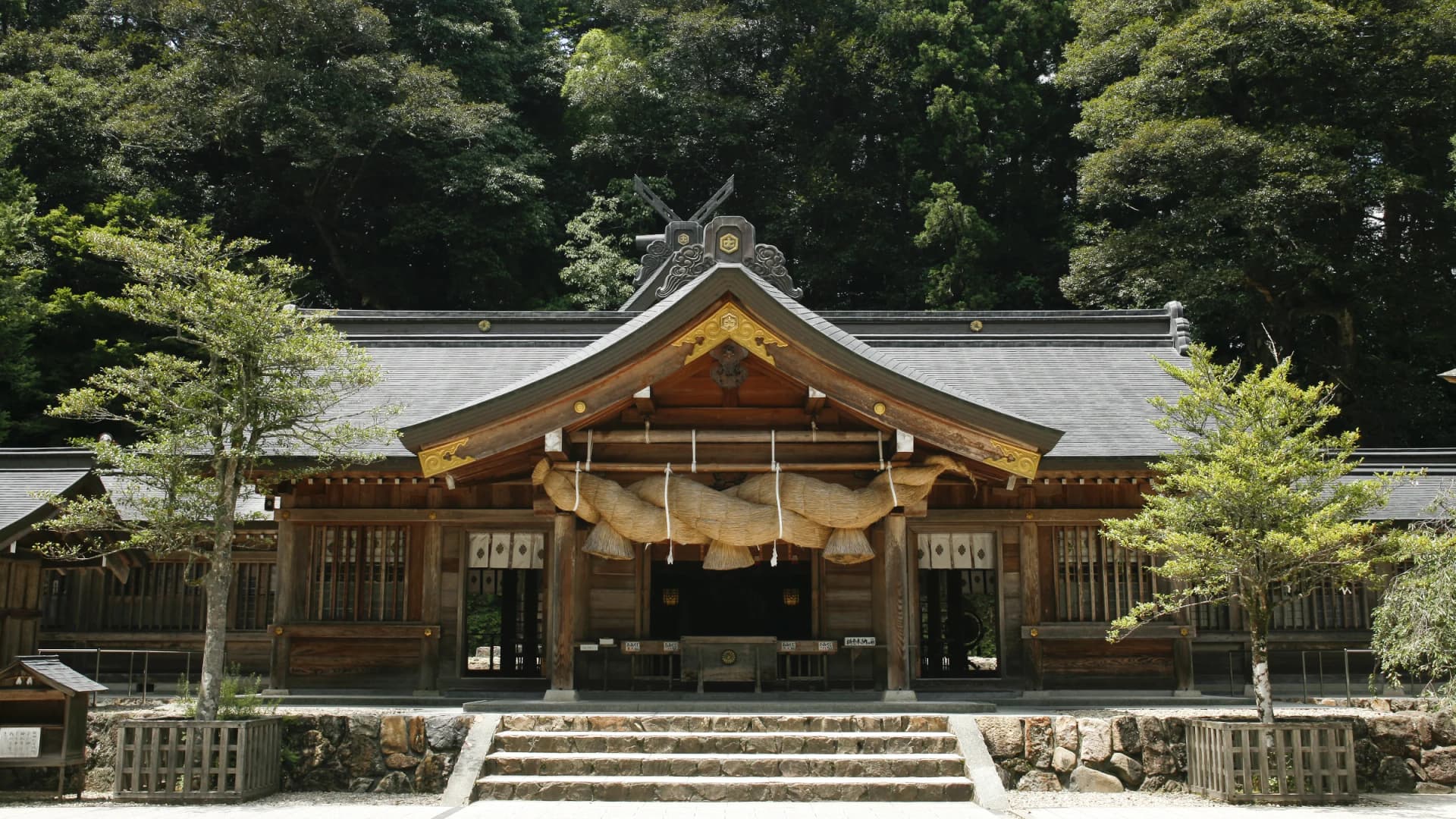
Kumano Taisha
Kumano Taisha, Izumo's "birthplace of fire", holds sacred hikiriusu and hikirigine fire-drills, a startling rice-cake ritual, and Susanoo's comb festival for Princess Inada.
Matsue · Shimane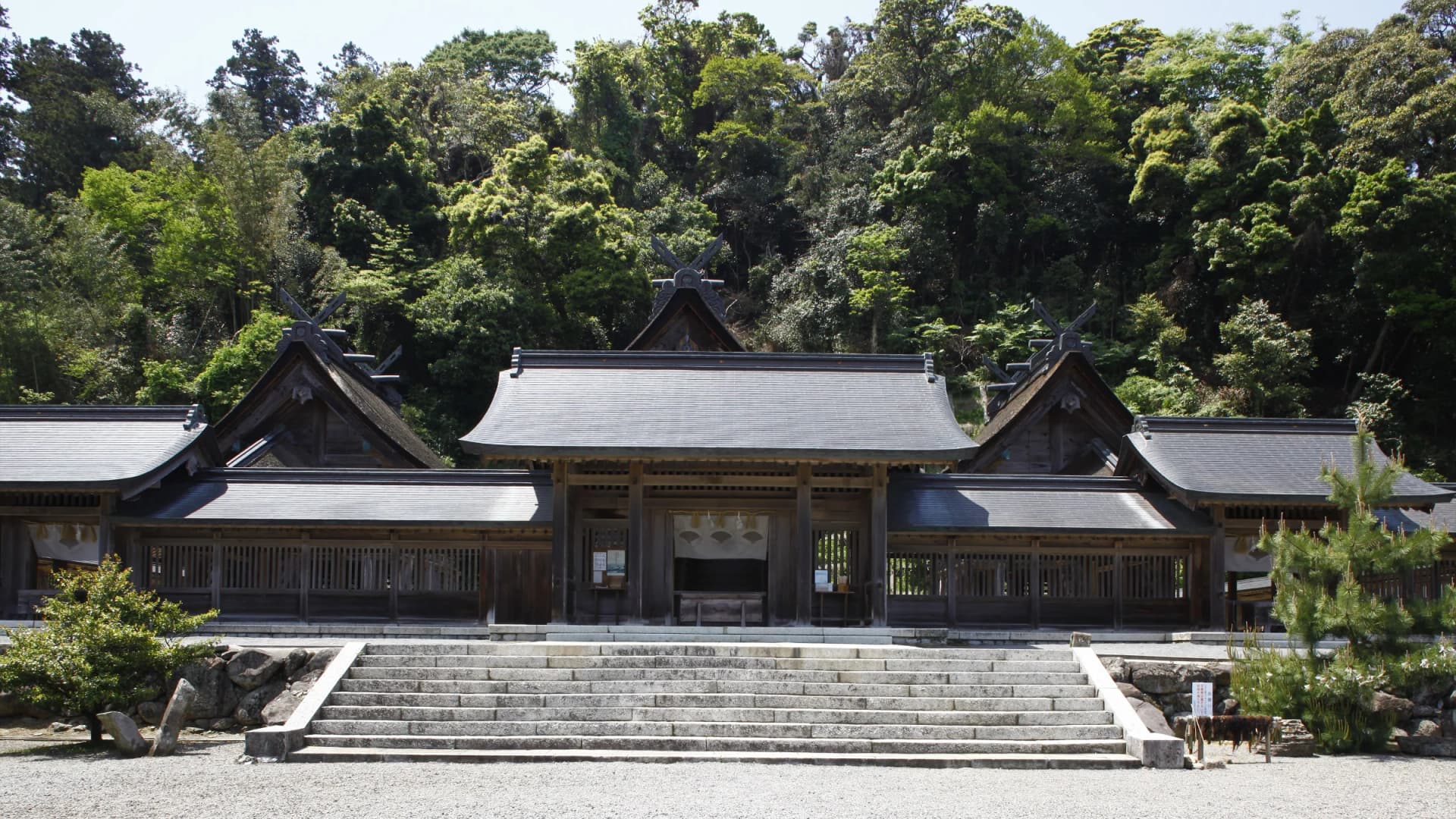
Sada Shrine
Sada Shrine near Matsue: a rare sanctuary of three halls side by side, the gods gathering each November to remember Izanami, and the UNESCO-listed Sada Shinno dance.
Matsue · Shimane