

Kamiari Festival
神在祭
Once a year the gods of Japan are said to abandon their shrines for Izumo, where a season of quiet rites welcomes, hosts, and finally sends them home again.
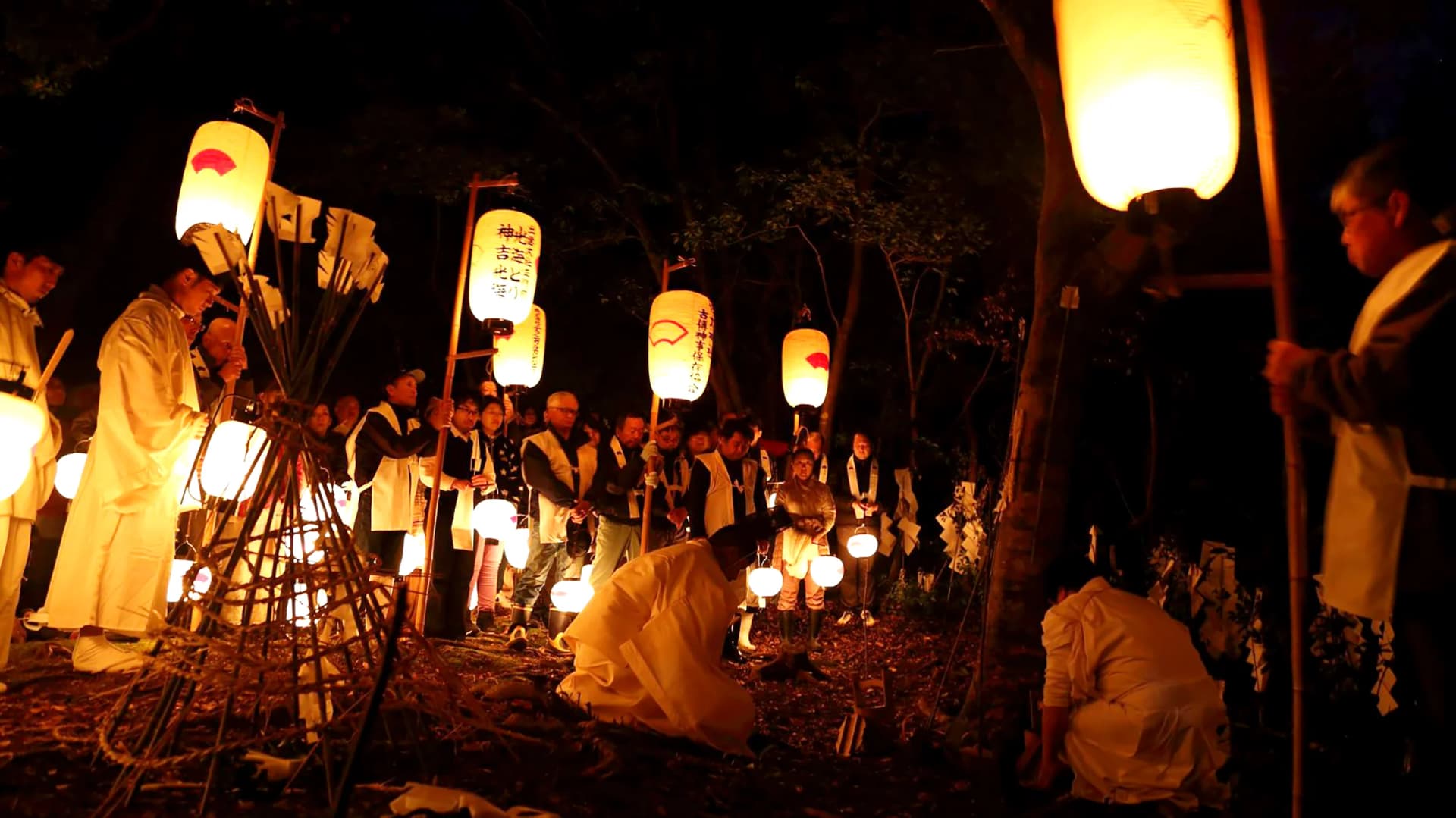
Once a year, in what we would now call late autumn, Japan observes a month with a strange name: Kannazuki, the "month without gods". The old belief behind it is simple – for this one stretch of the year, the gods are said to leave their shrines and go somewhere else. Everywhere in Japan, that is, except one place. Around Izumo, on the coast of Shimane Prefecture in western Japan, the same month goes by the opposite name: Kamiarizuki, the "month with gods". Because Izumo is where they are all said to have gone.
The gods in question are the yaoyorozu no kami – a phrase meaning something like "the eight million deities", the countless gods of the Shinto tradition, who are believed to dwell in shrines, mountains, rivers, and trees the length of the country. Once a year, tradition holds, they abandon their posts and travel to Izumo to gather. The ceremonies held to welcome them, host them, and send them home again are known together as the Kamiari-sai, the Kamiari Festival.
It is usually spoken of as a single event at Izumo Oyashiro (Izumo Grand Shrine, also known as Izumo Taisha), the region's great shrine. In truth it is closer to a season – a chain of rites spread across a whole network of shrines, each with its own part to play in receiving and dismissing the visiting gods.
Why the Gods Come
They come to hold a meeting. It is called the kamihakari, and it is described as a council at which the gods settle matters no human can decide: whether the land will be at peace, how the harvest will turn out, and — most famously — who will be bound to whom. The Japanese word is en, and while it is now mostly associated with love and marriage, its older meaning is far wider. It covers every tie between people: family, friendship, the colleague you happen to sit beside, the stranger you happen to meet.
Presiding over all this is Okuninushi, the great deity of Izumo Grand Shrine. In myth he handed the visible world over to the heavenly gods, and received in return authority over everything unseen – the hidden forces that shape a life. That is how he became the god of en-musubi, the tying of bonds, and why people travel to his shrine hoping for good relationships all year round, and above all during this month.
Welcome, Council, Farewell
At the main shrine, the season has a clear shape.
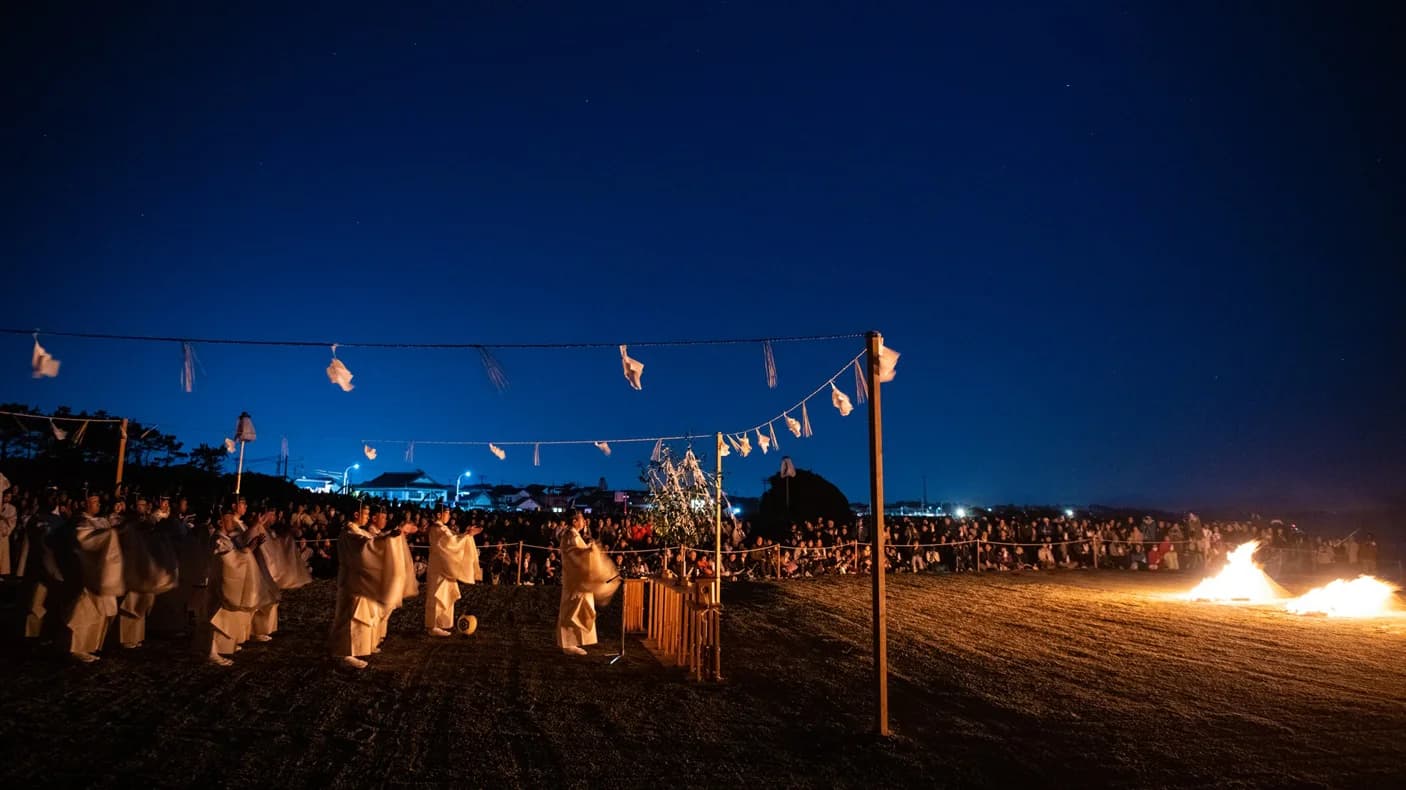
It opens after dark, on a beach. The gods are believed to arrive from over the sea, so the first ceremony — the Kamimukae-sai, the welcoming of the gods — is held not at the shrine but on the sand at Inasa-no-Hama, about a kilometre to the west. Bonfires burn, a temporary altar is set up on the shore, and the gods are received in near-silence. Tradition says a dragon-serpent guides them in to land; in practice this is tied to the sea snakes that wash ashore here at this time of year, long regarded as messengers of the gods. From the beach, priests escort the invisible guests in procession to the shrine.
Once there, the gods are said to lodge in the Jukusha – two long, low buildings lined with many small doors, standing either side of the main hall – while the council itself takes place at a smaller shrine to the west. For as long as the gods are in residence, the surrounding neighbourhood keeps deliberately quiet: no loud celebrations, no building work, nothing that might disturb the proceedings. The custom has a name, o-imi-san, and it produces something unusual – one of the largest festivals in Japan, and one of the least noisy.
At the end come the farewells, in a ceremony called the Karasade-sai. It happens twice: once when the gods leave the shrine, and again, over a week later, when they are considered to have left the Izumo region altogether.
Not One Shrine, But Many
The most unusual thing about the Kamiari festival is that no single shrine owns it. Shrines across the Izumo region each hold their own rites on their own dates, and only together do they make up the full sequence – the greeting, the hosting, the seeing-off. One old explanation is that the observance once ran fifteen days and was later split in two, with Izumo Grand Shrine keeping the first half and Sada Shrine the second, which is why the dates are scattered so widely.
Followed in order, the circuit begins with the earliest welcome, at Asayama Shrine – a hilltop shrine so old it appears in the region's ancient chronicle, which records Okuninushi visiting it every morning. Inasa-no-Hama, the beach of the firelit welcome, is a legendary site in its own right and a well-known spot for sunsets. Izumo Grand Shrine is the heart of the whole affair, one of Japan's oldest and most revered shrines, instantly recognisable by the colossal rope of twisted straw hanging at its front.
Further out, Hinomisaki Shrine stands in bright vermilion at the western tip of the peninsula, said to watch over the night of Japan just as the Ise shrines watch over the day. Sada Shrine preserves the oldest documented version of these rites, performed much as they were recorded five centuries ago, and is also home to a UNESCO-listed sacred dance. Kumano Taisha is ranked alongside Izumo Oyashiro as a first shrine of the old province, and is known as a birthplace of fire in Japan.
The circuit ends at Mankusen Shrine, where the gods are said to gather one final time, close their council, share a farewell meal, and set off for home. Several other shrines in the area take part too, each on its own schedule.
The Sweet Named After a Festival
The festival left one mark that reaches every corner of Japan, and most people who encounter it have no idea where it came from. During the Kamiari rites, an offering of rice cakes was made, called jinzai-mochi. Over the centuries, the story goes, jinzai softened into zenzai – the warm, sweet red-bean soup with mochi floating in it that is now eaten all over the country on cold days. Which is why Izumo, and Sada Shrine in particular, is described as the birthplace of zenzai.
You might also like

Dontosai Festival
An annual winter ritual in Sendai features the ceremonial burning of New Year decorations followed by a sacred pilgrimage procession in traditional attire.
14 Jan 2027Sendai · Miyagi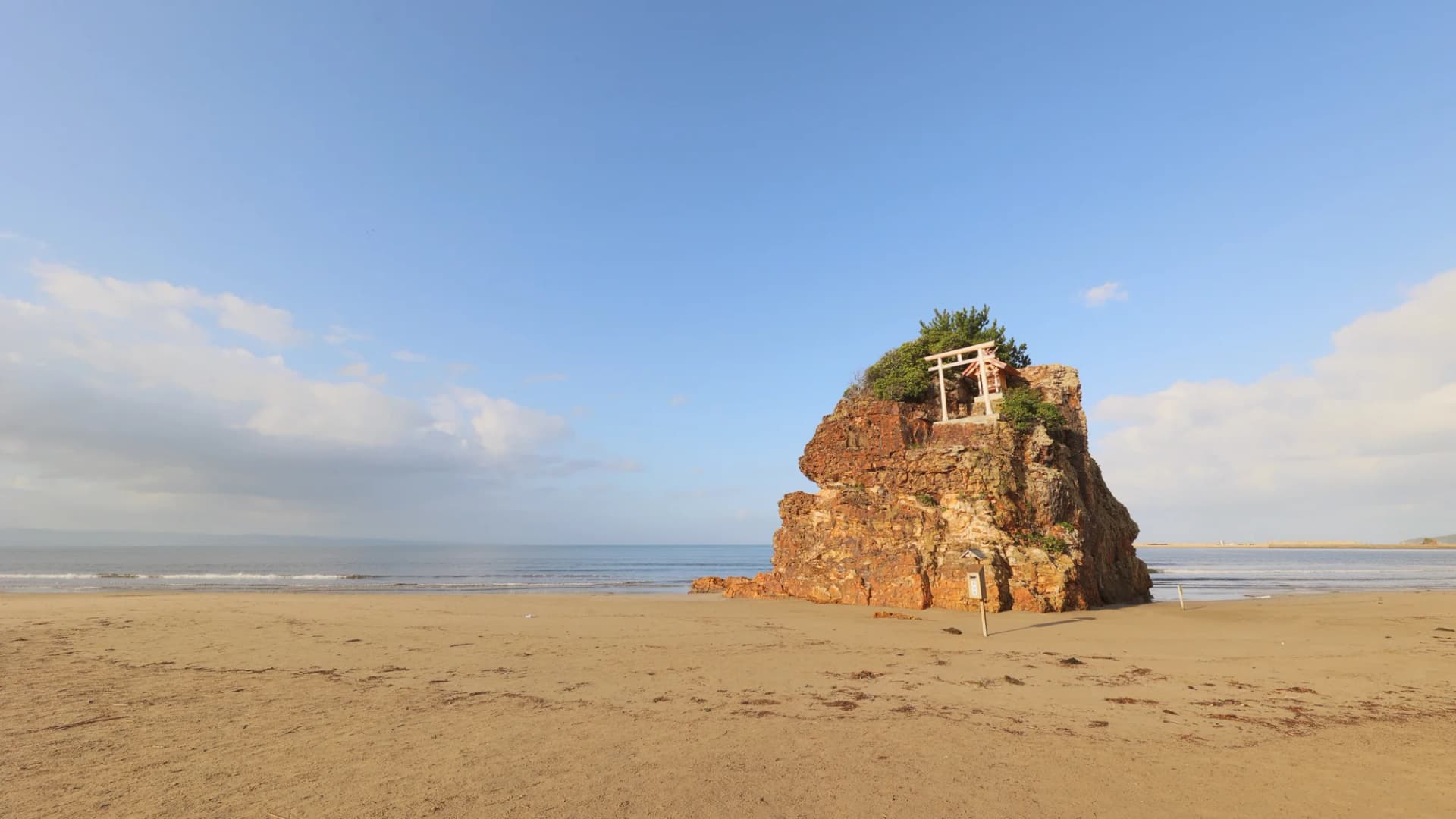
Inasa-no-Hama
Izumo · Shimane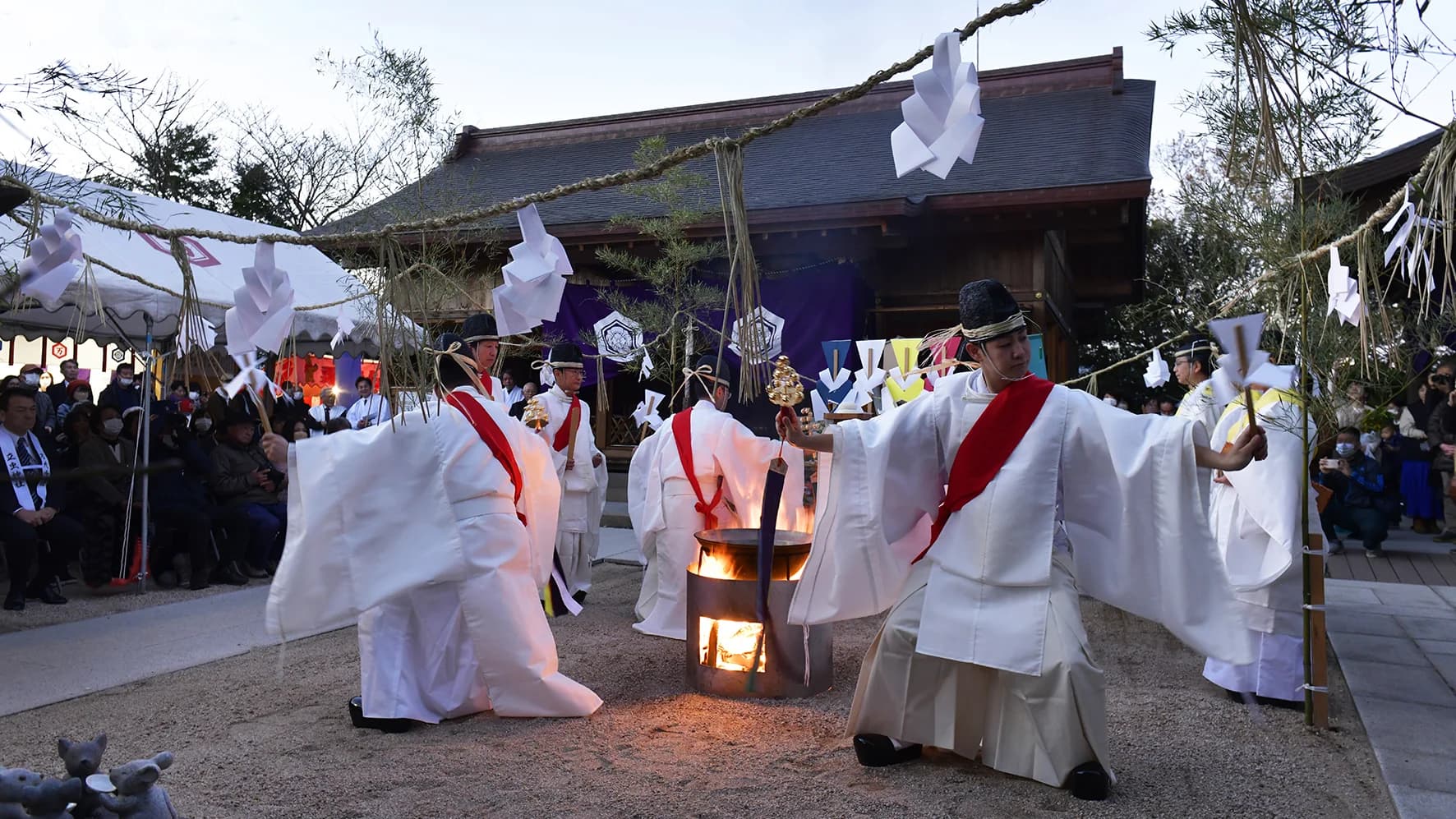
Mankusen Shrine
Mankusen Shrine in Izumo is said to be the last stop for the gods of Japan before they return home.
Izumo · Shimane
Nozawa Onsen Dōsojin Festival
Dōsojin, a folk deity protecting travelers and villages, is honored through this traditional festival featuring ceremonial fire and ritual.
15 Jan 2027Nozawaonsen · Nagano
Atsukishinmei Festival
Fire-lit pillars adorned with sacred paper stand on beaches as the community performs ceremonial dances twice daily, seeking protection from illness and calamity.
11 Feb 2027Yanai · Yamaguchi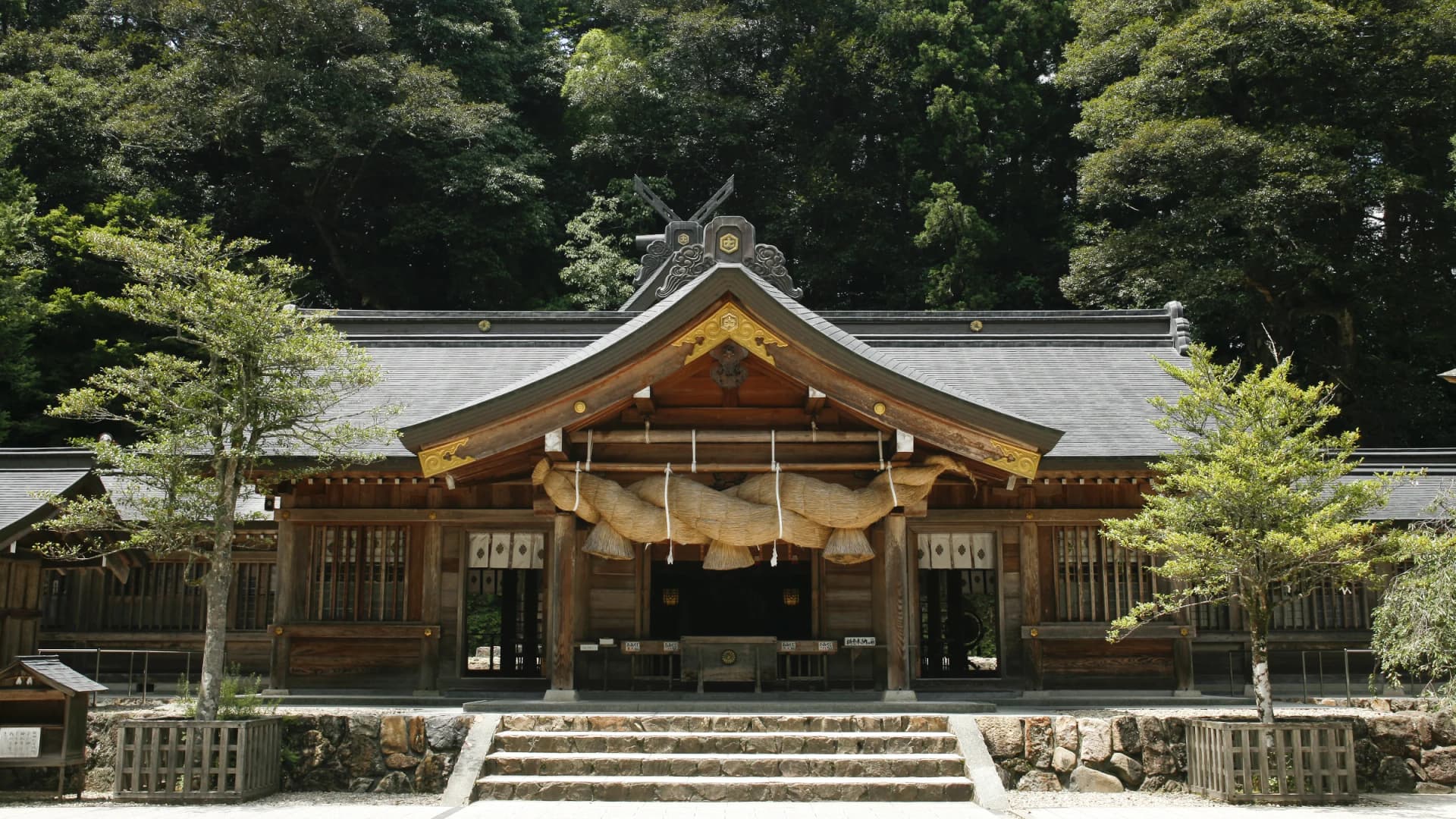
Kumano Taisha
Kumano Taisha, Izumo's "birthplace of fire", holds sacred hikiriusu and hikirigine fire-drills, a startling rice-cake ritual, and Susanoo's comb festival for Princess Inada.
Matsue · Shimane