Sanno Festival
日枝神社大祭(山王まつり)
Centered at Hie Shrine, this major Toyama festival originated in the Edo period and features a two-day mikoshi procession through the city's parishes.

〒 930-0064How to get there
The Sanno Festival is one of the largest and most important annual festivals in Toyama City. The festival centres on Hie Shrine and plays a major role in the city’s cultural, historical, and spiritual life. Locals affectionately refer to the shrine as “Sanno-san”, and the festival has long been regarded as Toyama’s representative celebration.
The origins of the Sanno Festival date back to the Edo period, when Hie Shrine served as the principal tutelary shrine of the Toyama Domain. Historical records indicate that the festival gained prominence after the second lord of the Toyama Domain, Maeda Masatoshi, donated portable shrines (mikoshi) to Hie Shrine in 1690. From that time, the custom of carrying the mikoshi through the castle town became established, strengthening ties between the shrine, the ruling domain, and local communities.
A central feature of the festival is the mikoshi procession (mikoshi togyo), which takes place over two days. On May 31, the mikoshi is carried through the western parish districts, and on June 1 through the eastern districts. The procession departs the shrine in the morning and returns in the early evening, accompanied by priests, parishioners, musicians, and large lion dance figures (shishimai). The rhythmic sounds of flutes and taiko drums, along with spirited chants, create a distinctive atmosphere as the procession moves through the city streets. The sight of the mikoshi returning to the shrine at dusk, passing between rows of lantern-lit stalls, is considered one of the festival’s defining scenes.
In addition to the shrine rituals and processions, the Sanno Festival is widely known for its scale and liveliness. Approximately 700 food and game stalls line the streets around Hie Shrine and extend into nearby commercial areas, drawing large crowds throughout the three-day period. These stalls offer a wide range of traditional festival foods, local specialties, and entertainment, contributing to the festival’s popularity among families and visitors.
The Sanno Festival also features cultural performances and community participation, reflecting its role as both a religious observance and a civic celebration. While deeply rooted in Shinto tradition — praying for household safety, business prosperity, and general well-being — the festival continues to serve as a major social event that brings together residents and visitors alike. Through its blend of history, ritual, and lively street culture, the Sannō Festival remains a cornerstone of Toyama’s annual calendar.
Getting There

You might also like

Iwase Hikiyama Festival (The Fighting Floats Festival)
Annual spring festival featuring thirteen ornate floats with elaborate wooden tatemon decorations pulled through streets with traditional music.
17–18 May 2027Toyama
Owara Kaze no Bon (Harvest Wind Festival)
This traditional harvest festival features processions of lantern-lit dancers in matching happi coats moving through Yatsuo to shamisen and kokyū music for three September days.
1–3 Sep 2027Toyama
Yatsuo Hikiyama Festival
A traditional spring festival features six ornately decorated floats assembled without nails, pulled through streets with classical hikiyama music.
3 May 2027Toyama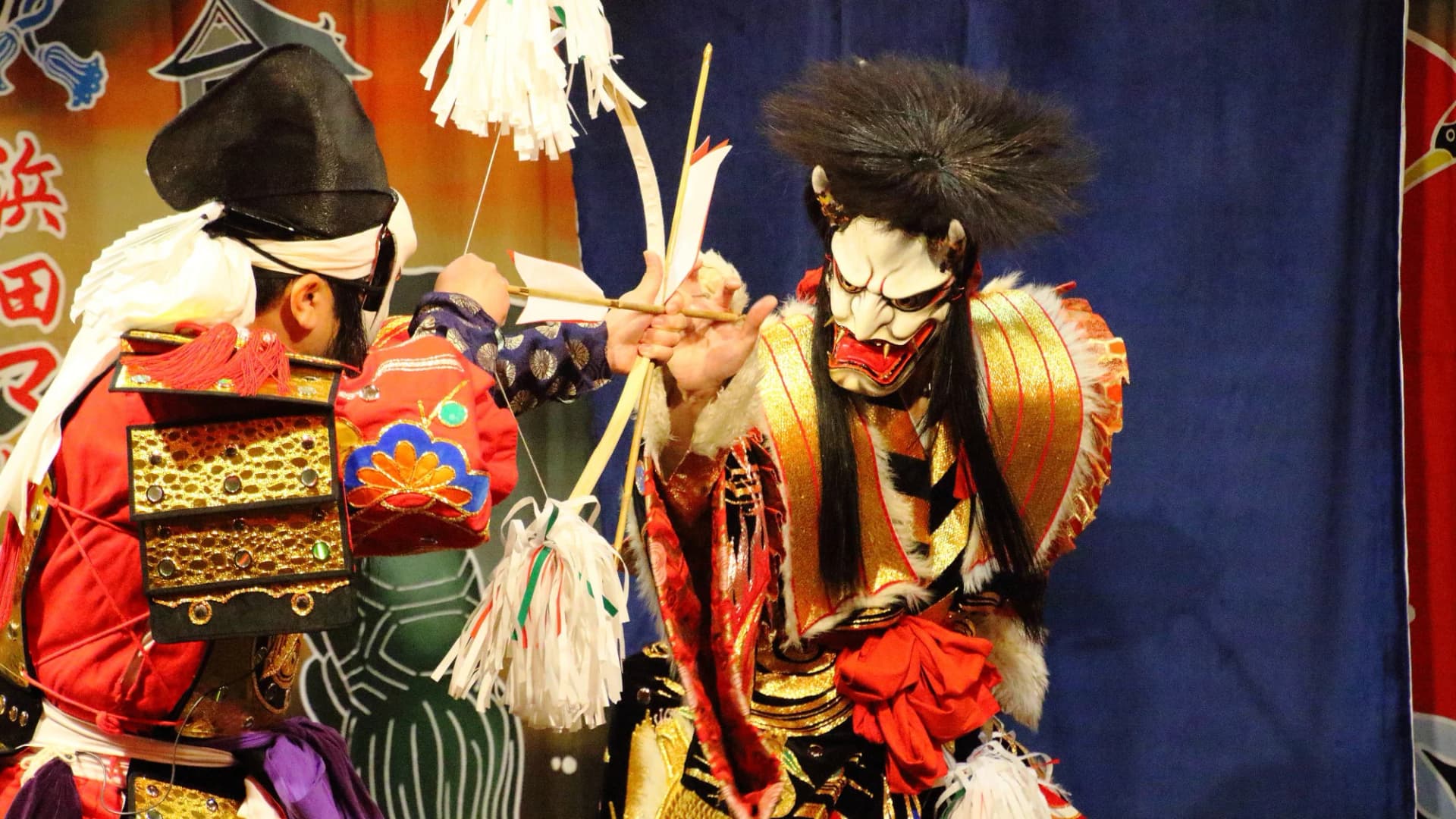
Iwami Kagura
Each autumn in western Shimane, shrine stages host Iwami Kagura – sacred dances performed through the night, from ceremonial pieces to a battle with a serpent.
Shimane · Chugoku
KAWAII MONSTER LAND – HARAJUKU
KAWAII MONSTER LAND is a 60-minute immersive experience beneath Takeshita Street featuring themed zones, performances, and interactive installations.
Tokyo
Kibitsu Jinja
Major Okayama shrine dedicated to Kibitsuhiko-no-Mikoto, a legendary prince credited with defeating an ogre and bringing peace to the region, foundations of the Momotaro folktale.
Okayama