Shingen-ko Festival
信玄公祭り
A historical reenactment festival in Kofu honors a 16th-century feudal lord with a large-scale procession featuring over 1,000 participants in period armor.

〒 400-0031How to get there
甲府Chuo Main Line · Minobu Line3 min walk from the station
The Shingen-Ko Festival is an annual cultural event held in Kofu. Now in its 52nd edition, the festival commemorates Takeda Shingen (1521-1573), a feudal lord who governed the Kai Province - present-day Yamanashi - during the Sengoku, or Warring States, period. The festival is recognised as one of Japan's largest historical reenactment events.
Takeda Shingen was born in 1521 as the eldest son of Takeda Nobutora. He assumed clan leadership in 1541 after orchestrating his father's exile and expanded Takeda territory through campaigns into Shinano, Suruga, and parts of the Tokai region. Beyond military affairs, he is credited with constructing the Shingen-zutsumi, a flood-control embankment along the Kamanashi River that remains partially in use today. He died in 1573 at the age of 53 while on campaign, reportedly from illness.
The Main Procession
The centrepiece of the festival is the Koshu Gundan Shutsujin (甲州軍団出陣), a large-scale procession in which more than 1,000 participants dress in period-accurate samurai armour and recreate Takeda Shingen's military march toward the Battles of Kawanakajima - a series of five engagements fought between 1553 and 1564 against rival warlord Uesugi Kenshin of the Hokuriku region.
The procession is organised into four battalions - Wind, Forest, Fire, and Mountain - drawn from the Fuurinkazan (風林火山) motto inscribed on Shingen's battle standard. Derived from Sun Tzu's The Art of War, the phrase translates as: "Swift as the wind, silent as the forest, fierce as fire, immovable as the mountain".
Events are held at two locations: Maizuru Castle Park, which hosts the departure and return ceremonies, and Heiwa-dori Avenue, where the main procession takes place. Paid seating is available. Free viewing zones are also available along the western side of Heiwa-dori Avenue.
Getting There

Planning a trip? Fit this into a trip and Oni plans the rest around it.
You might also like

Sengoku Chronicle: The Battle of Kawanakajima
A re-enactment on a river bed in Fuefuki, Yamanashi, where about seven hundred people in armour refight Takeda Shingen against Uesugi Kenshin.
8 Nov 2026Fuefuki · Yamanashi
Matsushiro Sanada Jumangoku Festival
An autumn parade brings the Warring States period to life with over 250 participants in samurai and historical costumes, honoring the Sanada clan.
10–11 Oct 2027Exact date not confirmed yetNagano
Kaikai Yokai Festival
Uzumasa Kyoto Village (Toei Kyoto Studio Park) fills with yokai every autumn: two evening parades, dance shows, daily yokai greetings and limited yokai food.
12 Sep – 29 Nov 2026Kyoto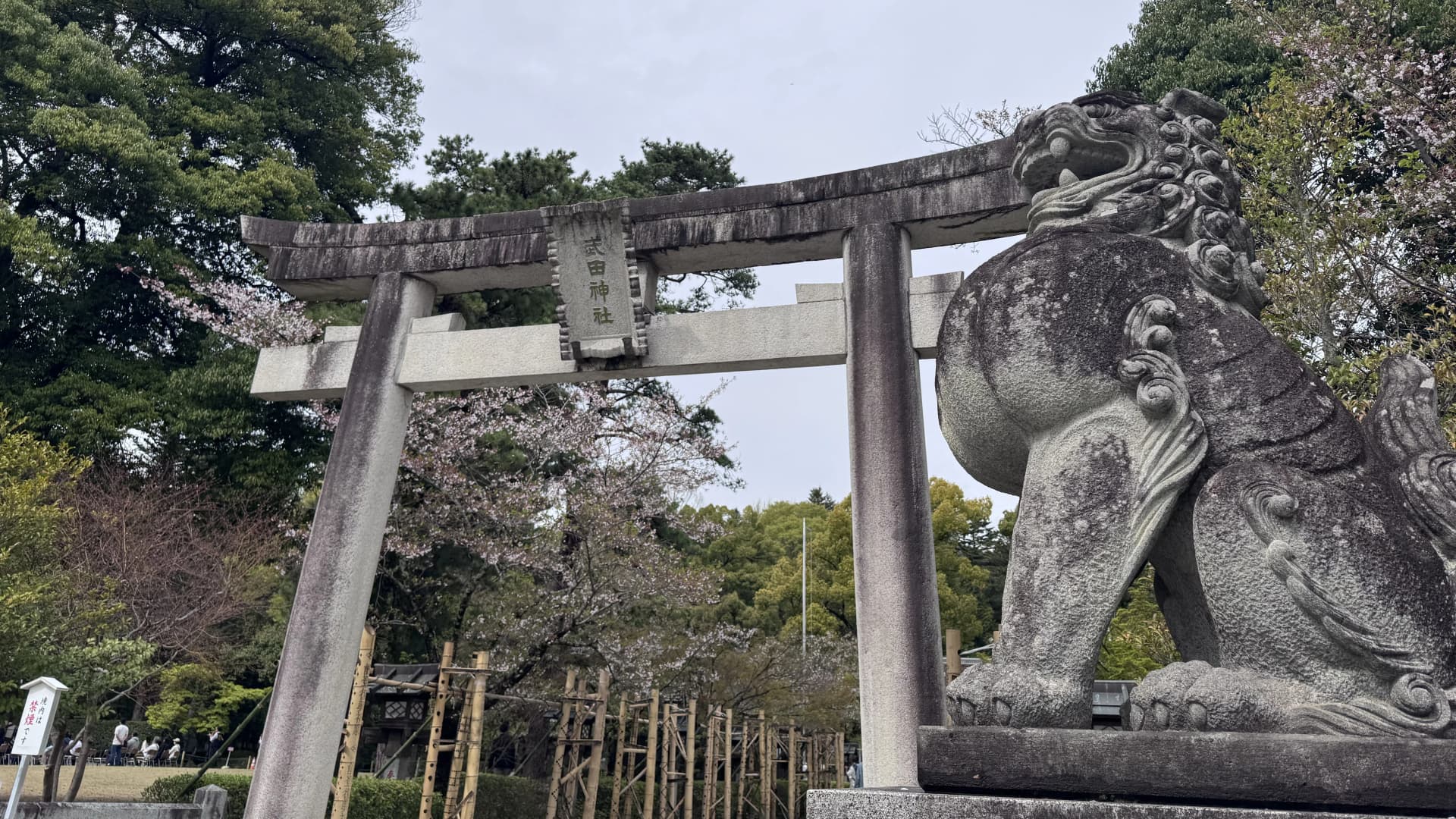
Takeda Shrine
This shrine honors Takeda Shingen, a Sengoku-period general remembered for both military prowess and regional development in the domain he ruled.
Kofu · Yamanashi
Fuji-Q Highland
Theme park at the base of Mount Fuji offering roller coasters, haunted houses, character shows, and traditional Japanese activities.
Fujiyoshida · Yamanashi
Kawaguchiko Music Forest Museum
A museum in Yamanashi showcasing over 400 music boxes, organs, and mechanical instruments from around the world with interactive workshops.
Fujikawaguchiko · Yamanashi