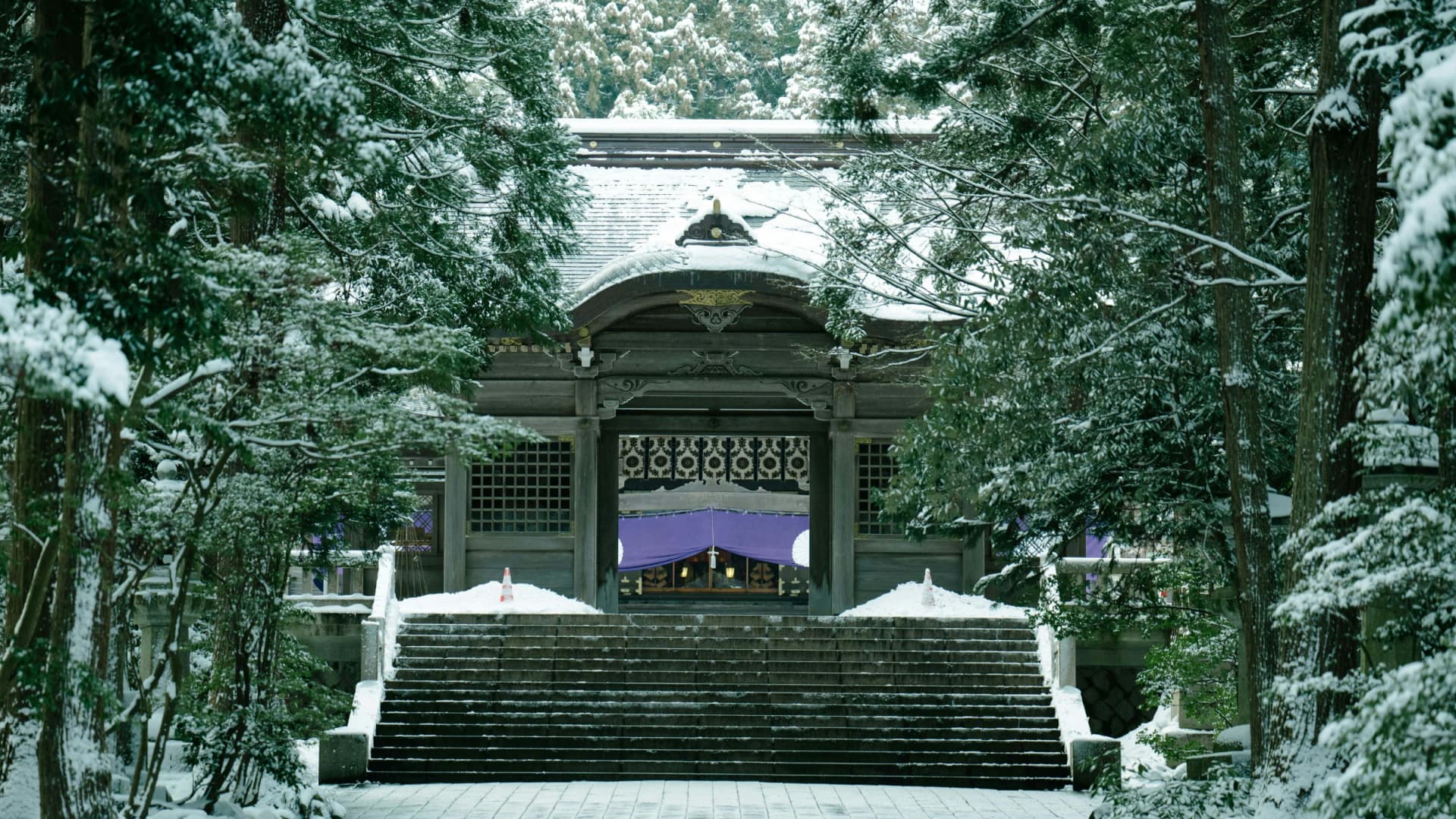
Takeda Shrine
武田神社
This shrine honors Takeda Shingen, a Sengoku-period general remembered for both military prowess and regional development in the domain he ruled.
〒 400-0014How to get there
甲府Chuo Main Line · Minobu Line38 min walk from the station
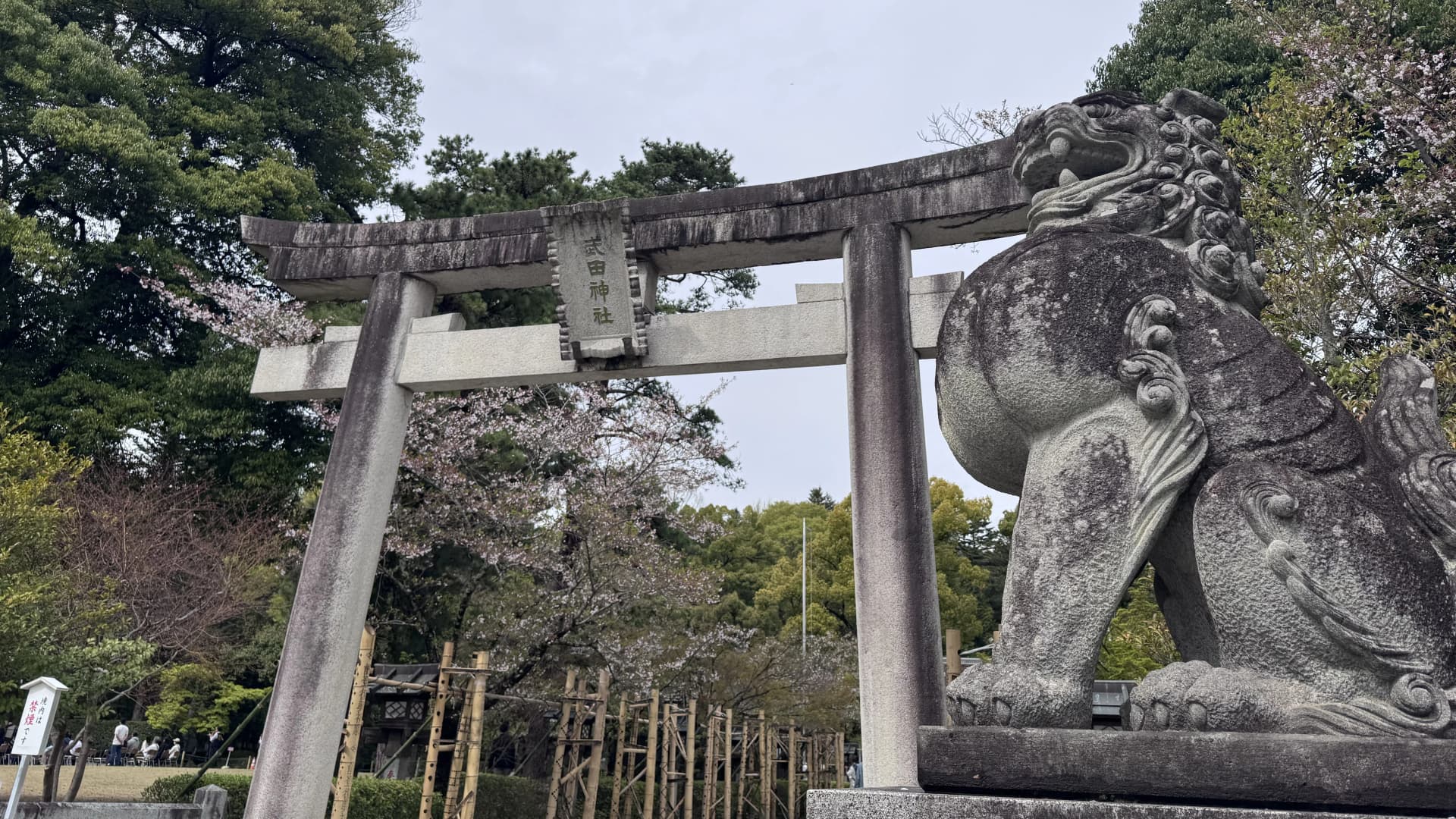
Takeda Shrine is a Shinto shrine dedicated to the Sengoku-period warlord Takeda Shingen. It stands on the site of the Tsutsujigasaki Residence, the fortified home of the Takeda clan, and is revered as the guardian shrine of the former province of Kai. For the people of Yamanashi, Shingen remains a local hero, still affectionately referred to as "Shingen-san".
Takeda Shingen
Takeda Shingen is remembered as one of the outstanding generals of Japan's Sengoku period. He was born in 1521 at Yogaisan Castle, on the hillside behind the present shrine, and became lord of Kai at the age of twenty-one. Over the following three decades he won a long succession of military victories, but he devoted himself equally to the government of his domain, placing particular emphasis on flood-control works and the promotion of agriculture and commerce. This care for his territory earned him the deep affection of his people.
In 1573, midway through his campaign to march on the capital, Shingen died at Komaba in Shinano Province. The shrine dedicated to him is associated above all with "victory fortune" (shoun), understood broadly as prevailing in life and overcoming oneself, rather than merely winning contests. Because he fostered agriculture, commerce, and industry, he is also worshipped as a deity of the economy.
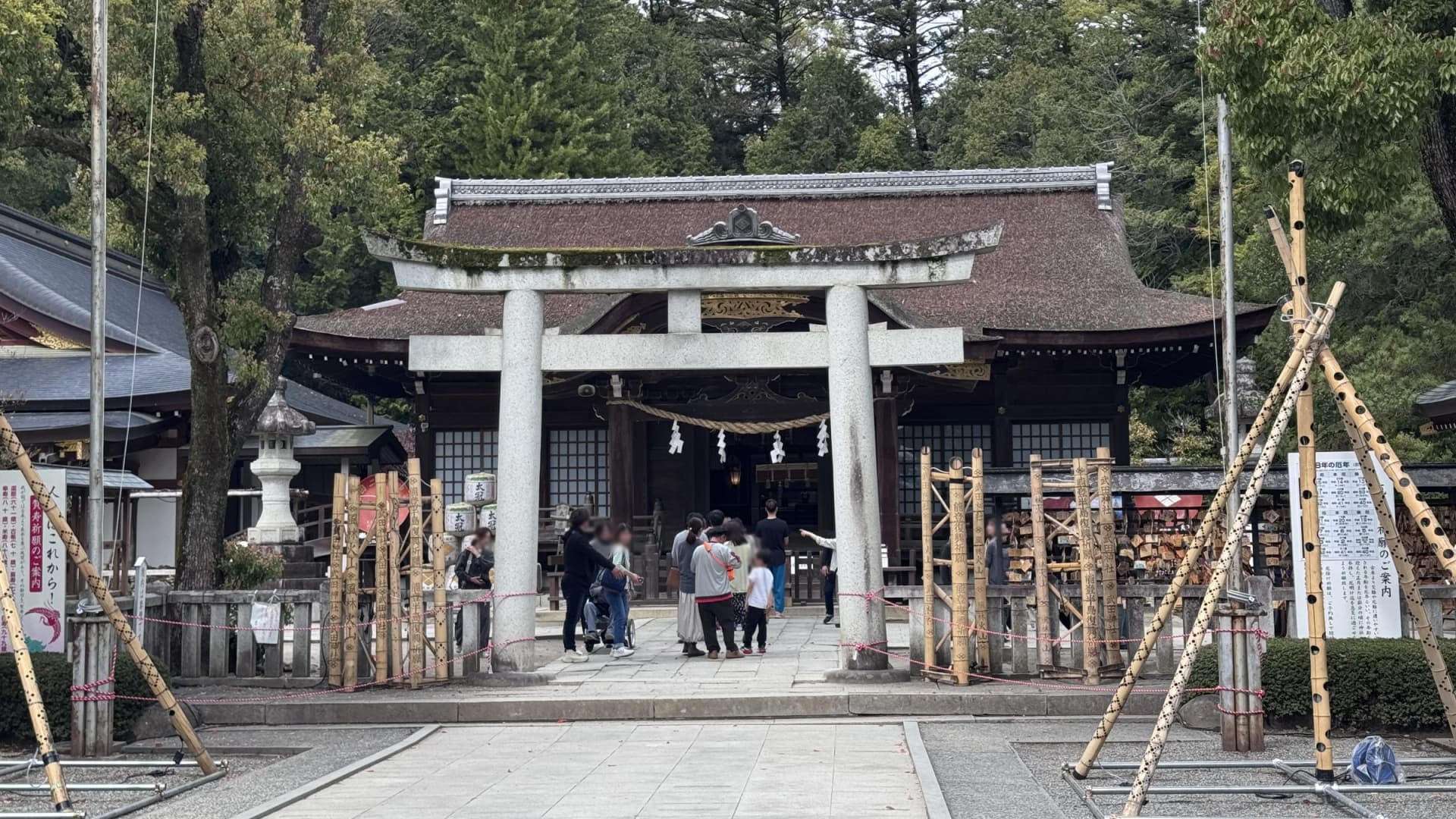
The site and grounds
The movement to establish the shrine gathered pace in the 1910s, and through public donations the shrine buildings were completed in 1919. The first annual festival was held that year on 12 April, the anniversary of Shingen's death.
The Tsutsujigasaki Residence was moved by Shingen's father Nobutora to this location from Isawa in 1519. Three generations of the family – Nobutora, Shingen, and Katsuyori – lived here for more than sixty years, and the site was designated a National Historic Site in 1938. Moats, stone walls, and old wells survive from the clan's time, preserving the atmosphere of the Takeda family to the present day, while hundreds of varieties of trees, donated from across the prefecture when the shrine was founded, give the grounds a changing beauty through the seasons.
Among the trees is a rare "three-needle pine" (mitsuba no matsu), unusual in Japan for shedding needles that turn a golden colour. Carrying one is said to bring good fortune in matters of money.
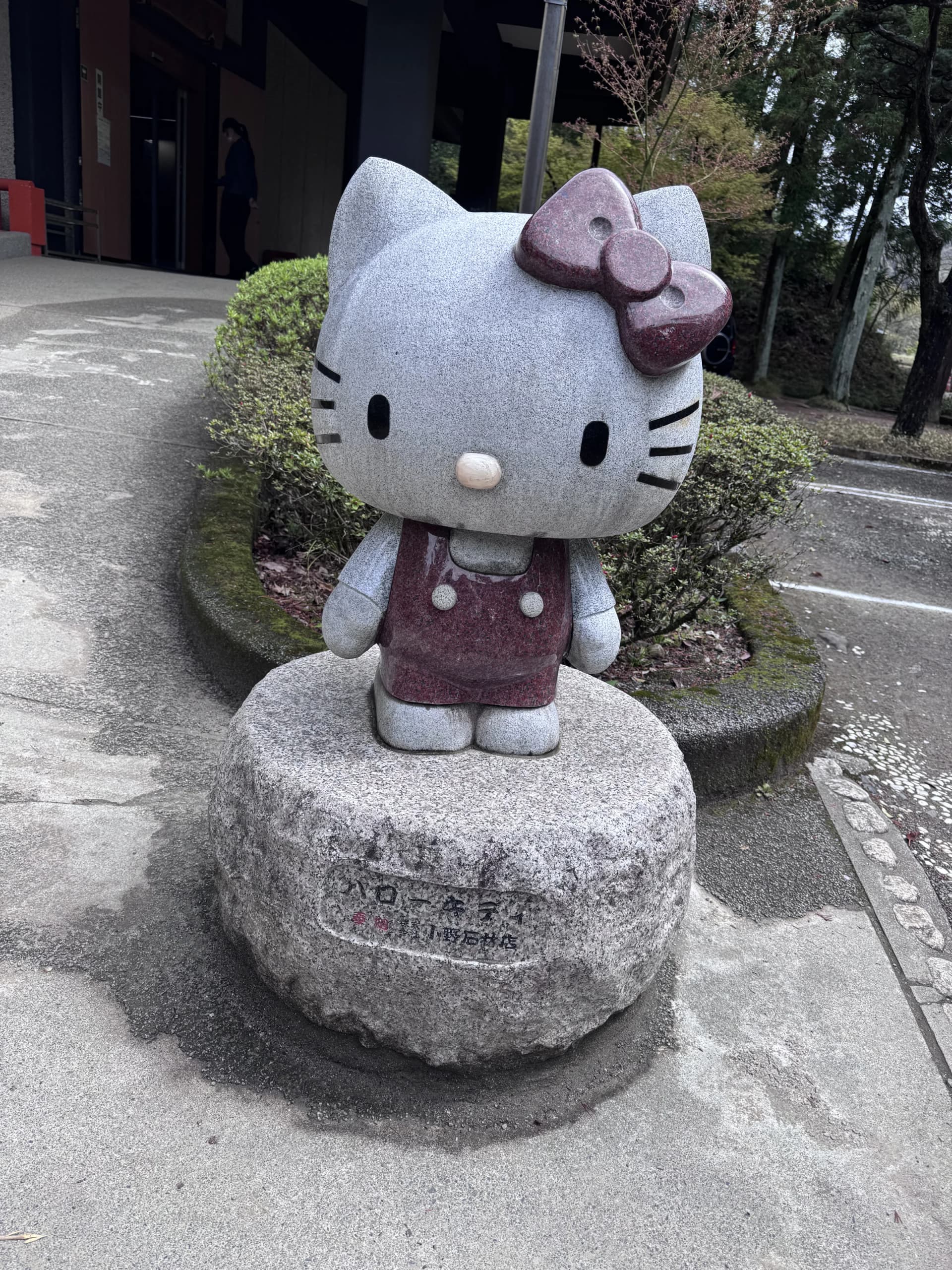
On the shrine's grounds, a marble statue of Hello Kitty can be found. The link is through Sanrio, the company behind the character, whose founder, Shintaro Tsuji, was born in Kofu. His family is said to descend from Yamagata Masakage, one of Takeda Shingen's leading retainers – a connection that ties the world-famous character back to the Takeda clan whose residence the shrine now occupies.
The treasure house
The shrine's treasure house holds a collection of items donated by Takeda-related families from around the country since the shrine's founding, and opened to the public in 1972. Its finest piece is the "Yoshioka Ichimonji", a sword designated an Important Cultural Property. An heirloom of the Sanjo family, it was presented to pray for the shrine's establishment, through the connection between the statesman Sanjo Sanetomi and Lady Sanjo, Shingen's principal wife. Alongside their historical and cultural value, the objects on display convey something of the passion of the warriors who staked their lives on the turbulent Sengoku age. Admission to the treasure house requires a fee, while the shrine grounds themselves are free to enter.
Just south of the shrine, the Shingen Museum (the Kofu City Takeda Clan Residence Site History Museum) offers more on the history of the three generations of the Takeda clan and the excavation of the residence site.
Getting There

Places nearby

Tsutsujigasaki Castle
This mountain castle in Kofu served as the Takeda clan's primary stronghold, reaching its height under the celebrated strategist Takeda Shingen from 1541.
Kofu · Yamanashi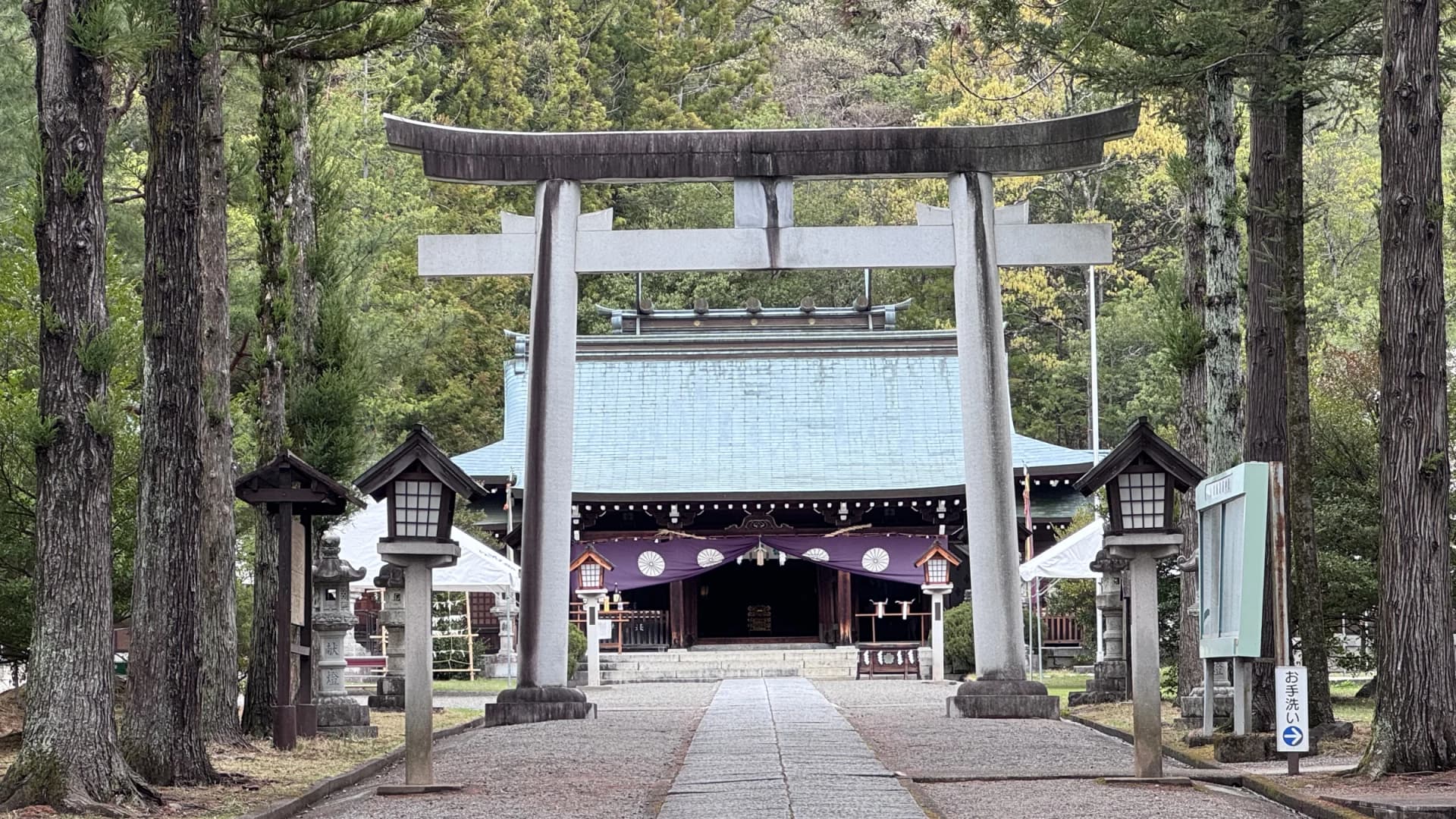
Yamanashi Gokoku Shrine
Shrine honoring over 25,000 military spirits from conflicts spanning the First Sino-Japanese War through the Pacific War, set among 300 cherry trees.
Kofu · YamanashiYou might also like

Shingen-ko Festival
A historical reenactment festival in Kofu honors a 16th-century feudal lord with a large-scale procession featuring over 1,000 participants in period armor.
3–5 Apr 2027Kofu · Yamanashi
Sengoku Chronicle: The Battle of Kawanakajima
A re-enactment on a river bed in Fuefuki, Yamanashi, where about seven hundred people in armour refight Takeda Shingen against Uesugi Kenshin.
8 Nov 2026Fuefuki · Yamanashi
Osu Kannon
A Shingon temple in central Nagoya, moved here by Tokugawa Ieyasu in 1612, whose Osu Bunko library holds a National Treasure manuscript of the Kojiki.
Nagoya · Aichi
Kumano Taisha Shrine
One of three major Kumano shrines in Japan, Kumano Taisha was established in 806 and is known as the Ise Shrine of the North for its significance.
Nanyo · Yamagata
Isaniwa Shrine
A Shinto shrine in Matsuyama with roots in a visit by Emperor Chuai and Empress Jingu to Dogo Onsen, enshrining multiple emperors as cultural treasures.
Matsuyama · Ehime
Okuma Kabuto Festival
Nanao's festival honors samurai heritage through a dramatic parade of locals dressed in full armor and helmets, accompanied by traditional music and dance performances.
20 Sep 2027Nanao · Ishikawa