

Kominato Line
小湊鉄道線
An unelectrified line from the Chiba coast into the hills, where the ride is the whole point – wooden halts, open-sided carriages and rape blossom in spring.
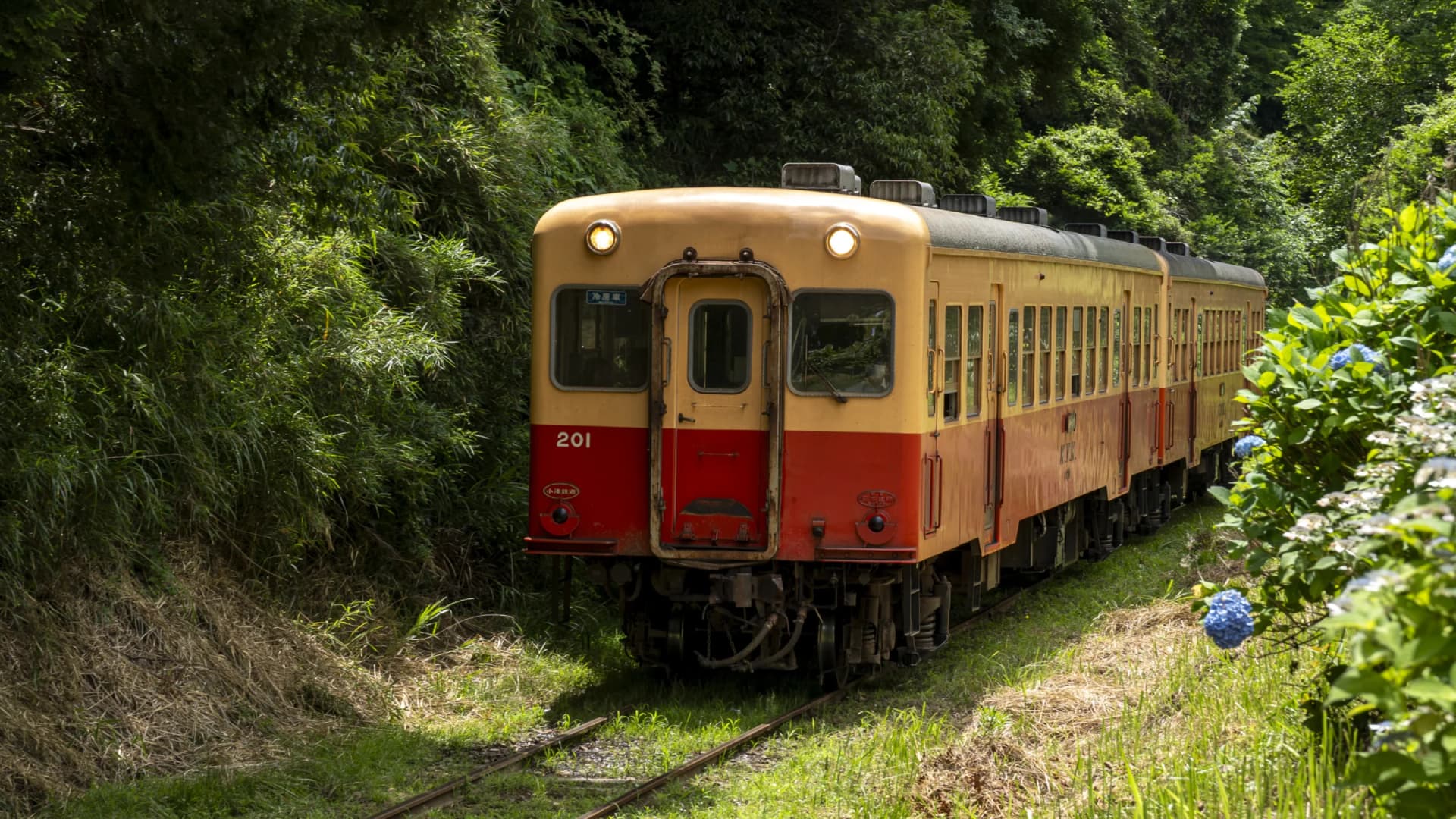
A single-track diesel line running forty kilometres and eighteen stations from Goi, on the coast of Chiba, into the hills at the centre of the Boso Peninsula. It was built to serve villages and still does. Most passengers now ride it simply for the ride.
The company has been running since 1917, and it has never electrified. That decision, made or rather not made over a century, is why the line looks as it does. Twenty-two structures along the route – station buildings, bridges, an old power house – are entered on the national register of Tangible Cultural Properties, and the line and the landscape it runs through have since been selected for a prefectural list celebrating the Cultural Assets of Chiba.
The Line
Trains leave Goi one or two an hour and reach Kazusa-Nakano, at the far end, in about an hour and a half. The first stretch is unremarkable, fields tangled up with housing. By Umatate, seventh out, the houses have thinned and what follows is satoyama: rice terraces, patches of woodland, small settlements, the worked countryside that most of Japan looked like before it didn't. The track crosses rivers and cuts through narrow valleys along the way.
The stations are the other half of the appeal, several of them small wooden buildings left more or less as built, standing alone in the fields with no staff at all. Kazusa-Tsurumai is the best known – it was named among the finest hundred stations in the Kanto region, and Sou Fujimoto designed the new lavatory block there.
A day pass covering the whole line is the sensible way to travel, since getting off at places and waiting for the next train is rather the point.
Before Setting Off
Goi rewards arriving early. A café sits beside the tracks just outside the station, wood-lined, doing simple food and cakes and selling railway souvenirs alongside local produce. The railway's depot is a little further down the line, where old steam locomotives can be seen by arrangement.
Other Riding Options
The Boso Satoyama Trolley runs from mid-March, pulled by a locomotive built to resemble a steam engine. Four carriages, glass-roofed, two with no glass in the windows at all, moving at roughly bicycle pace between Goi and Yoro-keikoku. It makes two round trips a day, mostly at weekends, with extra weekday runs in the busy months. Booking is online in Japanese, and there is a supplement on top of the ordinary fare.
Komichari, opened in June 2026, is a rail bike: you pedal along the actual track between Yoro-keikoku and Kazusa-Nakano.
There are also evening beer trains in summer, a lunch train serving a bento made from local produce, and station illuminations in winter.
Through the Year
Late March into April is when most people come. Rape blossom runs in yellow bands beside the track while the cherries are out at the same time, a combination unusual enough to draw photographers from across the country. The station most of them want is Itabu, where the trees stand beside a flooded paddy and are lit after dark, so everything appears twice – once above the water and once inverted in it. It only works on a still night.
The rest of the year rewards a visit too. Hydrangeas come out along the cuttings in June, summer is heavy green with the windows down, and autumn turns the hills over slowly.
Practical Notes
The southern end is unreliable. Services between Yoro-keikoku and Kazusa-Nakano have been cut back sharply, with buses covering the gap. Trains on that section are suspended entirely from 1 September to 8 October, and outside that window they run only on certain days. Since Kazusa-Nakano is where you change for the Isumi Railway to cross to the Pacific coast, anyone planning that journey should confirm the timetable first.
The carriages get hot. The railway says openly that the air conditioning on its older railcars often weakens or fails in the recent summers, and advises passengers to bring cold drinks, a fan and something to cool themselves with.
You might also like

Suzumushi Autumn Train
A retro-themed railway journey through autumn scenery is accompanied by the gentle sounds of bell crickets resonating through the carriages.
1 Sep – 15 Oct 2026Goshogawara · Aomori
Oyama Balloon Festival
The Oyama Balloon Festa fills autumn skies with hot air balloons competing in precision flights from dawn, and features illuminated night glows with synchronized fireworks and music.
8–9 Nov 2026Oyama · Tochigi
Strawberry Hunt in the Land of Oz
Strawberry picking transforms into a playful experience with themed décor and character guides at Japan's largest rose-themed park.
17 Jan – 30 Apr 2027Yachiyo · Chiba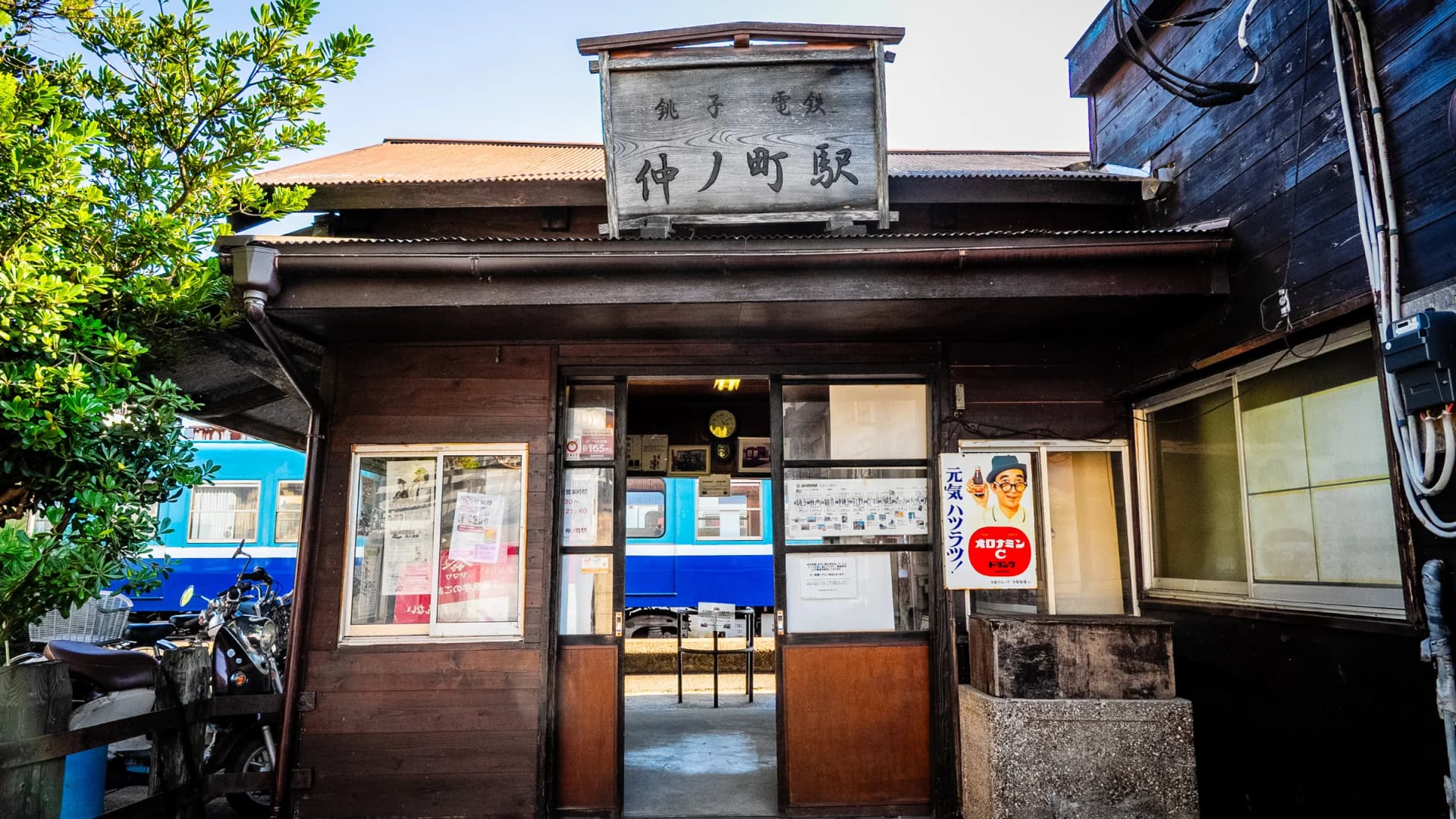
Choshi Line
A tiny railway at the eastern edge of Chiba, kept running by the rice crackers it sells – twenty minutes from the town to the Pacific, past cabbage fields.
Choshi · Chiba
PokéPark KANTO
The first permanent outdoor Pokémon facility features over 600 Pokémon across two zones: a forest trail and a town setting where visitors can discover creatures in their habitats.
Tokyo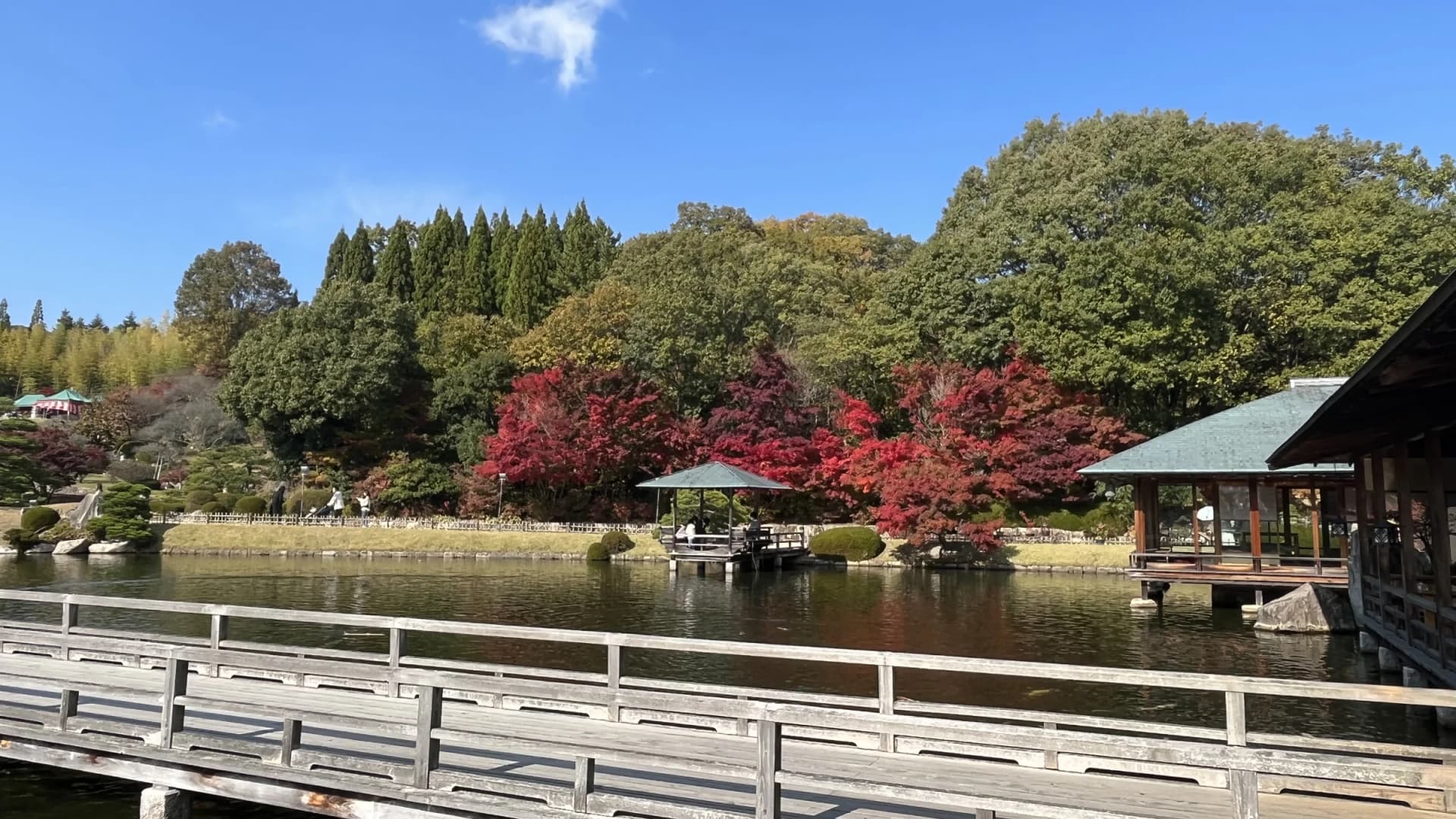
Sankeien Garden
A six-hectare strolling garden beside Hiroshima Airport, laid out in three zones that stand for the mountains, the countryside and the sea of Hiroshima.
Mihara · Hiroshima