

Choshi Line
銚子電気鉄道線
A tiny railway at the eastern edge of Chiba, kept running by the rice crackers it sells – twenty minutes from the town to the Pacific, past cabbage fields.
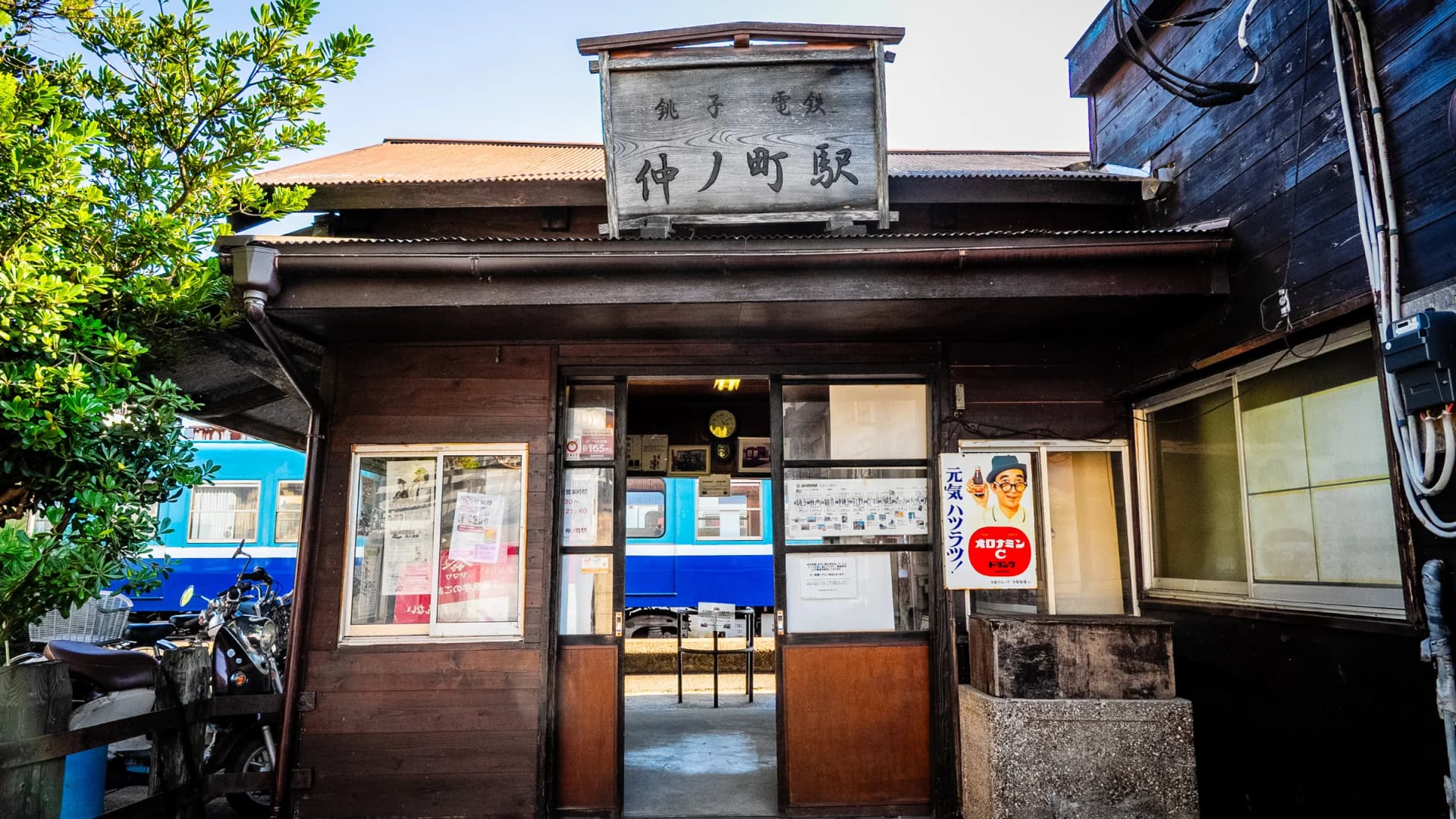
Six and a half kilometres of track, ten stations, twenty minutes end to end. The Choshi Electric Railway runs from the middle of Choshi, at the eastern tip of Chiba, out past cabbage fields to a fishing village on the Pacific. It is one of the smallest railways in Japan and, by some distance, the most inventive about staying alive.
The Railway That Sells Crackers
The line opened in 1923 and has been in financial trouble more or less ever since. Passenger numbers that once reached 1.5 million a year are now around a third of that.
What saved it was a biscuit. In the late 1990s, with the parent company collapsed and the railway about to follow, the staff fell back on a sideline they had started a few years earlier: nure-senbei, a soft soy-soaked rice cracker. The press took up the story, orders came in from across the country, and for a period the snack business earned more than the trains did. A second crisis in the 2000s was met with a plea posted online – buy our crackers, we need to fix the trains – which worked again.
Since then the company has diversified with a certain gallows humour. There is a snack stick called Mazui-bo, "the bad-tasting stick", named for the state of the company finances. There is a self-made film titled "Don't Stop the Train". There are recordings of level-crossing bells sold as music. For a year from 2025 the line even took the nickname Inubo Gakeppuchi Line – the Inubo cliff-edge line, which describes both the coastline it runs along and the company's position.
You can buy the crackers at four of the stations, and at one of them grill your own.
Riding It
Ten stations in twenty minutes. Five of them are worth getting off at.
Trains leave from a platform tucked inside JR Choshi Station. The rolling stock is second-hand and old – carriages that worked the Keio lines in Tokyo decades ago, later the Iyo Railway in Shikoku, and finished up here.
Nakano-cho comes first, one stop out, where the depot is and where old locomotives sit beside the track.
Kannon serves Iinuma Kannon, the temple at the centre of the old town. The station also sells taiyaki, and has done for long enough that people get off for that alone.
Beyond that the town thins into fields of cabbage – Choshi grows more spring cabbage than anywhere in Japan. This is the line's quietest stretch, four small halts serving little but the houses around them, before the track reaches the coast.
Kimigahama is one of a hundred beaches recognised nationally for their quality, with pines standing behind the shore across the road. People come for the sunrise, which is the reason to be there early.
Inubo is the busiest stop: the lighthouse, and the observatory on the hill at Kitafusa, ninety metres up, where enough of the horizon is visible that the curve of the earth shows. Several hotels along this stretch open their baths to visitors who are not staying, and the water looks out over the Pacific.
Tokawa, at the end of the line, keeps the feel of an old fishing settlement. Its lanes meet at right angles in a tight grid, and following them downhill brings you to the harbour.
Buy the day pass. A single fare from one end to the other costs the same as half of it, so it pays for itself on a simple return, and it comes with a rice cracker and discounts along the line. It is sold on board and at the staffed stations, though not at Choshi – and note that Suica and Pasmo are not accepted anywhere on the railway.
Most of the small stations are unstaffed, and services run roughly hourly, so it is worth having the timetable before setting out rather than after.
You might also like

Suzumushi Autumn Train
A retro-themed railway journey through autumn scenery is accompanied by the gentle sounds of bell crickets resonating through the carriages.
1 Sep – 15 Oct 2026Goshogawara · Aomori
Stove Winter Train
A retro winter rail journey through Aomori's snowy landscape, where coal-burning stoves warm passengers as they share stories and grill dried squid.
1 Dec 2026 – 31 Mar 2027Goshogawara · Aomori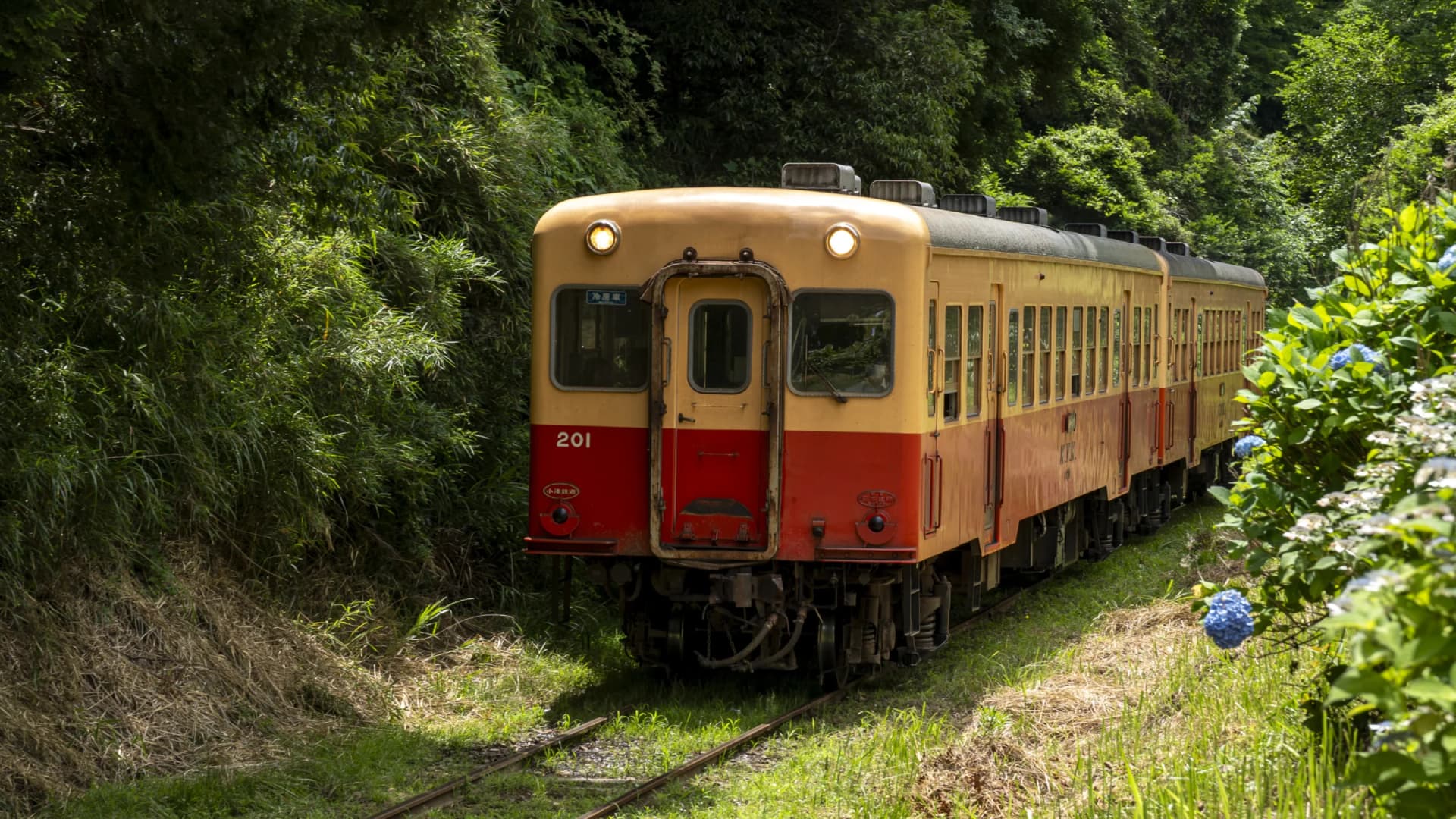
Kominato Line
An unelectrified line from the Chiba coast into the hills, where the ride is the whole point – wooden halts, open-sided carriages and rape blossom in spring.
Ichihara · Chiba
Furin Summer Train
A retro-themed summer train on the Tsugaru Railway Line adorned with furin, traditional Japanese wind bells that create soothing tinkling sounds.
1 Jul – 31 Aug 2027Goshogawara · Aomori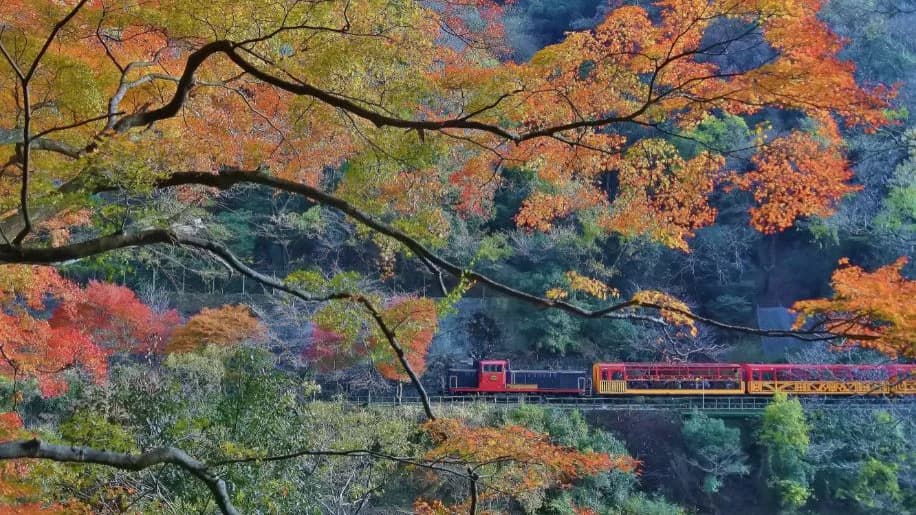
Sagano Romantic Train
The Sagano Romantic Train is a scenic sightseeing train near Arashiyama, Kyoto, running through the Hozugawa valley with different views across all four seasons.
Kyoto · Kansai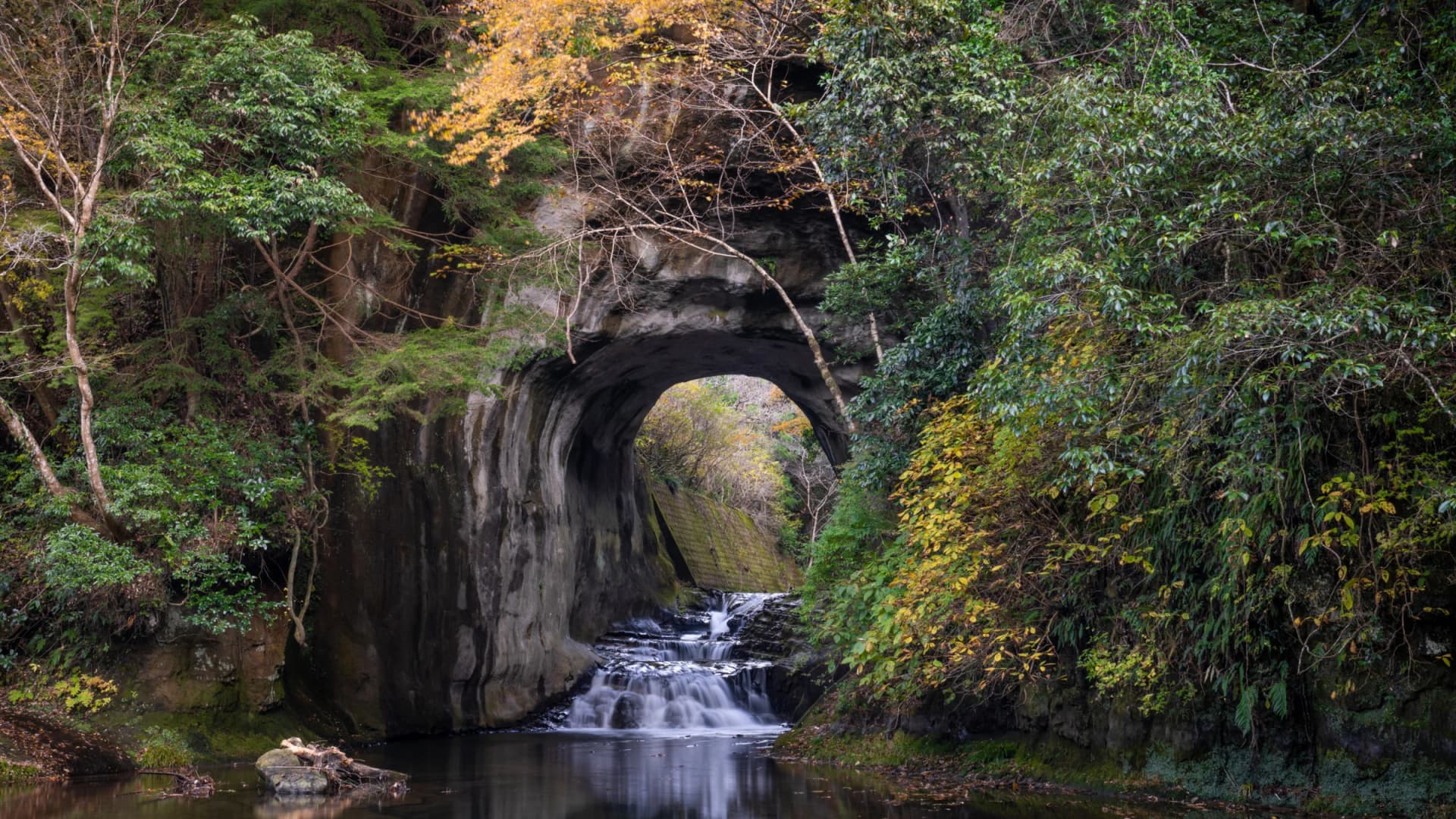
Shimizu Keiryu Hiroba
A wooded park in Kimitsu, where light entering an old river tunnel meets its reflection to form a heart on the water, best seen at dawn near the equinox.
Kimitsu · Chiba