Nagasaki Confucius Shrine
長崎孔子廟
The only Confucius temple in Japan built in full Chinese style, put up in 1893 by the Qing government and the Chinese community of Nagasaki.
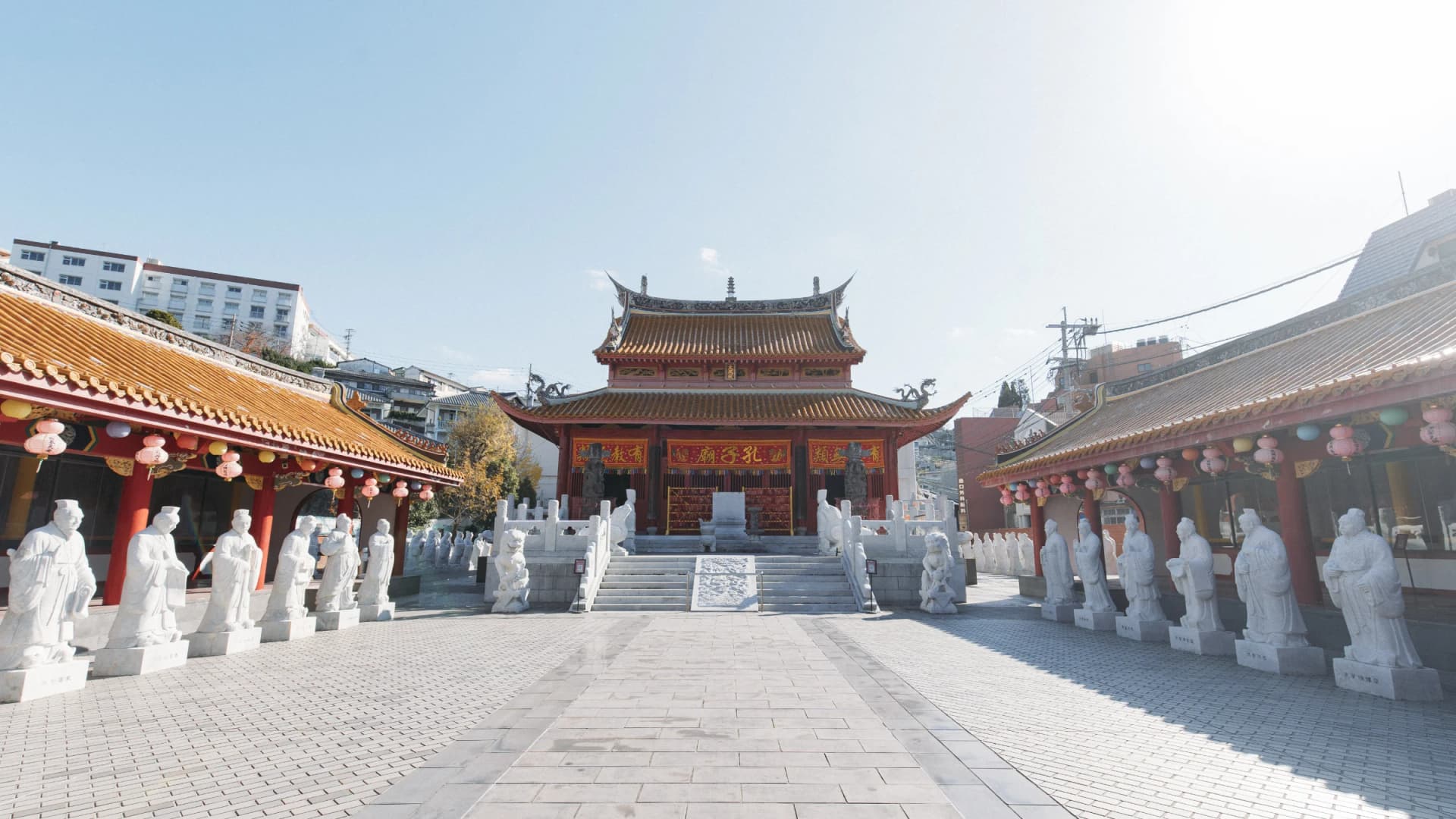
The Confucius shrine at Ouramachi in Nagasaki is the only one in Japan built throughout in Chinese style. It is a Confucian hall rather than a Shinto shrine or a Buddhist temple, and it went up in 1893, paid for and put up together by the government of Qing China and the Chinese community living in Japan. A museum of Chinese history stands next to it and the two are run as one.
Confucius lived from 551 to 479 BC, in the Spring and Autumn period of China. He taught that a person should hold to benevolence, right conduct, propriety, wisdom and good faith, and his sayings were gathered by his followers into the Analects. What he taught shaped education and morals across East Asia, not only in China.
Nagasaki had a Confucian hall long before this one. A scholar named Mukai Gensho founded a hall with a Confucius shrine at Kozenmachi in 1647, and it was moved across the city in 1717. It became a teaching office in the last years of the shogunate, passed into private hands after the school reforms of 1871, and was eventually taken down in 1959.
The present shrine is a separate foundation. Land at Oura was secured in 1892, building began in February 1893, and the work was finished that November. It took its present form in a rebuilding in 1967, and the museum was added in 1983.
For most of the twentieth century the shrine also held a school. The Jichu primary school for the children of Nagasaki's Chinese residents was founded inside the grounds in 1905, recognised by both the prefecture and the Chinese ministry of education, and moved to a new building in front of the shrine in 1967. It closed in 1988 as the number of children fell, and a language school took its place.
Places nearby
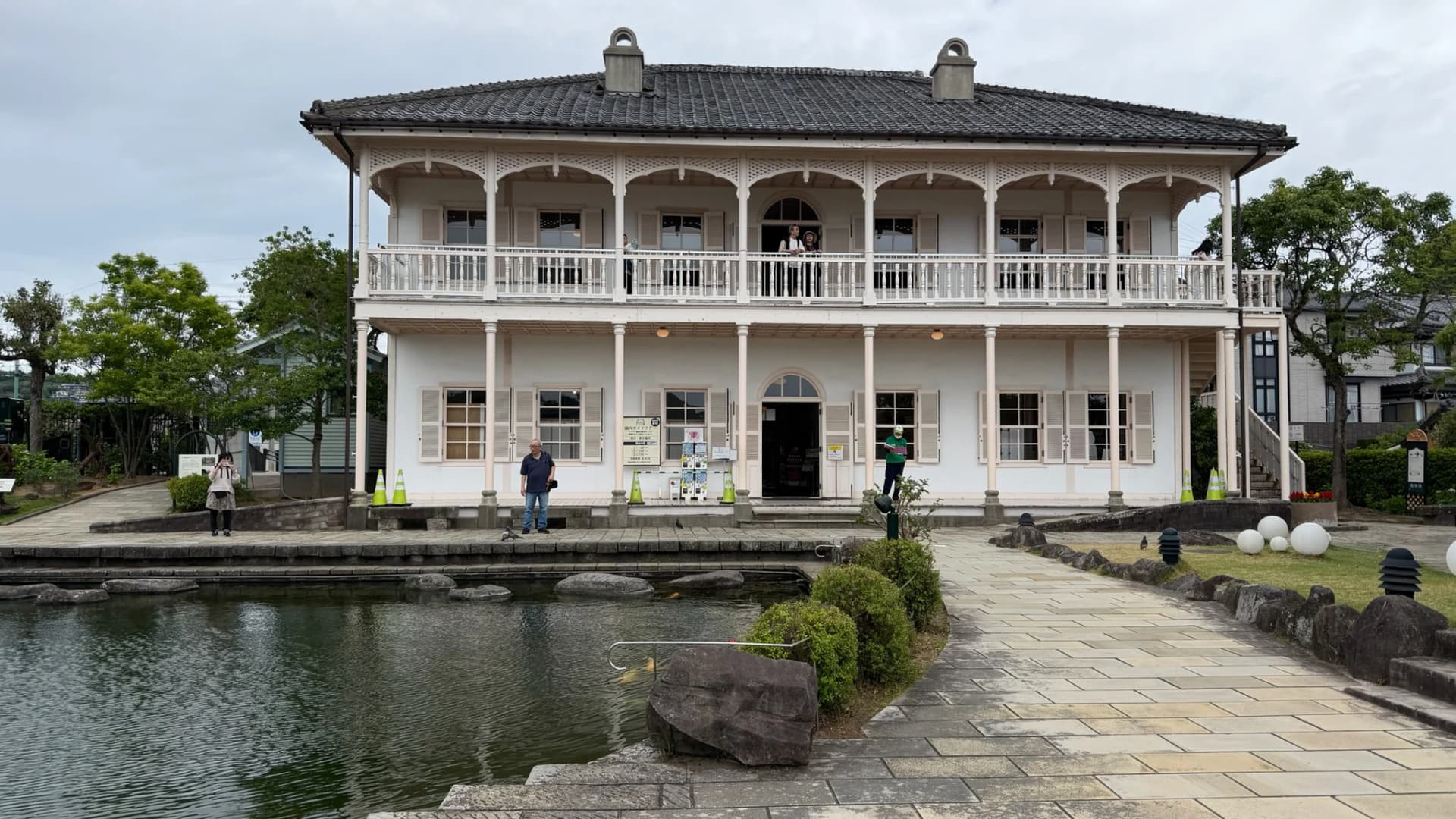
Glover Garden
A hillside park in Nagasaki holding the Western houses of the foreign settlement, among them the oldest wooden Western building in Japan.
Nagasaki · Nagasaki
Nagasaki Shinchi Chinatown
This historic Chinatown in Nagasaki, among Japan's oldest, was established by Chinese traders in the late 16th century with traditional architecture and Chinese New Year festivities.
Nagasaki · Nagasaki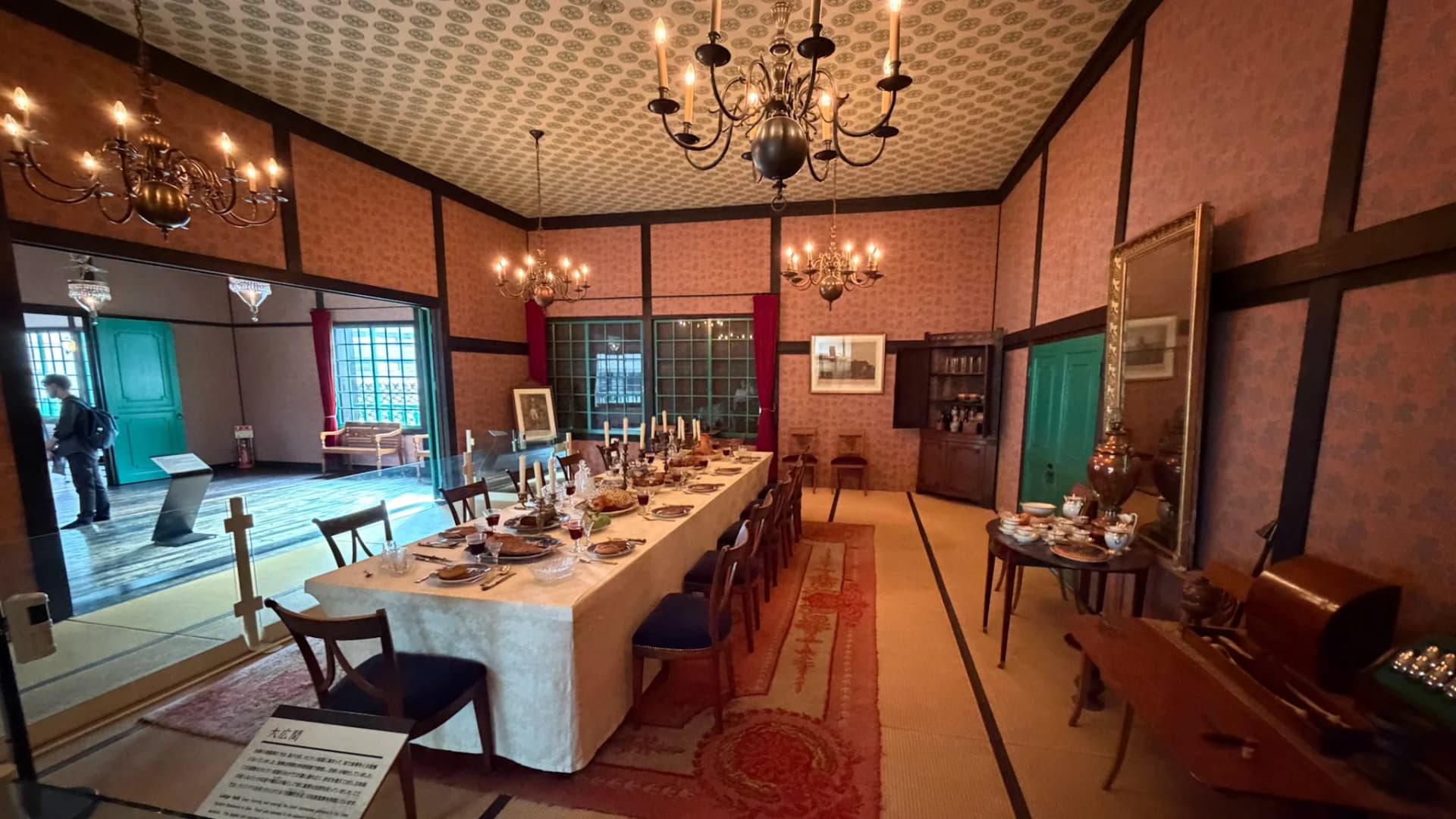
Dejima
The fan-shaped island in Nagasaki that was Japan's only opening to the West for more than two centuries, now rebuilt street by street.
Nagasaki · NagasakiYou might also like
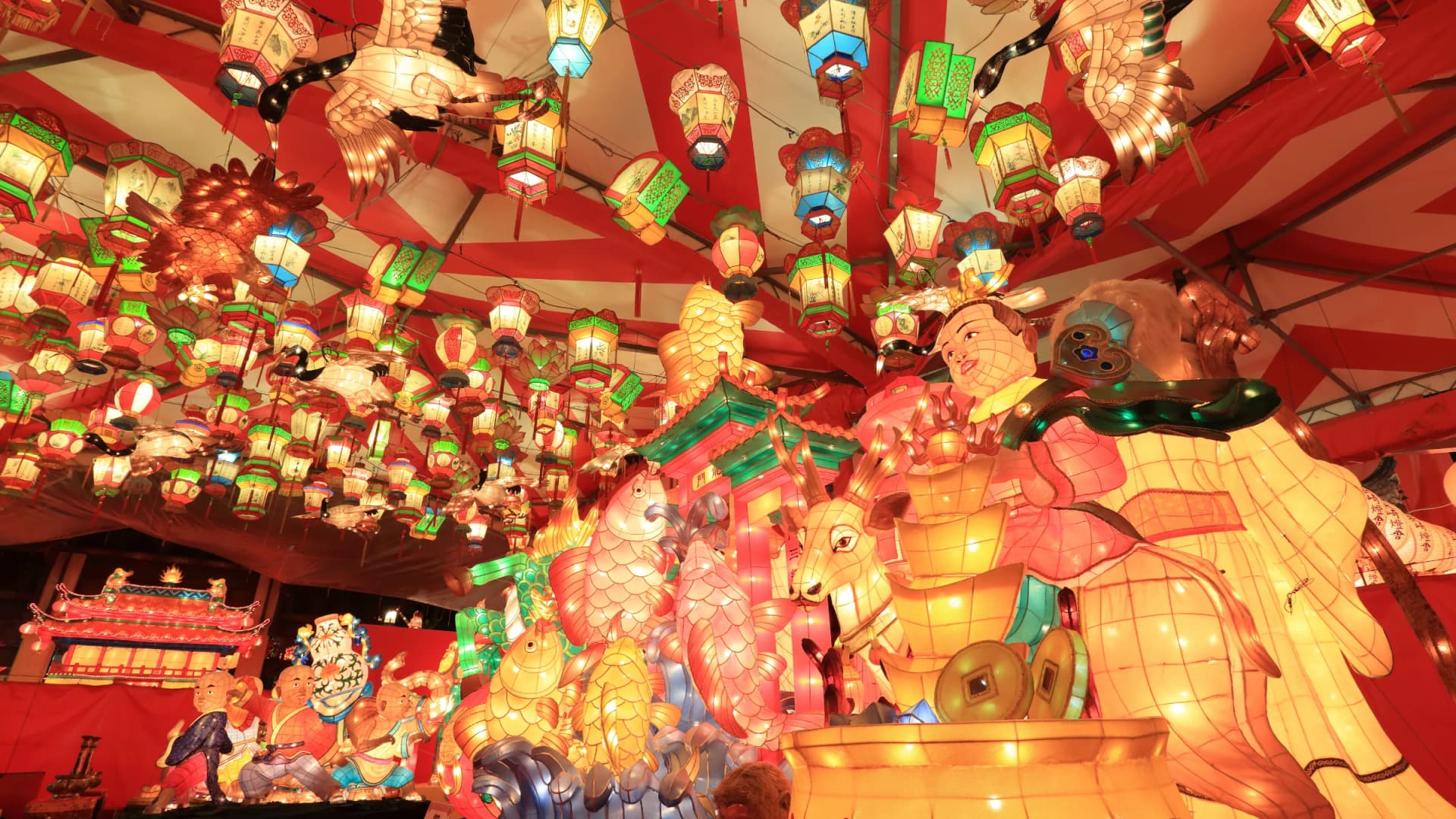
Nagasaki Lantern Festival
The festival illuminates Nagasaki's streets with around 15,000 Chinese lanterns, some reaching 10 metres, celebrating Lunar New Year traditions.
6–23 Feb 2027Nagasaki
Sengoku Chronicle: The Battle of Kawanakajima
A re-enactment on a river bed in Fuefuki, Yamanashi, where about seven hundred people in armour refight Takeda Shingen against Uesugi Kenshin.
8 Nov 2026Fuefuki · Yamanashi
Shingen-ko Festival
A historical reenactment festival in Kofu honors a 16th-century feudal lord with a large-scale procession featuring over 1,000 participants in period armor.
3–5 Apr 2027Kofu · Yamanashi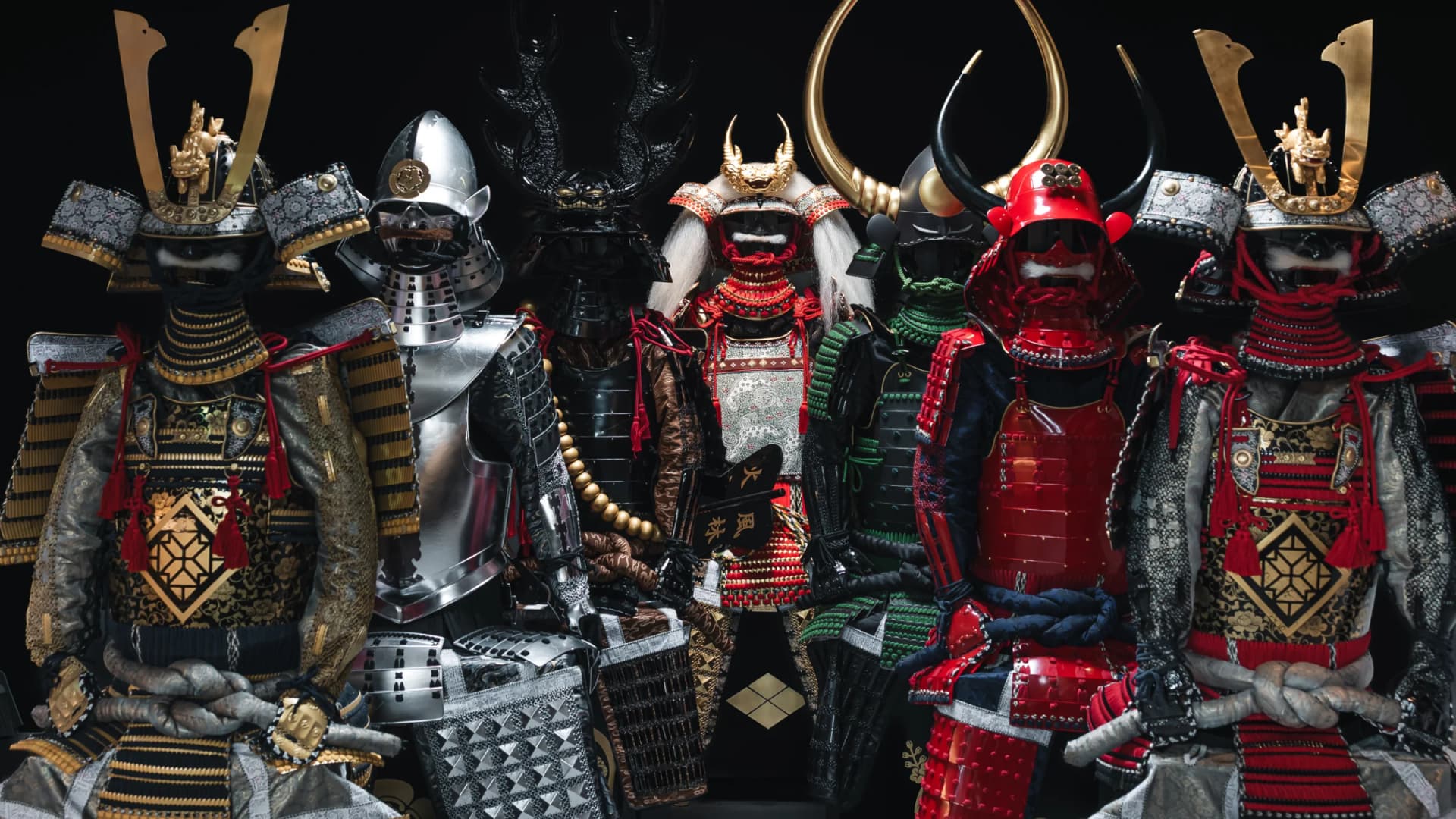
SHOGUN STUDIO JAPAN
A Kyoto studio where visitors put on real film-grade armour or hand-painted kimono and take tea in a tea room built for it, a minute from Umekoji-Kyotonishi.
Kyoto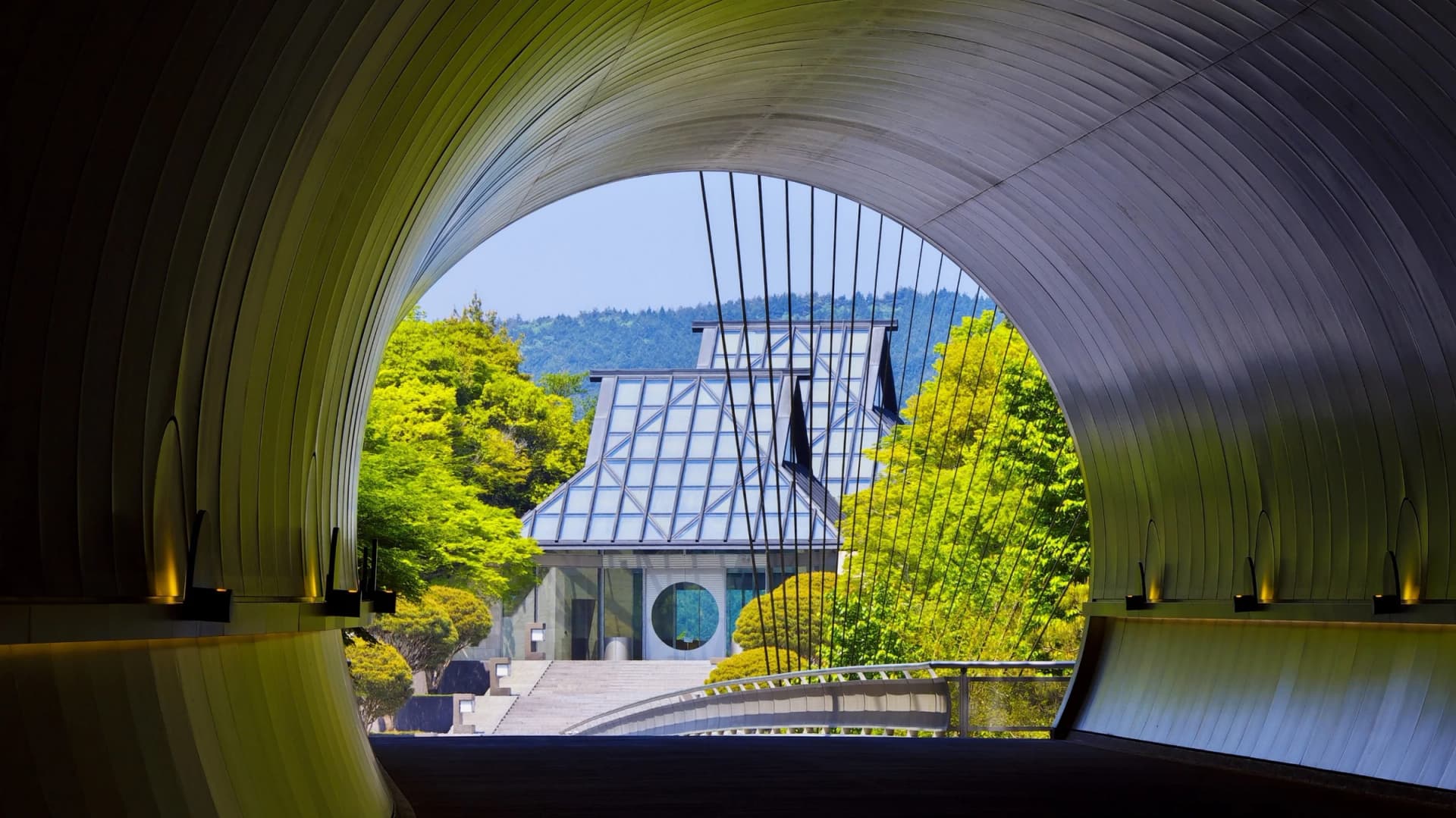
Miho Museum
A museum of 1997 in the mountains of Shiga, designed by I. M. Pei and mostly buried in the hillside, holding ancient art of the world alongside Japanese art.
Koka · Shiga
National Ainu Museum
Japan's first national museum dedicated to Ainu culture and the core facility of Upopoy, promoting understanding of this Indigenous heritage.
Shiraoi · Hokkaido