Enoshima Aquarium
新江ノ島水族館
An aquarium on the beach facing Enoshima, known for its jellyfish hall, a Sagami Bay tank with a school of sardines and the submersible Shinkai 2000.
Last entry 1 hour before closing. Longer hours in summer. Opens at 9:00 from 12/26 to 01/06 (closing at 16:00 on 01/01). Hours change in holiday periods, and the aquarium closes for a maintenance week each winter, so check the official calendar.
〒 251-0035How to get there
片瀬江ノ島Odakyu Enoshima Line5 min walk from the station
Enoshima Aquarium, known as Enosui (えのすい), stands on Katase Nishihama beach in Fujisawa, facing Sagami Bay and the island of Enoshima. It opened on 16 April 2004, replacing the older Enoshima Aquarium that had stood on the same beach since 1954, and its exhibits follow the life of Sagami Bay out into the Pacific. The keepers are called Enosui treaters, a name that plays on treating both the animals and the visitors.
History
The company behind the first aquarium was founded in 1952 by Hori Kyusaku, a former president of the film studio Nikkatsu. According to the aquarium, he reached the west beach of Enoshima on a drive, saw the island to the east and Mount Fuji to the west at dusk, and decided there and then to build an aquarium on the spot. It opened on 1 July 1954, and the aquarium counts it as the first modern aquarium in Japan.
Marine Land followed on 3 May 1957, with the first facility in Japan built to keep whales and dolphins, and the first dolphin show in the country. Emperor Showa, who studied hydrozoans in Sagami Bay, first visited on 18 January 1956 and came nine times in all. In 1988 the aquarium opened the Jellyfish Fantasy Hall, which it describes as the first exhibition hall for jellyfish in the world. The old buildings closed in 2003 and early 2004 to make way for the present one, a two-storey building with a basement that runs 253 metres along the beach.
Jellyfish Fantasy Hall
The hall is a half dome meant to suggest the inside of a jellyfish. Thirteen tanks of different sizes are set into its walls, and a spherical tank, Kurage Planet (クラゲプラネット), stands in the middle under changing light. About 14 species are on show at any time, among them the Pacific sea nettle, one of the largest jellyfish in the world. The aquarium has kept jellyfish for more than 70 years. In 2005 it became the first anywhere to breed Nomura's jellyfish (Echizen kurage, エチゼンクラゲ), the largest jellyfish in Japanese waters, from eggs spawned in a tank.
Sagami Bay
Sagami Bay lies near the meeting of warm and cold currents, and its waters run from the deep sea to rocky shores, sandy beaches and tidal flats. The largest tank in the building recreates its reefs and open water, with waves breaking on the rocks above, and holds a school of about 8,000 Japanese sardines. Smaller tanks show a kelp forest, fish of the Sagami River, and four real places on the bay: a tidal flat, an eelgrass bed, the coral off Zushi and a fishing port.
Shirasu (シラス), the tiny young fish that are a local speciality of Shonan and Enoshima, are on permanent display alive, and the aquarium has bred them over several generations. A touch pool holds animals from the bay and the rocky shore of Enoshima.
The deep sea
With Suruga Bay and Toyama Bay, Sagami Bay is known worldwide as an inner bay with a deep-sea floor. Deep Sea I is run with JAMSTEC, the Japan Agency for Marine-Earth Science and Technology, as a joint study of how to keep deep-sea animals over the long term, and includes a research room. One tank recreates three chemosynthetic communities of the sea floor: a cold seep, a whale fall and a hydrothermal vent.
Deep Sea II shows Shinkai 2000, the first full-scale crewed research submersible in Japan, completed in 1981 to dive to 2,000 metres. It made 1,411 dives between January 1982 and November 2002, more of them in Sagami Bay than anywhere else, including its first and its last. The Japan Society of Mechanical Engineers listed it as Mechanical Engineering Heritage No. 87 in 2017, and the Japan Society of Naval Architects and Ocean Engineers as Ship Heritage No. 33 in 2021.
Other exhibits
The Dolphin Show Stadium was designed so that Enoshima and Mount Fuji form the backdrop to the pool, where bottlenose and Risso's dolphins perform. At the outdoor Sea Turtle Beach, loggerhead and green turtles stand for the turtles of Sagami Bay. Loggerheads are the only ones that lay eggs on its shores, and the aquarium has worked with local government and residents to protect their nests for more than 50 years.
Humboldt penguins and spotted seals share a zone on the cold seas, and Asian small-clawed otters have a riverside forest. The Pacific zone moves from the cold Oyashio current to the bright reefs of the warm Kuroshio. A separate room presents the biological research of the imperial family: Emperor Showa's hydrozoans from Sagami Bay near the Hayama imperial villa, the Emperor Emeritus's studies of gobies, and Crown Prince Akishino's research on catfish and people.
What's on here
| Date | Event |
|---|---|
| 1 Nov – 25 Dec 2026 | ENOSUI CHRISTMAS |
Getting There

Planning a trip? Fit this into a trip and Oni plans the rest around it.
You might also like

Hakone-en Aquarium
Aquarium on Lake Ashi, Hakone, Kanagawa. At 723 metres it is the highest aquarium in Japan with a large seawater tank, with a Seal Plaza and penguins.
Hakone · Kanagawa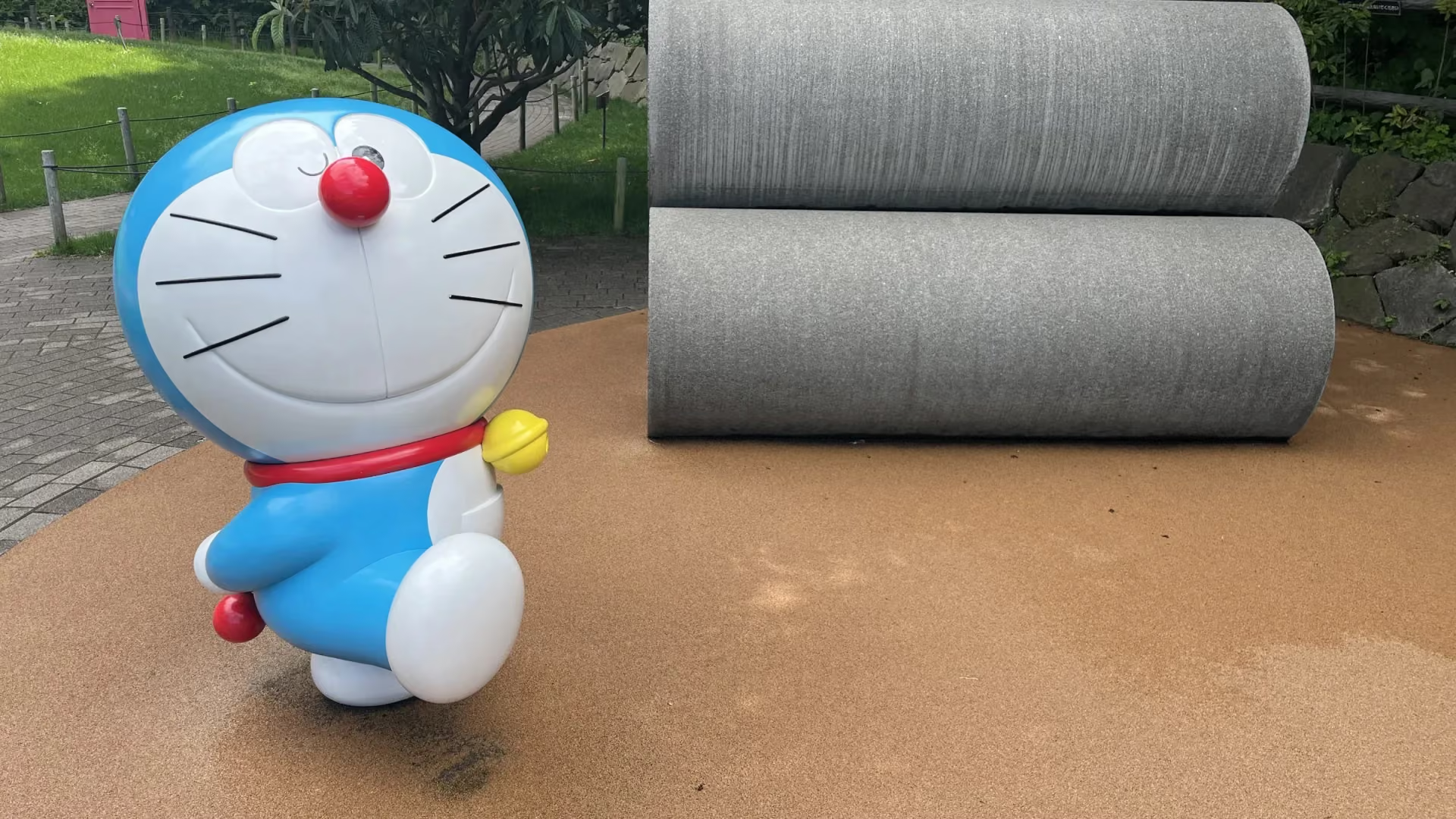
Fujiko・F・Fujio Museum
Museum in Kawasaki on the manga artist Fujiko F. Fujio, creator of Doraemon, with his original artwork, his desk and library, and a theater of short films.
Kawasaki · Kanagawa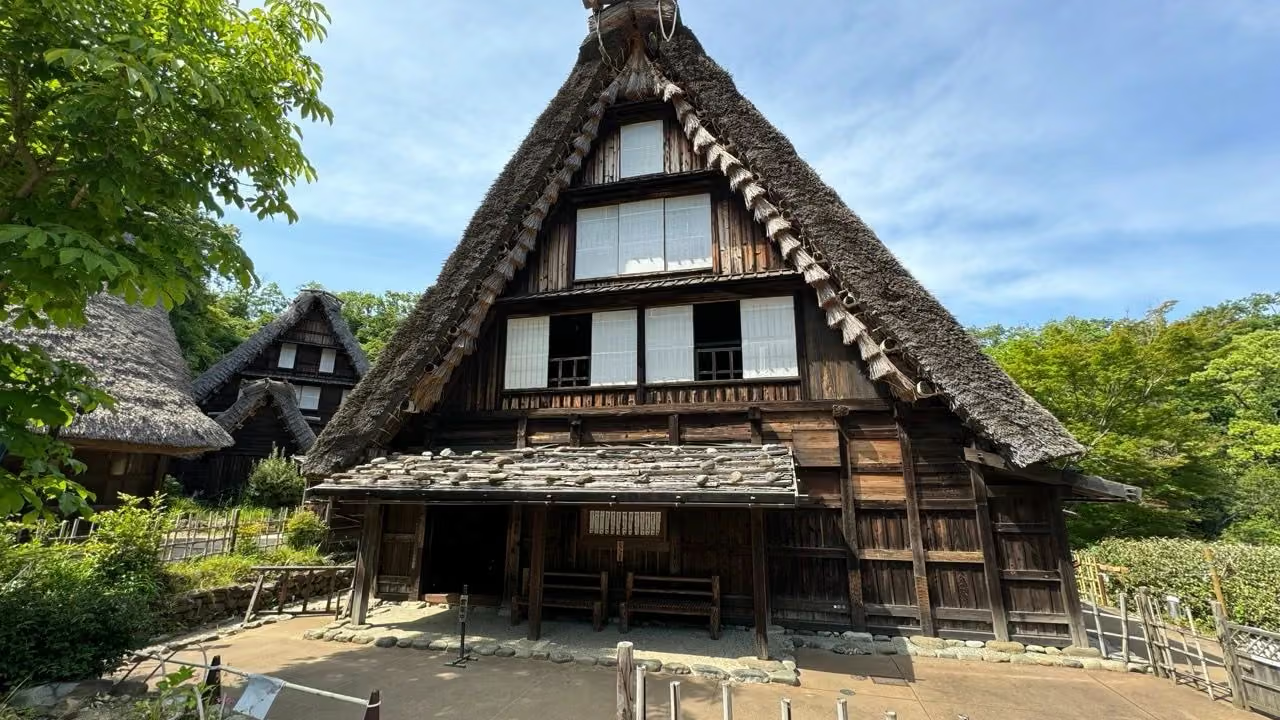
Japan Open-Air Folk House Museum
Open-air museum in Kawasaki with 25 old houses and other buildings moved from across Japan, plus indigo-dyeing sessions and a soba restaurant.
Kawasaki · Kanagawa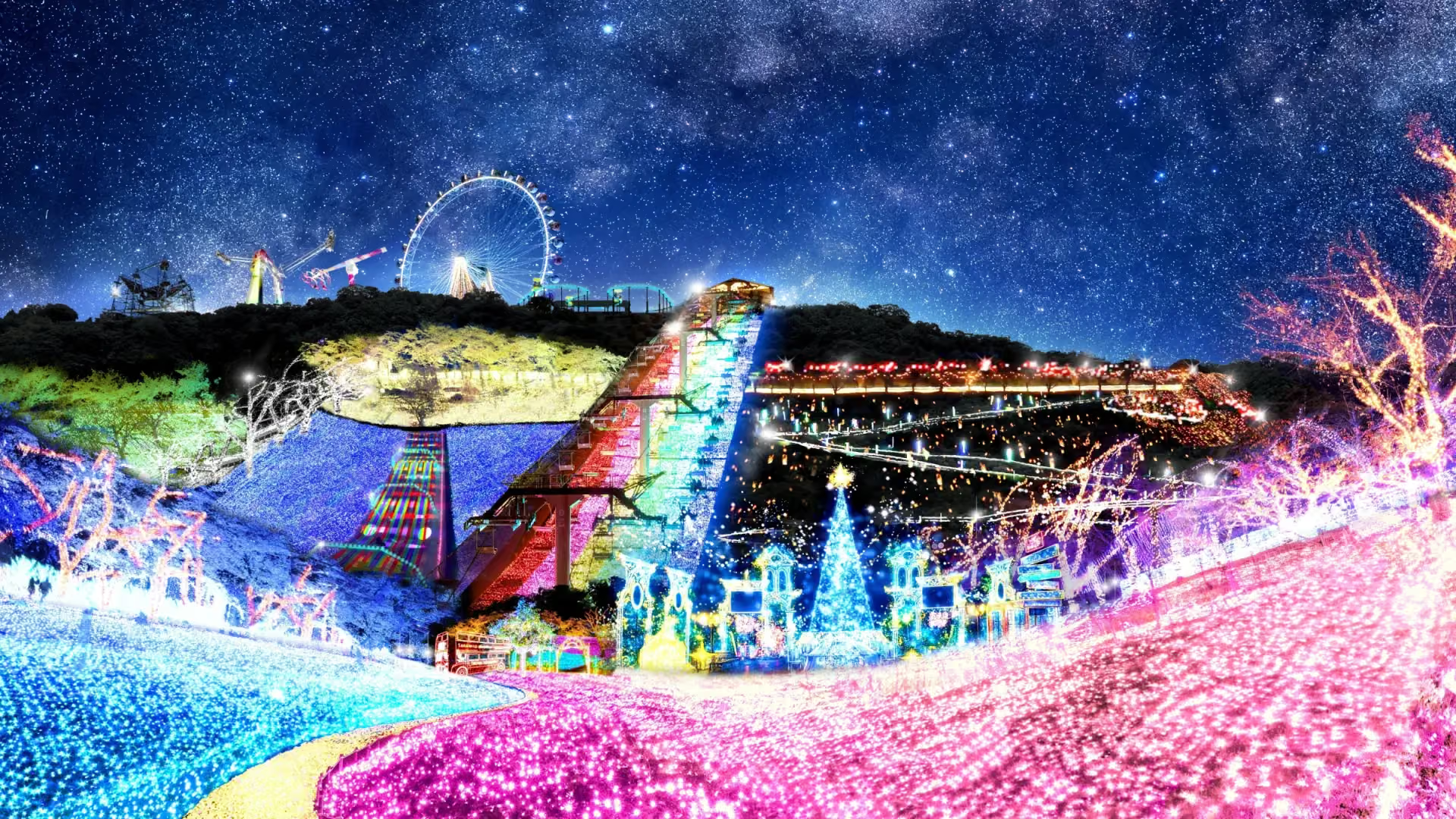
Sagamiko Illumillion
About six million lights on the hillsides of Sagamiko MORI MORI in Sagamihara, one of the Three Major Illuminations of Kanto, with music shows and night rides.
14 Nov 2026 – 9 May 2027Sagamihara · Kanagawa
Tokyo Toy Show
Japan's largest-scale toy fair, run by the Japan Toy Association at Tokyo Big Sight, with trade days for the industry and public days of hands-on exhibits.
27–30 Aug 2027Exact date not confirmed yetTokyo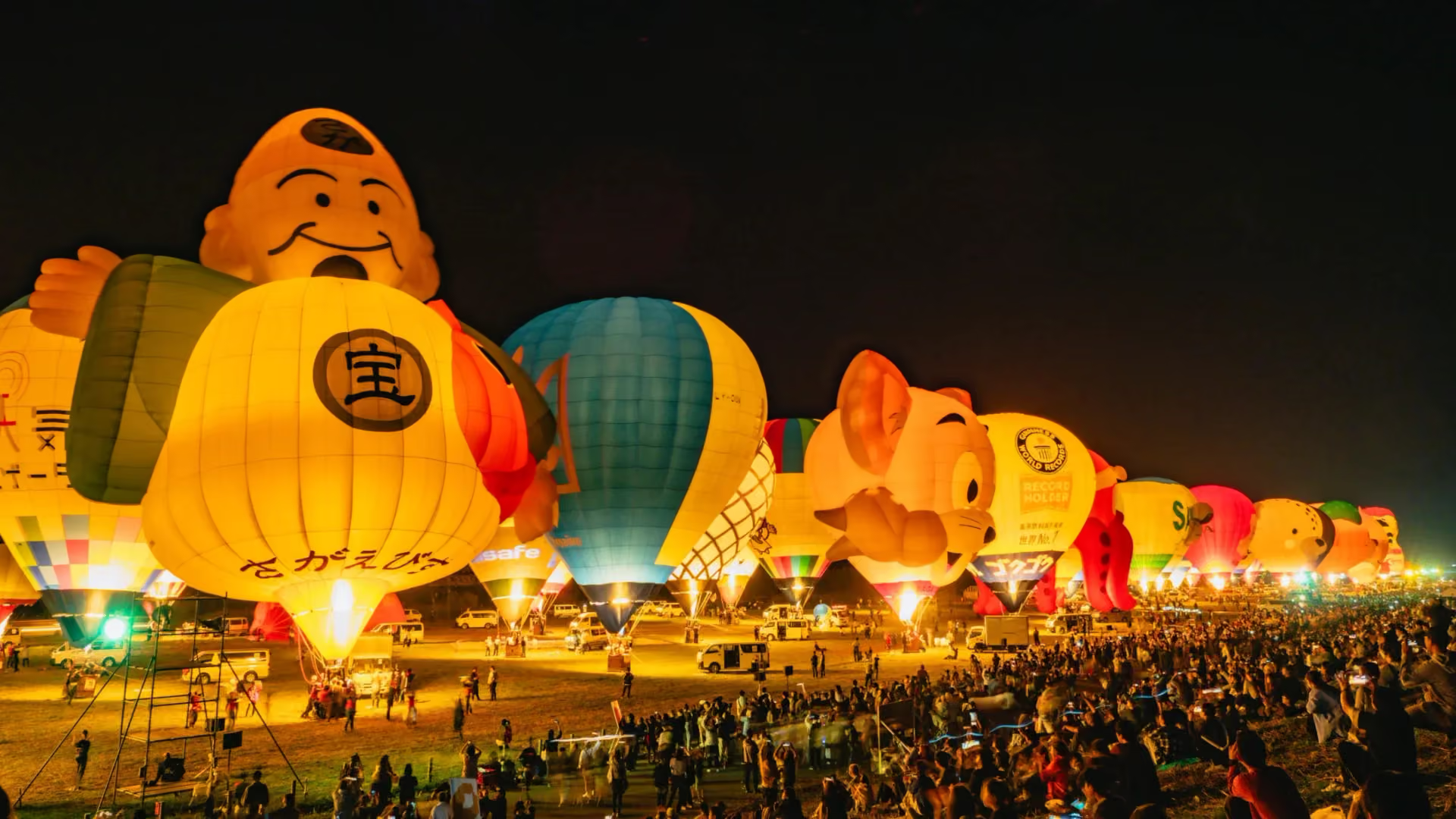
Saga International Balloon Fiesta
One of Asia's largest hot-air balloon events, where around 100 balloons rise over the Kase River in Saga each autumn in a five-day competition and festival.
30 Oct – 3 Nov 2027Exact date not confirmed yetSaga