

Hinomisaki Shrine
日御碕神社
Two shrines on one site at the western tip of the Shimane Peninsula, rebuilt in the 1630s and holding a National Treasure suit of armour.
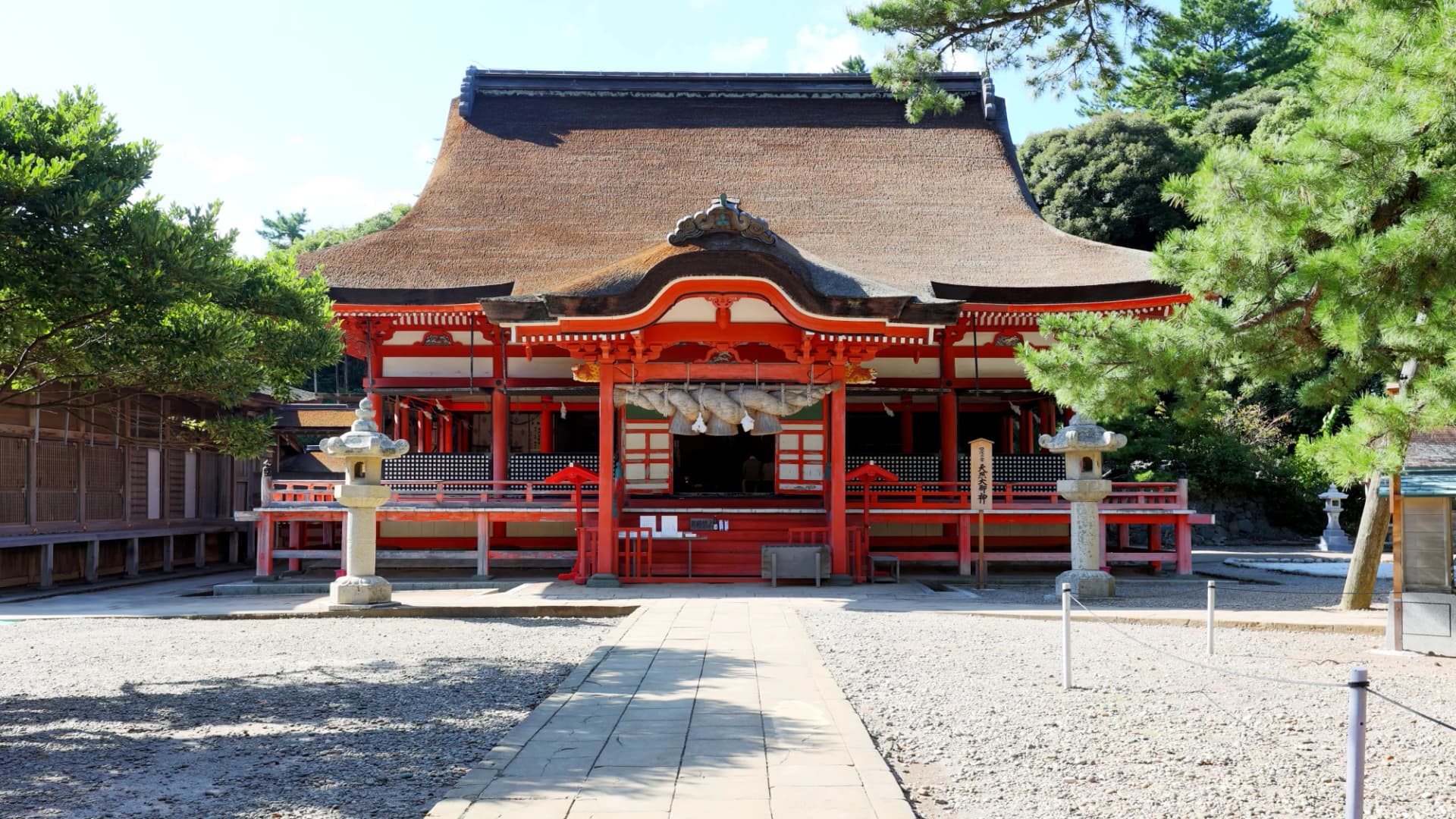
Hinomisaki Shrine stands at the western tip of the Shimane Peninsula, in Taisha-cho in the city of Izumo. It is made up of two shrines on one site: the upper shrine, Kaminomiya, and the lower shrine, Hishizuminomiya.
History
Kaminomiya enshrines Susanoo no Mikoto and Hishizuminomiya enshrines Amaterasu Omikami. Both stood elsewhere first. By the shrine's own account Kaminomiya was on the hill behind the present buildings, and Hishizuminomiya came to the site around 948 from Fumishima, an island about 200 metres to the west.
In the late Heian period Hinomisaki was known in the capital as a centre of Shugendo, a tradition of religious training carried out in the mountains. By the Sengoku period it ranked alongside Izumo Taisha as the guardian shrine of Izumo province, supported by the imperial court, the shogunate and the daimyo.
The buildings standing now were put up between 1635 and 1643, on the orders of the third Tokugawa shogun, Iemitsu. Fourteen of them, with two torii, were made Important Cultural Properties in 1953.
Treasures
The best known of the shrine's treasures is the shiroito odoshi yoroi, a suit of armour laced with white silk cords, which is a National Treasure. Much of the rest is armour, swords and other work given by warriors, a large part of it now Important Cultural Property or Cultural Property of Shimane Prefecture.
The shrine keeps a copy of the Izumo no Kuni Fudoki, the old record of Izumo province, given in 1634 by Tokugawa Yoshinao, lord of the Owari domain. It is known as the oldest copy of the text that survives.
The shrine also holds papers from the rebuilding in the 1630s, among them records of the carving and the painting, and the original drawings.
You might also like

Takachihogawara
A sacred highland at 970 meters on Mount Kirishima's slopes, legendary in Japanese mythology as where the heavenly grandchild descended to rule.
Kirishima · Kagoshima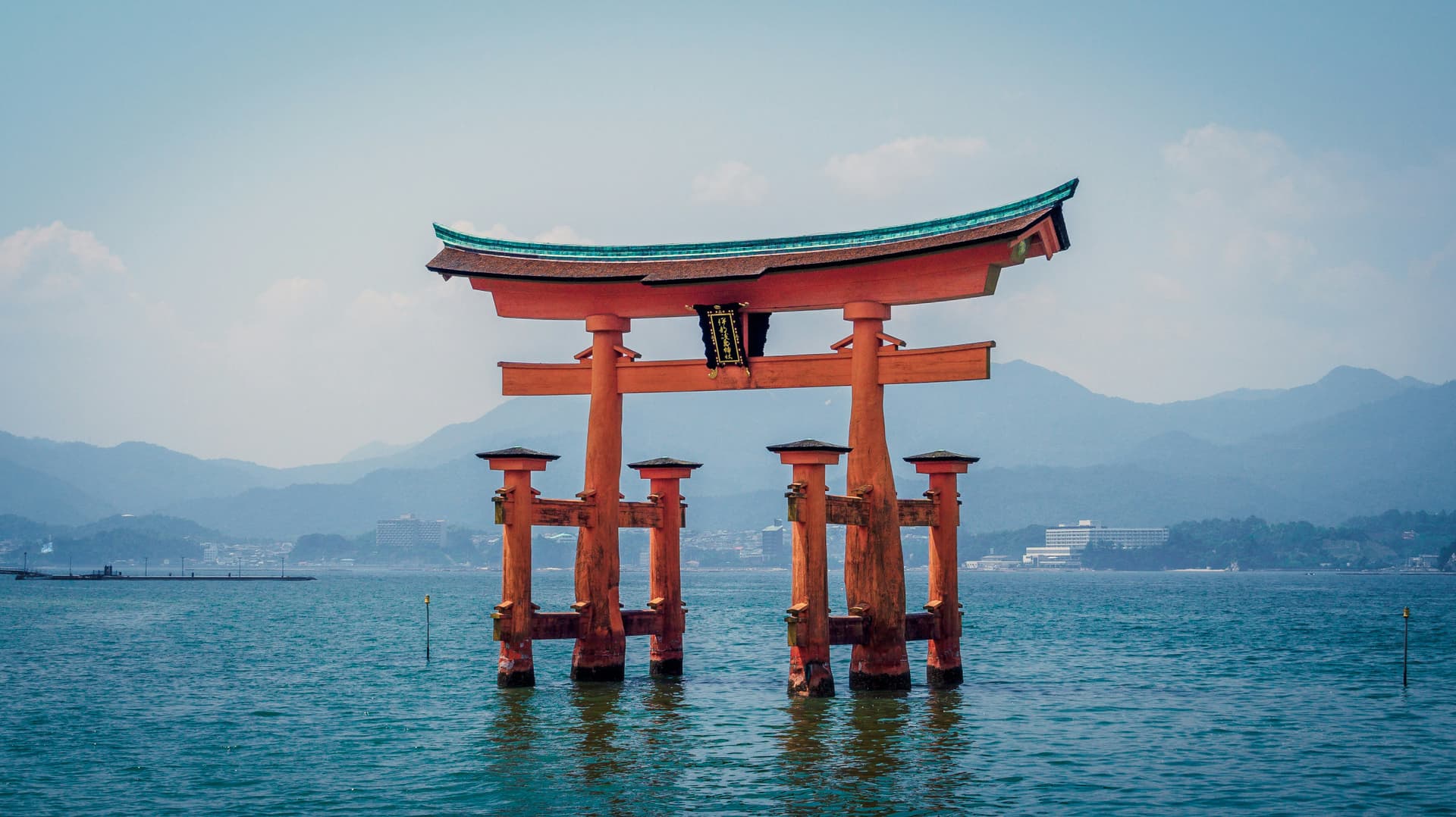
Itsukushima Shrine
The floating shrine of Miyajima, built out over a tidal cove, with its great vermilion torii standing in the sea off the sacred island.
Hatsukaichi · Hiroshima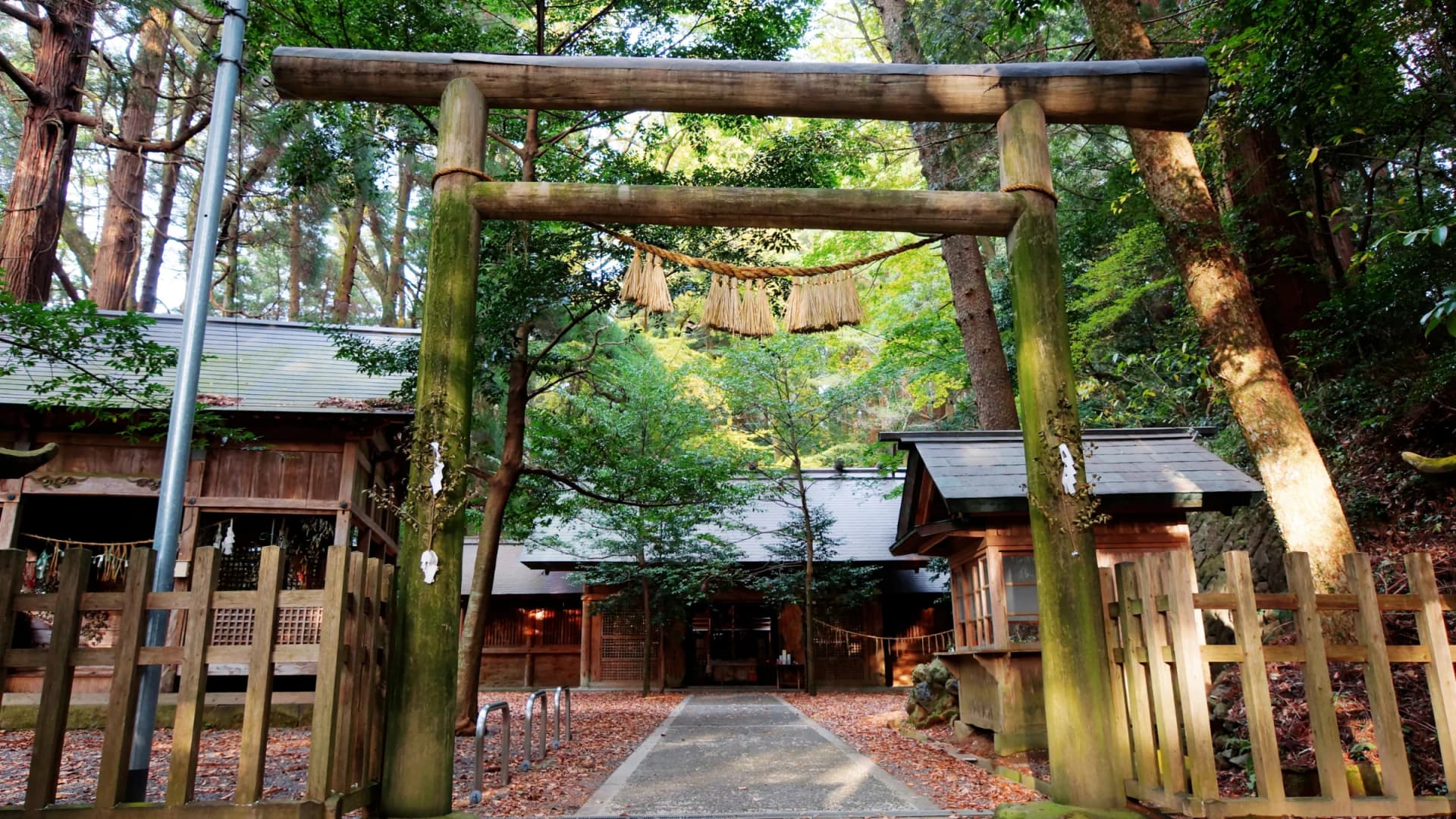
Amano Iwato Shrine
A shrine at Takachiho that worships the cave where the sun goddess is said to have hidden, leaving the world in darkness.
Miyazaki
Nagano Gion Festival
The Nagano Gion Festival celebrates Susanoo-no-Mikoto, the deity of storms and protection, through mikoshi processions at Yasaka Shrine near historic Zenkoji temple.
6 Jun 2027Nagano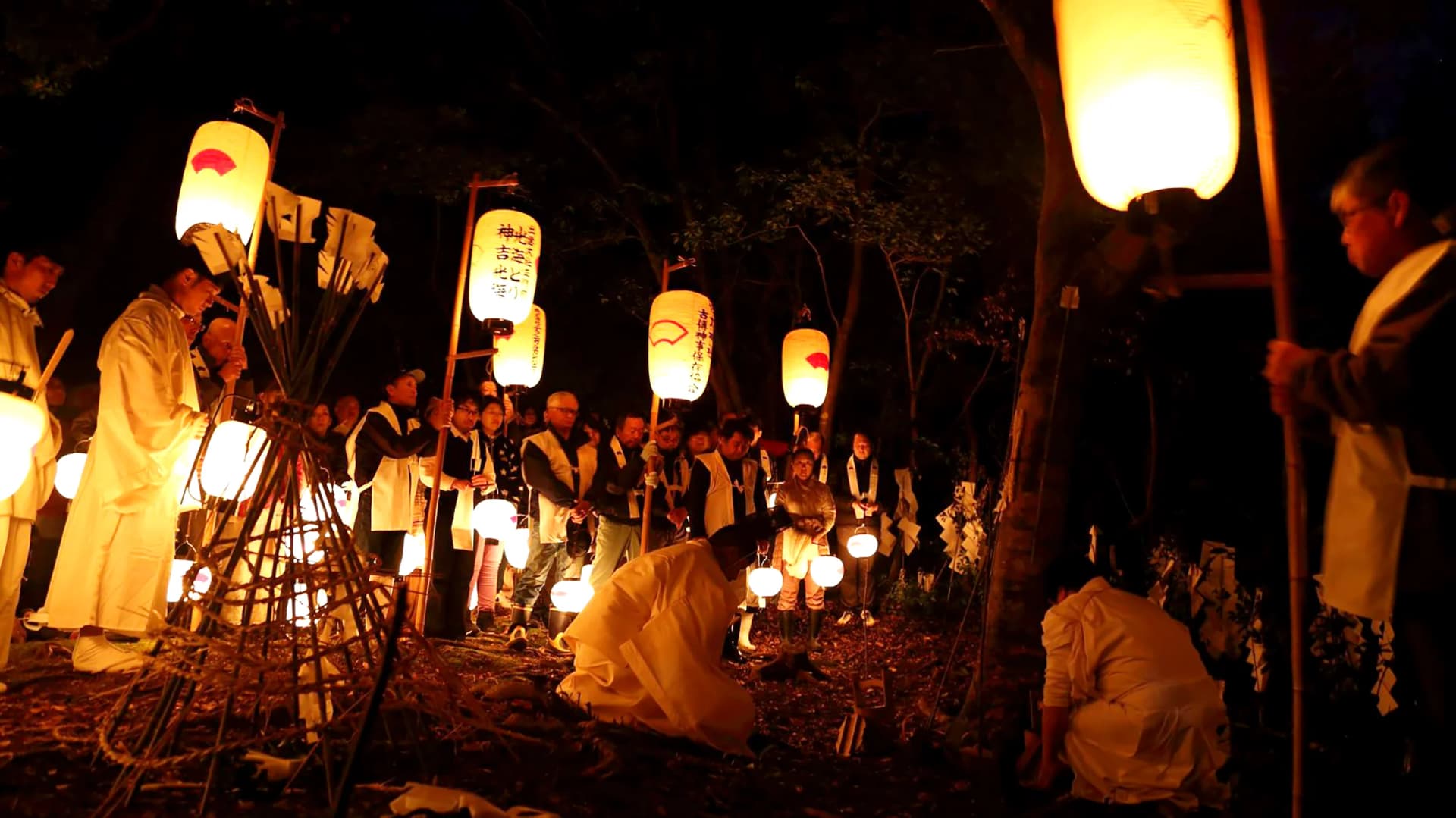
Kamiari Festival
Once a year the gods of Japan are said to abandon their shrines for Izumo, where a season of quiet rites welcomes, hosts, and finally sends them home again.
18–25 Nov 2026Izumo · Shimane
Tsuchizaki Shinmeisha Shrine Annual Celebration And The Float Festival
Elaborate floats and traditional performances honor this port town's spiritual guardian, a shrine established in 1620 by local leaders.
20–21 Jul 2027Akita