Yoshida Shrine
吉田神社
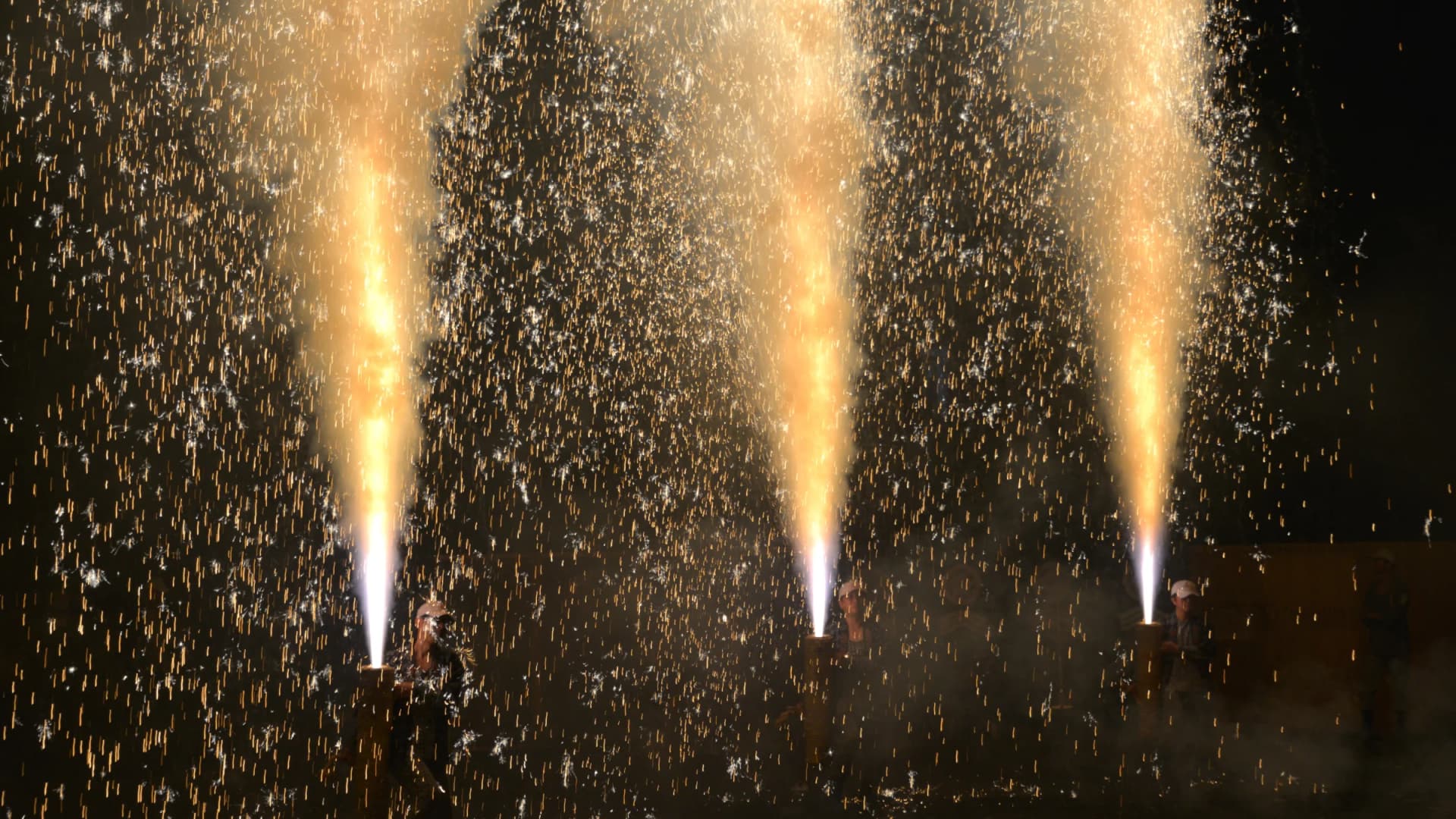
Yoshida Shrine in Toyohashi, Aichi, dates to 1124, stood within Yoshida Castle under its lords, and is known as the birthplace of tezutsu hand-held fireworks.
〒 440-0891How to get there
市役所前7 min walk from the station
Yoshida Shrine stands beside the ruins of Yoshida Castle on the south bank of the Toyokawa River. It enshrines Susanoo no Mikoto and is known as the birthplace of tezutsu hand-held fireworks.
History
Accounts of the founding vary, but the former priestly family's records place it in 1124, when an epidemic struck the area and Gozu Tenno – a deity associated with warding off plague – was invited here and petitioned to drive the sickness away.
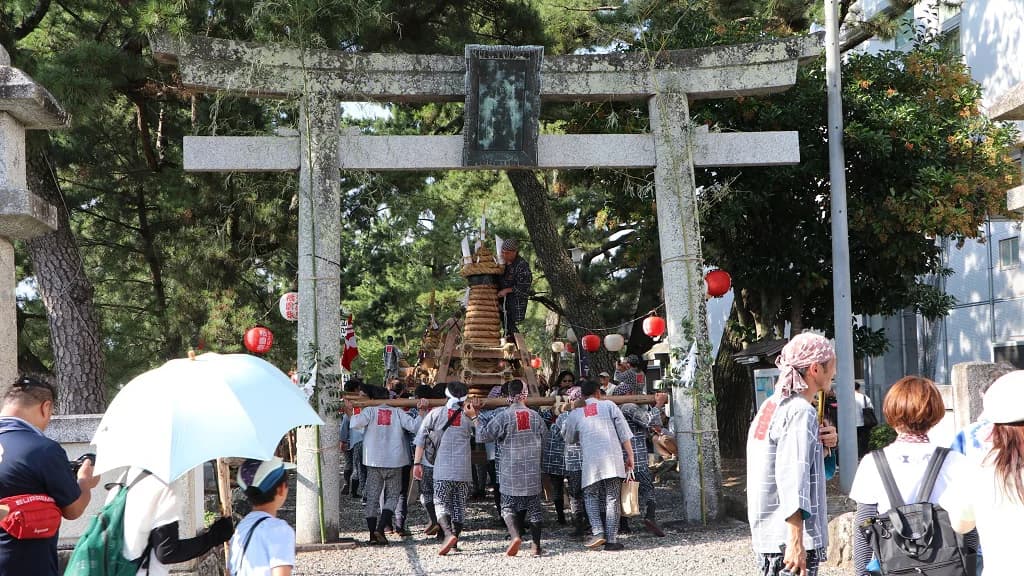
The shrine claims a close association with Minamoto no Yoritomo, who is said to have sent proxies to worship here in 1178 and 1186. That connection survives in the Yoritomo Procession, the centrepiece of the shrine's annual festival.
Once the castle was built, the shrine stood within its grounds and came under the patronage of its lords. Imagawa Yoshimoto, Sakai Tadatsugu, and Ikeda Terumasa all supported it, and Tokugawa Ieyasu granted it thirty koku of land. Every construction and repair of the shrine buildings through the Edo period – two rebuildings and fourteen repairs – was carried out by a castle lord. It took the name Yoshida Shrine in 1869. The present worship hall dates from 1884 and the main hall from 1893, both built with donations from the parish after a typhoon brought a cedar down on the earlier structure. The shrine remains the tutelary shrine of eight parish districts, which together stage the Toyohashi Gion Festival each July.
On the grounds
The stone torii dates from 1746, with a plaque written by the last lord of Yoshida Domain. Near it lies the Yogoseki, a large stone unearthed during a torii rebuilding in 1673; an oracle directed that the stone be left in place and the torii moved instead, and it has been venerated since as a place where a deity may manifest. A monument marking the birthplace of Mikawa's tezutsu fireworks was erected in 1993.
Three subsidiary shrines stand on or near the grounds: the Kinkanmaru Inari Shrine, worshipped for career advancement and protection against misfortune; the Izawa Shrine; and the Susanoo Shrine in Shinhonmachi, founded in 1186, which serves as the resting place for the portable shrine during the July festival and holds its own ring-passing rite on 31 July.
Cultural properties
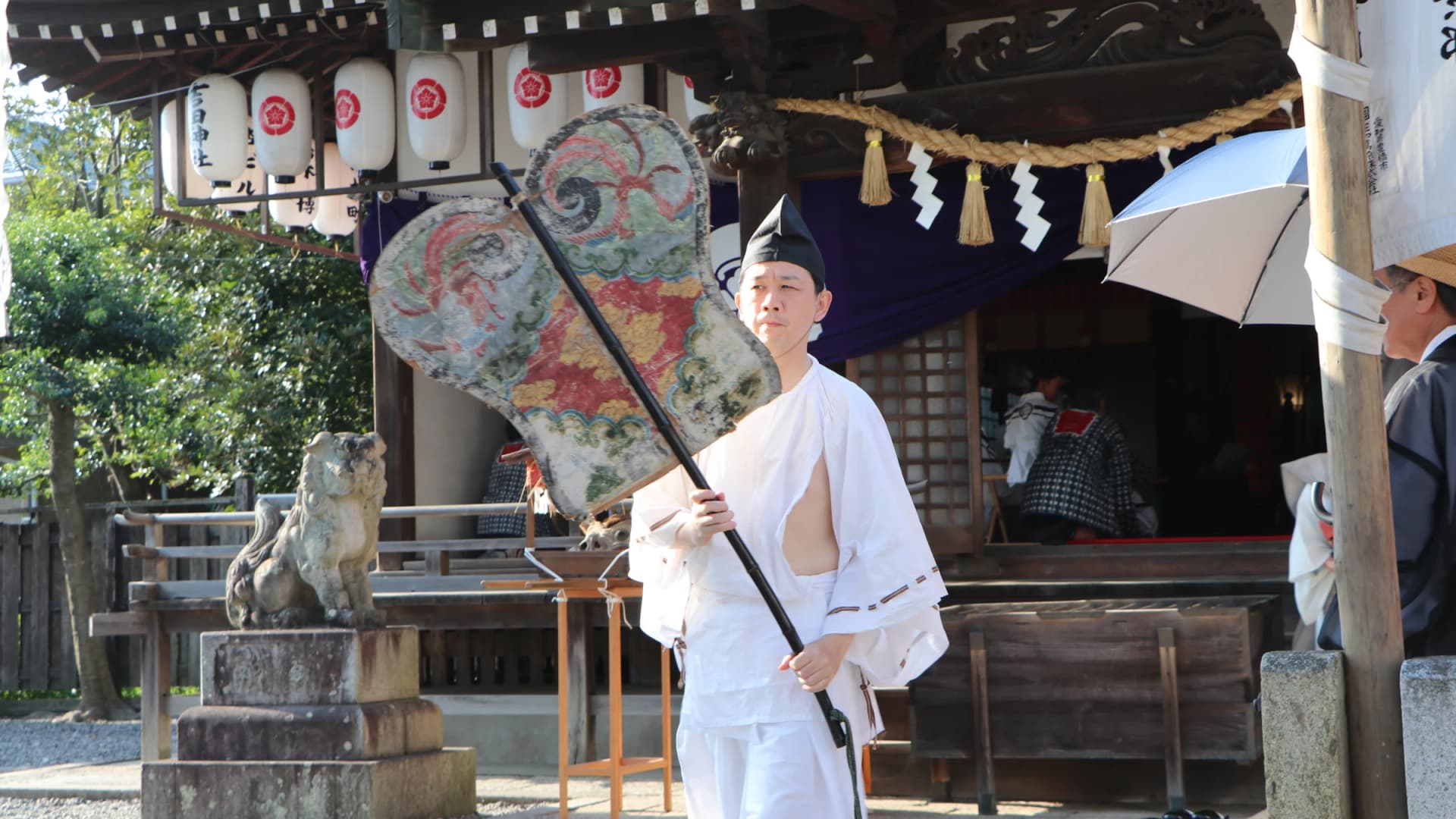
Between 2021 and 2024, Toyohashi City designated several of the shrine's holdings as cultural properties. Among them are a pair of Kamakura-period wooden lions; a lion head said to have been donated by Imagawa Yoshimoto, which still leads the portable shrine procession facing south; a demon mask also attributed to Yoshimoto; ridge tablets recording the construction and repair of the shrine's portable shrines from 1547 onward, valuable as sources on Yoshida from the Sengoku through the Edo period; and a votive painting of 1890 depicting the festival fireworks and procession as they were in the late Edo years.
Getting There

Planning a trip? Fit this into a trip and Oni plans the rest around it.
Upcoming events at this place
Toyohashi Gion Festival
Held annually in Toyohashi, Aichi, the Gion Festival combines tezutsu hand-held fireworks with the Yoritomo Procession, and dates back to the Edo period.
17–19 Jul 2027 · Dates not yet confirmedToyohashi · AichiYou might also like

Abare Festival
Illuminated lanterns parade through coastal Ushitsu in a celebration rooted in legend, featuring frenzied rituals to honor spiritual protection from epidemics.
3–4 Jul 2027 · Dates not yet confirmedNoto · Ishikawa
Owari Okunitama Shrine
Owari Okunitama Shrine is the regional guardian of Owari Province, enshrining the sacred land spirit revered for protection of agriculture and commerce since the Nara period.
Inazawa · Aichi
Osu Kannon
A Shingon temple in central Nagoya, moved here by Tokugawa Ieyasu in 1612, whose Osu Bunko library holds a National Treasure manuscript of the Kojiki.
Nagoya · Aichi
Tagata Shrine
This shrine dedicated to fertility and agricultural prosperity enshrines deities rooted in Japan's ancient traditions of harvest blessing and family well-being.
Komaki · Aichi
Nagano Gion Festival
The Nagano Gion Festival celebrates Susanoo-no-Mikoto, the deity of storms and protection, through mikoshi processions at Yasaka Shrine near historic Zenkoji temple.
6 Jun 2027 · Dates not yet confirmedNagano
Morioka Fall Festival
One of Iwate's most enduring celebrations, this autumn festival originated as prayers for harvest, now featuring ornate floats and traditional parades.
14–16 Sep 2027 · Dates not yet confirmedMorioka · Iwate