

Ishioka Festival
石岡のおまつり
Around thirty lion carts and twelve tiered floats fill central Ishioka for three days each September, at one of the three great festivals of the Kanto region.
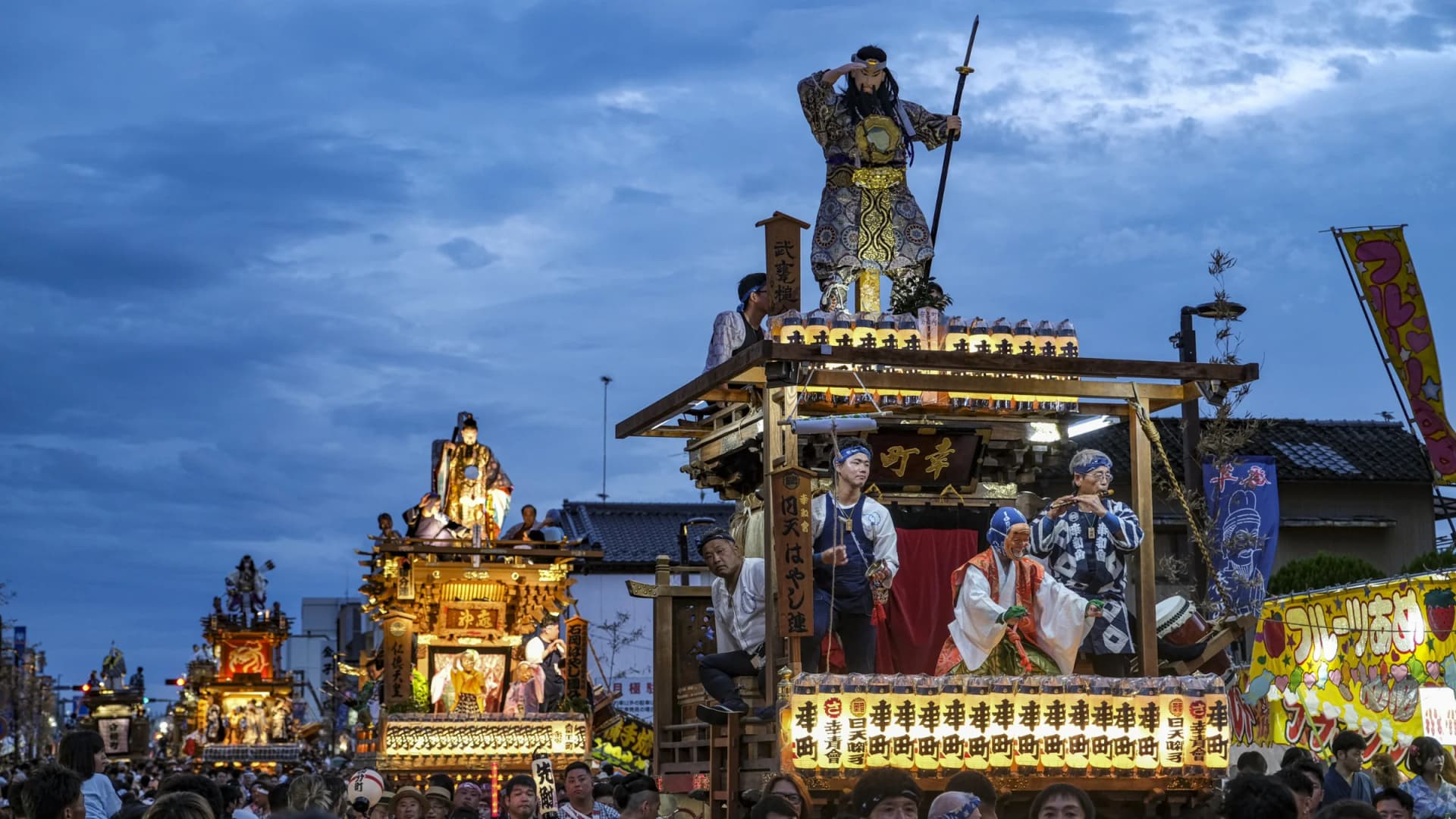
Ishioka Festival is formally the annual grand festival of Hitachinokuni Soshagu, a shrine with around a thousand years of history. It is counted among the three great festivals of the Kanto region, alongside the Sawara Grand Festival in Chiba and the Kawagoe Festival in Saitama. Ishioka itself is an old town. It served as the provincial capital of Hitachi Province, and the shrine was established to allow officials to worship the deities of the whole province in one place.
The festival is generally described as having more than three hundred years of tradition, with early records pointing to sumo bouts offered to the shrine in the mid-eighteenth century. Its older purpose was simpler: prayers for a good harvest, for freedom from illness, and for the safety of the community.
The shape visitors see today took form in the Meiji era, when a portable shrine, or mikoshi, began to be carried through the streets and the scale of the celebration grew. The same period produced the rotating system of host neighbourhoods that still governs the festival, described below.
The three days follow a clear sequence. On the first, a spirit of the shrine's deity is transferred into the great mikoshi (portable shrine) and carried out of the shrine grounds in a procession of more than two thousand people, bound for a temporary hall in the host neighbourhood. The second day brings the parades that most visitors come for, along with sumo and sacred dance offered at the shrine. On the third, the mikoshi returns.
Highlights
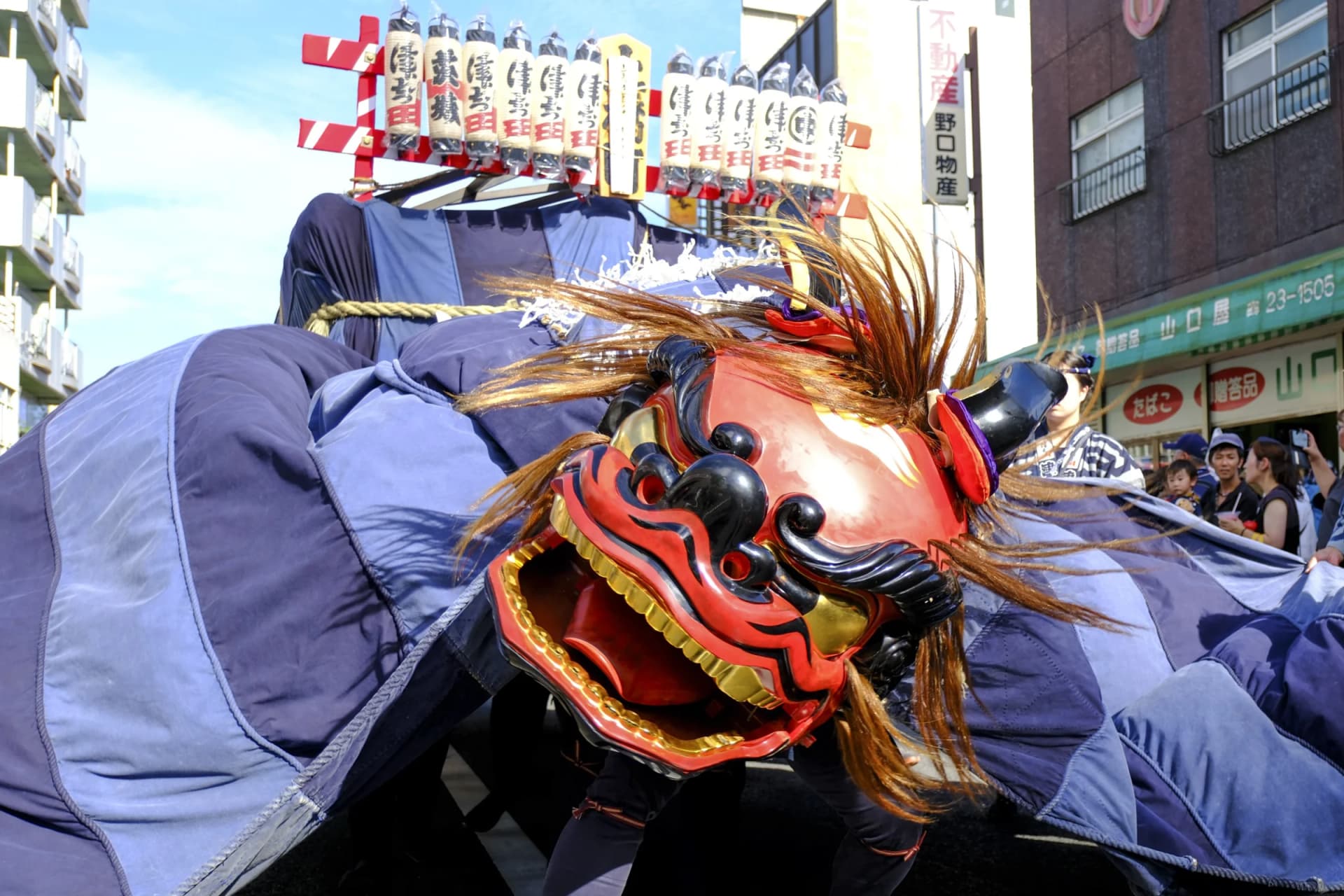
The horojishi. The festival's signature sight, and one found almost nowhere else in Japan. A large wheeled cart carries a hut around two metres wide and five metres deep, draped in a fabric skirt whose colour identifies its neighbourhood, with musicians inside playing the local festival music on drums, flutes, and hand gongs. At the front, one performer holds a carved lion head above his own and dances it along the route. The heads run to about half a metre across and can weigh twenty kilograms – far larger than those used in ordinary lion dances.
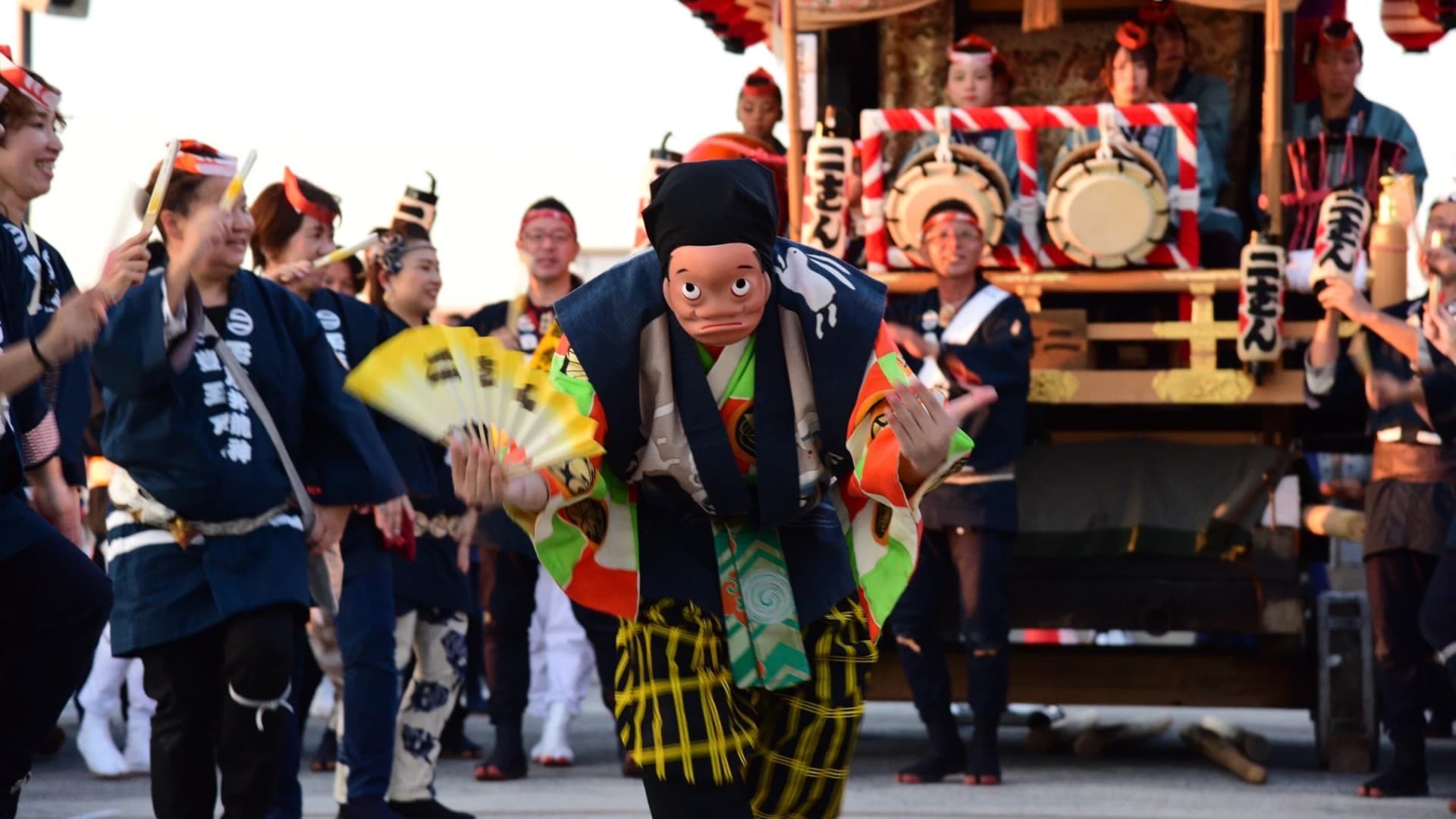
The floats. Built in two or three tiers with no roof, each dashi is topped instead by a figure some two metres tall, bringing the whole structure to well over five metres. The figures depict gods and historical personalities, including Yamato Takeru, whose figure is a registered folk cultural property of the city; a small team walks alongside to keep it clear of overhead obstacles. The lowest tier is a rotating stage where masked dancers perform, swapping masks to match the tune.
The second day. Floats and lion carts converge on the main street outside Ishioka Station – the busiest and most spectacular stretch of the weekend.
The sasara. Three lion dancers – the old lion, the young lion, and the female lion – purify the route at the head of the mikoshi procession, wearing black-lacquered heads with gold leaf on the eyes and teeth. They appear only twice: when the mikoshi leaves the shrine on the first day, and when it returns on the last.
The osshai-tai. Groups of women who accompany the procession with rhythmic calls in time with the music, some using fans or hand movements of their own devising. Not every neighbourhood has one.
You might also like
Sakura Autumn Festival
Each October the old castle town of Sakura fills with towering doll floats, portable shrines and Edo-descended music for three days of procession.
9–11 Oct 2026Sakura · Chiba
Ohara Hadaka Festival
The 'Naked Festival' features mikoshi carried into the sea, a boisterous parade through town, and shrines tossed high against fireworks and songs of joy.
23–24 Sep 2026Isumi · Chiba
Sanja Matsuri
Sanja Matsuri is one of Tokyo's largest traditional festivals, honouring enshrined figures through mikoshi processions and an Intangible Folk Cultural Property ritual dance.
15–17 May 2027Tokyo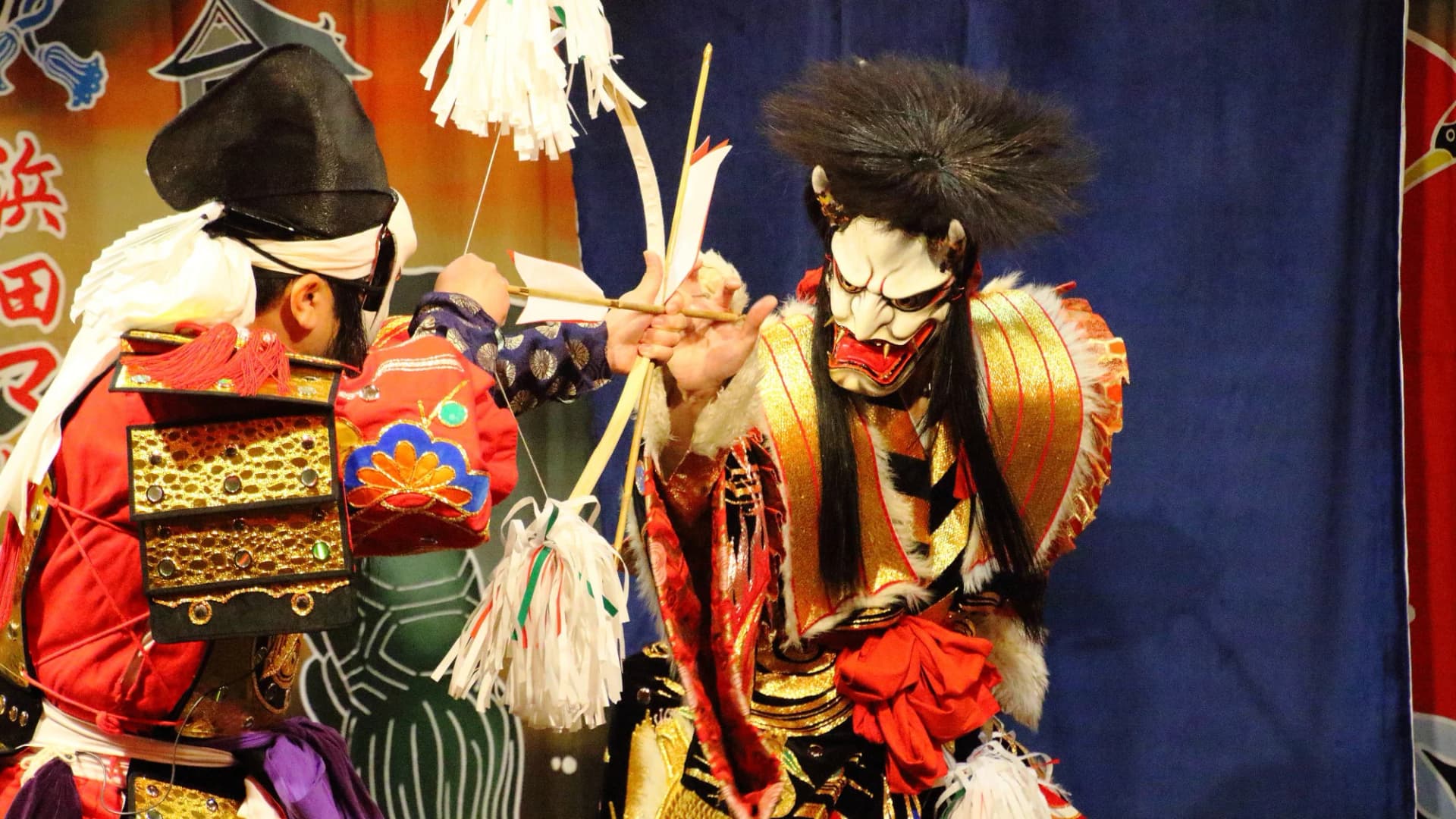
Iwami Kagura
Each autumn in western Shimane, shrine stages host Iwami Kagura – sacred dances performed through the night, from ceremonial pieces to a battle with a serpent.
Shimane · Chugoku
Kibitsu Jinja
Major Okayama shrine dedicated to Kibitsuhiko-no-Mikoto, a legendary prince credited with defeating an ogre and bringing peace to the region, foundations of the Momotaro folktale.
Okayama
Kumano Taisha
Kumano Taisha, Izumo's "birthplace of fire", holds sacred hikiriusu and hikirigine fire-drills, a startling rice-cake ritual, and Susanoo's comb festival for Princess Inada.
Matsue · Shimane