Kanuma Autumn Festival
鹿沼秋まつり
An autumn festival held in October with origins tracing to a 1608 rainmaking ritual, featuring 27 ornately carved musical floats from the Edo period.

〒 322-0068How to get there
新鹿沼Tobu Nikko Line17 min walk from the station
The Kanuma Autumn Festival also known as Kanuma Imamiya Shrine Festival traces its origins to 1608, during the early recovery of Kanuma-juku from the devastation of the Sengoku (Warring States) period. That year, a severe drought struck the region. Parishioners and villagers gathered at Imamiya Shrine to perform a three-day rainmaking ritual, which was miraculously followed by a fierce thunderstorm. This event is considered the beginning of the Imamiya Shrine Festival.
The Kanuma Festival is held annually on the second Saturday and Sunday of October. The city’s 27 neighbourhood yatai floats are dedicated to the shrine each year. These yatai are single-story, four-wheeled musical stages, lavishly adorned with intricate carvings influenced by the Nikko master shrine carpenters of the late Edo period. Many date back to the early 19th century, with notable sculptors such associated with their construction.
Originally, the yatai were simple roofed platforms for dances and performances honouring the local deity. By the late 18th century, they grew larger and more ornate, with musicians riding inside. Limited performance space led to the addition of separate dance platforms in front, used for dances and kyogen plays (traditional Japanese comic theatre). Over time, the floats were enhanced with black lacquer and colourful painted accents, gradually taking on the highly decorative form seen today.
Structurally, the floats feature karahafu (curved, undulating gable) on their roofs, surrounded by carved panels. The interior comprises an inner chamber for musicians and a performance space with sliding doors, balustrades, and double-sided carved side screens. The roof ridge follows a box-style design. Standard dimensions are approximately 3 × 3.6 × 3.6 meters.
Festival Yatai
The neighbourhoods are divided into four groups - Kamigumi (Upper), Shitagumi (Lower), Tamachi Shitagumi (Lower Tamachi), and Tamachi Kamigumi (Upper Tamachi) - with each neighbourhood owning its own yatai. Each year, one group is responsible for organising the festival, with the role of lead town rotating among its member neighbourhoods. Each group also has a designated “parent town” that serves as coordinator: Kubomachi for Kamigumi, Nakamachi for Shitagumi, Nakataamachi for Tamachi Shitagumi, and Kamitamachi for Tamachi Kamigumi. This structure ensures the festival thrives as a community-centred tradition, continuing a legacy of collective prayer and effort that began more than four centuries ago.
Yatai of Kamigumi (Upper District)
Kubocho: In the early modern period, Kubo Town was a wealthy merchant hub and its float reflects this prosperity. Entirely coated in black lacquer and richly adorned with fittings, it features painted carvings in a style reminiscent of paintings. Highlights include the gold-and-red “Twin Dragons” on the gable, a gold-painted Chinese lion, painted peonies, and delicate floral-and-bird carvings. The front showcases an owl, the rear a dazzling golden dragon, giving the float a vibrant five-colour brilliance. Built around 1813, the sculptor remains unknown, but it stands as a prime example of Kanuma’s luxurious carved festival floats.
Ginzanicho: This historic shopping street’s float was rebuilt after the 1847 fire and completed in 1857. It is the only old float featuring carved pillar decorations. Highlights include a giant phoenix, floral-and-bird motifs, the powerful “dragon on waves,” and five parent-and-child lions, with colourful twin dragons and turtles on the side screens. The yatai was fully restored in 1988 and 1998 and is a designated Tangible Cultural Property.
Tenjincho: This Edo-period float, carved from white wood, showcases powerful dragon motifs alongside tigers, long-tailed birds, plum blossoms, and peonies with Chinese lions. Its bold yet balanced design highlights delicate kozakura (cherry blossom) techniques, giving the float both grandeur and harmony. It was restored in 1987 and 2001 and is recognised as a designated Tangible Cultural Property.
Kamizaimokucho: Black-Lacquered Carved Float (1828) is renowned for its exquisite floral-and-bird motifs, including golden lions, peacocks with wisteria and peonies, and squirrels with grapes. Notable for its rare mother-of-pearl inlay, it was restored between 1988 and 1996 to its original splendor. It has been a designated Tangible Cultural Property since 1974.
Toharicho: First built in 1828, this float was transformed from a white-wood design into a black-lacquered, decorated float in 1846. Highlights include a striking eagle-and-monkey scene, colourful “Squirrels with Grapes”, golden pheasants with gourds, and paired golden dragons. Restored in 1996, it is a designated Tangible Cultural Property.
Izumicho: The newest of Kanuma’s 27 floats, completed in 1996, this white-wood float features Genbu (snake and turtle) carvings, symbolising northern protection. Floral-and-bird motifs add elegance to the design.
Onaribashicho: Named after the historic Onaribashi Bridge, this float began as a floral float built in 1917 and was later adorned with carvings by a local artisan. Postwar, it was finished in black lacquer with coloured carvings, enhancing its grandeur. Fully restored in 2002, it continues to represent the pride of Onaribashi-machi.
Yatai of Shitagumi (Lower District)
Nakamachi: First created in 1794 and rebuilt in 1836, this float blends natural white wood with vivid touches of colour. Restored in 1993, it remains a brilliant example of refined Edo-period craftsmanship.
Asaucho: Completed in 1857, this white-wood float features striking lions and peonies, unique lion-cub carvings, and golden railing dragons. Originally developed in 1818 and later sold, it was restored in 2002 and remains a splendid example of Edo-period craftsmanship.
Ishibashicho: Believed to have been built around 1812, this float was gradually enhanced over decades, featuring intricate chrysanthemum carvings, golden pheasants, and numerous small birds. Restored in 1992 with new wheels added in 1996, it remains one of Kanuma’s most ornate and elegant floats.
Shimozaimokucho: Made in 1832, this float is entirely adorned with gilded dragons, dynamically carved against black lacquer. Restored and repainted in 1993, it is a striking example of Edo-period craftsmanship.
Teramachi: Famous for its turtle carvings, this float was rebuilt in 1978 after the original was lost in the 1907 fire. A striking dragon on the transom is its main highlight. The float was restored in 2002 and remains a central feature of the Imamiya Shrine festival.
Horaicho: First appearing in the festival in 1881, the current float was rebuilt in 1955 and enhanced with exquisite carvings featuring dragons, hawks, and the twelve zodiac animals. Restored in 2001.
Toriidocho: Named after the site of Nikkō-san’s distant torii, this float was rebuilt in 1955 and transformed into a carved float in 1988, featuring phoenixes, peonies, and floral-and-bird motifs. Inner panels depict Nikkō-san and the torii, combining grandeur with delicate craftsmanship.
Yatai of Tamachi Shitagumi
Nakatamachi: Mostly made around 1830, this white-wood float features dramatic wave dragons, peonies, Chinese lions, and an eagle-and-monkey scene. After changing hands several times, it was fully restored in 1998 and remains a fine example of Tenpō-era craftsmanship.
Shimotamachi: Built in 1862, this float features powerful dragon carvings, an eagle-and-dragon horse motif, and delicate floral-and-bird details. Its tall ridge and low base emphasise the grandeur of the white-wood carvings. Traditional turning with a lever is still used, and restoration has preserved its bold Edo-period craftsmanship.
Shimoyokomachi: Built around 1804, this float features hibiscus and doves on the side screens, hibiscus on the onita and gegyo, and elegant floral-and-bird motifs throughout. Rebuilt in 1856 and enhanced in 1926, it remains a graceful example of early Edo-period craftsmanship.
Ginzaichome: Built in 1814, this black-lacquered float with white-wood carvings features dragons, grapes with squirrels, and an eagle-with-monkey motif on the side screens. Modified in 1832 and 1855, it was fully restored in 1998 and remains one of Kanuma’s oldest and most intricate floats.
Suehirocho: Originally built in 1882, this float features peonies and lions on the oniita (decorative front panel) and gegyo (lower decorative panels), pillar carvings of grapes and squirrels, and wave-decorated wheel covers. Rebuilt and enhanced with borrowed carvings in 1948, it was fully restored by 2003 and remains a key participant in the Imamiya Shrine festival.
Higashisuehirocho: Built in 1982, this float features dragons rising from stormy waves on the oniita and gegyo and lion cubs among peonies on the side screens.
Yatai of Tamachi Kamigumi
Kamitamachi: Built in 1953 to commemorate Kanuma City’s 5th anniversary, this float incorporates historic coloured carvings, including flying dragons, peonies with Chinese lions, and chrysanthemums with small birds. Restored in the 1990s, it showcases exceptional white-wood carving and elegant side screens.
Bunkabashicho: Built in 1958, this white-wood float was created for Kanuma City’s 10th anniversary. The district has participated in the Imamiya Shrine festival since 1924, with its name derived from the historic Bunka Bridge over the former Bunka Canal.
Asahicho: This white-wood float, built in 1954 from Kanuma cypress, features a phoenix on the oniita and peonies on the gegyo. Originally planned as a new construction in 1989, the town instead purchased an existing float from Utsunomiya and made minor adjustments, including rebuilding the ridge and repositioning the wheel axles.
Fuchumachi: Built in 1990 and modeled after the neighbouring Fushomachi float. Since then, it has participated in the Imamiya Shrine festival, with various carvings added over the years.
Fudokorocho: Completed in 1997, this collaborative Japan–Taiwan float features bold carvings of dragons, lions, koi, and zodiac animals, including a crystal ball held by the dragon. The oniita, gegyo, and side panels were carved in Inami, Toyama, while the remaining carvings were made by artisans from Sanyi, Taiwan.
Fudokorohoncho: Built in 1993, this white-wood float features kumiko latticework panels and straight railings. In 1996, a Taiwanese carver added the oniita and gegyo, showing two dragons vying for a crystal ball.
Uwanomachi: Built in 1983 and fully carved in 1996, this Kanuma float features bold carvings, including the Dragon Horse on the oniita, symbolising Kamigumi. It is a prime example of a float entirely made by local artisans.
Yatai-bayashi – Festival Float Music
One of the most important ways to honour the gods, pray for future abundance, and give thanks for blessings received was through bayashi - festival music.
The word bayashi (also hayashi) derives from hayasu, meaning “to praise” or “to cheer,” expressing the act of elevating someone’s presence and helping them flourish. Over time, different styles of bayashi developed, such as Gion-bayashi and Edo-matsuri-bayashi. Kanuma’s festival float music belongs to the Edo-matsuri-bayashi tradition.
The roots of Edo-matsuri-bayashi can be traced back to Kasai Bayashi. In the early Kyoho period (1716), the head priest of Katori Myojin in the Kasai District (district in eastern Tokyo) created kagura-bayashi (sacred Shinto ritual music) and spread it throughout the domain as an offering for abundant harvests. This tradition became known as Kasai Bayashi.
Today, Kanuma Yatai Bayashi is performed as a five-part ensemble (godan-bayashi), featuring the pieces Edobaka, Shōden, Kandamaru, Kamakura, and Okame.
Highlights of the Festival
Buttsuke (Competition of Bayashi Music): One of the most exciting features of the festival is Buttsuke, when two or more elaborately carved yatai floats face each other at an intersection to perform a musical showdown. The performers play their bayashi with intensity and precision, competing to maintain flawless rhythm and harmony despite the powerful pace. Around them, the atmosphere comes alive with glowing lanterns, cheers, and the spirited encouragement of the crowd.
Tekomai: Another vibrant element is the Tekomai. These dancers not only perform the dynamic kanabō (iron rod) dance but are led by a performer carrying hyōshigi (wooden clappers) to guide the float. In earlier times, geisha and entertainers would sometimes dress as men to play this role, but today, men and women chosen from each neighbourhood proudly carry on the tradition. Dressed in Ise hakama, katahada-nugi juban (robe with one shoulder exposed), tekko (arm guards), kyahan (leg coverings), navy tabi socks, and waraji sandals, with a flowered hat on their back, they preserve the authentic style of Kanuma’s festival.
Steering the Yatai and Turning Manoeuvres: The yatai floats are massive, lavishly decorated structures, and moving them through the streets requires remarkable skill and coordination. Watching the teams guide and maneuver these great carts is like witnessing the taming of a powerful beast - both awe-inspiring and thrilling. One of the most difficult tasks is turning the float to change direction. This is achieved with the help of a kirin, a hand-operated jack placed under the centre of the float to lift the wheels off the ground, allowing the yatai to be rotated slowly, usually clockwise. Many neighbourhoods now use hydraulic jacks, but the spectacle remains just as impressive.
The Unique Shimodamachi Yatai: Among all the floats, the Shimodamachi yatai stands out for preserving traditional handling techniques from the Edo period. Unlike other floats that rely on the kirin, this yatai is turned using a wooden ushi (rotating platform), a wooden uma (lever platform), and sturdy timbers. This method, known as teko-mawashi (lever rotation), is a rare and dramatic highlight of the festival, showcasing both the skill and heritage of Kanuma’s float traditions.
The Kanuma Autumn Festival is nationally recognized for its elaborate musical floats, a distinctive expression of Kanuma’s cultural heritage. In February 2003, the Yatai Event was designated a National Important Intangible Folk Cultural Property in recognition of its cultural significance. Later, on December 1, 2016, it was inscribed on the UNESCO Intangible Cultural Heritage list as part of “Yama, Hoko, Yatai, Float Festivals in Japan” - a collective registration of 33 festivals from 18 prefectures - underscoring its vital role in preserving Japan’s traditional festival culture.
Getting There

You might also like

Moka Summer Festival
Moka Summer Festival honors Kojin, the god of fire and hearth, with over 20 mikoshi and festival floats paraded through the city during a three-day summer celebration.
24–26 Jul 2027Moka · Tochigi
Otawara Yatai Festival
A spring festival dating to the Edo period features nine elaborately decorated floats paraded through city streets accompanied by traditional music.
18–19 Apr 2027Otawara · Tochigi
Yamaage Festival
Karasuyama's largest festival combines a nationally designated folk performance tradition with outdoor Kabuki dance, organized rotationally by six local districts.
24–26 Jul 2027Nasukarasuyama · Tochigi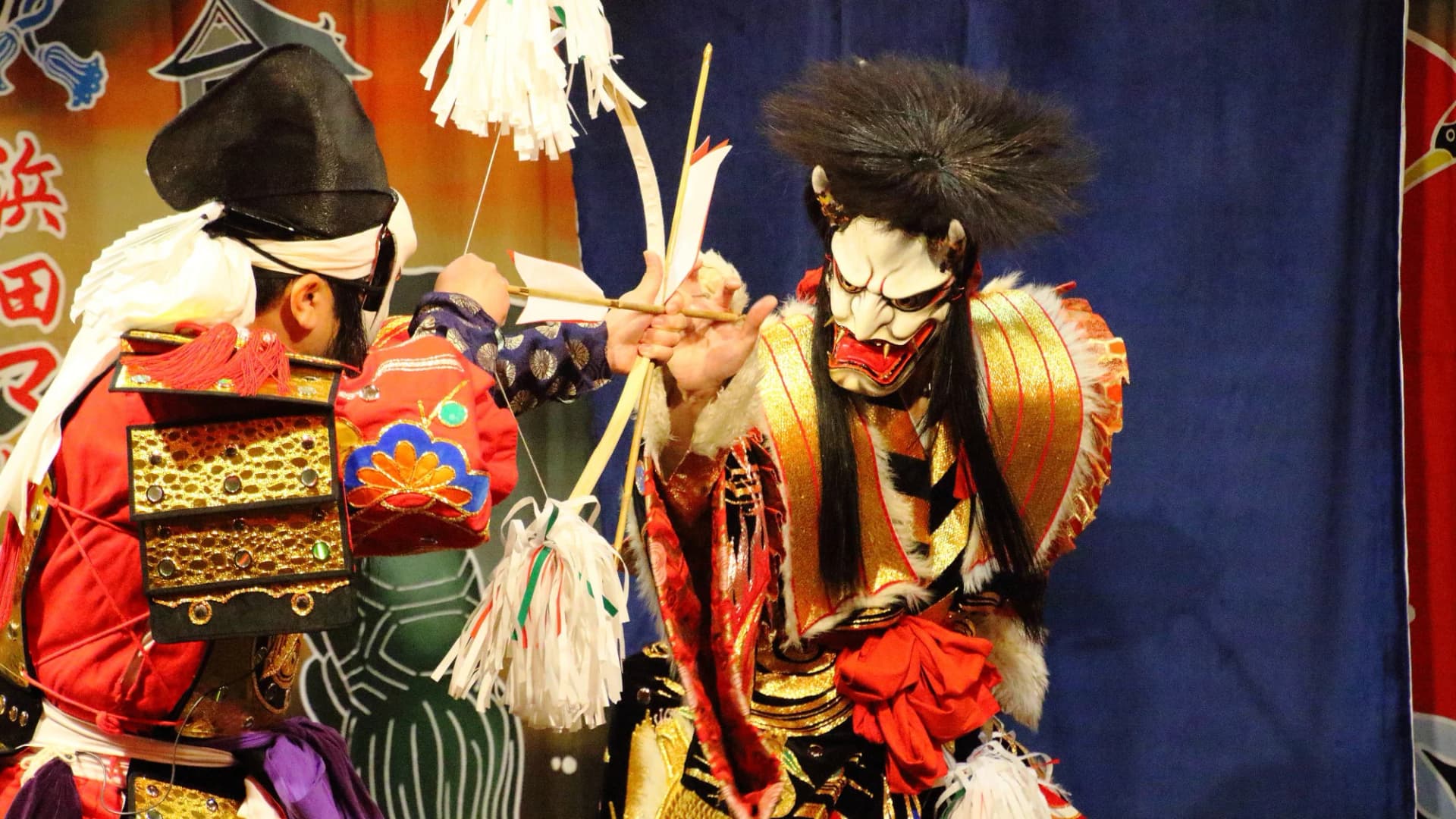
Iwami Kagura
Each autumn in western Shimane, shrine stages host Iwami Kagura – sacred dances performed through the night, from ceremonial pieces to a battle with a serpent.
Shimane · Chugoku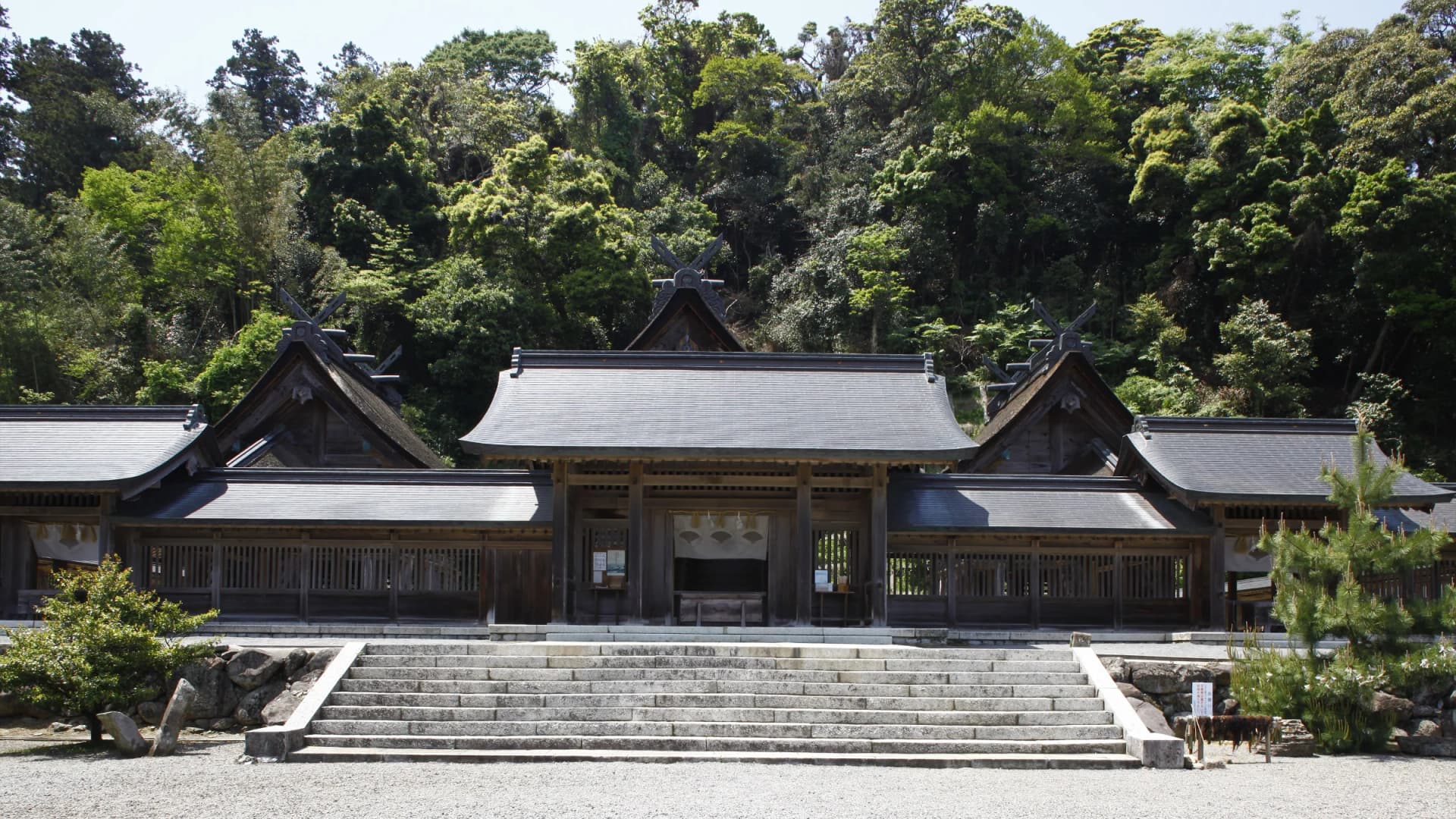
Sada Shrine
Sada Shrine near Matsue: a rare sanctuary of three halls side by side, the gods gathering each November to remember Izanami, and the UNESCO-listed Sada Shinno dance.
Matsue · Shimane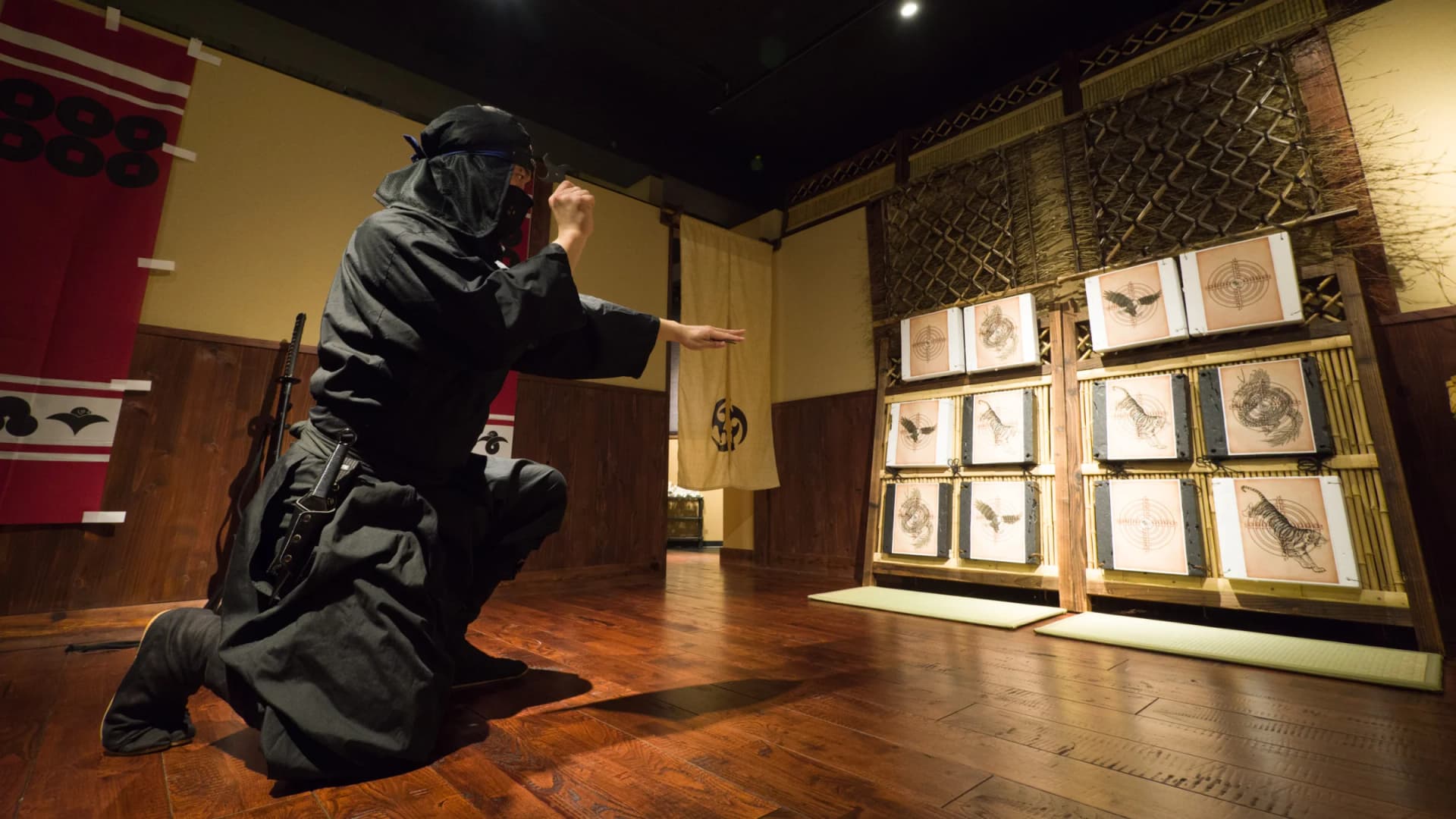
Ninja Trick House in Tokyo
A small ninja house in Kabukicho where visitors throw iron shuriken, draw a wooden sword and hunt for the tricks built into the walls.
Tokyo