

Katsuura Big Hina Matsuri
かつうらビッグひな祭り
Every spring the town of Katsuura in Chiba sets out 10,000 hina dolls down shrine staircases, under temple gates, and through the shops and streets between.
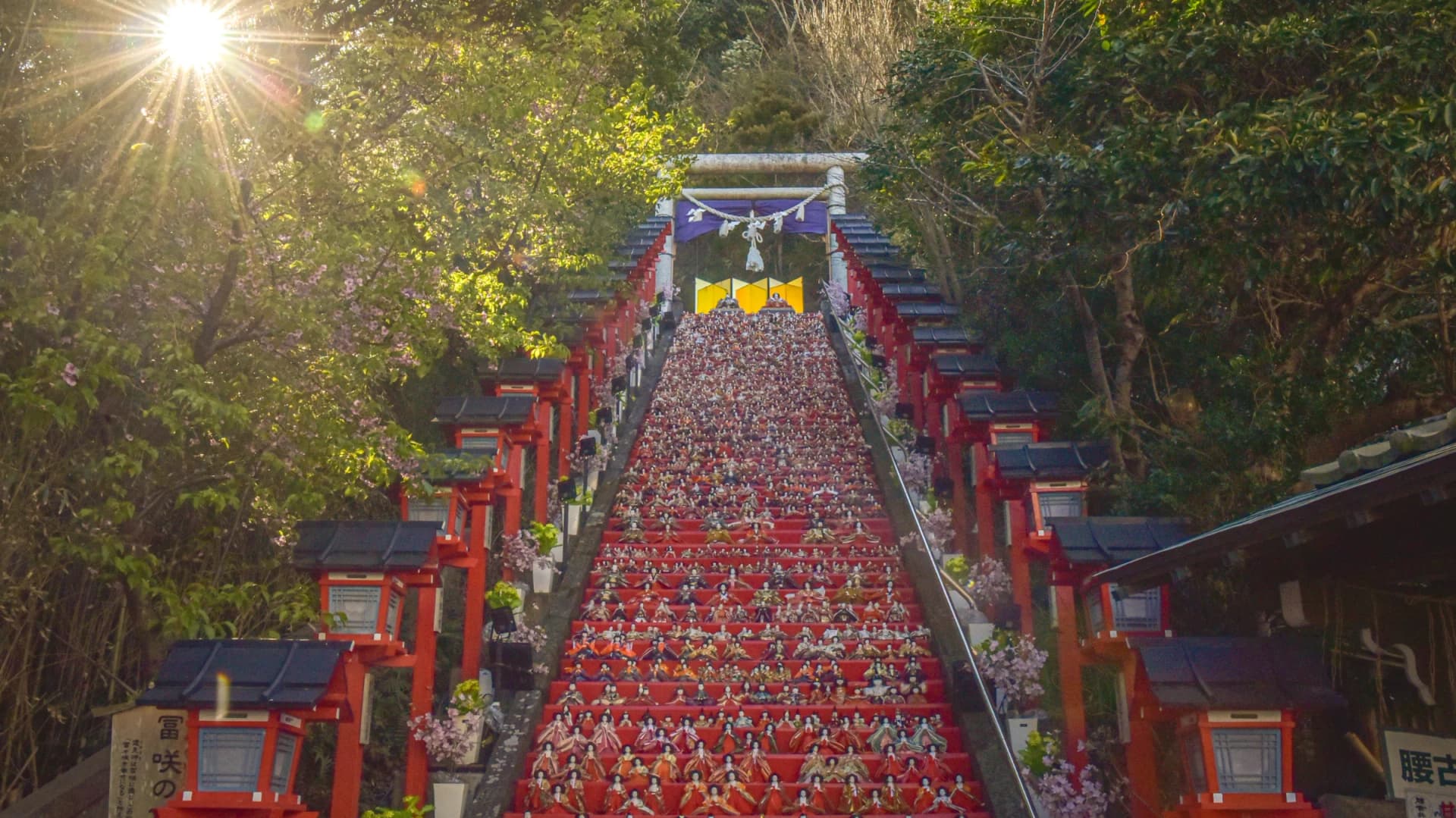
Every year from late February until 3 March, the coastal town of Katsuura in Chiba Prefecture disappears under a tide of dolls. Some 10,000 of them are set out across the town for the Katsuura Big Hina Matsuri – on shrine steps, in temple gateways, in shop windows, even in the post office.
The dolls are hina dolls, the ornate sets displayed in Japanese homes for Hinamatsuri, the Doll Festival held on 3 March each year to wish for the health and happiness of girls. What makes Katsuura unusual is the scale, and the fact that the whole town takes part.
The festival is younger than it looks. It began in 2001, when the town received around 7,000 hina dolls passed on from Katsuura-cho in Tokushima Prefecture, on the other side of Japan – a gift arranged through a network linking places that share the name. Dolls have been donated from across the country ever since, and the display has grown to roughly 10,000.
Where to See Them
The centrepiece is Tomisaki Shrine, where dolls are arranged down all sixty steps of the shrine staircase in a single cascade. The display is put out fresh each fine morning and taken in again – at speed, by a well-drilled team of residents – the moment it rains. Lit up after dark, it is the festival's most photographed sight, and the limited-edition shrine seal draws queues.
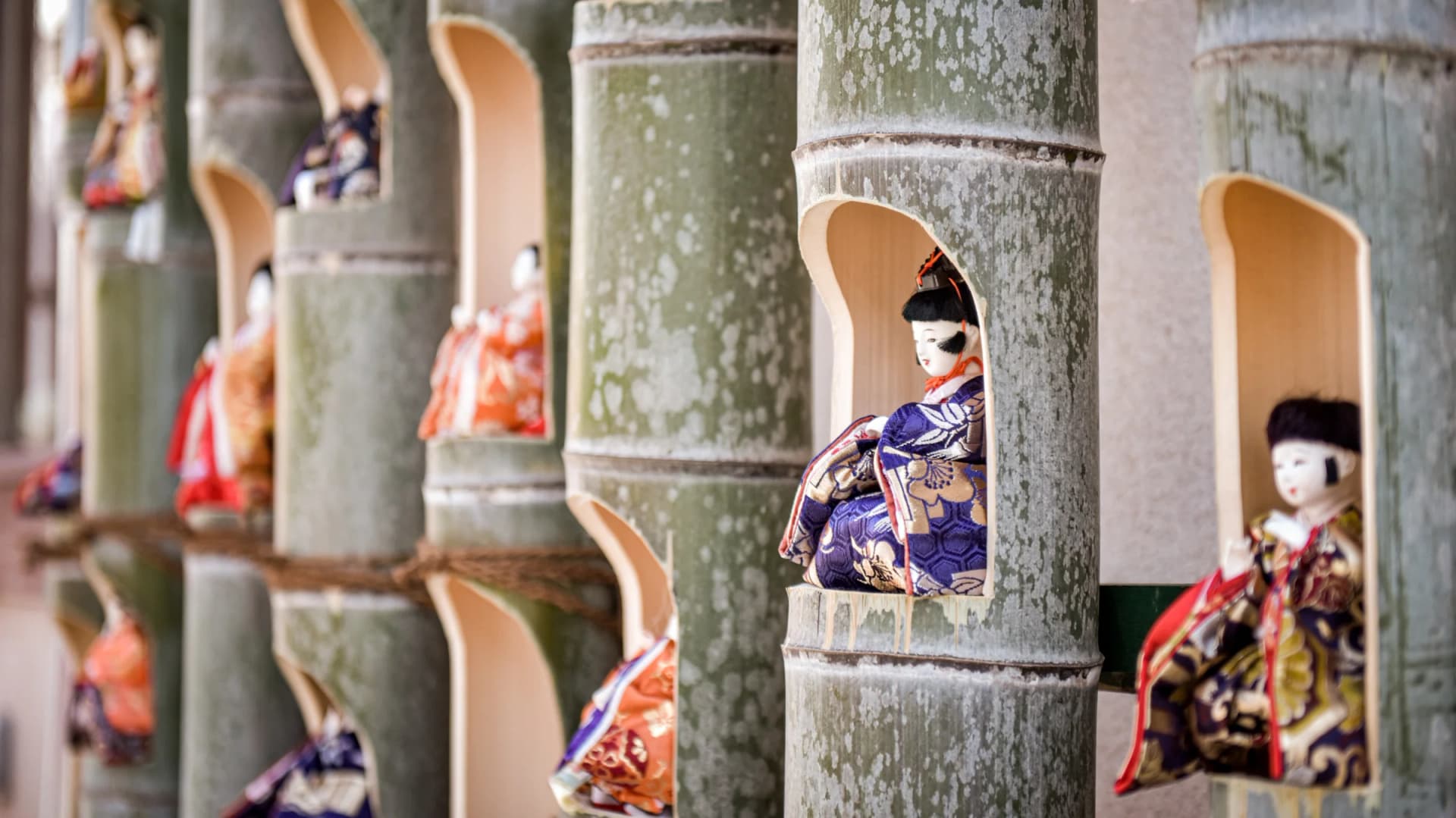
Five minutes' walk away, Kakuoji, the family temple of the lords of Katsuura Castle, sets out some 600 dolls beneath its old gate. Out at Hebara, a surfing district, Takiguchi Shrine is decorated by local people with handmade hanging dolls.
The shopping streets around the morning market are worth a slow wander too, where displays turn eccentric – an emperor doll in spectacles, and other variants you will not see anywhere else.
You might also like

Ohara Hadaka Festival
The 'Naked Festival' features mikoshi carried into the sea, a boisterous parade through town, and shrines tossed high against fireworks and songs of joy.
23–24 Sep 2026Isumi · Chiba
Katakai Matsuri
The autumn festival of Asahara Shrine at Ojiya in Niigata, where the fireworks are offerings and include the four-shaku shell, said to be the world's largest.
11–12 Sep 2027Ojiya · Niigata
Sanja Matsuri
Sanja Matsuri is one of Tokyo's largest traditional festivals, honouring enshrined figures through mikoshi processions and an Intangible Folk Cultural Property ritual dance.
15–17 May 2027Tokyo
Kanayama Shrine
Shrine dedicated to metalworking deities, famous for the annual Kanamara Matsuri celebrating fertility and well-being, with origins in the Edo period.
Kawasaki · Kanagawa
Tsurugaoka Hachimangu
Shrine founded as guardian deity of the Kamakura shogunate, hosting significant festivals including horseback archery and sumo wrestling traditions.
Kamakura · Kanagawa
Hie Shrine
Hie Shrine in Tokyo's Nagatachō district dates to the Kamakura period and served as guardian deity of Edo Castle and the Imperial Palace.
Tokyo