

Sawara Grand Festival
佐原の大祭
Every July in Sawara, ten seven-metre floats crowned with giant dolls are spun through the streets of a preserved Edo-period merchant town, grazing the eaves.
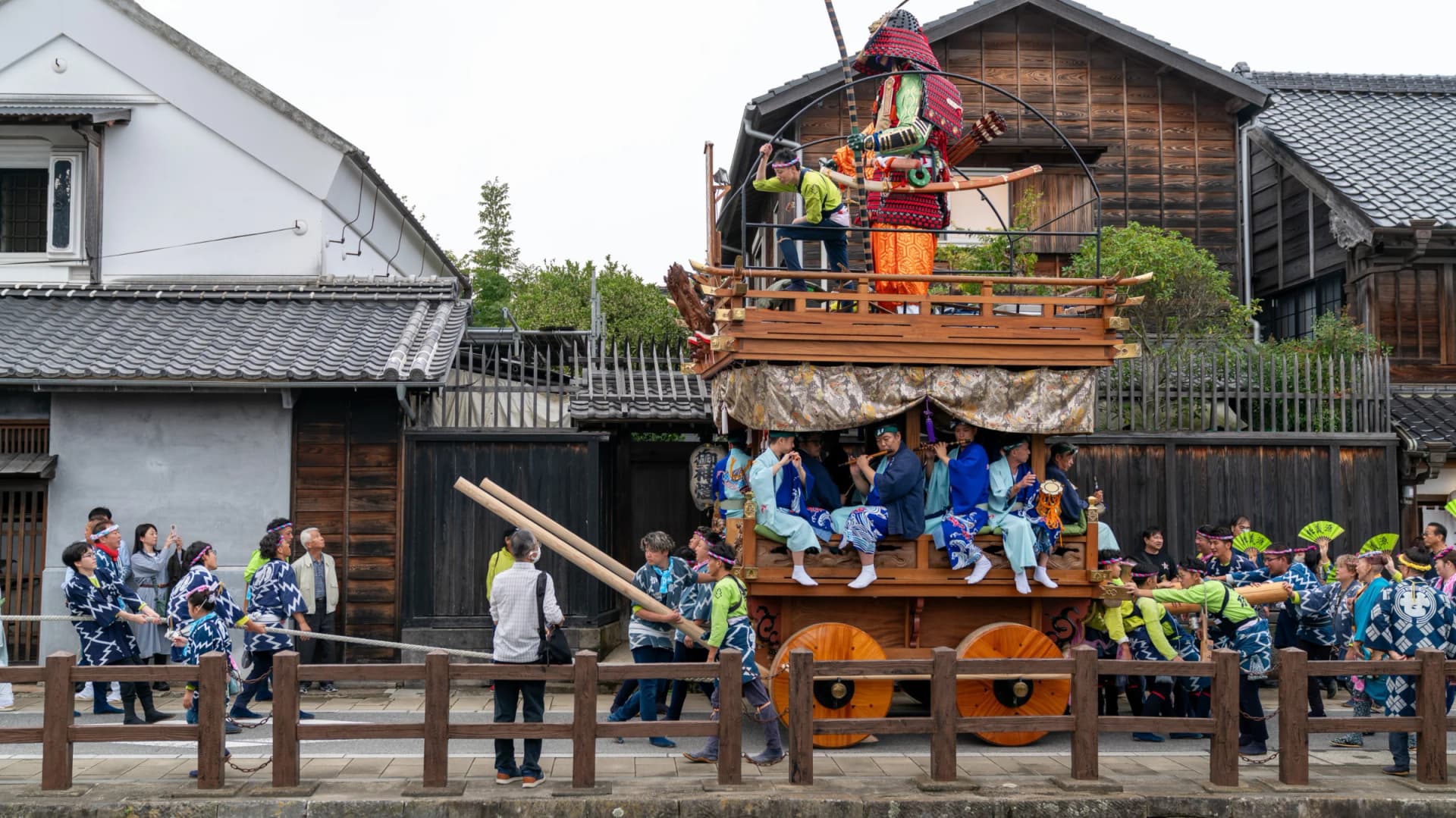
Twice a year, the old merchant town of Sawara gives itself over to its floats. The Sawara Grand Festival is held once in July and again in October, and between them they count as one of the three great float festivals of the Kanto region. The tradition runs back some three hundred years, and in 2016 it was inscribed on the UNESCO Intangible Cultural Heritage list.
Sawara made its money on the river trade to Edo, and it grew wealthy enough to earn the boast Edo-masari – "better than Edo". Much of the town it built survives: a preservation district of dark wooden merchant houses lining the Ono River. The floats pass so close that they graze the eaves.
The river splits Sawara in two, and each half has its own festival and its own shrine. The summer festival, in July, is the Gion festival of Yasaka Shrine, and ten floats are pulled through the Honjuku district on the east bank. The autumn festival, in October, belongs to Suwa Shrine, and fourteen floats work the Shinjuku district to the west. Both run Friday to Sunday.
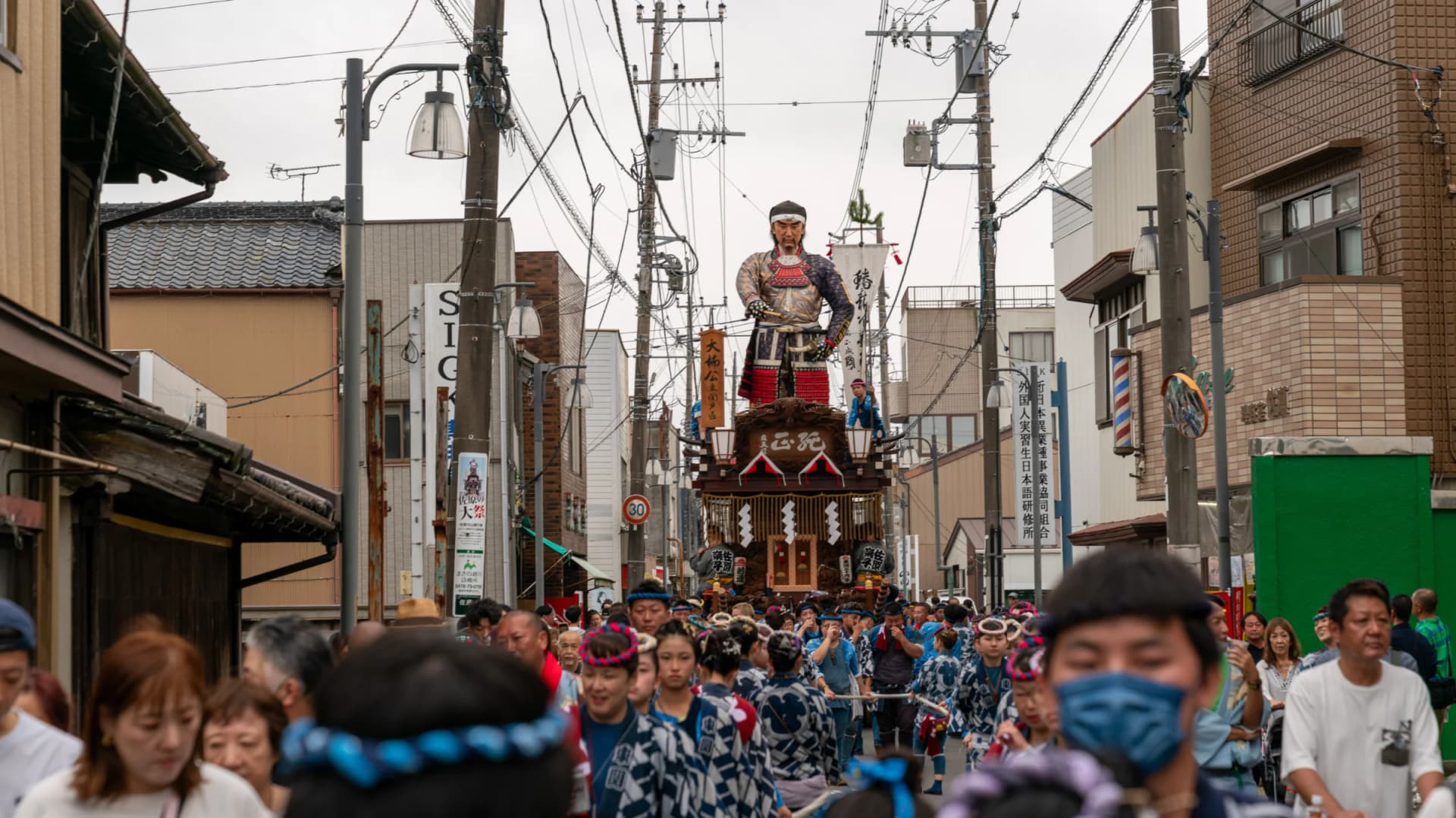
Built entirely of zelkova wood and carved in the heavy Kanto style with lions, dragons and scenes from legend, the floats stand around seven metres tall and weigh three to four tonnes. Each is crowned by an enormous figure – a historical or legendary character, some reaching four metres, made by master doll-makers of the Edo and Meiji periods. The oldest surviving float in the town dates to 1822.
Beneath the figure sits the musicians' deck, where the geza ensemble plays as the float moves – some fifteen players of flute, drums and gong, close to an orchestra of Japanese instruments. Ahead of the float, dancers perform a form descended from tekomai, the dancers who once led processions.
The manoeuvre everyone comes to see is the nonoji-mawashi – the "figure-of-の turn". Several tonnes of float are spun through a series of rotations tracing the shape of the kana character の, and the mark of a well-executed turn is that the giant doll on top revolves slowly, as though performing a Noh dance.
The music is reckoned one of the three great festival musics of Japan. It plays continuously as the floats move, and after dark, when each float lights its lanterns, the town takes on an entirely different character.
For anyone visiting outside the festival dates, the Suigo Sawara Float Museum displays two of the floats year-round, one from each season.
You might also like

Kakunodate Festival
A traditional autumn festival with 400 years of history, held in September in Kakunodate, featuring large wooden floats decorated with samurai warrior dolls.
7–9 Sep 2027Semboku · Akita
Sakura Autumn Festival
Each October the old castle town of Sakura fills with towering doll floats, portable shrines and Edo-descended music for three days of procession.
9–11 Oct 2026Sakura · Chiba
Kanuma Autumn Festival
An autumn festival held in October with origins tracing to a 1608 rainmaking ritual, featuring 27 ornately carved musical floats from the Edo period.
10–11 Oct 2026Kanuma · Tochigi
Ozu Castle
A castle above the Hiji River at Ozu whose keep was rebuilt in wood in 2004, using the old drawings and photographs, alongside four surviving turrets.
Ozu · Ehime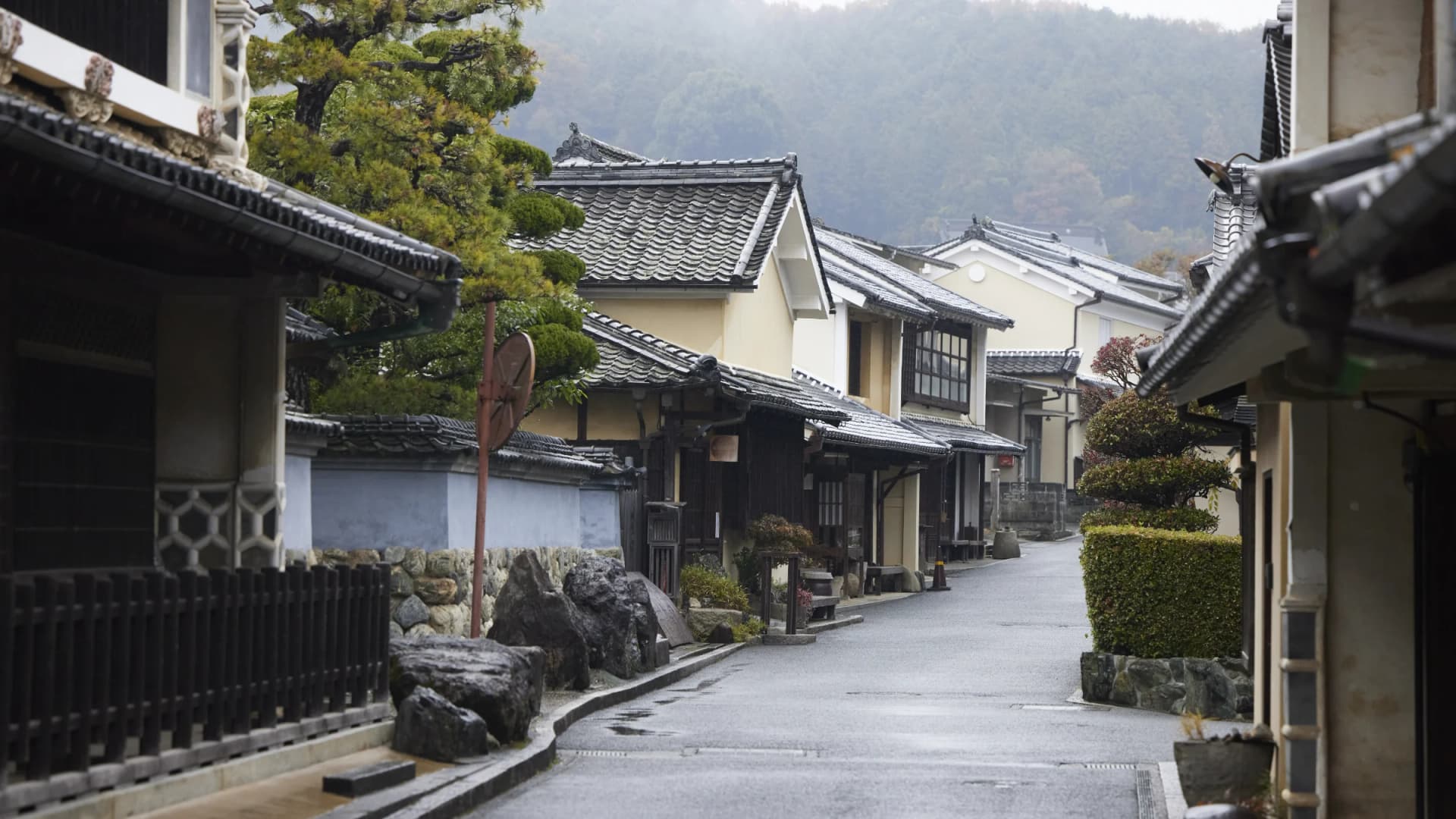
Yokaichi and Gokoku Historical District
A street of wax merchants' houses in Uchiko, Ehime, with walls in a yellow plaster made from local earth, preserved since 1982.
Uchiko · Ehime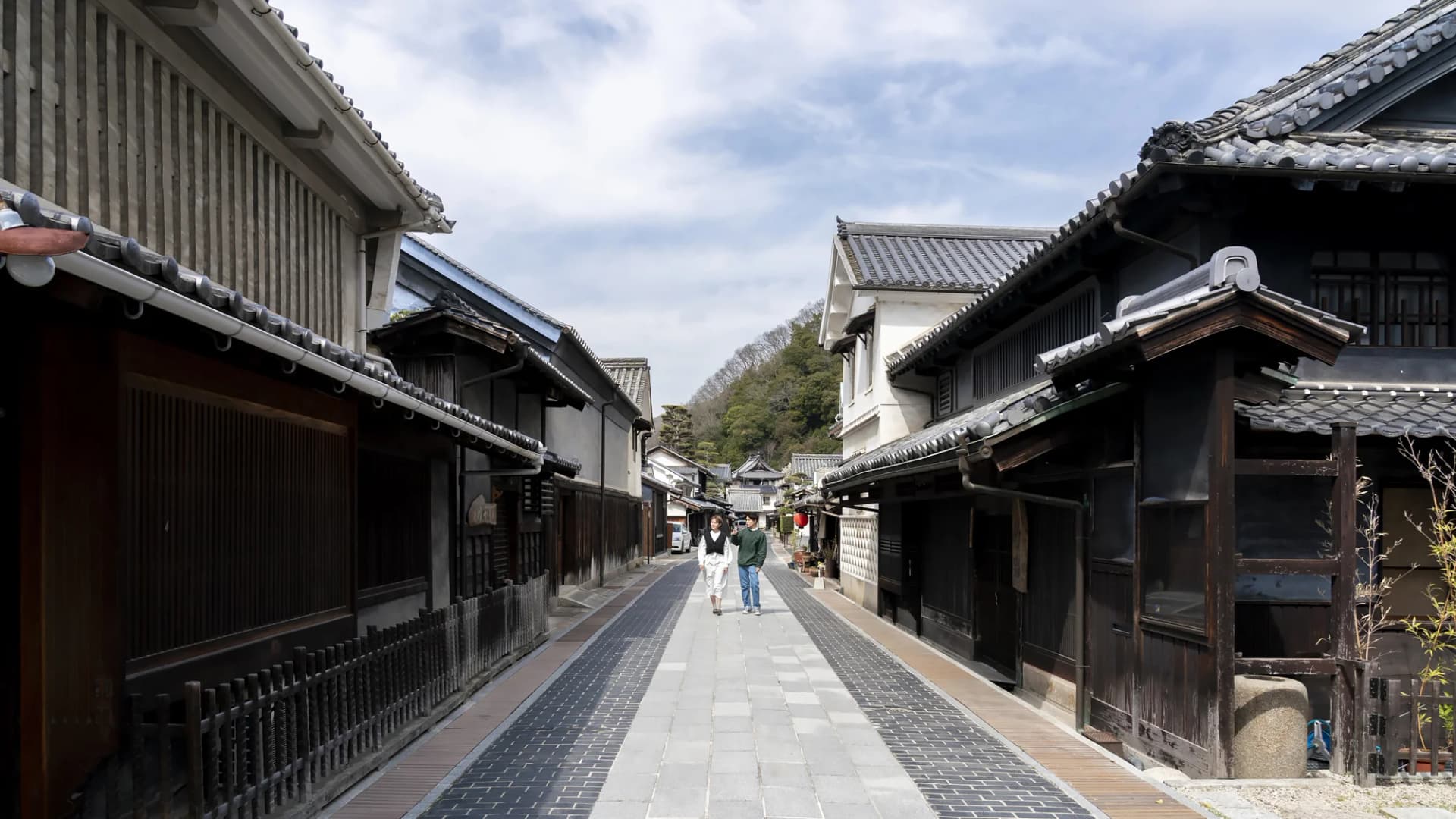
Takehara Historic Preservation District
A five-hectare quarter of Edo and Meiji merchant houses in Takehara, Hiroshima, built on the fortunes of salt and known as the Little Kyoto of Aki.
Takehara · Hiroshima