

Setsubun Armor Festival
節分鎧年越
In February, this festival features a grand procession of 200 costumed samurai in traditional armor proceeding to Bannaji Temple for a traditional purification ceremony.

Every year in February, Ashikaga City hosts a spectacular and historic event known as the Setsubun Armor Year-Cross. This traditional festival, held on the night of Setsubun, marks the end of winter and the welcoming of spring according to the Japanese lunar calendar.
The Event
The highlight of the celebration is a grand armour parade, in which about 200 participants, including local citizens, march through the city’s traffic-restricted main streets. Dressed in full samurai armour reminiscent of the Bandō region warriors, they proceed from the Orihime Community Center to Bannaji Temple, the historic family temple of the Ashikaga clan.
Upon arrival at Bannaji Temple, the participants gather at the temple’s Main Hall, designated a National Treasure, where the traditional Tsuina Ceremony (drive away misfortune) takes place. This ritual is performed to drive away evil spirits and pray for good fortune in the year ahead.
What is Setsubun?
Setsubun, literally meaning “seasonal division”, is celebrated annually on February 3rd across Japan. It symbolises the end of winter and the beginning of spring. A central custom of Setsubun is the mamemaki (bean-throwing) ritual, where roasted soybeans are thrown to expel misfortune and invite happiness.
In Ashikaga, Setsubun is given a distinctive samurai flair through the Armor Year-Cross, linking the seasonal festival with the city’s proud warrior heritage.
Historical Roots
The origins of the Armor Year-Cross date back to the Kamakura period, about 750 years ago, when the powerful samurai Ashikaga Yasuuji gathered 500 warriors at Bannaji Temple to honour the Ashikaga family. Over a century later, his descendant Ashikaga Takauji rose to become the first shogun of the Muromachi period, solidifying the clan’s legacy in Japanese history.
Although the event fell into decline during the late Edo and Meiji periods, it was revived in 1915 by a group of local textile workers. Since then, it has been preserved as one of Ashikaga’s most important traditional events.
You might also like

Moka Summer Festival
Moka Summer Festival honors Kojin, the god of fire and hearth, with over 20 mikoshi and festival floats paraded through the city during a three-day summer celebration.
24–26 Jul 2027Moka · Tochigi
Sanja Matsuri
Sanja Matsuri is one of Tokyo's largest traditional festivals, honouring enshrined figures through mikoshi processions and an Intangible Folk Cultural Property ritual dance.
15–17 May 2027Tokyo
Ohara Hadaka Festival
The 'Naked Festival' features mikoshi carried into the sea, a boisterous parade through town, and shrines tossed high against fireworks and songs of joy.
23–24 Sep 2026Isumi · Chiba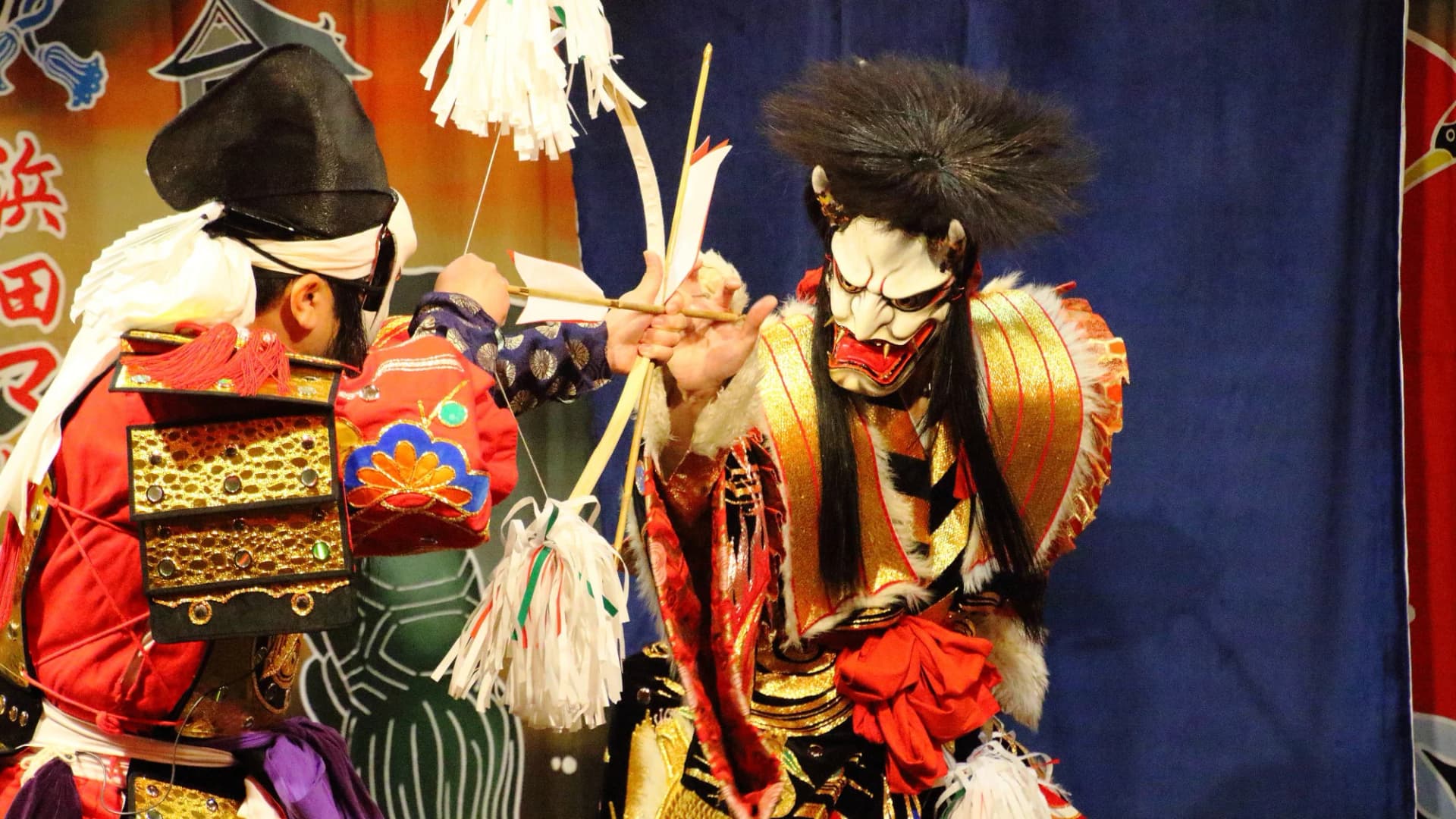
Iwami Kagura
Each autumn in western Shimane, shrine stages host Iwami Kagura – sacred dances performed through the night, from ceremonial pieces to a battle with a serpent.
Shimane · Chugoku
Kibitsu Jinja
Major Okayama shrine dedicated to Kibitsuhiko-no-Mikoto, a legendary prince credited with defeating an ogre and bringing peace to the region, foundations of the Momotaro folktale.
Okayama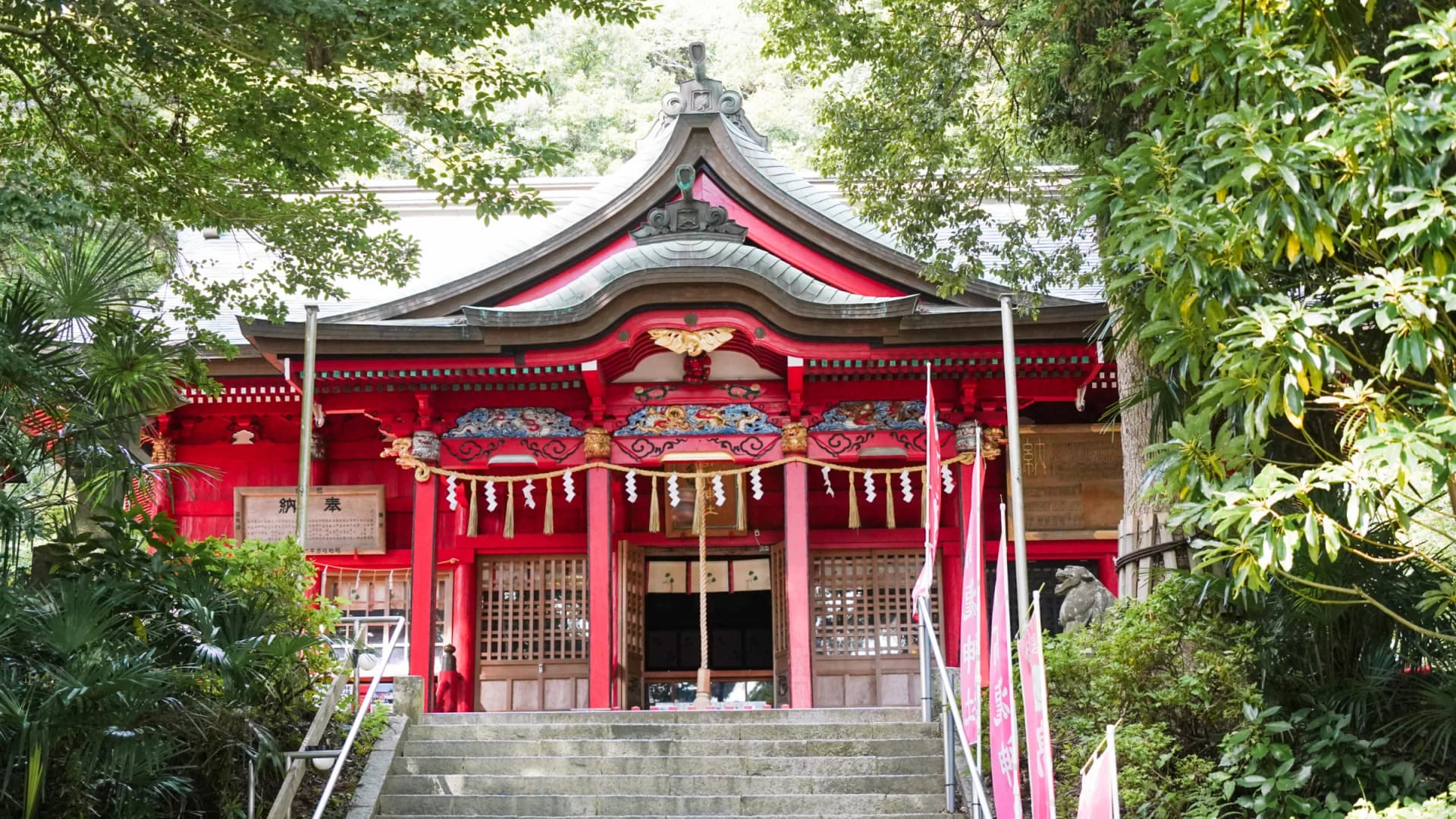
Takataki Shrine
A shrine in Ichihara with an unusual tradition: expectant mothers borrow a small purse left unstitched at the base, for an easy birth.
Ichihara · Chiba