

Yatsushiro Myoken Matsuri
八代妙見祭
A 390-year-old procession through Yatsushiro in Kumamoto, listed by UNESCO, with a turtle-serpent beast and nine canopied floats carried to a riverbank.
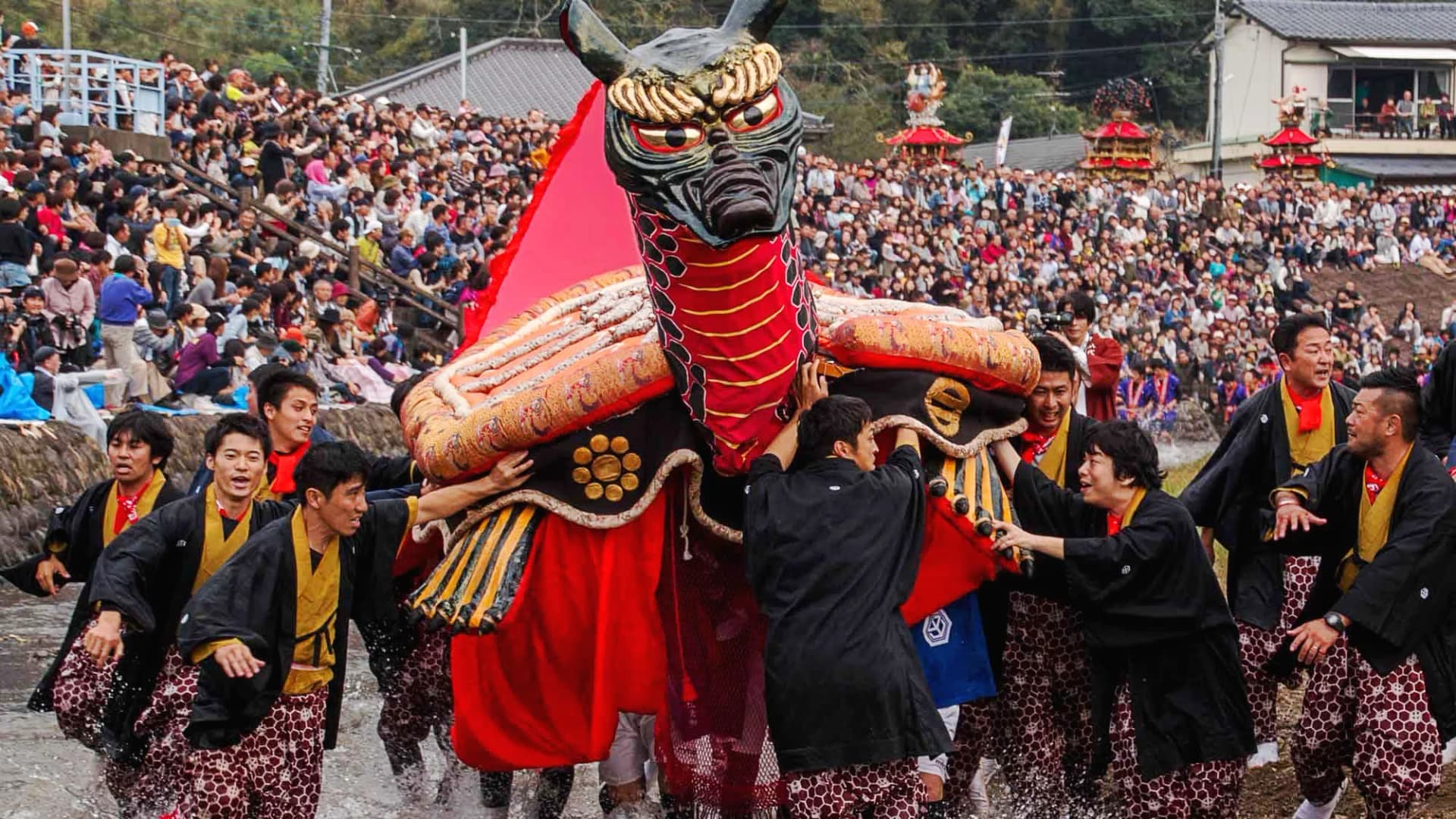
The Myoken festival is the autumn festival of Yatsushiro Shrine, known as Myokengu, in Yatsushiro in Kumamoto Prefecture. It has been held for about 390 years, since the Edo period. Its procession is an Important Intangible Folk Cultural Property of the state, and it is one of the thirty-three float festivals of Japan entered together on the UNESCO list of Intangible Cultural Heritage.
In September 2026 the shrine and the society that keeps the festival announced that this year's procession and everything around it would not be held, because of damage from the Kumamoto earthquake of 2026 and concerns for safety. The eve festival, the children's festival and the events planned for the tenth year of the UNESCO listing are all cancelled with it. Some of the rites will still be performed at the shrine.
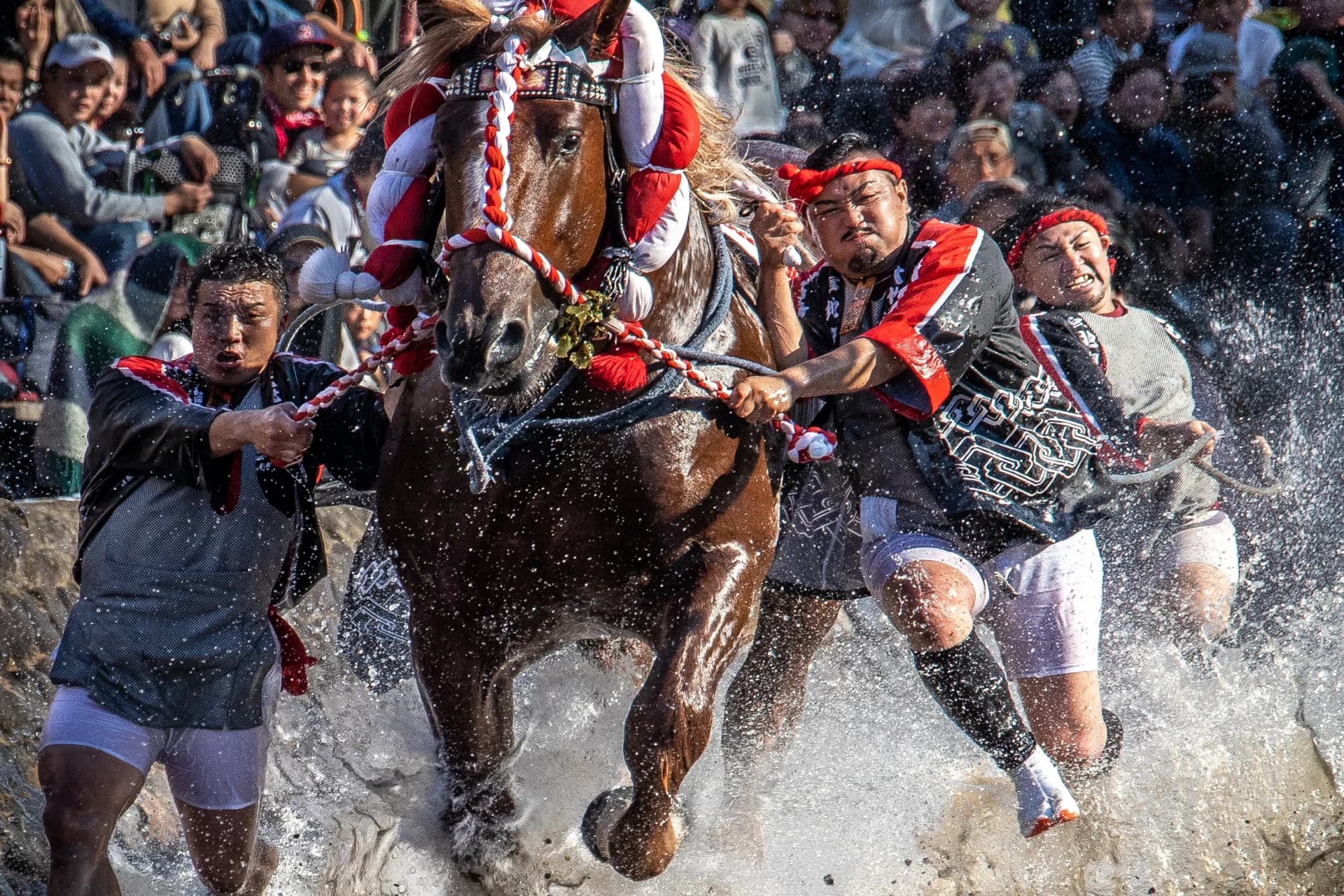
In an ordinary year the procession forms about forty separate turns and stretches a kilometre and a half along the road, covering some six kilometres over the two days: out on the first day, back on the second. It ends at Tosaki, a broad stretch of riverbank, where each group performs in turn and horses are ridden hard along the gravel.
Kida
The figure people come for is the Kida, a beast with the body of a turtle and the head of a serpent, which the god of the shrine is said to have ridden across the sea from China some 1,300 years ago. It is three metres long, two and a half high, and weighs more than a hundred kilograms. Five men carry it at a time, swinging its head as they run.
Kasaboko
Nine kasaboko are drawn in the procession, tall canopied floats, each decorated differently with things that stand for long life and good fortune. They took their present form early in the eighteenth century, and each is put together fresh every year from two or three hundred pieces of wood without a single nail.
Lions and the horses
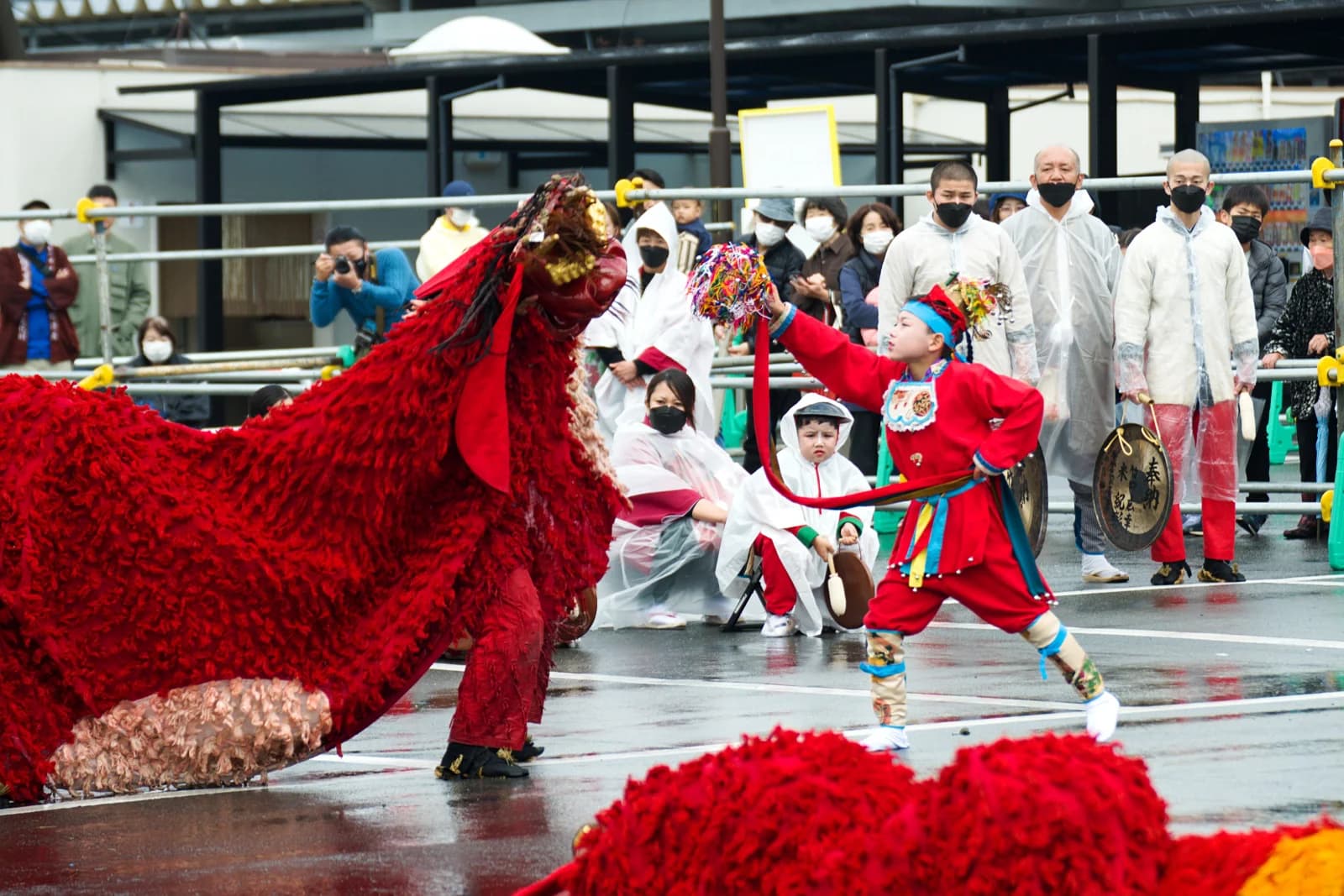
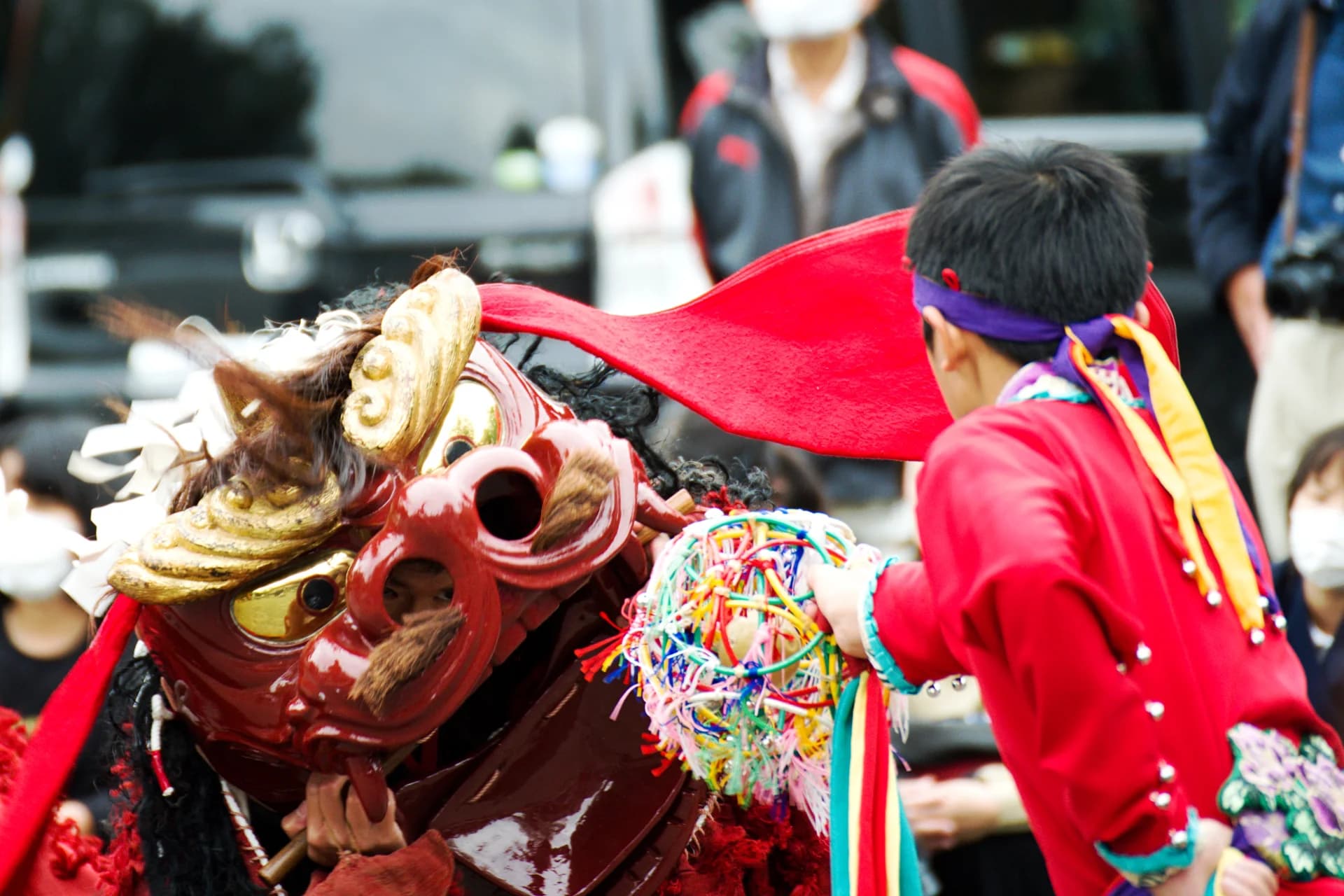
A pair of lions, male and female, dance to charumera, gongs and drums, a form learned long ago from the Kunchi festival at Nagasaki. Parents bring children for the lion to take their heads in its mouth, which is held to make them grow up strong.
Horses go in the procession too: the god's own horse, horses in ornament, and wooden horses that were once given to the shrine when a child of the castle town reached the ages that are marked.
You might also like

Ohara Hadaka Festival
The 'Naked Festival' features mikoshi carried into the sea, a boisterous parade through town, and shrines tossed high against fireworks and songs of joy.
23–24 Sep 2026Isumi · Chiba
Kuji Autumn Festival
This over 650-year-old festival in a northern mountain town expresses gratitude for the harvest while praying for protection from disaster and the arrival of good fortune.
17–20 Sep 2026Kuji · Iwate
Inuyama Festival
Historic shrine festival featuring thirteen elaborate floats equipped with mechanical puppets performing traditional ceremonies on the first weekend of April.
4–5 Apr 2027Inuyama · Aichi
Kibitsu Jinja
Major Okayama shrine dedicated to Kibitsuhiko-no-Mikoto, a legendary prince credited with defeating an ogre and bringing peace to the region, foundations of the Momotaro folktale.
Okayama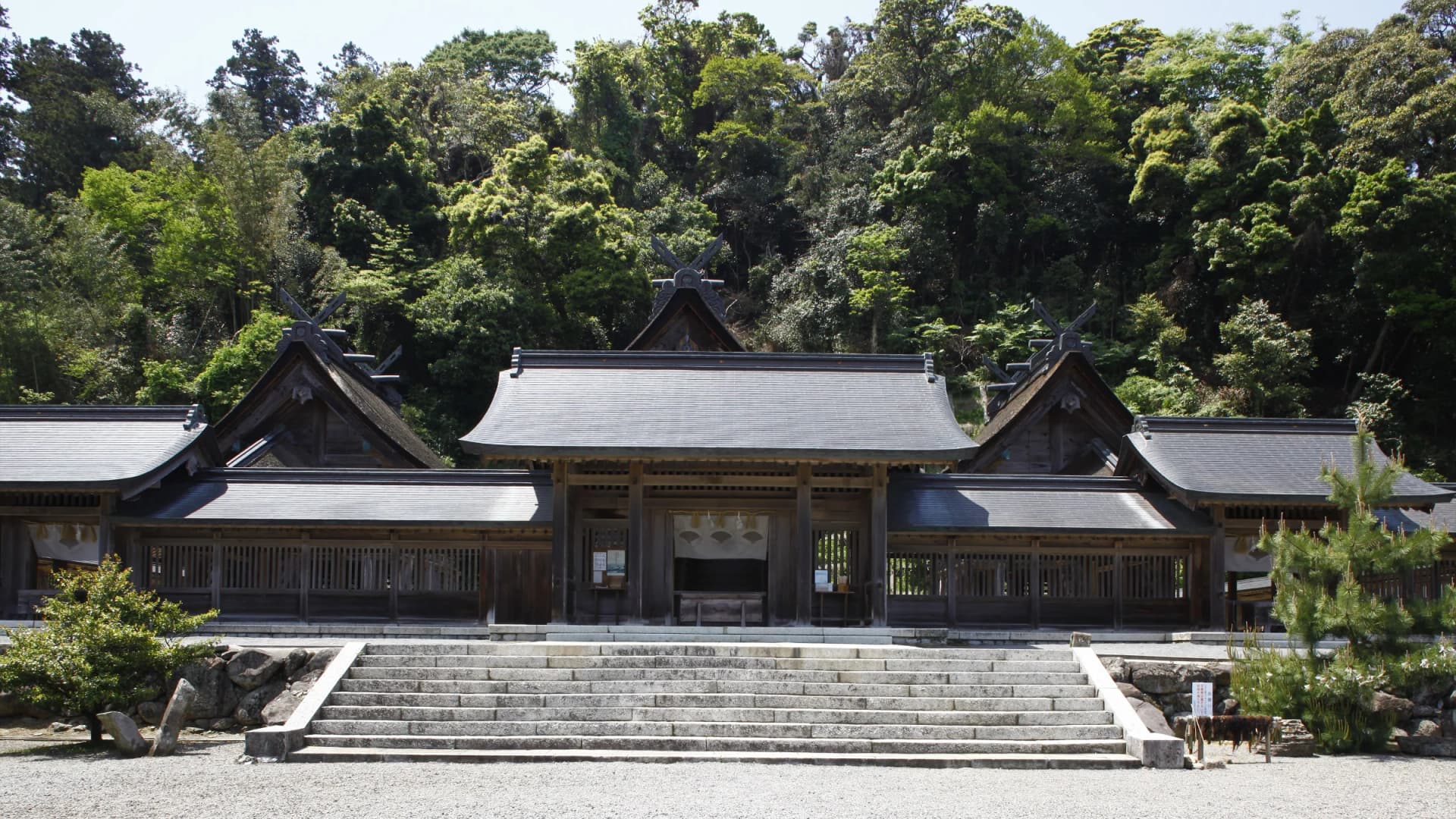
Sada Shrine
Sada Shrine near Matsue: a rare sanctuary of three halls side by side, the gods gathering each November to remember Izanami, and the UNESCO-listed Sada Shinno dance.
Matsue · Shimane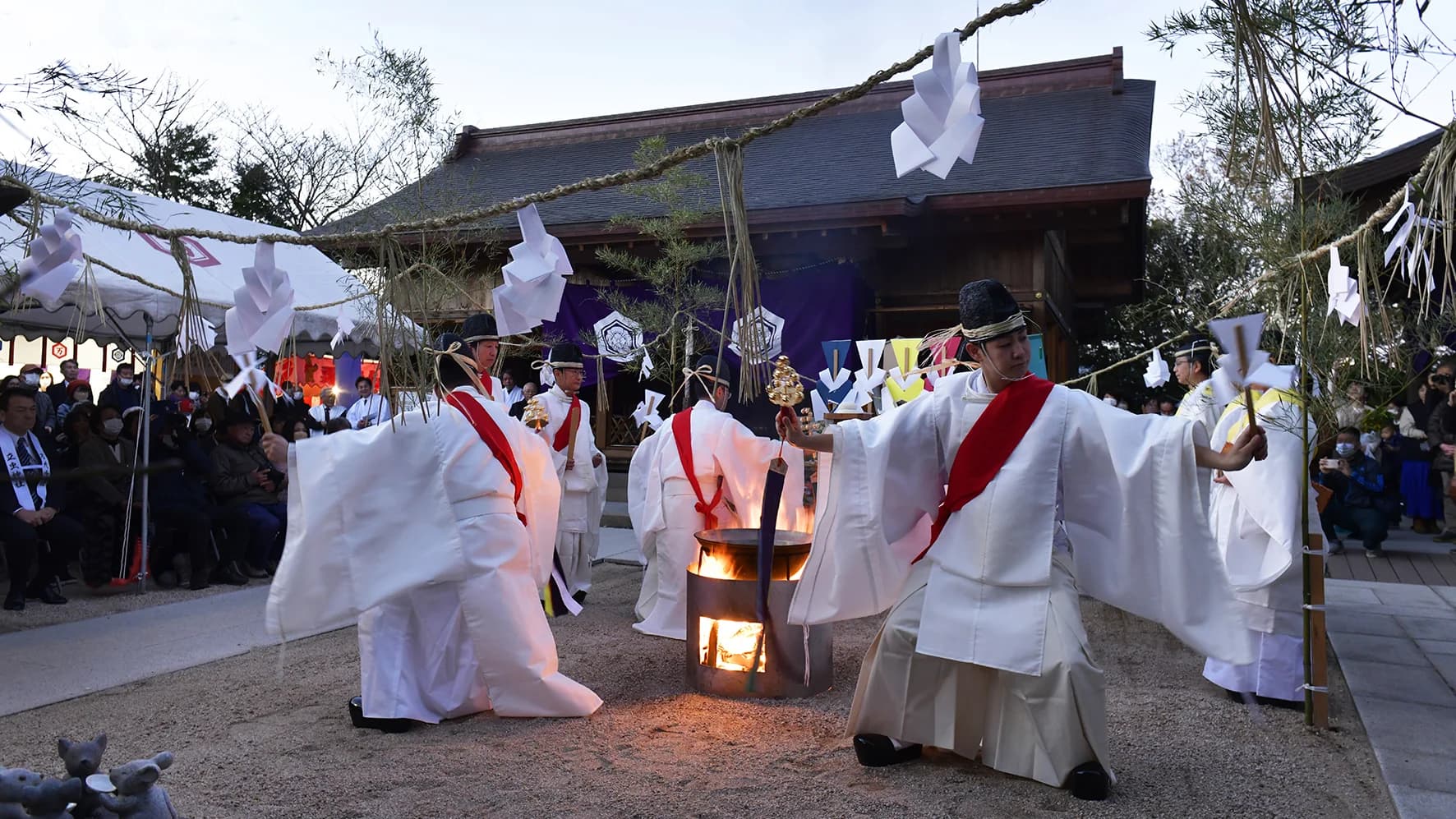
Mankusen Shrine
Mankusen Shrine in Izumo is said to be the last stop for the gods of Japan before they return home.
Izumo · Shimane