

Poppo no Oka
ポッポの丘
On a quiet hillside in rural Chiba, around thirty retired railway carriages have been preserved, including several that survive nowhere else in Japan.
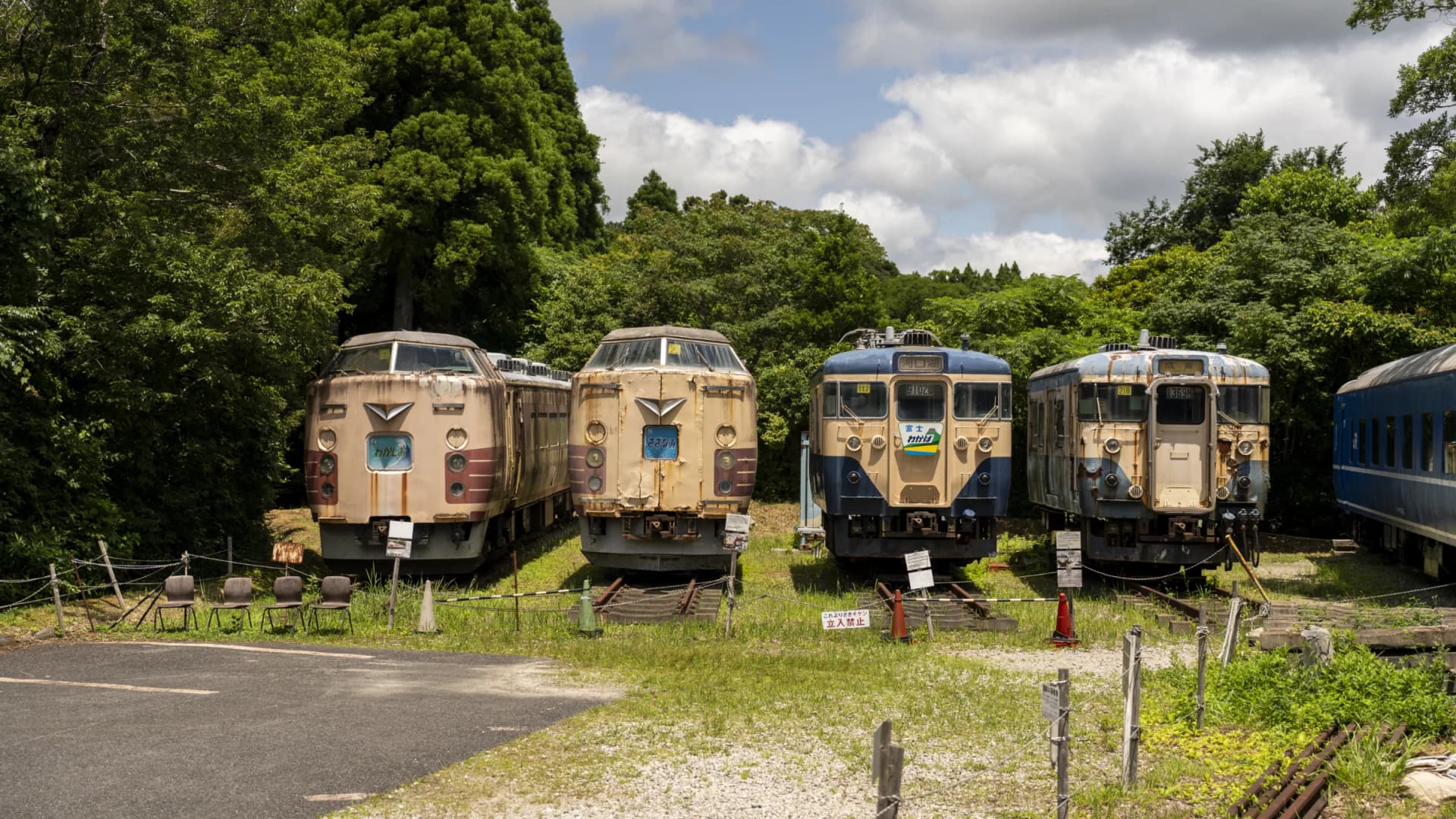
Poppo no Oka sits on a former poultry farm in rural Isumi, where around thirty retired railway vehicles have been brought to sit out their retirement. The trains began in 2010, when the owner was offered a carriage by the local railway and bought it – as he put it, much as one might buy a car. The collection grew from there.
It is not a museum in any formal sense, more a field full of trains, several of which have been given new jobs. The carriages here are used rather than merely displayed. A former Chiba Urban Monorail car houses the shop, selling railway goods, souvenirs and the farm's own eggs. A tram from the Manyosen line in Toyama is full of capsule-toy machines. An old Kururi Line carriage serves as a gallery, hung with photographs of the collection in service and of the vehicles being hauled up the hill to get here. Others are simply rest areas.
The café, TKG, occupies an Isumi Railway carriage and is named for what it serves: tamago kake gohan, raw egg over rice.
The collection is a serious one, and includes several vehicles that survive nowhere else in Japan – among them a 183-series express car, two 113-series commuter carriages and a 103-series driving trailer of a rare sub-class. There are two blue-liveried sleeper carriages from the age of the overnight express, a red Marunouchi Line underground car, freight guard's vans, shunting locomotives, and a cable car from Mount Oyama in Kanagawa that had to be lifted out by helicopter because no road reached it.
Much of the work is done by volunteer preservation societies, each looking after a particular vehicle, and some restorations are still in progress. One carriage was saved from the scrapyard by crowdfunding.
Most carriages can be entered. There is play equipment and a hand-pumped trolley for children, and a few small paid activities – sounding the horn in the Marunouchi Line driver's cab costs ¥100 for three goes. On weekends, a shunting engine sometimes pulls a short train of guard's vans fifty metres up the line and back, free to ride when it runs.
You might also like

Tokyo Game Show 2026
Tokyo Game Show 2026 goes five days for its 30th anniversary. Full guide to dates, ticket prices, confirmed games, cosplay rules and how to survive Makuhari.
19–21 Sep 2026Chiba
Japan Open-Air Folk House Museum
An open-air museum in Kawasaki with 25 traditional Japanese houses relocated from across the country, plus indigo-dyeing sessions, a soba restaurant, and craft displays.
Kawasaki · Kanagawa
Twenty-Four Eyes Movie Village
An open-air film set on Shodoshima island that preserves the world of a beloved literary and cinematic masterpiece set in prewar Japan.
Shodoshima · Kagawa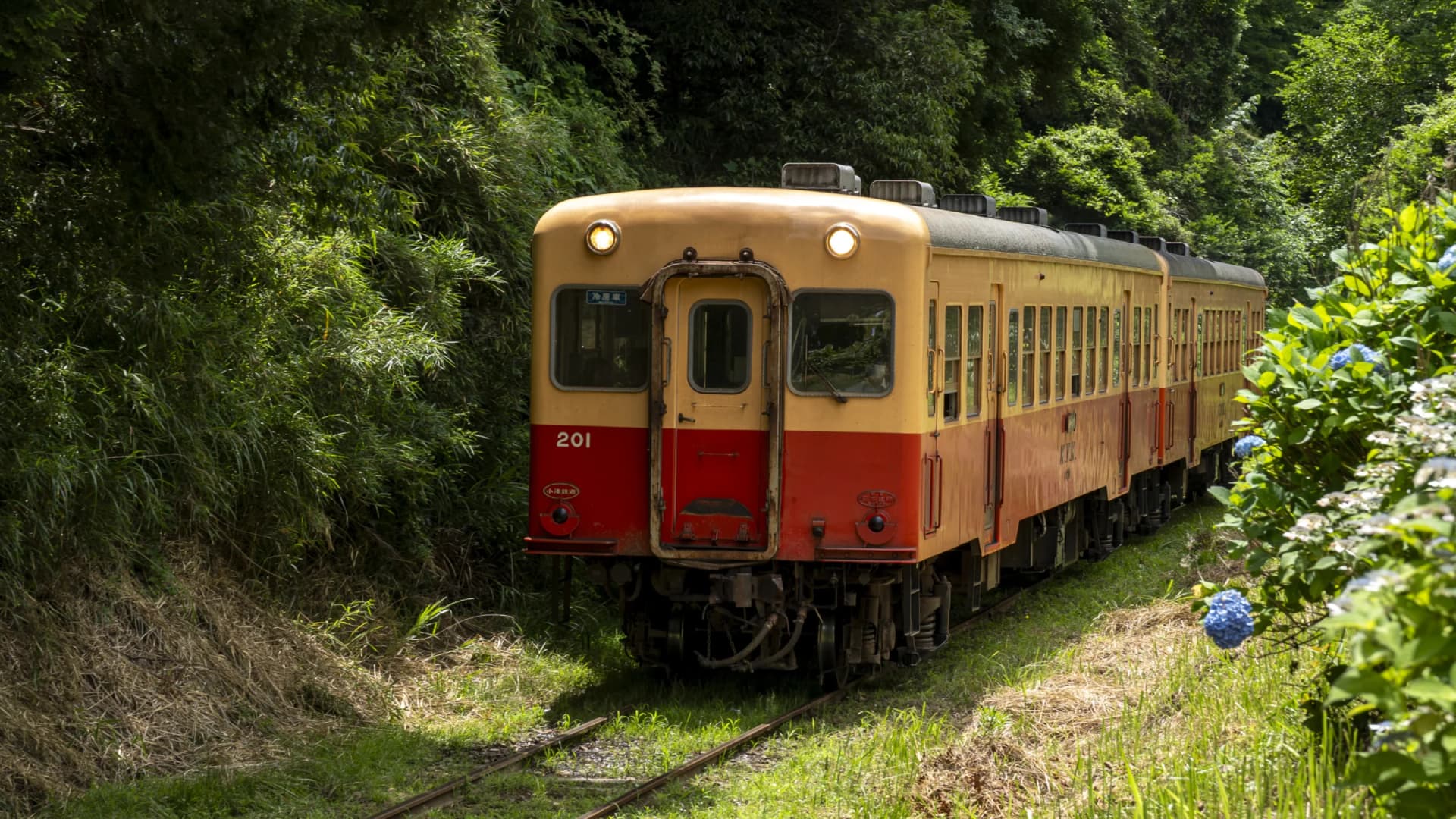
Kominato Line
An unelectrified line from the Chiba coast into the hills, where the ride is the whole point – wooden halts, open-sided carriages and rape blossom in spring.
Ichihara · Chiba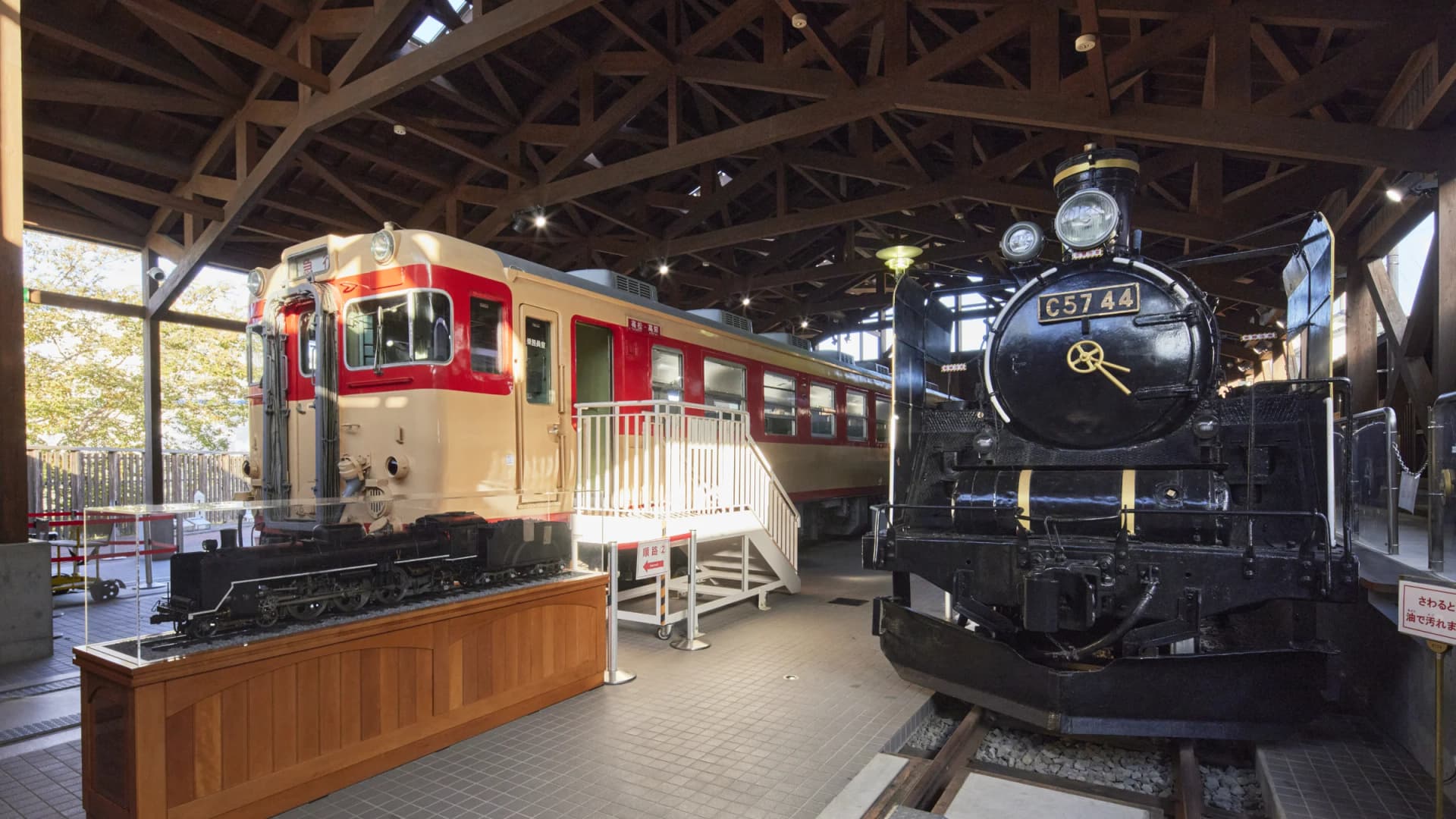
Railway History Park in Saijo
A railway museum beside Iyo-Saijo station holding an original bullet train car and the diesel locomotive that worked the lines of Shikoku.
Saijo · Ehime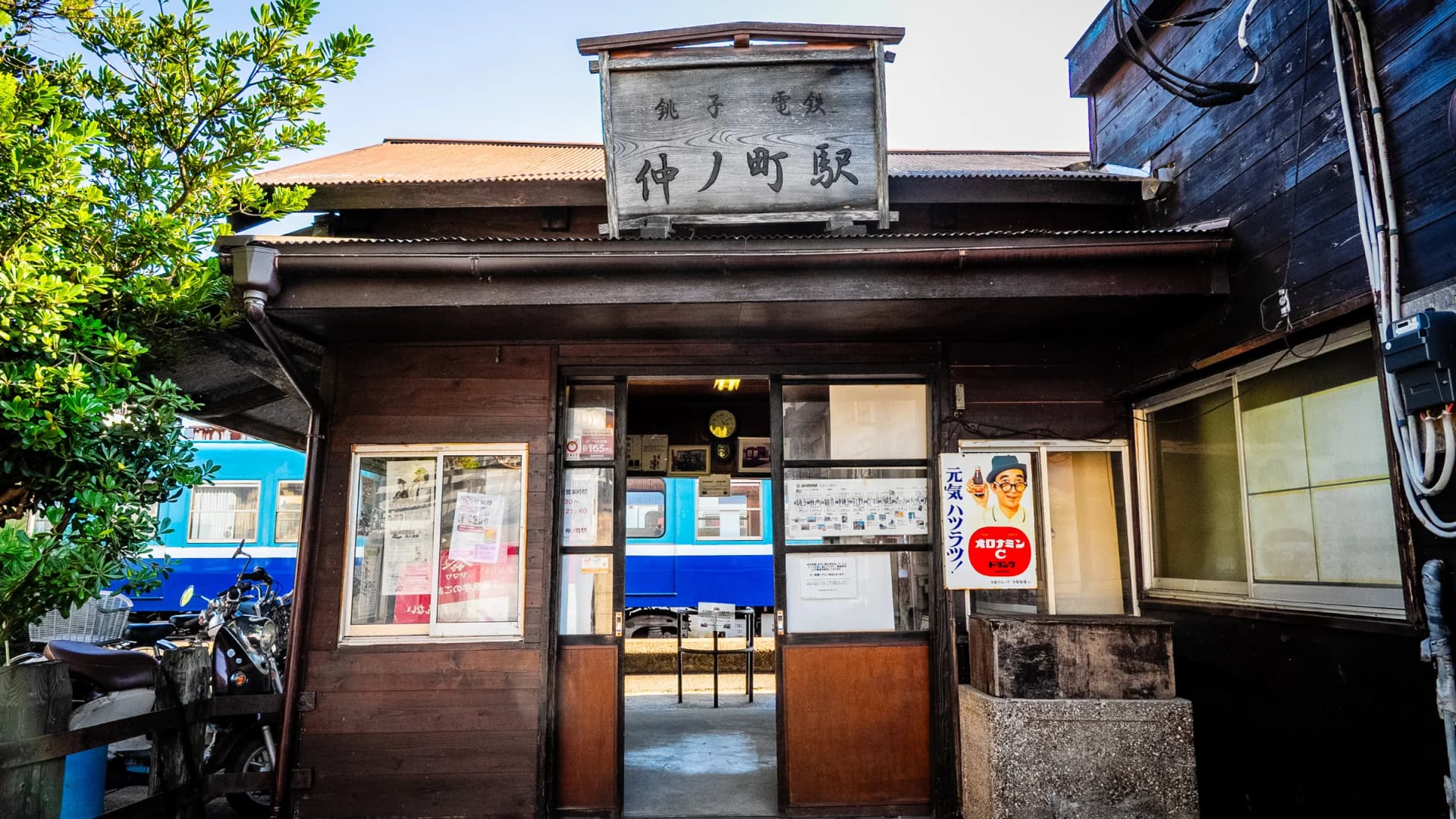
Choshi Line
A tiny railway at the eastern edge of Chiba, kept running by the rice crackers it sells – twenty minutes from the town to the Pacific, past cabbage fields.
Choshi · Chiba