Cherry Blossoms at Mount Yoshino
吉野山の桜
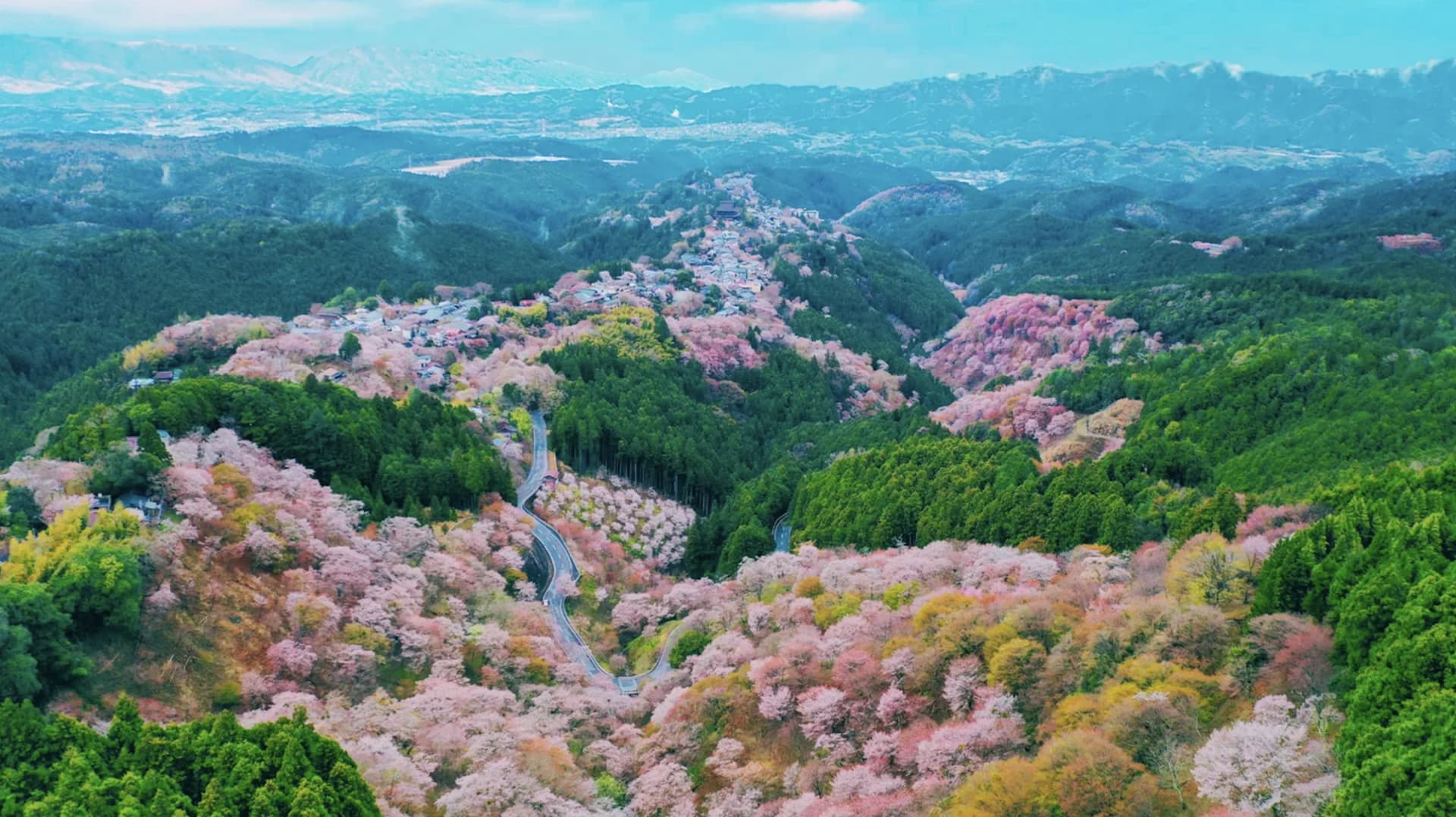
About thirty thousand cherry trees on a mountainside in Nara, planted over centuries as offerings, which come into flower from the foot upward over a month.
〒 639-3115How to get there
吉野Kintetsu Yoshino Line37 min walk from the station
Mount Yoshino in Nara Prefecture carries about thirty thousand cherry trees, of some two hundred kinds. They were not planted for display. The mountain is a centre of the Shugendo mountain religion, and the trees were given as offerings to Zao Gongen, the deity enshrined there, and tended as his sacred trees. That has gone on for centuries, and the mountain has filled up with them.
The trees stand in four bands up the slope, known from the bottom as Shimo Senbon, Naka Senbon, Kami Senbon and Oku Senbon, the lower, middle, upper and inner thousand. The word senbon means a thousand trees, and the mountain is also described as ichimoku senbon, a thousand at a glance.
The four bands differ in height, in the lie of the land, in how much sun they get and in their soil, so they do not flower together. The blossom begins at the foot and moves upward, and from the lowest zone to the innermost takes about a month. The trees themselves also vary, having been planted piecemeal over centuries. Saying the mountain is in full bloom does not mean every tree is out at once.
The variety most people picture is the Somei Yoshino, which was bred in Edo and carries the name Yoshino, but it is not what grows here. About eight in ten of the trees on the mountain are mountain cherries, and most of those are the white mountain cherry. The difference is visible: a Somei Yoshino opens its flowers on bare branches, while a mountain cherry puts out a few leaves first and flowers among them, so the effect is paler and less uniform.
While the blossom lasts the trees are lit after dark in the lower and upper zones, and the gates and halls of the temples and shrines along the road are lit as well.
Getting There

You might also like
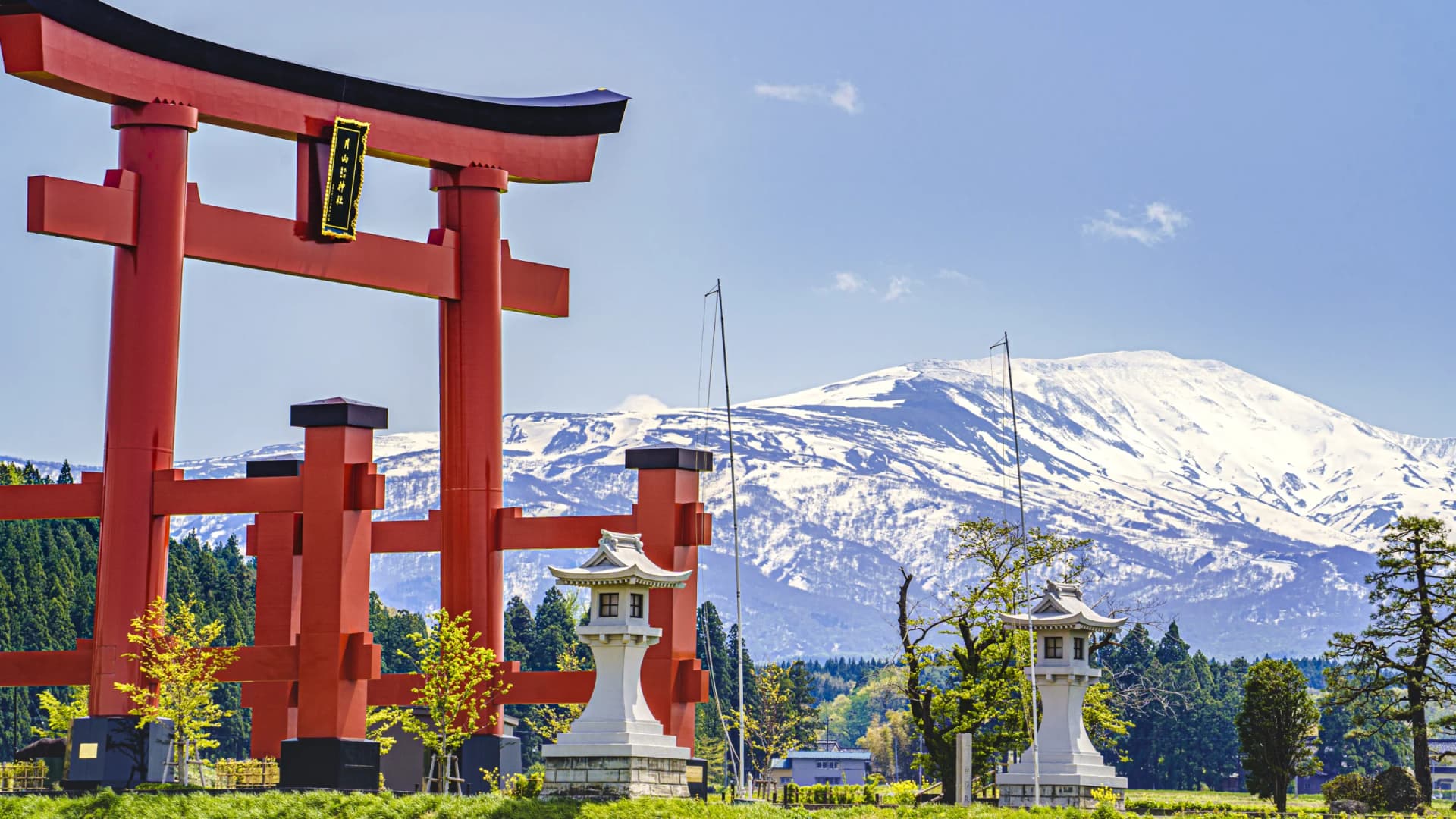
Mt. Haguro
The lowest of the three mountains of Dewa in Yamagata, climbed by a stone stair through old cedars, with a five-storey pagoda that is a National Treasure.
Tsuruoka · Yamagata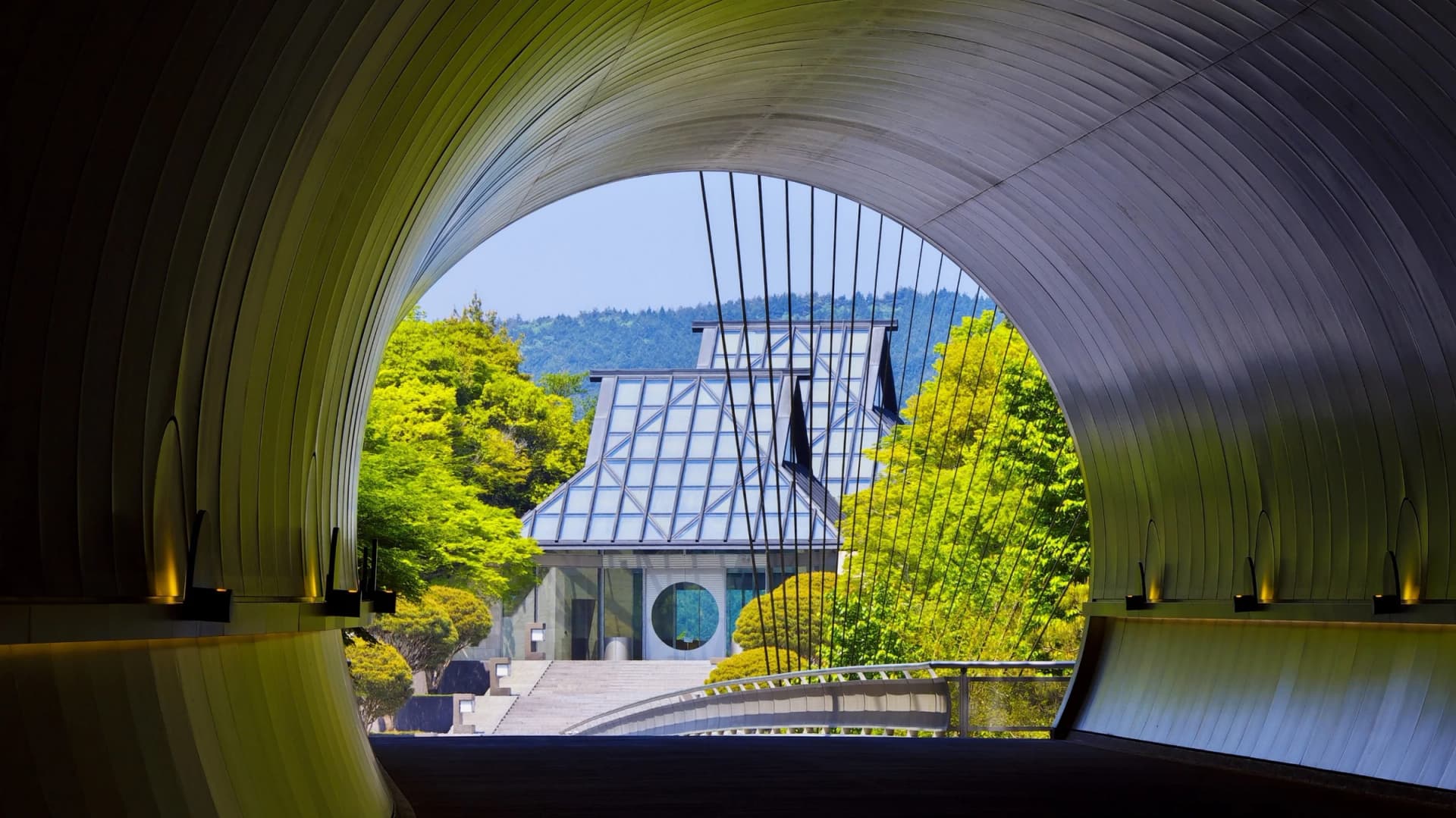
Miho Museum
A museum of 1997 in the mountains of Shiga, designed by I. M. Pei and mostly buried in the hillside, holding ancient art of the world alongside Japanese art.
Koka · Shiga
Rinnoji Temple
Rinnoji is a Tendai Buddhist temple in Nikko and part of a UNESCO World Heritage Site, known for its Sanbutsudo hall and the National Treasure Taiyuin mausoleum.
Nikko · Tochigi
Hyakusaiji Temple and the Buddhist Art of Omi
An autumn exhibition in Shiga where the hidden image of Hyakusaiji, an eleven-headed Kannon of the 8th century, leaves the temple for the first time.
26 Sep – 6 Dec 2026Koka · Shiga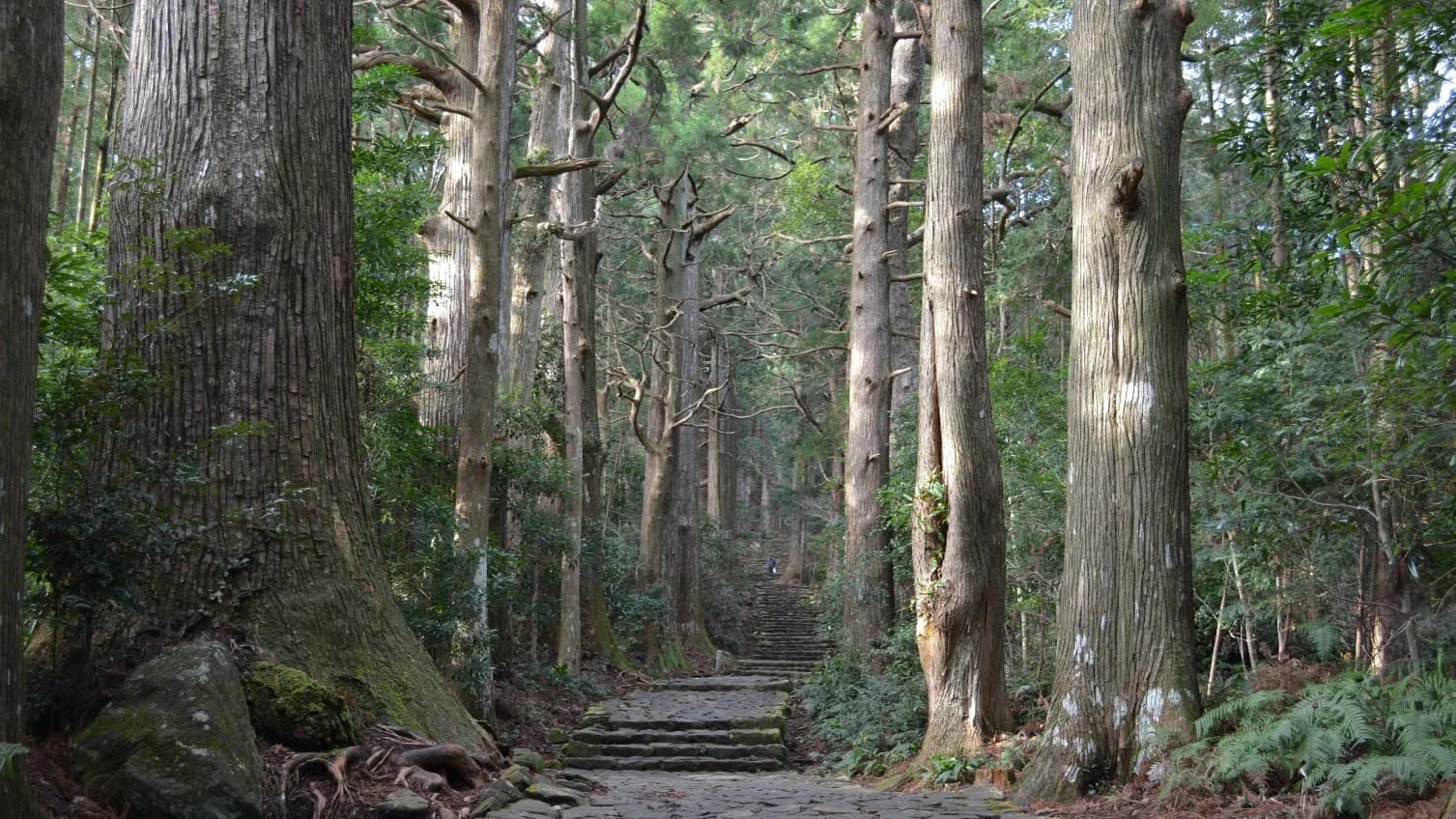
Kumano Kodo
For over a thousand years, the Kumano Kodo has led pilgrims through the mountains of Kii to the sacred Kumano Sanzan shrines – now a UNESCO World Heritage Site.
Wakayama · Kansai
Ogimachi Sakura Festival
A cherry blossom festival in Osaka features night illuminations and LED lantern releases alongside traditional Japanese instrument performances.
3–5 Apr 2027 · Dates not yet confirmedOsaka