

Twenty-Four Eyes Movie Village
二十四の瞳映画村
An open-air film set on Shodoshima island that preserves the world of a beloved literary and cinematic masterpiece set in prewar Japan.

Twenty-Four Eyes Movie Village is an open-air heritage site on Shodoshima island in Kagawa Prefecture that preserves the world of one of Japan's most beloved literary and cinematic works. Built as a replica film set for the 1987 remake of Twenty-Four Eyes, it has since grown into a cultural destination honouring both the story's origins and the golden age of Japanese cinema.
Twenty-Four Eyes (二十四の瞳 - “Nijushi no Hitomi) began as a 1952 novel by Shodoshima-born author Tsuboi Sakae. Set on the island from the 1920s through the 1940s, the story follows a young schoolteacher, Miss Oishi, and her twelve rural pupils — whose twelve pairs of eyes give the novel its title. The narrative traces their lives through the hardships of the prewar and wartime years, and is widely regarded as a humanistic masterpiece of Japanese literature. Director Kinoshita Keisuke adapted the novel into a celebrated 1954 film starring Takamine Hideko, which became one of the most acclaimed Japanese films of its era. A second film adaptation followed in 1987, for which the movie village was constructed.
Highlights
The Schoolhouse and Its Setting
The site's most popular landmark is the wooden schoolhouse, a replica of the Taura Branch of Naume Elementary School, the original filming location situated 700 meters from the village entrance. Perched on a hillside overlooking the Harima-nada sea, the schoolhouse is divided into three rooms — a first-grade classroom, a combined classroom for grades two through four, and a teachers' room. Each space is filled with props and photographs from the 1987 production, and the work of director Kinoshita Keisuke is also documented here.
The original Taura Branch schoolhouse itself, built in 1902 and used until 1971, remains preserved nearby. Visitors can sit at the original desks, beside the original organ, and take in a blackboard still bearing handwritten messages left by former students.
Cinematic Heritage
Gallery Shochikuza, renovated in 2012 to mark the centenary of director Kinoshita's birth and the 60th anniversary of Tsuboi's novel, recreates the atmosphere of a 1930s Japanese movie theatre, complete with tiled entrance and vintage star portraits. The 40-seat screening room shows the original 1954 film on a regular basis. Display cases feature comments on the film from prominent figures in contemporary Japanese cinema, including directors and actors such as Yamada Yoji, Kitaoji Kin'ya, and Kuroki Hitomi.
Kinema no Iori, opened in 2006, is dedicated to the golden age of Japanese cinema from the late 1940s through the 1960s, with displays covering the major studios of the era — Toho, Toei, Shochiku, Nikkatsu, and Daiei Film — alongside a vintage Daihatsu Midget three-wheeled vehicle at its centre.
A book café, opened in 2016, holds personal manuscripts and furnishings that belonged to Takamine Hideko, who was both a celebrated actress and a writer, alongside a collection of books related to film and the Seto Inland Sea.
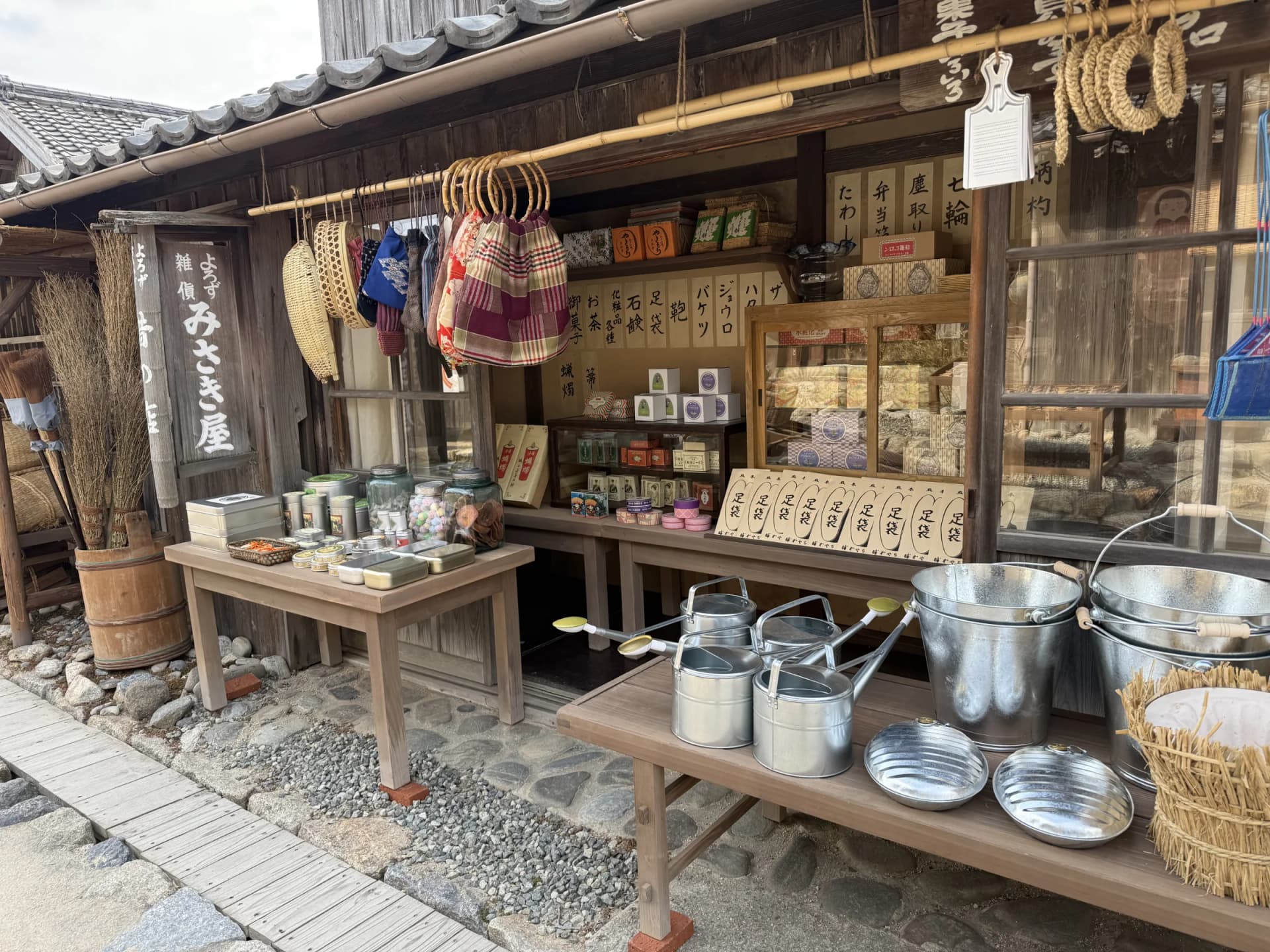
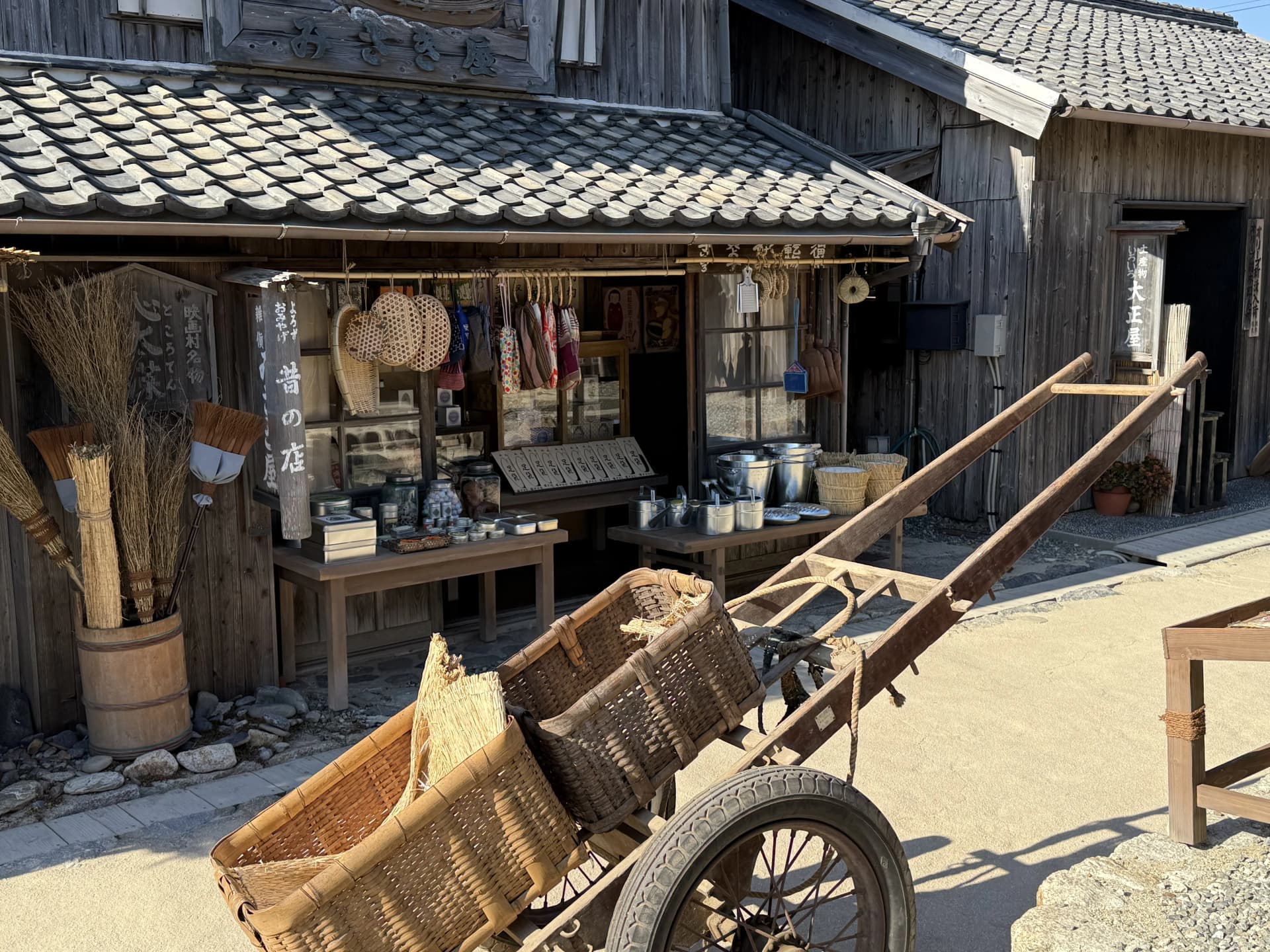
Literature and Local Heritage
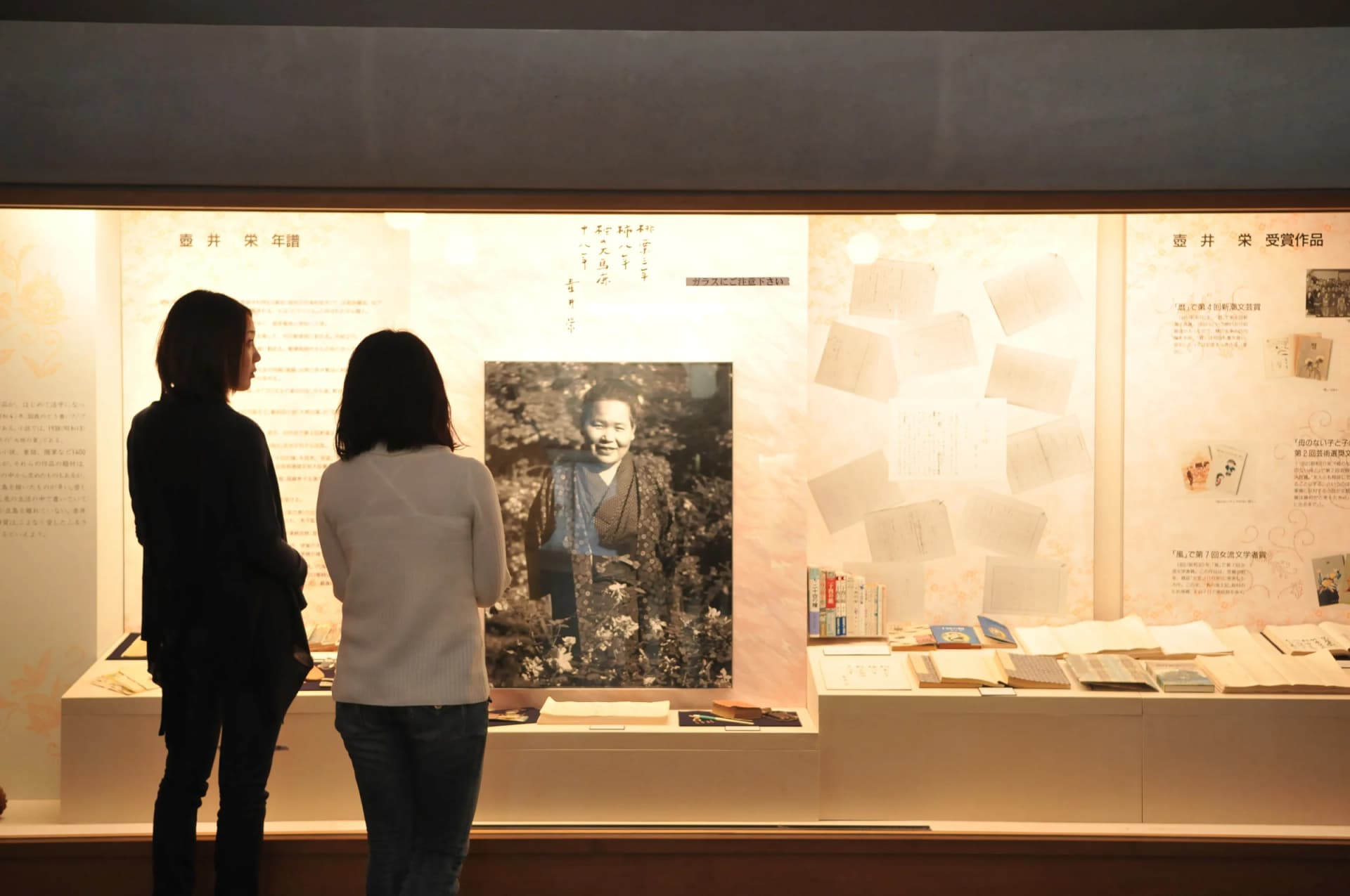
The Tsuboi Sakae Literary Museum honours the author and her husband, poet Tsuboi Shigeji, as well as fellow Shodoshima writer Kuroshima Denji. The village also contains a small Tenmangu shrine dedicated to academic achievement, with fortunes written in quotations from Shakespeare — a quietly unexpected touch.
Art Installations and Contemporary Works
The village incorporates several works from the Setouchi Triennale, the international art festival held across the islands of the Seto Inland Sea.
One of the most visually striking is Dance Party of Love (恋のダンスパーティ), a large-scale mural by painter Okamura Miki — known for her collaboration with Yanobe Kenji at the 2013 Setouchi Triennale.
Another Triennale work, Fisherman's Dream (漁師の夢) by Irie Saya, occupies one of the old fisherman's houses used during filming. Irie, a contemporary artist known for erasing printed imagery and reconstituting it into sculptural form, imagined an original side story centred on a fisherman character from the novel.
Also on the grounds is Bollard of Love (愛のボラード) by product designer Shimizu Hisakazu, a monumental bollard — the type of post used to moor ships at harbour — standing approximately 2.6 meters tall and 3.2 meters wide, placed in the site's parking area.
The Village Grounds
Beyond its cultural offerings, the site has the relaxed character of a coastal village. A tidal river running through the grounds is home to saltwater fish, including a large carp known affectionately as "Kobu-chan", a resident mascot. Seasonal flower fields shift from rapeseed in spring to sunflowers in summer and cosmos in autumn. A lane lined with hand-painted vintage film posters evokes the popular cinema culture of the 1950s. Visitors can also rent kasuri cotton kimono and try traditional childhood pastimes such as stilts and hoop rolling on the school grounds.
The Figure Gallery Kaiyodo, opened within the village in 2019, displays work by one of Japan's most prominent figure manufacturers and is accessible with standard village admission.
You might also like

Shin-Yokohama Ramen Museum
Opened in 1994 as the world's first ramen-themed food amusement park, this museum gathers famous ramen shops from across Japan in a single location.
Yokohama · Kanagawa
Japan Open-Air Folk House Museum
An open-air museum in Kawasaki with 25 traditional Japanese houses relocated from across the country, plus indigo-dyeing sessions, a soba restaurant, and craft displays.
Kawasaki · Kanagawa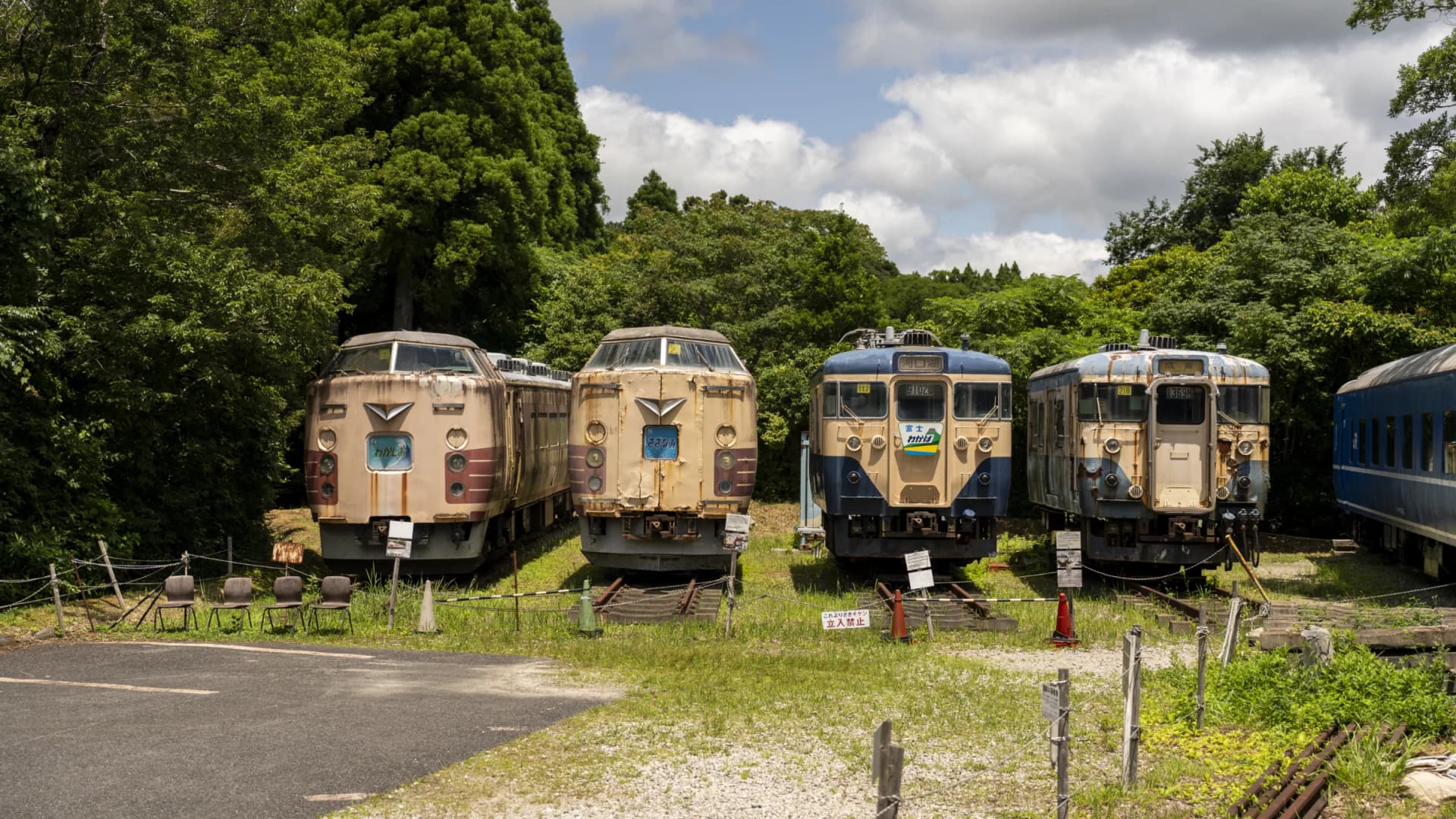
Poppo no Oka
On a quiet hillside in rural Chiba, around thirty retired railway carriages have been preserved, including several that survive nowhere else in Japan.
Isumi · Chiba
POP YOKAI: Contemporary Hyakki Yagyō — Contemporary Character Art of Japan
The Yokai Art Museum celebrates contemporary yokai sculpture across two exhibition phases, showcasing approximately 100 modern interpretations of legendary supernatural creatures.
26 Dec 2025 – 30 Nov 2026Kagawa
Kon Satoshi Birthday Festival 2026
Screenings of the films of Kon Satoshi at two Tokyo cinemas in the month of his birth, with talks by the actors who voiced his characters.
9–12 Oct 2026Tokyo
Kawasaki: The City You Have Already Passed Through
A million and a half people between Tokyo and Yokohama, and almost nobody stops. What is actually in Kawasaki, and why it is worth getting off the train for.
2026/08/04