

Shukkeien Garden
縮景園
A daimyo garden begun in 1620 in the centre of Hiroshima, destroyed by the atomic bomb and rebuilt over thirty years.
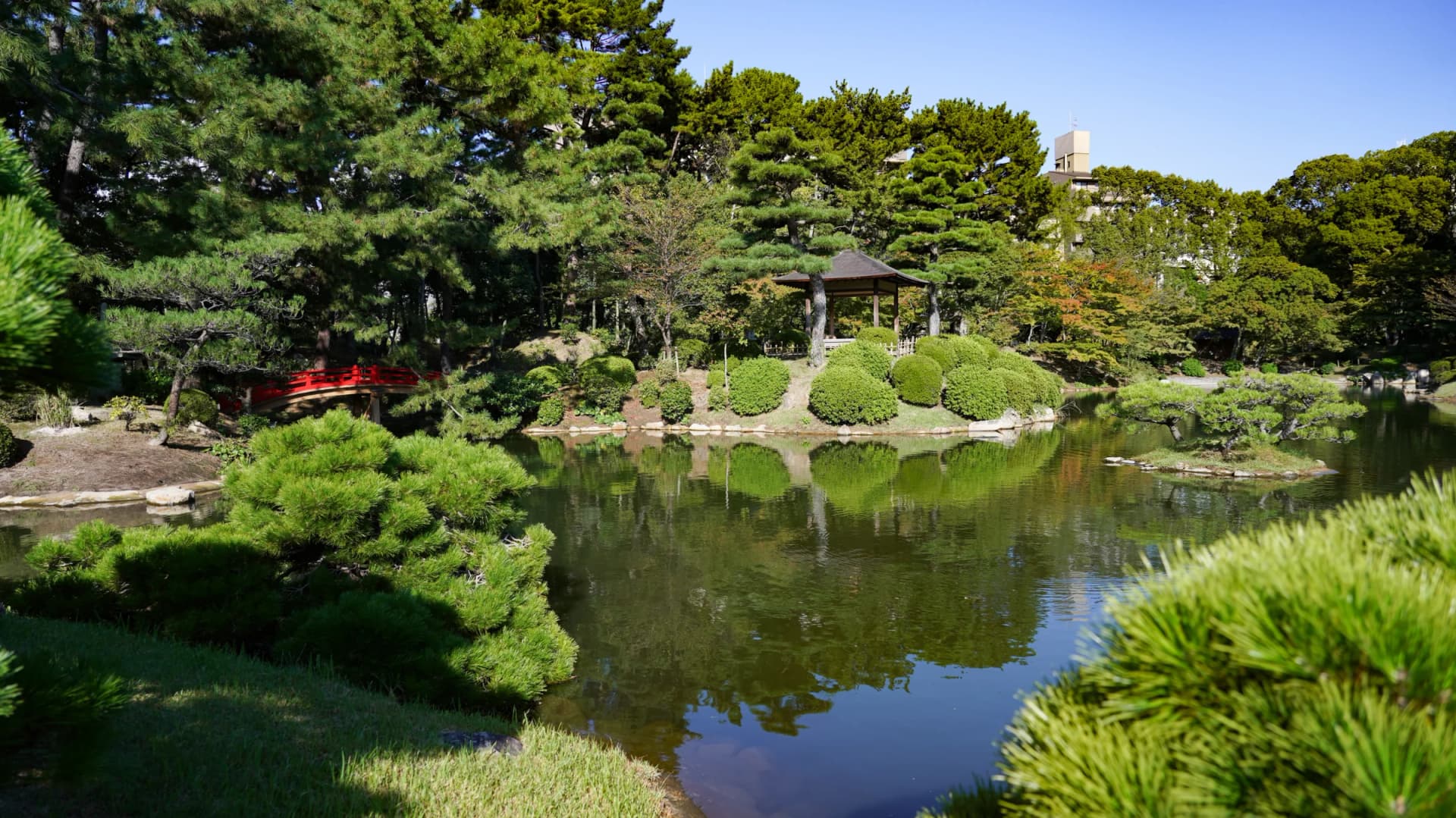
Shukkeien is a garden in the centre of Hiroshima, begun in 1620 for the lord of the domain and open to the public today. It has been a Place of Scenic Beauty, a national designation, since 1940.
Asano Nagaakira entered Hiroshima Castle in 1619 as the first Asano lord of the domain, and began the garden the next year as the grounds of a villa. It was laid out by Ueda Soko, one of his senior retainers and a tea master in the line of Sen no Rikyu. Later lords added to it, and it took roughly its present form under them.
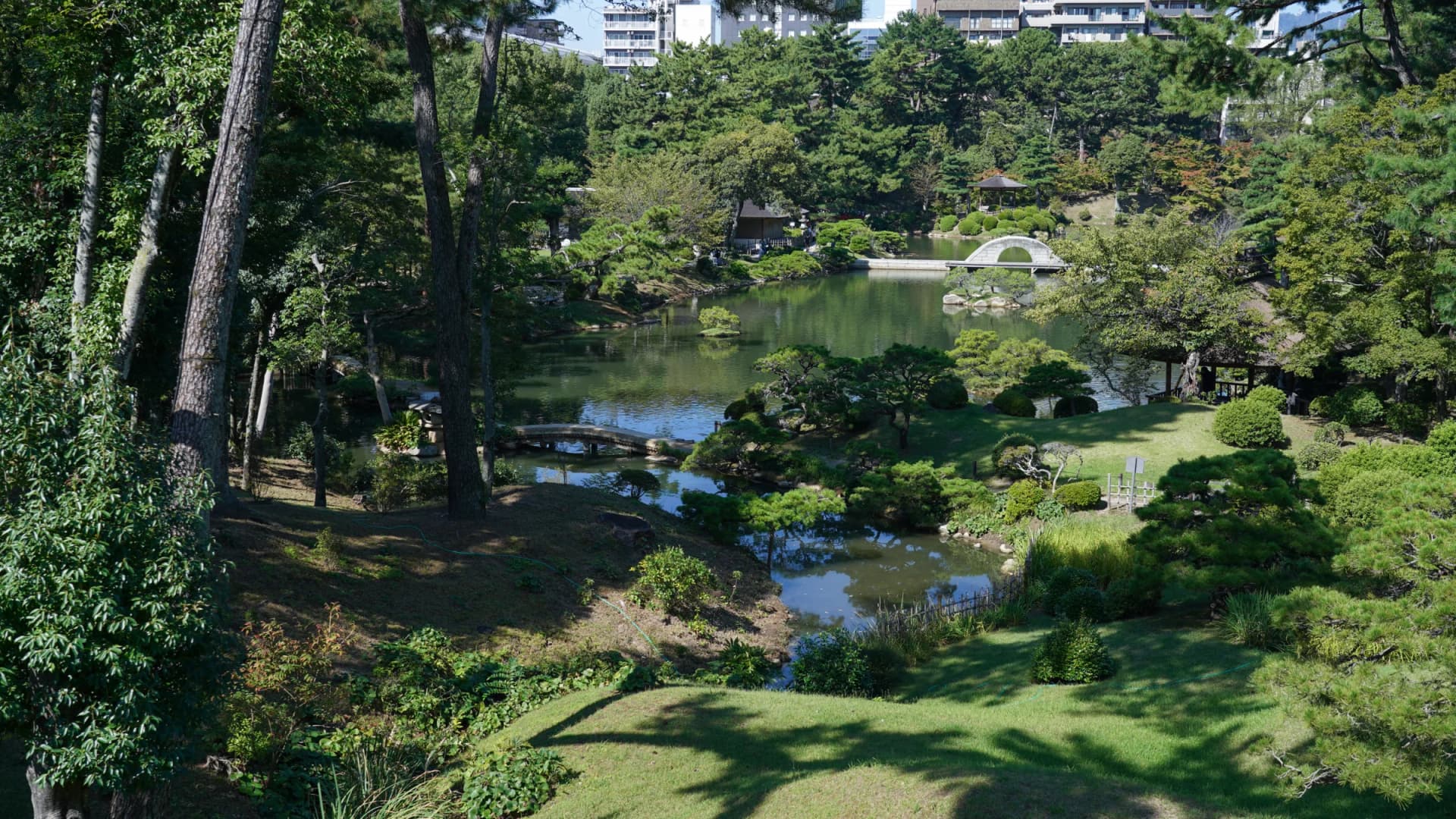
The garden was first known as Osensui or Sentei. The name Shukkeien is traced to a poem written for the second lord by the scholar Hayashi Razan, whose preface describes sea and mountain drawn small into one piece of ground and the scenery gathered into a single pavilion. Another account has the garden modelled on West Lake in China, reduced in scale.
Fire destroyed many of its buildings in 1758, and a long rebuilding followed from 1783. The Asano family gave the garden to Hiroshima Prefecture in 1940. Five years later the atomic bomb left it in ruins. Work to restore it began in 1949 and took about thirty years.
Paths run around a pond called Takueichi, which holds a number of small islands, two of them named for the crane and the tortoise, the creatures of long life.
Cherry and peach flower in spring, the maples turn in autumn, and plum and camellia come in winter. The garden is lit at night during the cherry and maple seasons. Tea gatherings are held through the year and are open to anyone.
Places nearby

Hiroshima Castle
A 16th-century castle destroyed in the atomic bombing of Hiroshima in 1945, reconstructed in 1958 and now serving as a museum documenting the city's history.
Hiroshima · Hiroshima
Atomic Bomb Dome
The remains of the Industrial Promotion Hall near ground zero from the August 6, 1945 atomic bombing, designated a UNESCO World Heritage site in 1996.
Hiroshima · Hiroshima
Hiroshima Peace Memorial Museum
A museum dedicated to preserving the memory of the atomic bombing of Hiroshima on August 6, 1945, featuring exhibits and artifacts that document its history.
Hiroshima · HiroshimaYou might also like
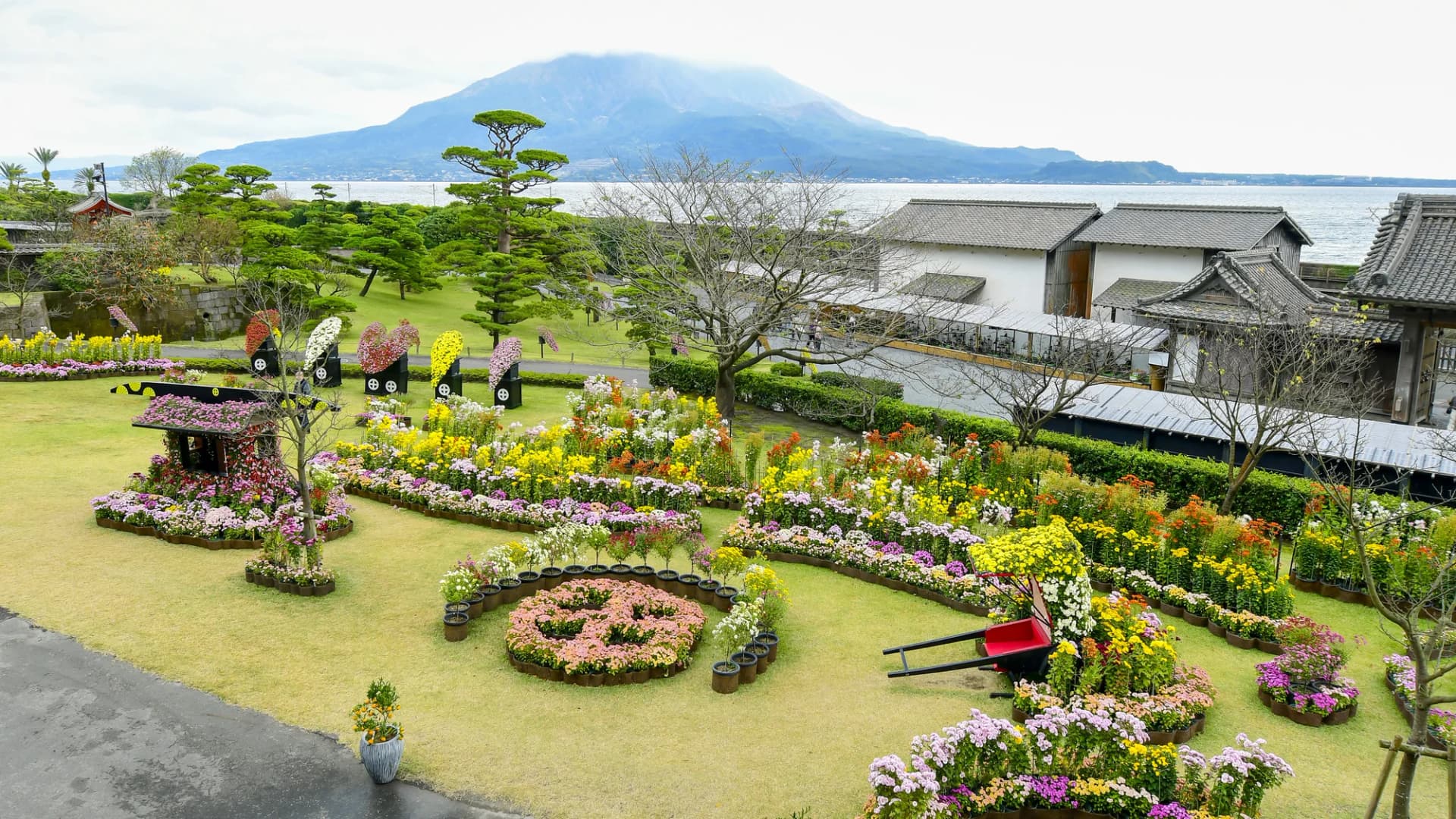
Sengan-en
The garden and villa of the Shimazu lords at Kagoshima, laid out in 1658 with Sakurajima and the bay borrowed as its scenery.
Kagoshima
Kairakuen
One of Japan's Three Great Gardens spanning 300 hectares, built in 1842 and renowned for its plum trees and cherry blossoms that bloom seasonally.
Mito · Ibaraki
ASAKUSA CULTURE & LIGHTS 2026
Five nights of projection mapping on the main hall and gate of Sensoji in Tokyo, with the temple's closed garden and its hall of ema open alongside.
30 Oct – 3 Nov 2026Tokyo
Kongorin-ji
A Tendai sect Buddhist temple founded in the early Heian period, housing a National Treasure main hall with Heian-period statues and garden.
Aisho · Shiga
Japan Game Awards 2026
Japan Game Awards 2026: "Pokemon Pokopia" takes the Grand Award, "Word Game" the Game Designers Award, and the Pokemon series a ministry honour for 30 years.
2026/09/15
Kaikai Yokai Festival
Toei Kyoto Studio Park brings Japanese yokai legends to life with parades, interactive dance experiences, workshops, and exhibitions celebrating supernatural folklore.
12 Sep – 29 Nov 2026Kyoto