

Takehara Historic Preservation District
竹原町並み保存地区
A five-hectare quarter of Edo and Meiji merchant houses in Takehara, Hiroshima, built on the fortunes of salt and known as the Little Kyoto of Aki.
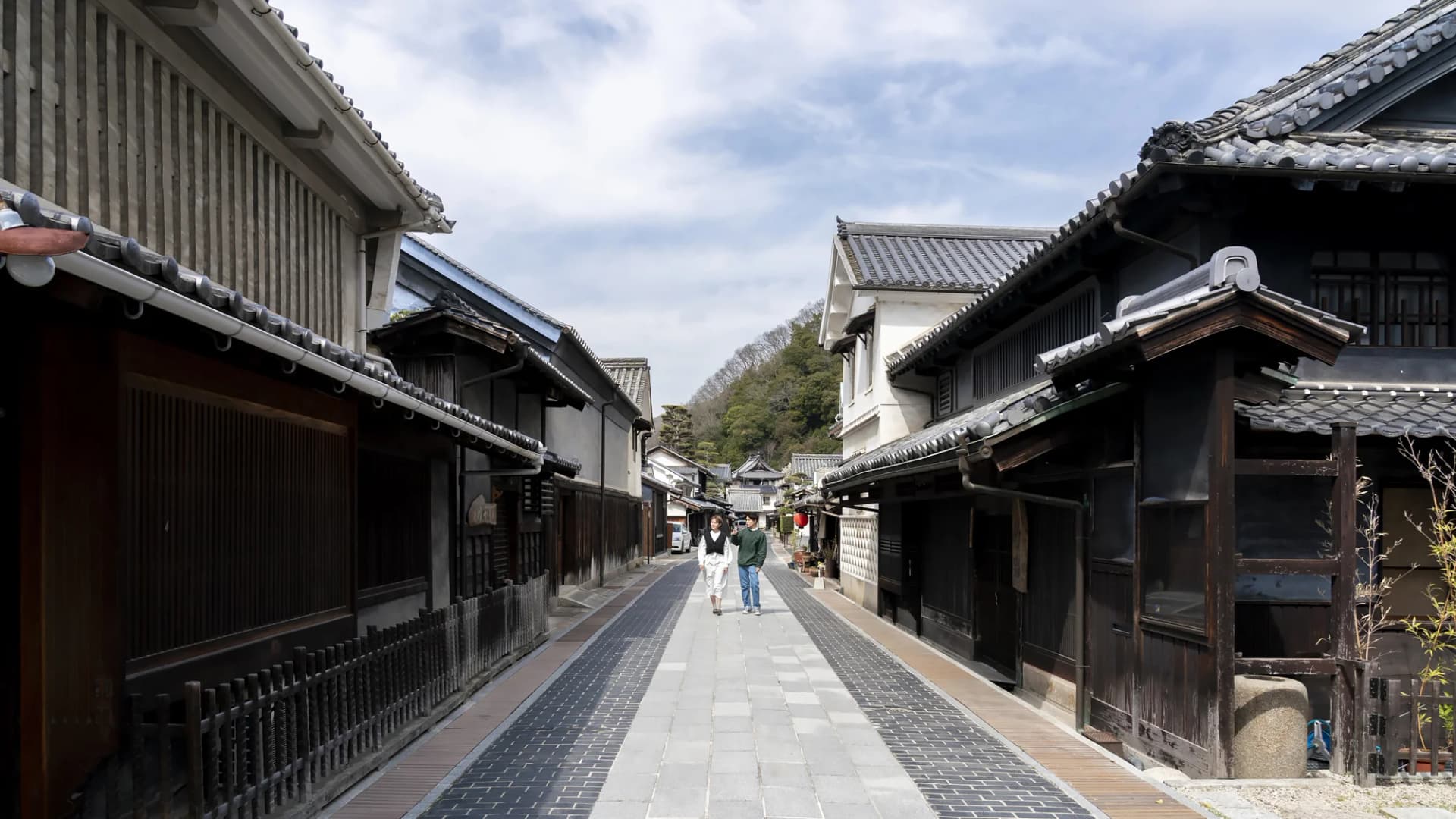
The old merchant quarter of Takehara stands on the Seto Inland Sea coast of Hiroshima Prefecture. About five hectares of it were designated an Important Preservation District for Groups of Traditional Buildings in 1982, a national designation. The two-storey wooden houses, tiled and thick-walled, date from the middle of the Edo period through to Meiji, and the town is known as the Little Kyoto of Aki, after the old province.
Takehara grew rich on salt. The shallows here were laid out as irihama salt fields, which used the tide to flood the beds, and the merchants who ran them, called hama-danna, made fortunes large enough to build the houses that still line the streets. Many brewed sake as well.
The salt was shipped out by the kitamaebune, the cargo ships working between Osaka and Hokkaido around the Sea of Japan. It travelled as far as Hokkaido, and in the ports that received it the name of the town came to stand for the goods: at Itoigawa, buying salt was called buying Takehara. That trade is now recognised as a Japan Heritage story, which takes in the townscape, the house of the largest salt wholesaler in the town, and the stone lanterns that guided the ships into harbour after dark.
Highlights
Fumeikaku, a hall of the temple Saihoji, stands on a rise above the district. It is built with a projecting stage in the manner of Kiyomizudera in Kyoto and looks out over the roofs of the town.
Several of the merchant houses can be visited: the former Matsusaka residence, with a curved karahafu gable and latticed plaster windows; the former Morikawa residence, rebuilt in the Taisho era; the former Kasai residence, now used for events; and the former Mitsumoto residence.
The lattices themselves repay attention. Takehara lattice takes many forms, from projecting and plastered screens to the small barred mushiko window, and shapes are worked into some of them, hearts and shuriken among them.
Taketsuru Shuzo, a sake brewery still working in the district, is the birthplace of Taketsuru Masataka, who is called the father of Japanese whisky. He was born there in 1894, studied in Scotland in his twenties and married a Scotswoman, Rita, in 1920. His life was dramatised by NHK as Massan.
You might also like
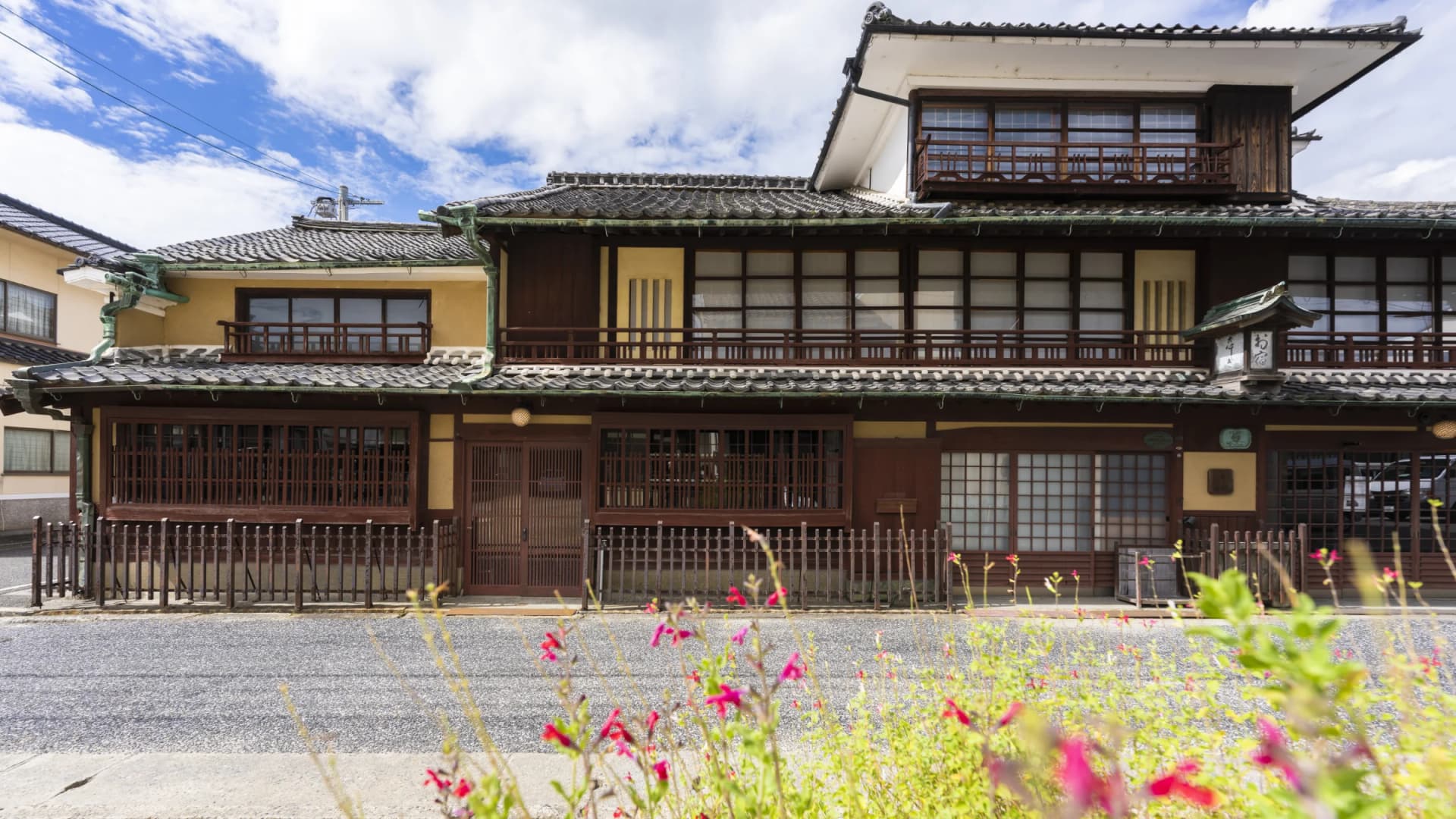
Koishiki
A restaurant inn of 1872 in Fuchu, Hiroshima, with a strolling garden of 1918, now on the national register and open to the public.
Fuchu · Hiroshima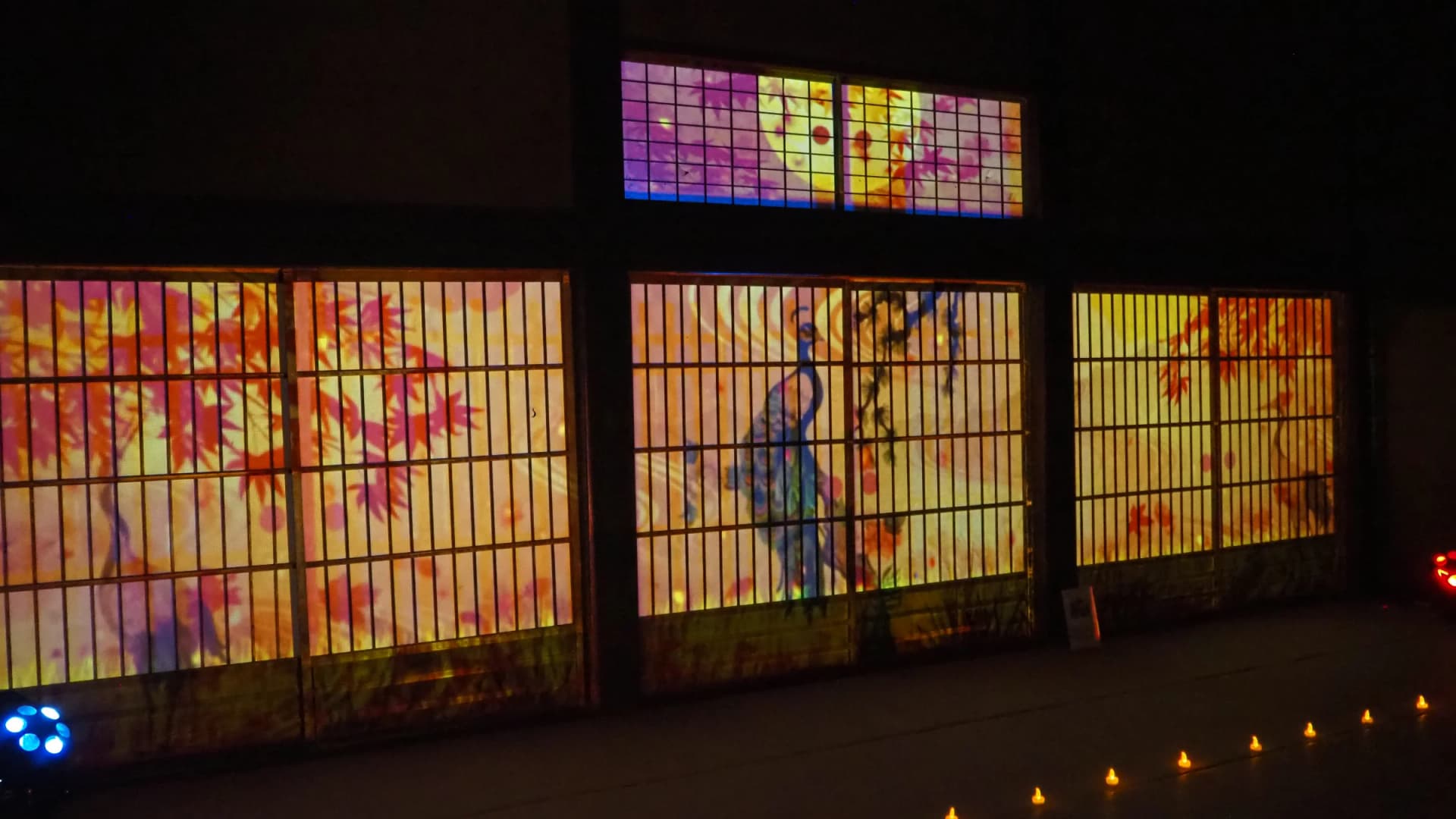
Wa no Hikari at Sasagawa-tei
A light display each autumn at the former Sasagawa residence near Niigata, with projections on an Edo-period house, a lit garden and works by local students.
26 Sep – 18 Oct 2026Niigata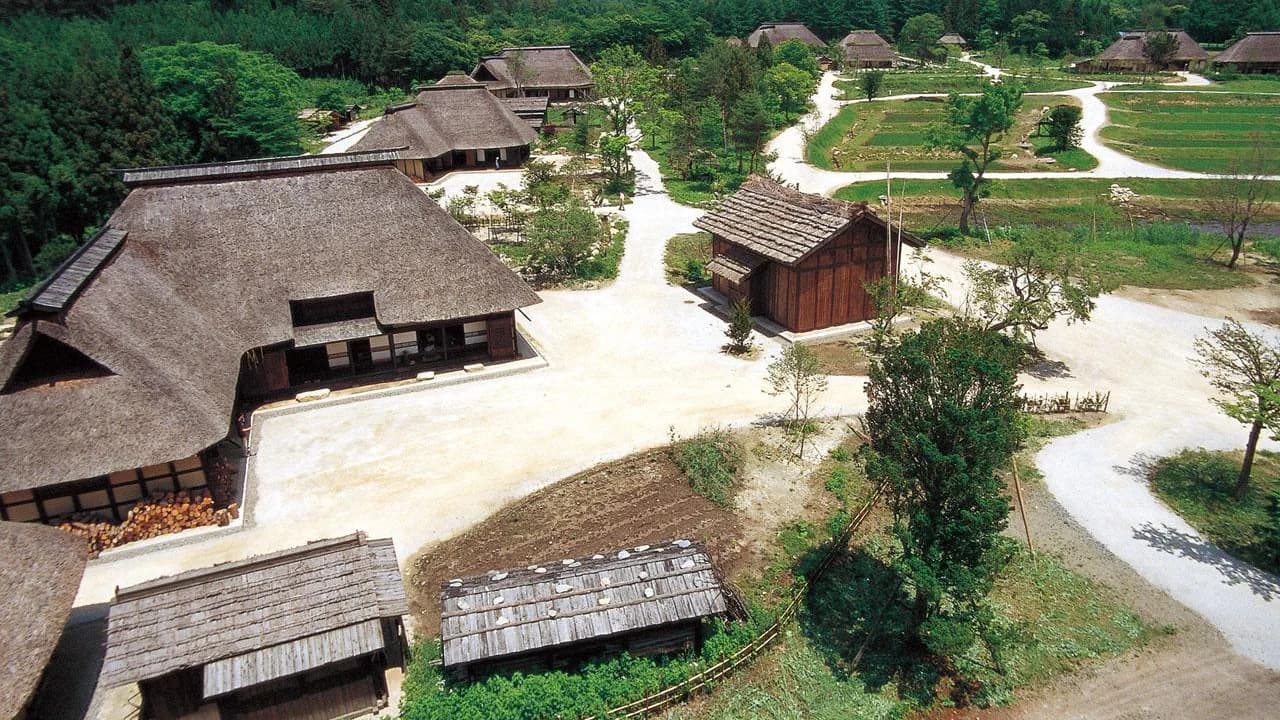
Tono Furusato Village
Seven old farmhouses of the Nanbu type moved to a valley in Iwate and kept as a working village, with horses, paddies and a water mill.
Tono · Iwate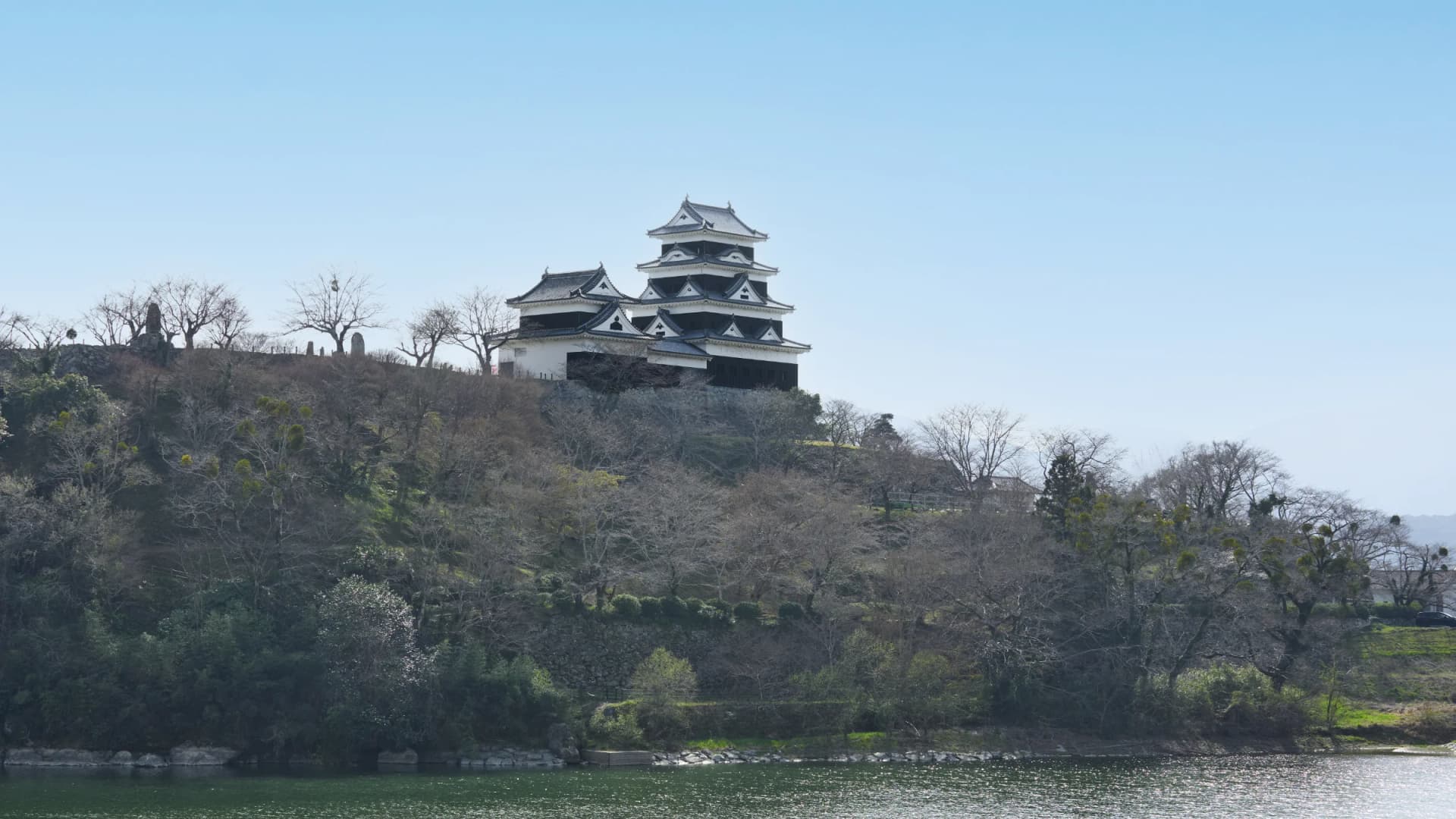
Ozu Castle
A castle above the Hiji River at Ozu whose keep was rebuilt in wood in 2004, using the old drawings and photographs, alongside four surviving turrets.
Ozu · Ehime
Nighttime Special Opening: Autumn Foliage and Building Light-Up
This evening event illuminates historic buildings and autumn foliage at the museum while showcasing traditional Japanese lighting methods like paper lanterns and gas lamps.
22–23 Nov 2026Koganei · Tokyo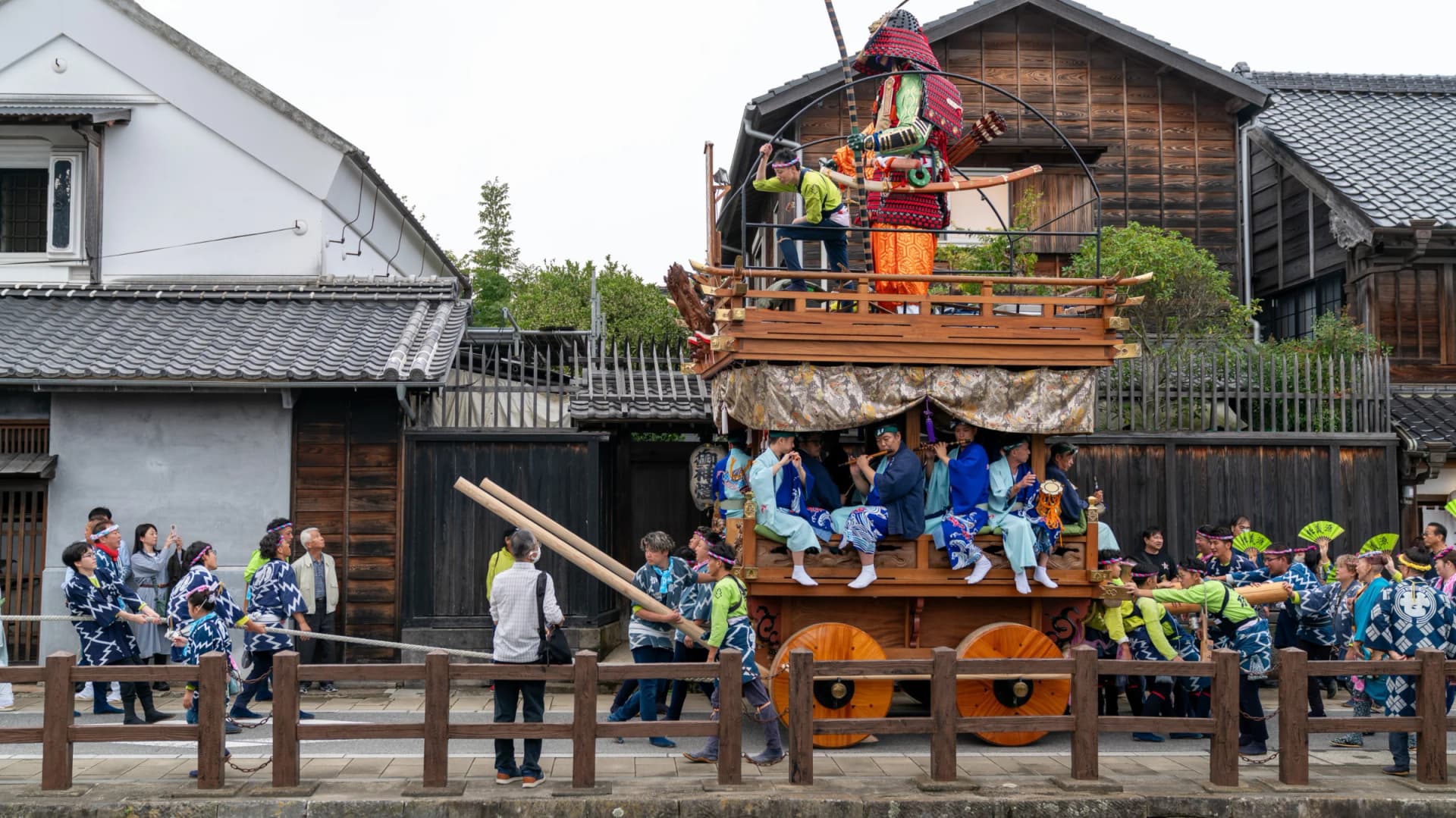
Sawara Grand Festival
Every July in Sawara, ten seven-metre floats crowned with giant dolls are spun through the streets of a preserved Edo-period merchant town, grazing the eaves.
10–12 Jul 2027Katori · Chiba