

Kawasaki: The City You Have Already Passed Through
Two cities in a thirty-kilometre strip, and no queue at any of it
Most people who visit Japan pass through Kawasaki. It lies on the old Tokaido corridor between Tokyo and Yokohama, so the train in from Haneda runs through it, the Shinkansen runs past it, and the line down to Kamakura or Hakone goes straight through the middle. A city of a million and a half people, and for most visitors it is a name on a platform sign at speed.
If you have heard of anything in Kawasaki at all, it is probably the Kanamara Matsuri, the spring festival where a large pink phallus is carried through the streets. It reaches the international press every April and it tells you almost nothing about the city.
Two cities, not one
The first thing worth knowing is that Kawasaki is not somewhere you walk around. It is a strip roughly 30km long, wedged between the Tama River and Yokohama, and the two ends have very little to do with each other.
The coastal end, around Kawasaki Station and the port, is industrial: refineries, chemical plants, canals, and an old post town buried underneath it. This is also the end nearest Haneda Airport, which sits directly across the river.
The inland end, half an hour north-west on the Odakyu and Nambu lines, is residential and green. Wooded hills, three museums in one park, and a Pokémon theme park on a ridge. Arrive at Kawasaki Station expecting that and you will be confused.
Pick an end. They do not combine well in a single day.
Yoru-Kawa: the night side
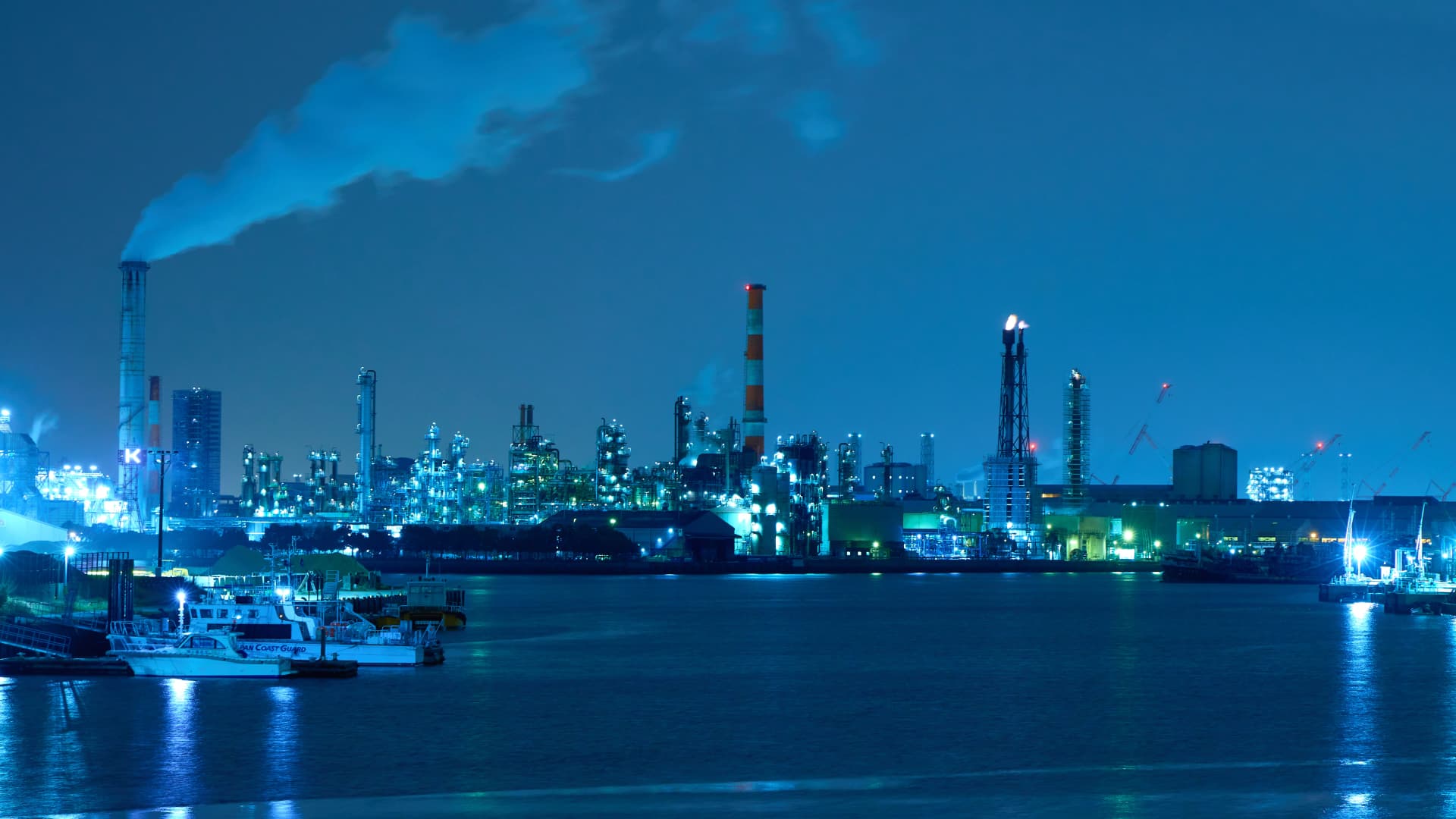
The city has its own shorthand for its two moods: Hiru-Kawa and Yoru-Kawa, day Kawasaki and night Kawasaki. Night Kawasaki is the industrial waterfront, and it is the one thing Kawasaki gave to the rest of the country.
In the 2000s people began noticing that the refineries at the port looked extraordinary after dark. Pipework lit white and orange, flare stacks, steam going up, all of it doubled in the black water of the canals. Kawasaki turned it into an attraction, other industrial cities followed, and kojo yakei, the factory night view, became a recognised category of Japanese tourism. Kawasaki is where it started.
The best way to see it is from the water. The city's tourist association runs a yakatabune, a traditional roofed boat, out through the Shiohama, Tanabe and Minamiwatarida canals with the plants rising on both sides. It sails on Saturday evenings, with extra summer departures, and you board not at the water but at Kawasaki Station, where a shuttle bus takes you out – allow around three hours. Booking is in Japanese, sailings need a minimum number of passengers, and a quiet date can be called off, so reserve ahead.
If the boat does not work out, the canals are public and the view exists from land. It is a lesser version of the same thing, but it is free and it is there every night.
Hiru-Kawa on the coast: Kawasaki Daishi
Kawasaki Daishi, properly Heiken-ji, is the reason Japanese people know Kawasaki. It is one of the most visited temples in the country at New Year, when several million people come for hatsumode, the first shrine or temple visit of the year, across the first three days of January. For the other 362 days it is calm.
The approach is the good part. The street up to the gate is lined with shops selling kuzumochi and herbal cough sweets, and the candy makers cut their sweets on the counter with two blades in a rhythm you can hear from the far end of the street. It is a ten minute walk from Kawasaki Daishi Station on the short Keikyu Daishi branch line.
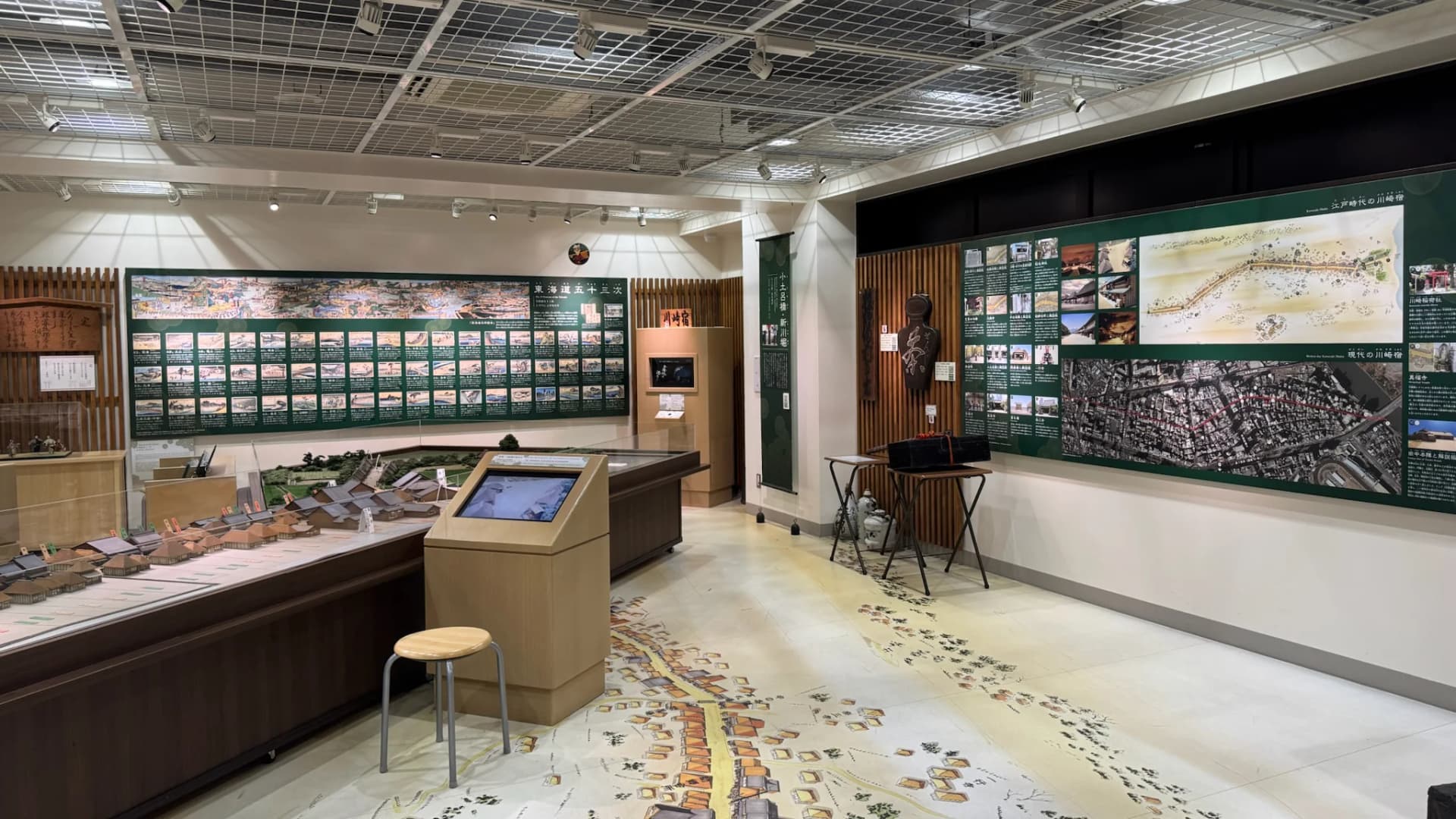
Nearby, the Tokaido Kawasaki-shuku Koryukan explains what the ground under the station used to be. Kawasaki was the second post town on the Tokaido, the road between Edo and Kyoto, and travellers have been stopping here on the way somewhere else for four hundred years.
Hiru-Kawa inland: the other half
Thirty to forty minutes north-west, around Mukogaoka-Yuen on the Odakyu line, is the Kawasaki that surprises people.
The Japan Open-Air Folk House Museum, or Nihon Minkaen, is the best thing in the city and one of the better museums of its kind anywhere in Japan. Around two dozen traditional houses, some of them three hundred years old, were taken apart in villages across the country and rebuilt here in the woods. Thatched roofs, packed earth floors, and irori hearths that the staff keep burning, so the buildings smell of woodsmoke the way they are supposed to. It is a thirteen minute walk from the station and it is rarely crowded.
It sits inside Ikuta Ryokuchi, a wooded park on a hillside that holds three museums with nothing whatsoever to do with each other. That is a strange sentence to write about a suburban park, but it is accurate, and it is the best reason to come out this way.
The second of the three is the Taro Okamoto Museum of Art, a few minutes further into the same park. Okamoto was born in Kawasaki in 1911 and grew into the most confrontational artist Japan produced in the twentieth century. He built the Tower of the Sun for the 1970 Osaka Expo, and painted the vast Myth of Tomorrow mural that now hangs in a Shibuya Station walkway, where the whole of Tokyo hurries past it every day without looking up. The museum is here because this is where he was from. The work is loud and difficult and sits about as far from the thatched farmhouses next door as it is possible to get, which is exactly why the two are worth seeing in one afternoon.
The third is the Fujiko F. Fujio Museum, dedicated to the man who created Doraemon. Tickets are for a specific date and time and they sell out well in advance, so it is a decision to make before you travel rather than on the morning.
A couple of stops further along the Odakyu line is Yomiuriland, an amusement park spread over a hill, and since February 2026 the home of PokéPark Kanto, the first permanent outdoor Pokémon facility anywhere in the world. It is 2.6 hectares of purpose-built forest and town with more than six hundred Pokémon placed through it.
Two things are worth knowing. The first is a border oddity that will sound familiar by now: Yomiuriland's postal address is in Inagi, Tokyo, but most of its land, including the hill PokéPark occupies, lies in Kawasaki, and even its phone number uses Kawasaki's 044 code. The city's tourist association lists it as a Kawasaki attraction, which settles that.
The second matters more if you actually want to go. Tickets are sold by lottery, not at the gate. Applications open for a twelve-day window at the start of each month, covering dates three months ahead. That means you cannot decide to visit while you are already in Japan on a two-week trip. It has to be planned before you leave home.
Coming from Haneda
Kawasaki happens to be convenient to the airport, which is worth knowing even though it is not by itself a reason to go.
Keikyu Kawasaki is about 25 minutes from Haneda Terminals 1 and 2, no transfer. The airport sits on the Tokyo bank of the Tama River and Kawasaki begins on the other side, close enough that a bridge between the two, the Tamagawa Sky Bridge, opened in 2022.
In practice that puts the coastal half within reach of an evening or an early start. Kawasaki Daishi before an afternoon flight is comfortable. The inland half is not, so give that most of a day.
Worth the stop?
Kawasaki does not perform for visitors. There is no preserved old quarter, no view, no single sight that a trip gets built around, and it has never held the international profile its neighbours do. What it has is a first-rank temple, three good museums in one wood, a genuinely strange night landscape that it invented a whole category of tourism for, and, PokéPark aside, no queue at any of it.
That is not an argument for skipping anywhere else. It is an argument for not letting it stay a name on a platform sign.
You might also like
Tokaido Kawasaki Shuku Koryukan
A small, free museum near Kawasaki Station on the history of Kawasaki Shuku, the Edo-period post town on the old Tokaido highway between Edo and Kyoto.
Kawasaki · Kanagawa
Japan Open-Air Folk House Museum
An open-air museum in Kawasaki with 25 traditional Japanese houses relocated from across the country, plus indigo-dyeing sessions, a soba restaurant, and craft displays.
Kawasaki · Kanagawa
Twenty-Four Eyes Movie Village
An open-air film set on Shodoshima island that preserves the world of a beloved literary and cinematic masterpiece set in prewar Japan.
Shodoshima · Kagawa
Japan Game Awards 2026
Japan Game Awards 2026: "Pokemon Pokopia" takes the Grand Award, "Word Game" the Game Designers Award, and the Pokemon series a ministry honour for 30 years.
2026/09/15
Kaikai Yokai Festival
Toei Kyoto Studio Park brings Japanese yokai legends to life with parades, interactive dance experiences, workshops, and exhibitions celebrating supernatural folklore.
12 Sep – 29 Nov 2026Kyoto
Design Festa
With over 10,000 participating artists and 140,000 expected visitors, this open art event showcases original creations across diverse mediums and styles.
23–24 May 2027Tokyo