

Kumano Hongu Taisha Grand Festival (Reitaisai)
熊野本宮大社 例大祭
Each April, Kumano Hongu Taisha holds its Reitaisai – three days of purification rites, beautiful sacred dance performances, and a grand palanquin procession.
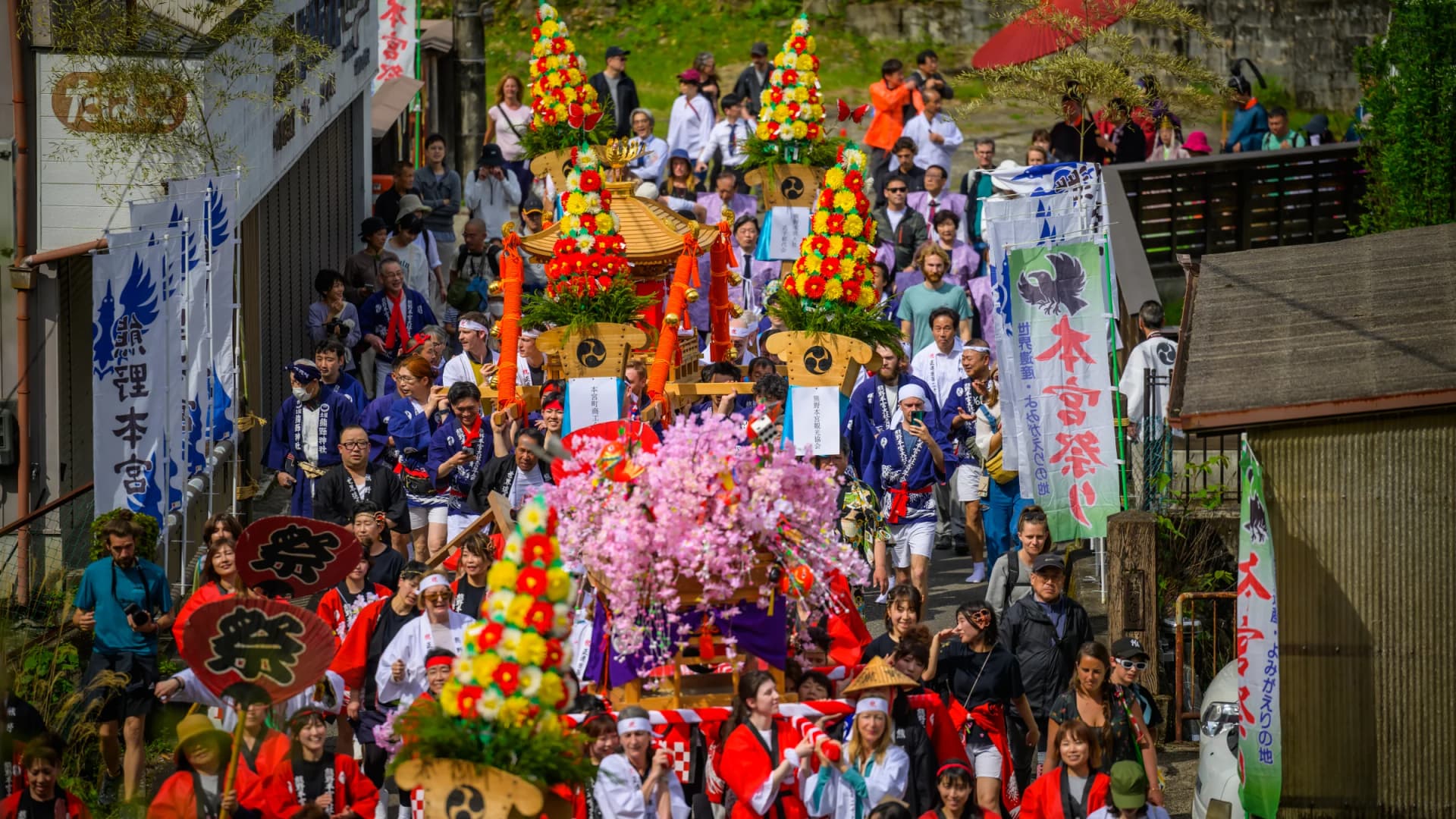
The Kumano Hongu Taisha Grand Festival, also known as the Reitaisai, is the largest and most important festival held at Kumano Hongu Taisha, one of the three grand shrines of the Kumano Sanzan. Taking place each year from 13 to 15 April, it unfolds over three days of solemn rites and lively celebration, drawing crowds to this sacred corner of the Kii Peninsula.
Day One: The Yunobori Rite
The festival opens on 13 April with the Yunobori Shinji, a purification ritual designated an Intangible Folk Cultural Property of Wakayama Prefecture. On the morning of the 13th, a procession of forty to fifty people – the chief priest and shrine clergy, parishioners, mountain ascetics, sacred musicians, and young boys of two or three years old serving as chigo (sacred children) – sets out from the shrine. Singing sacred songs to the beat of a drum, they make their way to the hot springs of Yunomine Onsen to purify themselves, bathing in the waters and eating a ceremonial rice porridge.
The chigo are central to the rite: because the Kumano deity is believed to dwell in the child's head, the boys must never be set down on the ground during the ceremony, and are carried on their fathers' shoulders as the procession moves.
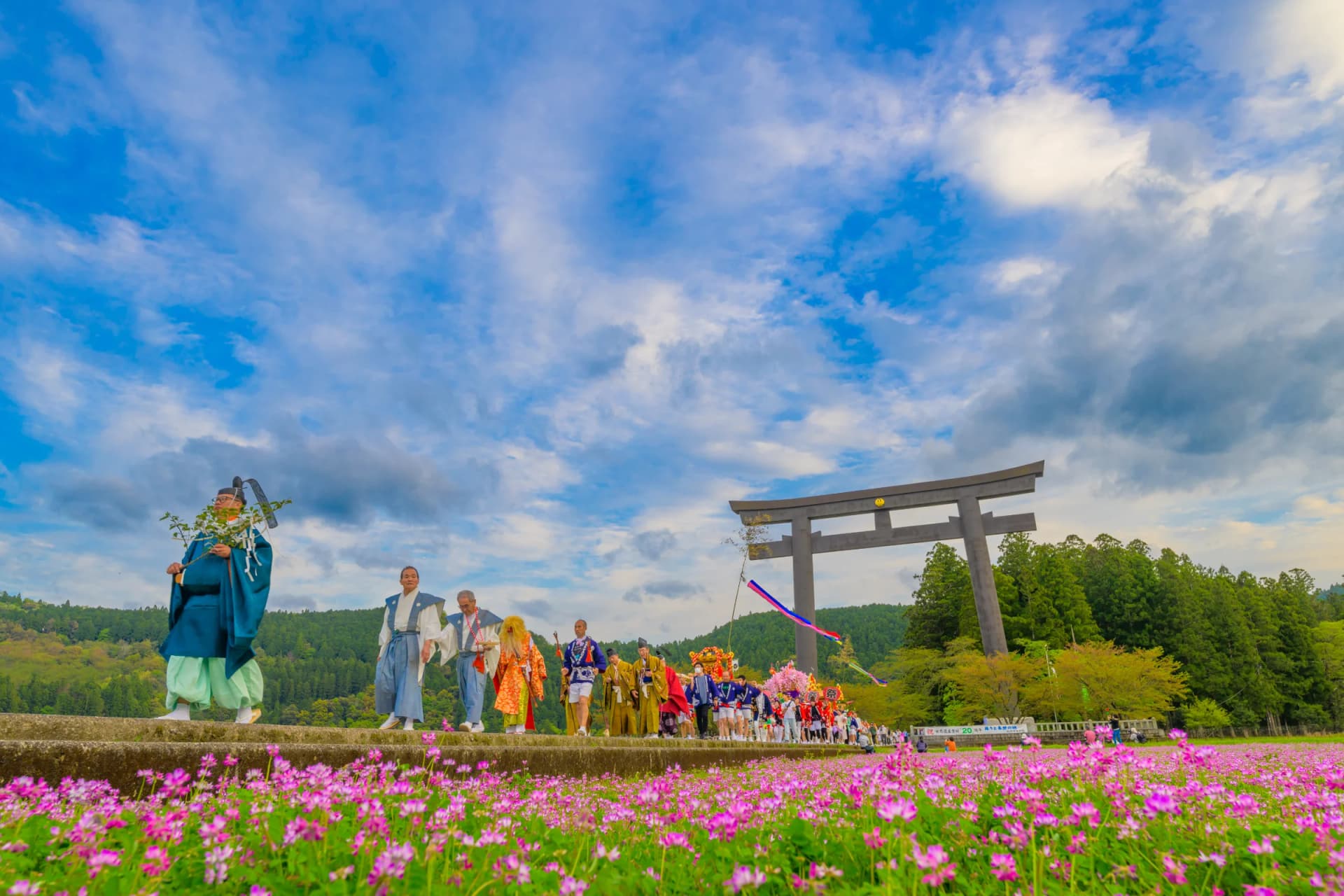
In the afternoon, a sacred children's dance called the Yasabaki Shinji is performed, thought to draw the spirit of the deity into the child. The procession then crosses the mountain path known as the Dainichi-goe before continuing on to the old shrine grounds at Oyunohara, where the day's rites conclude at dusk with an evening procession.
Day Two: The Funatama Festival
The 14th is given over to the Funatama Taisai and the festival's eve celebration, building toward the climax to come.
Day Three: The Togyosai Procession
The festival reaches its finale on the 15th with the Togyosai. It comprises two rites: the Honden-sai held within the shrine's main hall, and the grand procession from the shrine to the old grounds at Oyunohara. Beginning in the early morning, the main-hall rite centers on a sacred palanquin adorned with chobana – chrysanthemum flowers mounted on a tall bamboo pole – an important symbol associated with the deity Kumano Musubi no Kami.
The palanquin, believed to carry the enshrined spirit, then departs the main hall at the head of a procession of shoulder-carried chigo, shrine maidens, and priests. At Oyunohara, local children in traditional costume perform the Yamato-mai dance to flute and drum, shrine maidens dance, and the chigo dedicate a rice-planting rite. The day closes with a fire ritual and the scattering of rice cakes by the mountain ascetics, sending the great festival off amid celebration.
You might also like

Morioka Fall Festival
One of Iwate's most enduring celebrations, this autumn festival originated as prayers for harvest, now featuring ornate floats and traditional parades.
14–16 Sep 2026Morioka · Iwate
Sanja Matsuri
Sanja Matsuri is one of Tokyo's largest traditional festivals, honouring enshrined figures through mikoshi processions and an Intangible Folk Cultural Property ritual dance.
15–17 May 2027Tokyo
Ohara Hadaka Festival
The 'Naked Festival' features mikoshi carried into the sea, a boisterous parade through town, and shrines tossed high against fireworks and songs of joy.
23–24 Sep 2026Isumi · Chiba
Kumano Hongu Taisha
Kumano Hongu Taisha, heart of the Kumano Sanzan, traces its origins to before Emperor Jinmu – where legend says three moons descended to found the shrine.
Tanabe · Wakayama
Iwami Kagura
Each autumn in western Shimane, shrine stages host Iwami Kagura – sacred dances performed through the night, from ceremonial pieces to a battle with a serpent.
Shimane · Chugoku
Kibitsu Jinja
Major Okayama shrine dedicated to Kibitsuhiko-no-Mikoto, a legendary prince credited with defeating an ogre and bringing peace to the region, foundations of the Momotaro folktale.
Okayama