Omuta Daijayama Festival
おおむた大蛇山
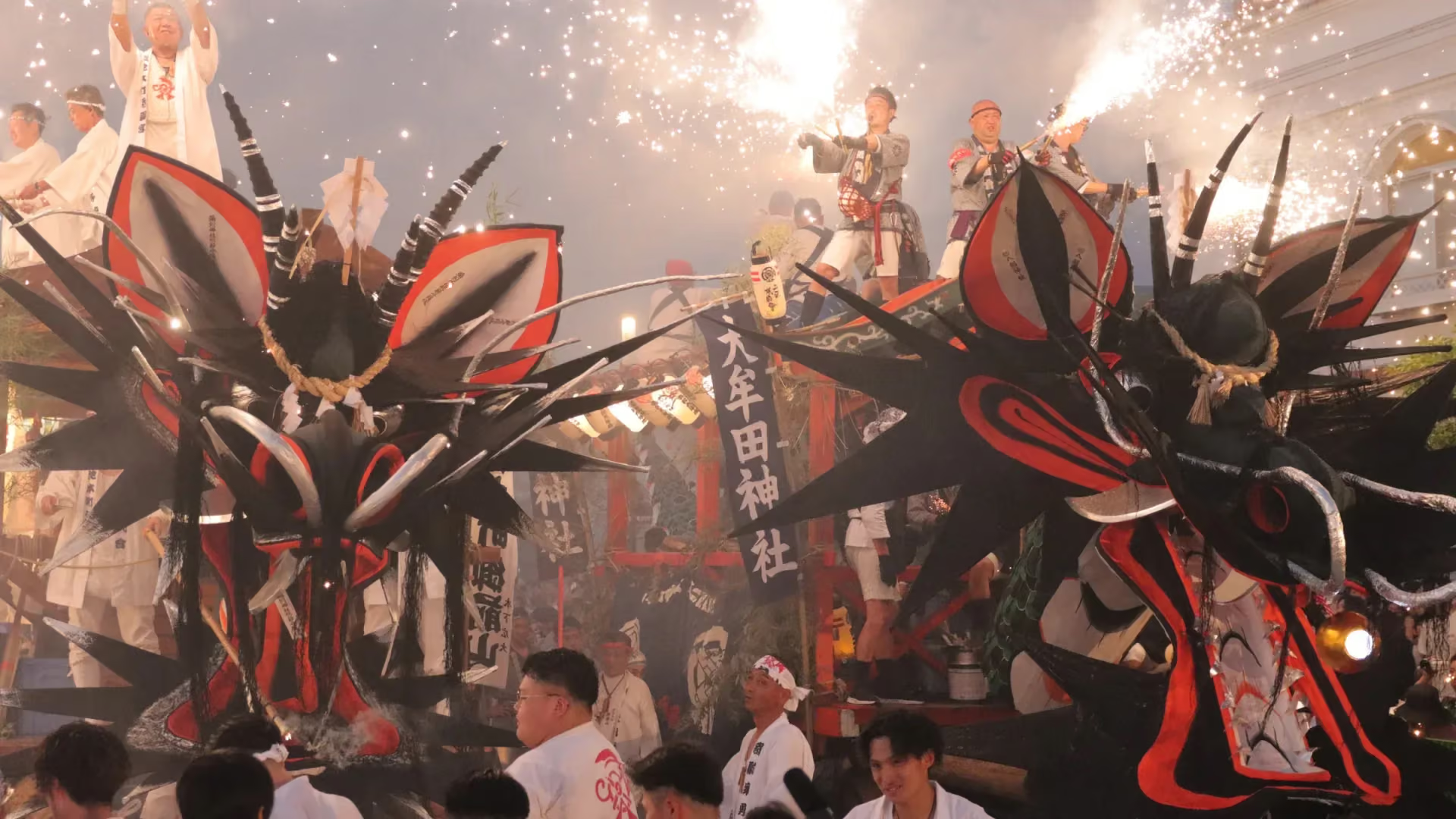
A festival featuring massive serpent-shaped wooden floats that spew fire and smoke as they parade through Omuta City streets in July.
〒 836-0047How to get there
大牟田Kagoshima Main Line · Tenjin Omuta Line6 min walk from the station
The Omuta Daijayama Festival is known for its Daijayama (meaning Great Serpent Mountain) float - a spectacular festival float measuring about 10 meters long, 5 meters tall, and weighing up to three tons. Constructed from wood, bamboo, straw, and traditional Japanese paper (washi), its enormous head, body, and tail are decorated to resemble a giant serpent.
Every July, these massive floats parade through the streets of Omuta City, Fukuoka Prefecture, spewing fire and smoke from their mouths while the sound of drums and bells echoes throughout the town. The main celebration of the Omuta Daijayama Festival takes place on the fourth Saturday and Sunday of July in the city centre, Taisho-machi, where visitors can see multiple Daijayama floats up close in all their fiery splendour.
The Origins of Daijayama
In Japan, serpents (orochi, mizuchi) and dragons have long been symbols of water deities, worshipped under the ancient Water God Faith (suijin shinko) due to the importance of water in agriculture. In the Miike region of Omuta, the three ponds atop Mt. Miike were historically used for rainmaking rituals, and the serpent was revered as a guardian of water and fertility.
Another important local belief was the Gion faith. During the early Edo period, the Miike region suffered from poor harvests and frequent epidemics. The local lord built a Gion shrine dedicated to the deity of agriculture and protection from illness, spreading the Gion faith among the townspeople. Over time, the Gion festival became a major event supported by the entire domain.
Both the Water God Faith and the Gion Faith are deeply connected to agriculture, and their fusion led to the emergence of the Daijayama - a great serpent float integrated into the Gion festival as a symbol of protection, purification, and prosperity.
The earliest written record dates back to 1852, when about thirty people pulled a float during the Miike Gion Festival, made from bamboo and straw ropes. This is believed to be the prototype of the modern Daijayama. However, local traditions claim that the custom is much older.
Daijayama Festival Today
From its birthplace in the Miike region, Daijayama gradually spread throughout Omuta. Around 1893, young parishioners in Honmachi’s Gion district built their own version of the Miike Daijayama. From there, the practice expanded across the city, forming the Six Gion Daijayama Floats (Gion Rokuzan).
By the 1970s, new community-based floats, known as regional Daijayama, were created to promote local vitality and youth involvement, spreading the tradition throughout the entire city.
Each Daijayama has a distinct form and colour scheme, captivating onlookers as it roars through the streets, belching fire and smoke while shaking its enormous head. Each of the six Gion-associated Daijayama floats has its own distinct history and craftsmanship.
Miike Honmachi Giongu - Known for its red-painted float and dragon carvings, a gift from the Yanagawa lord after the Shimabara Rebellion.
Miike Han Daijayama (Miike Shinmachi Yatsurugi Shrine) - Features vivid green colouring and an elegant female serpent; the float was presented by the Miike lord in 1852.
Hongu Yatsurugi Shrine - The origin of the Omuta Daijayama, dedicated to prayers for a good harvest and protection from plague, fire, and floods.
Omuta Shrine Second District Gion - Famous for its red float and serpent holding a sacred jewel (hoju) in its mouth; it has represented the city at major festivals in Osaka, Hakata, and even Honolulu.
Third District Yatsurugi Shrine - Renowned for its brilliant colours and innovative craftsmanship that preserve traditional methods.
Suwa Shrine - Features the most powerful and rugged “male serpent”, its fierce movements symbolising raw strength and vitality.
Traditional elements of Japanese festivals - movement (floats), sound (drums), and light (lanterns) - are enhanced by the use of real fireworks, a feature rarely seen in Japan today. This combination of fire, sound, and motion makes the Daijayama one of the country’s most dynamic and visually striking festivals.
One of the most beloved customs is the Kamase. Parents hold their children before the serpent’s open mouth, allowing them to be “bitten” gently by the sacred creature. It is believed that children who undergo this ritual will enjoy good health and protection for the year ahead.
Alongside the Daijayama celebrations, the Port Festival is held in July, around Marine Day, honouring the sea through ceremonies, children’s parades, and maritime events. Another major highlight is the “Ten Thousand Dancer Parade”, where citizens join together in a two-kilometre-long dance line to the rhythms of “Tanko Bushi” - a song about coal mining - and “Daijayama Bayashi”, the festival’s traditional dance.
Getting There

Planning a trip? Fit this into a trip and Oni plans the rest around it.
You might also like
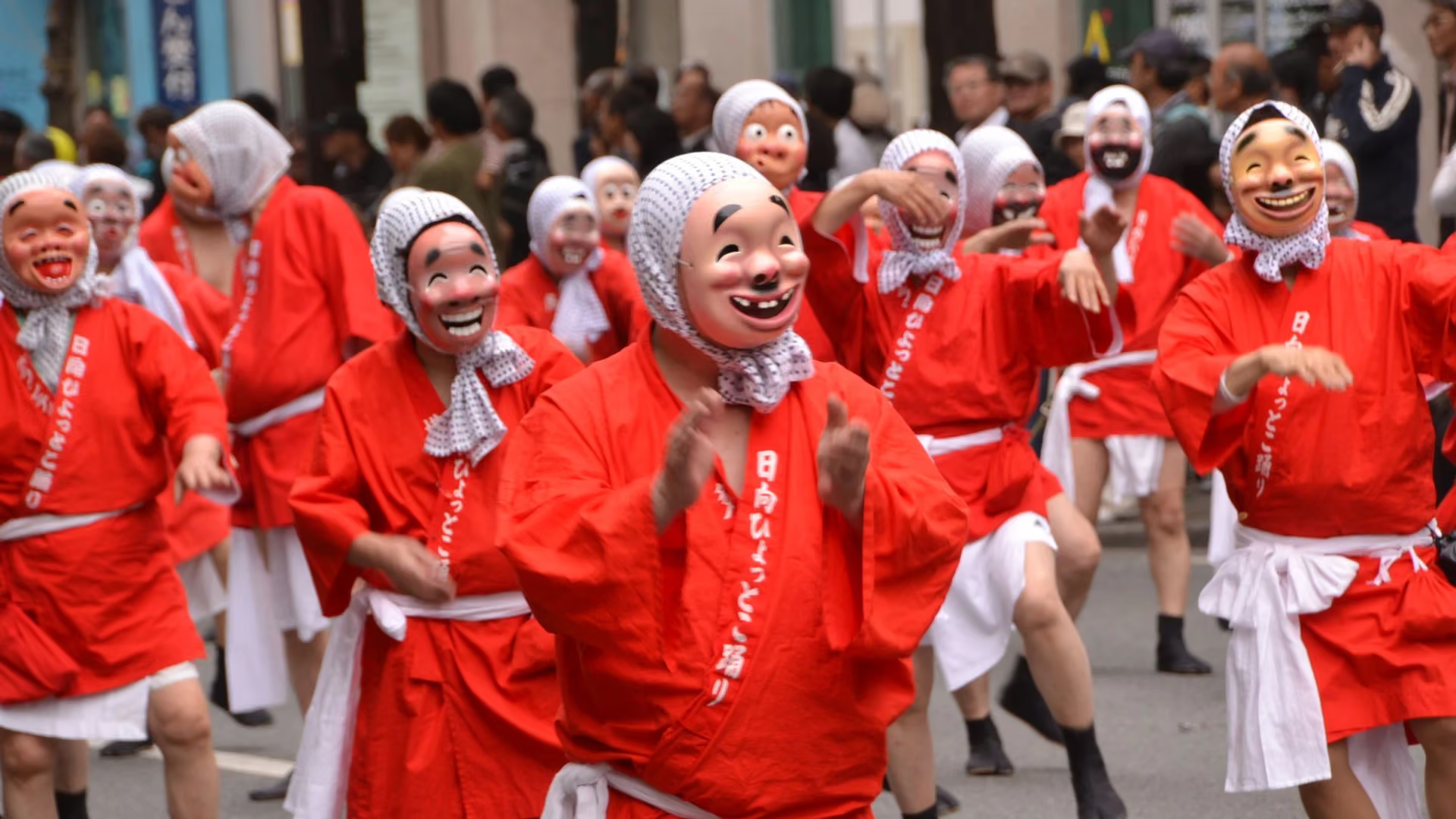
Hakata Dontaku
One of Japan's largest festivals, dating back to 1179, with parades of the Three Lucky Gods, children's processions, and modern Flower Cars.
2–4 May 2027Exact date not confirmed yetFukuoka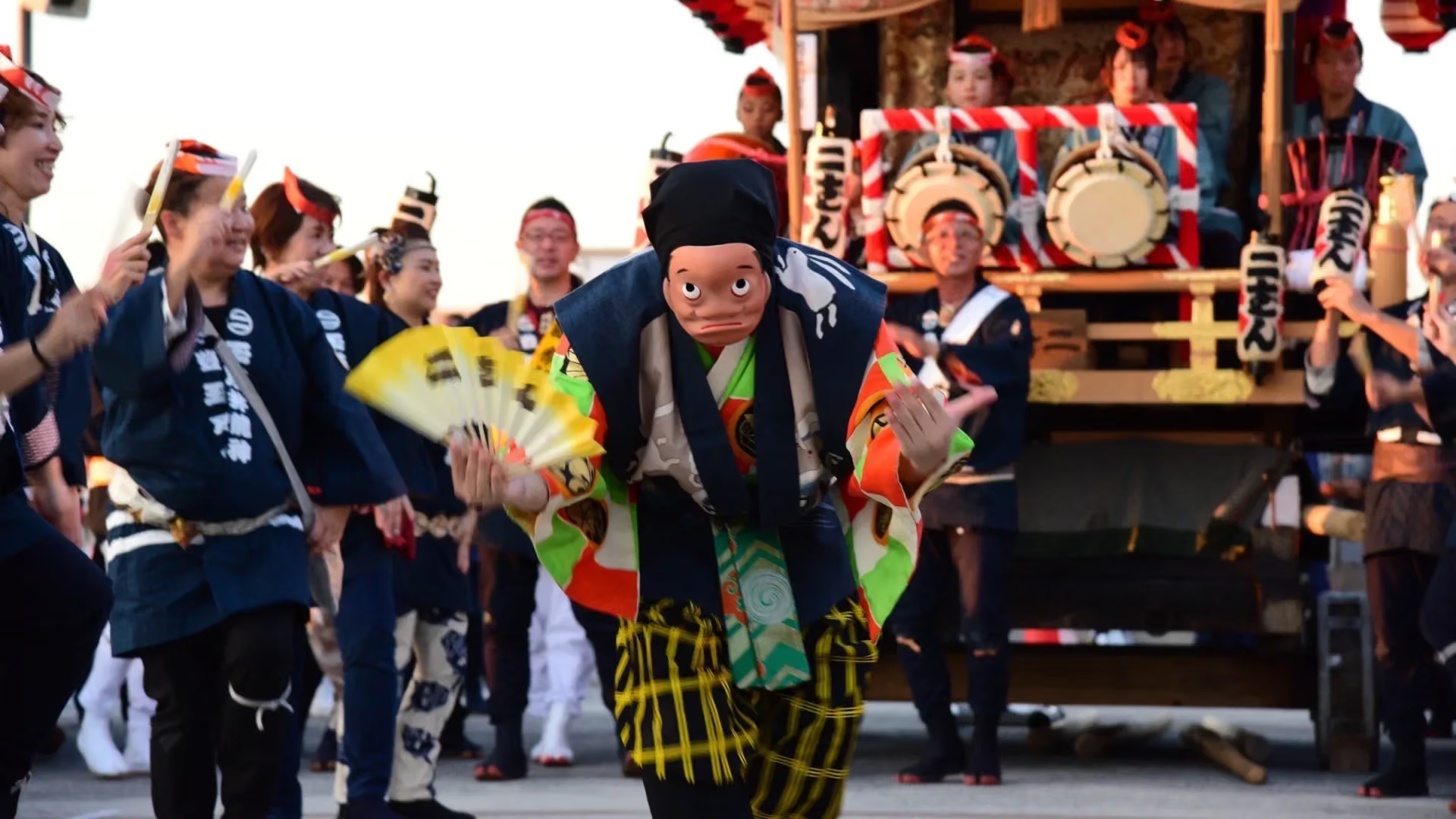
Sakura Autumn Festival
Each October the old castle town of Sakura fills with towering doll floats, portable shrines and Edo-descended music for three days of procession.
9–11 Oct 2027Exact date not confirmed yetSakura · Chiba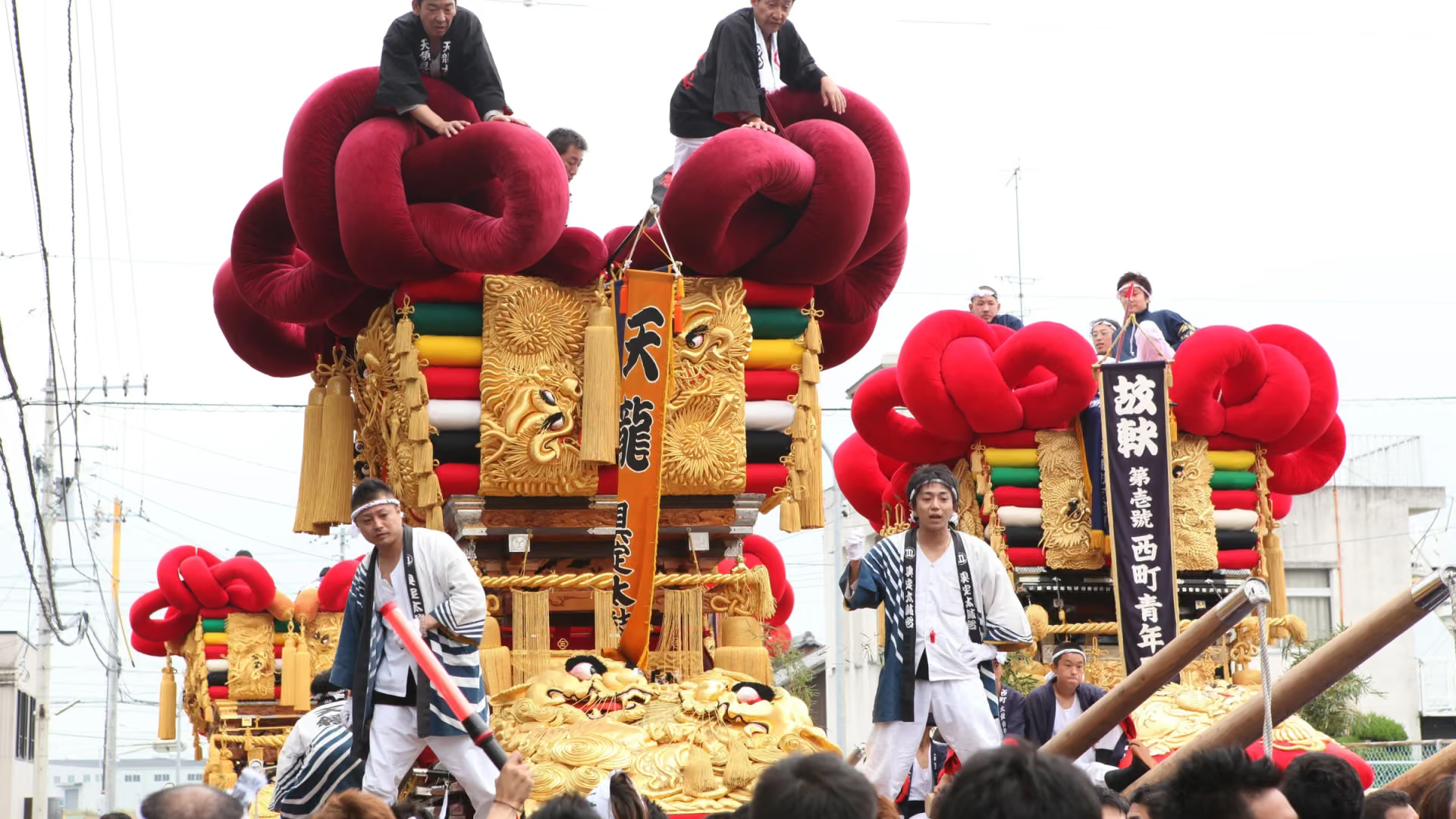
Niihama Taiko Festival
Towering drum-bearing floats parade through Niihama in this October celebration, drawing nearly 200,000 spectators each year.
16–18 Oct 2027Exact date not confirmed yetNiihama · Ehime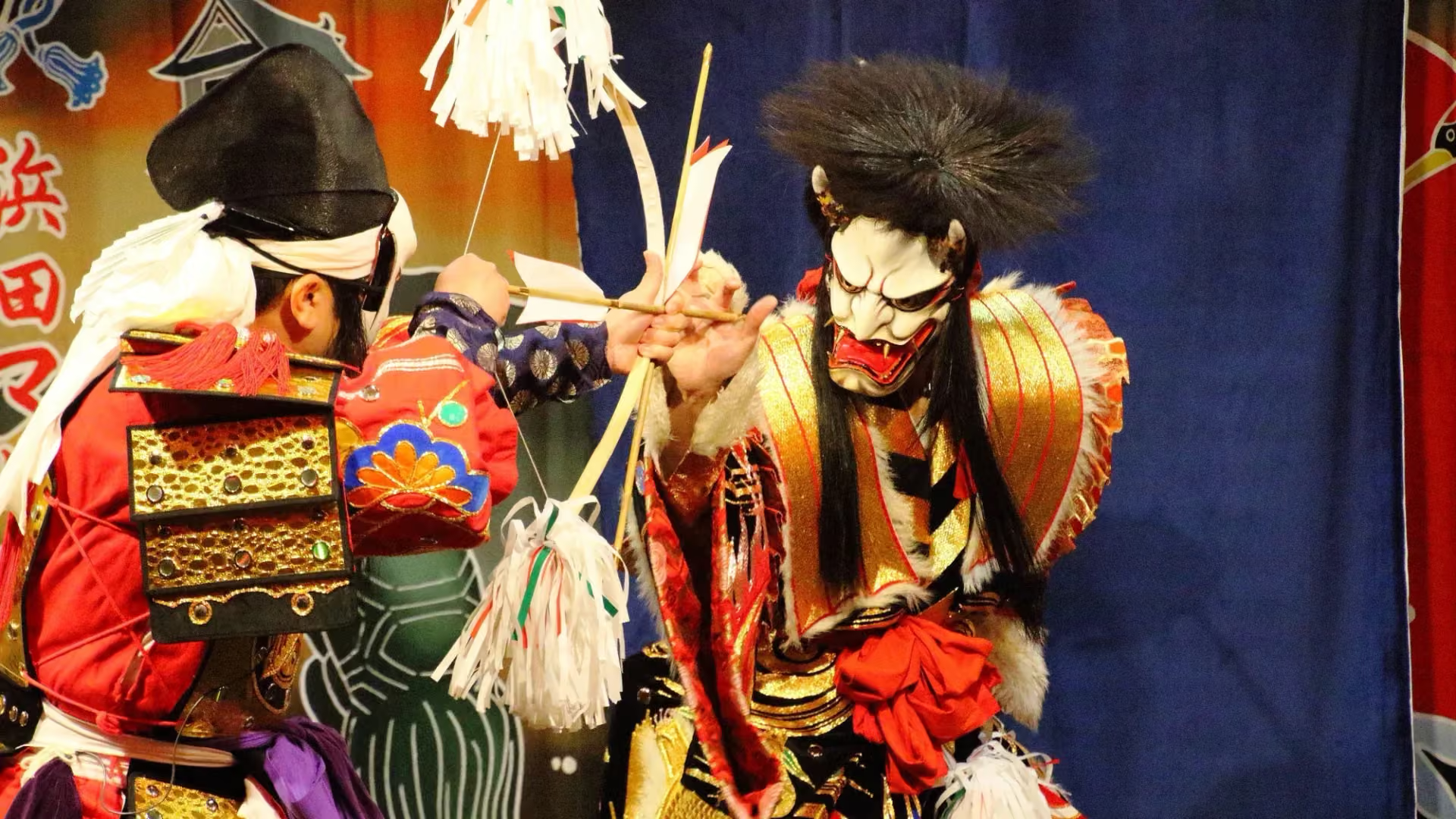
Iwami Kagura
Each autumn in western Shimane, shrine stages host Iwami Kagura - sacred dances performed through the night, from ceremonial pieces to a battle with a serpent.
Shimane · Chugoku
Ninja+Kabuki Tokyo
This nonverbal stage experience blends traditional kabuki and taiko drumming to tell a mythological tale of rival ninja, opening in August 2024.
Tokyo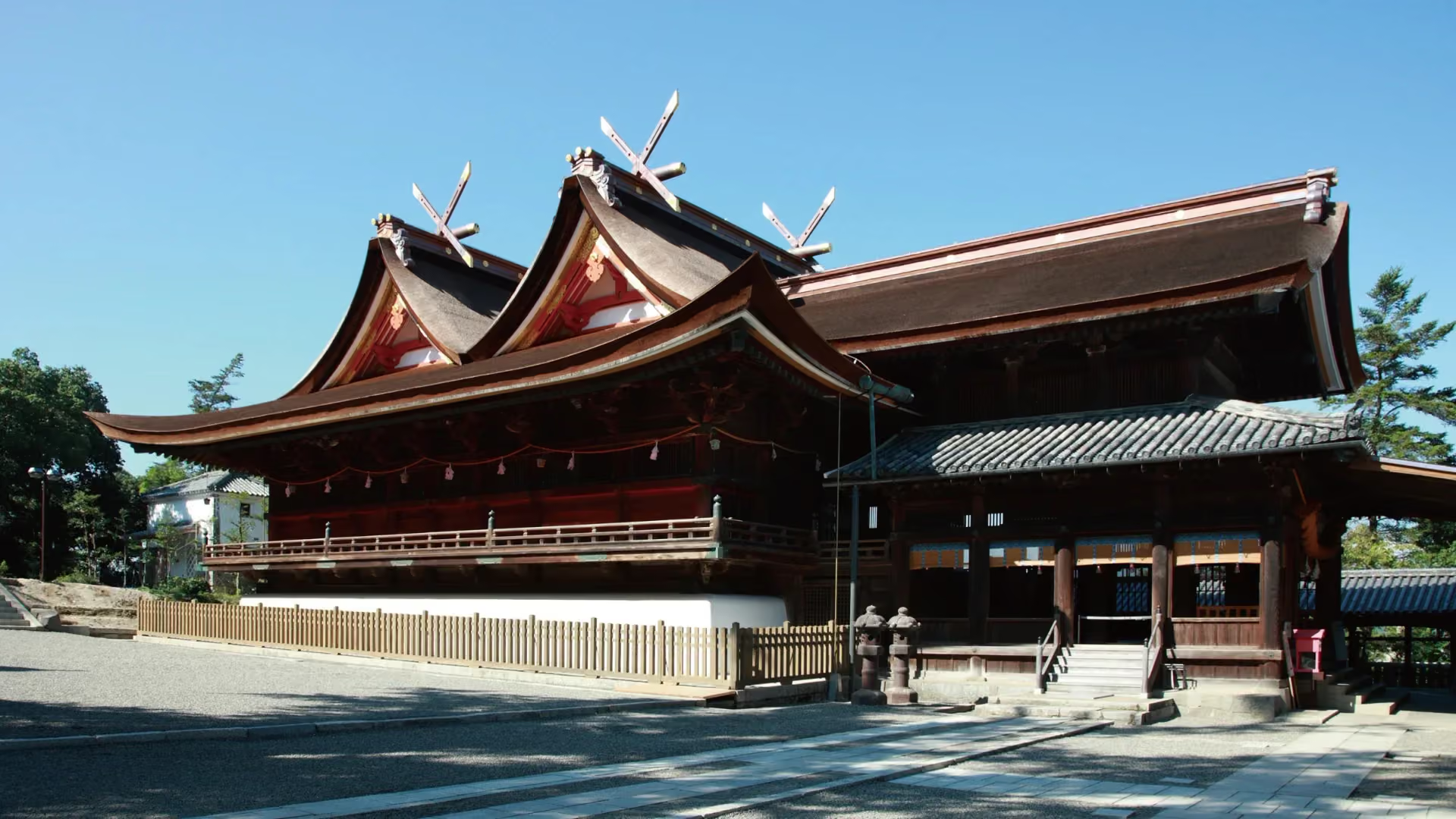
Kibitsu Jinja
Okayama shrine to Kibitsuhiko-no-Mikoto, a legendary prince said to have defeated an ogre and brought peace to the region, the root of the Momotaro story.
Okayama