

Yaegaki Shrine Gion Festival
八重垣神社祇園祭
Every 4–5 August, ten neighbourhoods of Yokaichiba send mikoshi through the streets while crowds throw water over them. A Chiba festival nearly 500 years old.
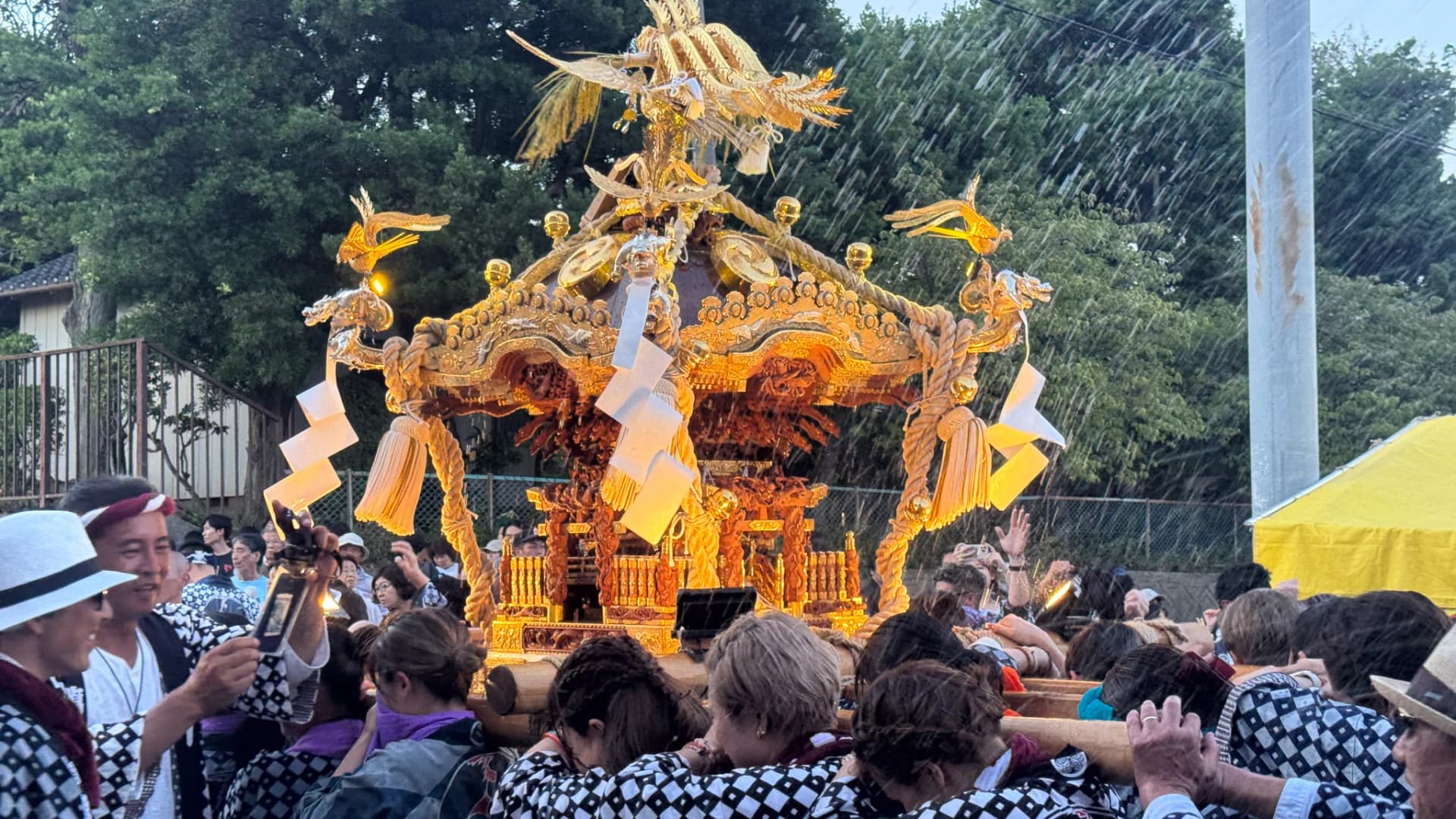
Every 4th and 5th August, the town of Yokaichiba fills with portable shrines – mikoshi – and the sound of flute and drum. Ten neighbourhoods send their mikoshi out into the streets for the Gion festival of Yaegaki Shrine, carried to a rhythm particular to this part of Japan and to a shouted call of "anrya doshita". One thing sets it apart from the outset. As the mikoshi pass, the crowds throw cold water over them.
The festival's early history is thinly documented, but the shrine's own records note a great festival beginning in 1530, with a new mikoshi built for it – which gives the tradition close to five hundred years. A document held at a local temple places the Gion rites themselves around 1697, and another records the first proper shouldering of a mikoshi before the shrine gate in 1713.
The music arrived much later, from the middle of the Meiji era, and is known locally as Mikawa-bayashi after the route by which it was handed down. Each of the ten neighbourhoods plays its own distinct melody, so ten different tunes overlap in the streets at once.
For a long time the mikoshi went out separately, and the rivalry between neighbourhoods produced constant trouble. The solution, adopted in the Taisho era, was to make them all process together – and that joint procession is now the festival's climax.
It begins at noon on the 5th, when some twenty mikoshi and their musicians set out from a local primary school and wind through the town in a single long column. As they near Yaegaki Shrine in the middle of the afternoon, the energy builds to its peak.
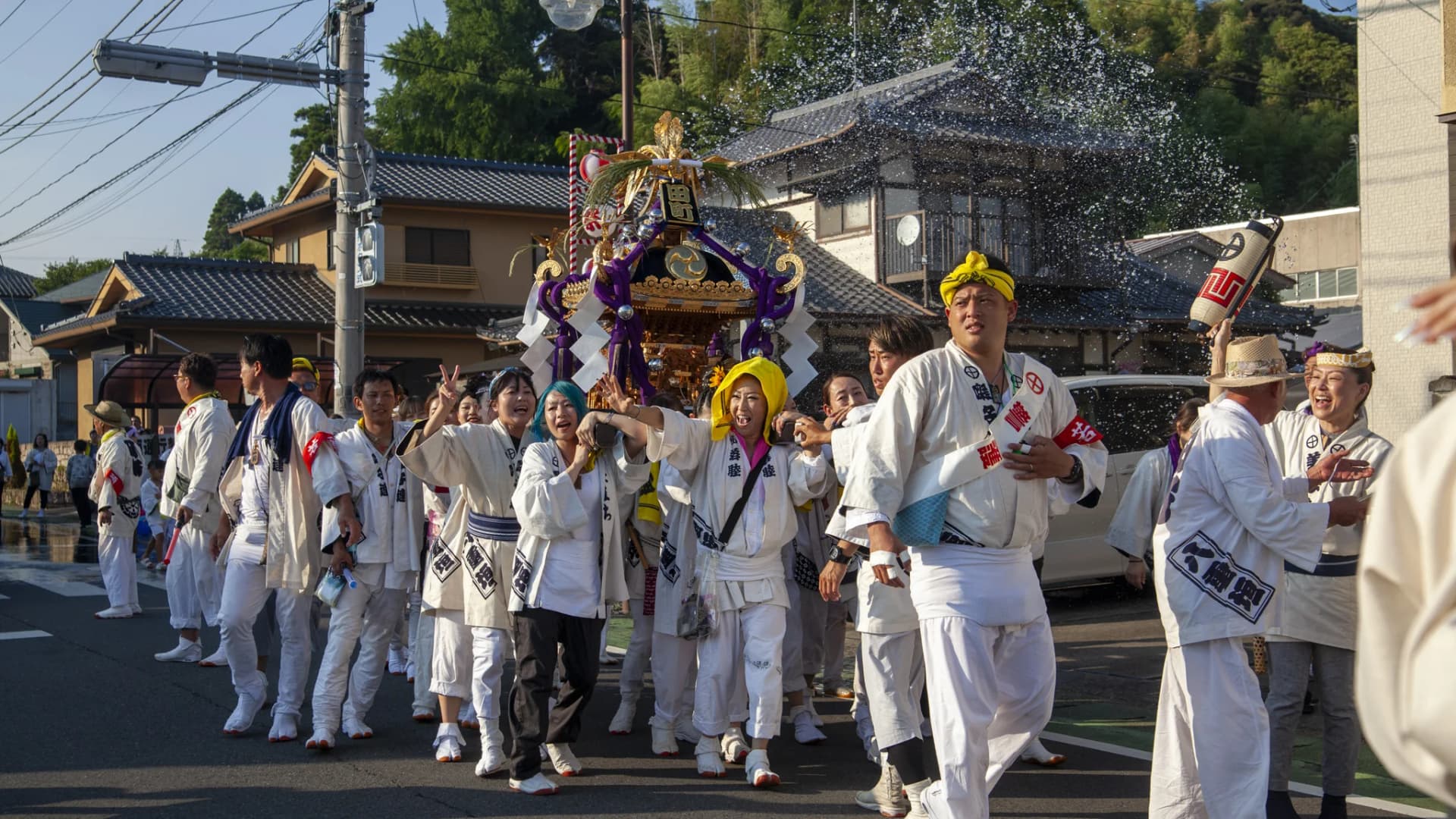
Women were traditionally barred from carrying a mikoshi. At this festival the old rule was relaxed, and women's mikoshi now go out – ten of them, one from each neighbourhood, on the evening of the 4th. Mikoshi carried entirely by women remain rare in Japan, and these have drawn attention well beyond the town.
You might also like
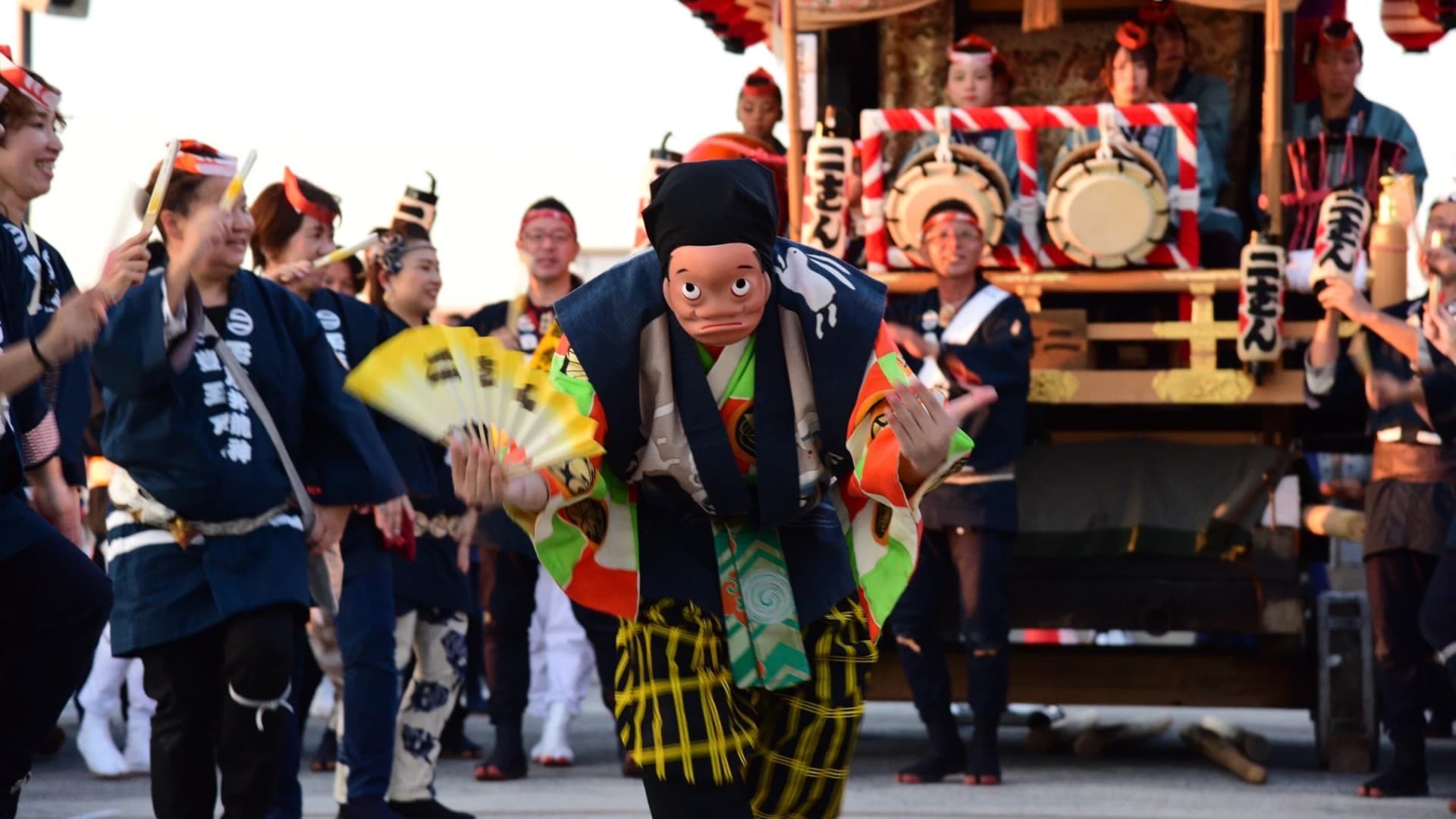
Sakura Autumn Festival
Each October the old castle town of Sakura fills with towering doll floats, portable shrines and Edo-descended music for three days of procession.
9–11 Oct 2026Sakura · Chiba
Ohara Hadaka Festival
The 'Naked Festival' features mikoshi carried into the sea, a boisterous parade through town, and shrines tossed high against fireworks and songs of joy.
23–24 Sep 2026Isumi · Chiba
Furusato Miya Matsuri
This Utsunomiya summer festival brings residents together for parades, traditional performances, and displays of local culture.
1–2 Aug 2027Utsunomiya · Tochigi
Ninja+Kabuki Tokyo
This nonverbal stage experience blends traditional kabuki and taiko drumming to tell a mythological tale of rival ninja, opening in August 2024.
Tokyo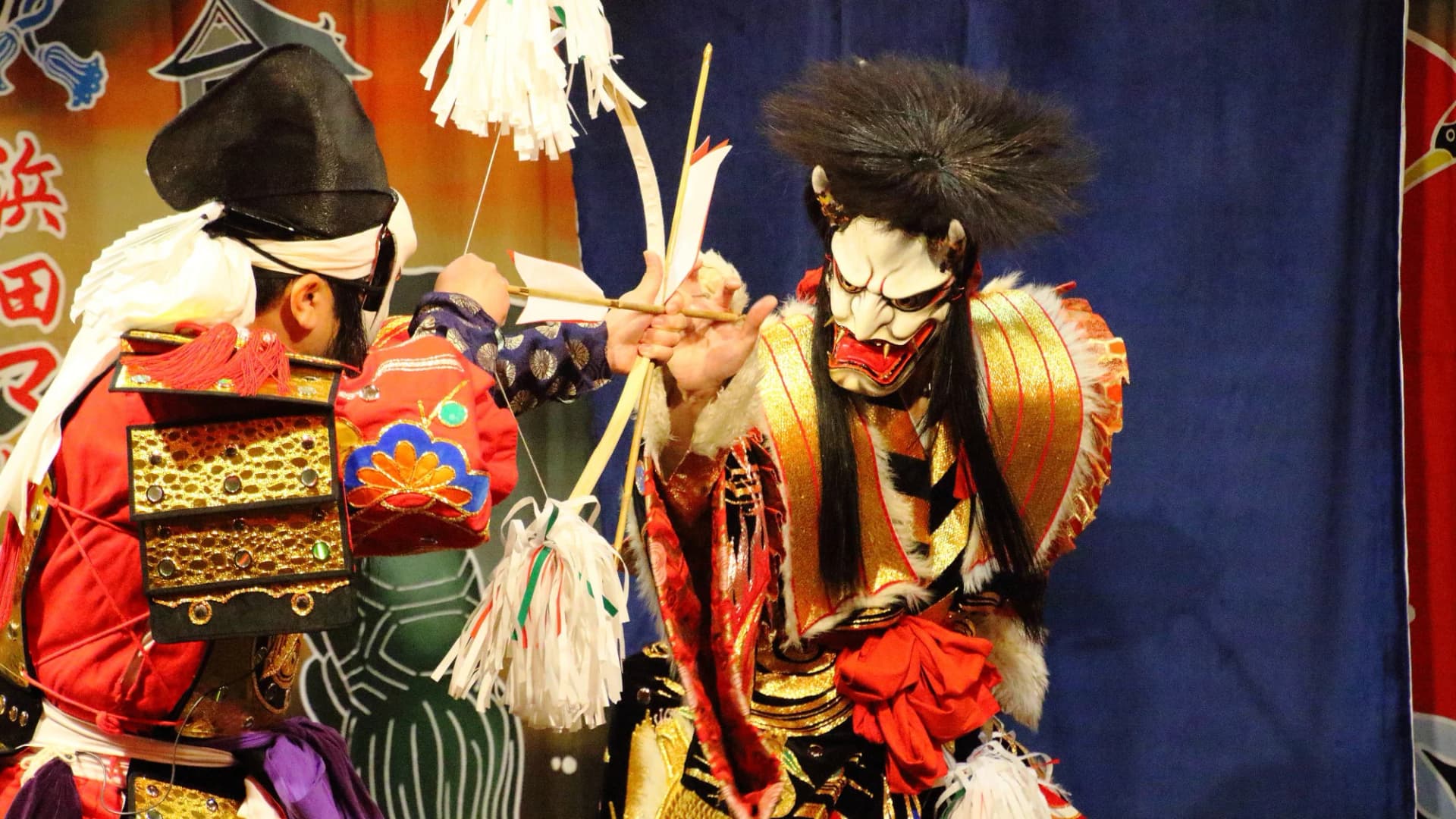
Iwami Kagura
Each autumn in western Shimane, shrine stages host Iwami Kagura – sacred dances performed through the night, from ceremonial pieces to a battle with a serpent.
Shimane · Chugoku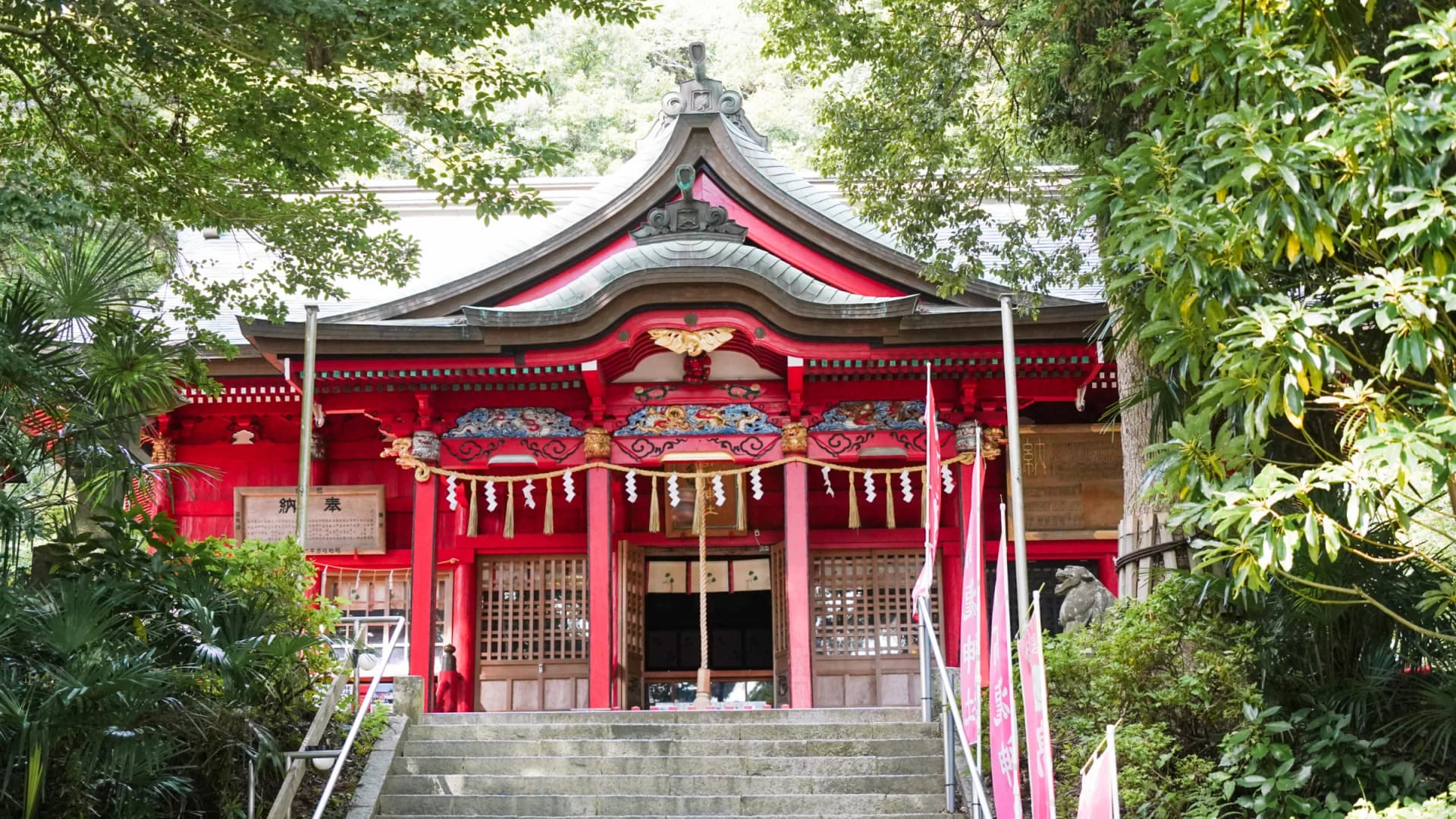
Takataki Shrine
A shrine in Ichihara with an unusual tradition: expectant mothers borrow a small purse left unstitched at the base, for an easy birth.
Ichihara · Chiba