Hakone Shrine
箱根神社
Shrine in Motohakone, Hakone, Kanagawa, founded in 757 on the shores of Lake Ashi and known for the Heiwa no Torii, a red torii gate standing in the lake.
〒 250-0522How to get there
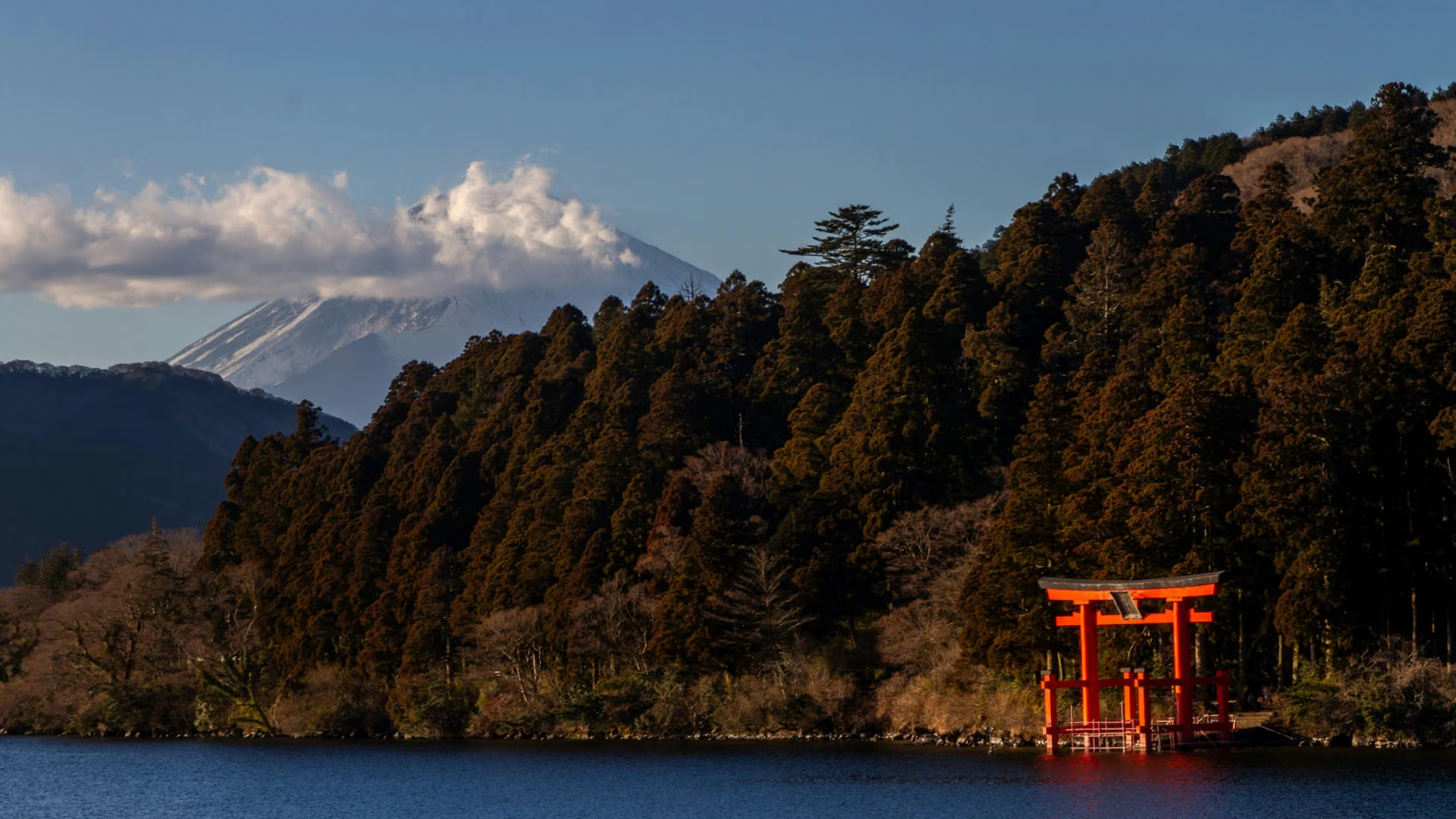
Hakone Shrine stands on the shore of Lake Ashi at Motohakone in Hakone. Revered for centuries as Hakone Daigongen, the guardian shrine of the Kanto region, it is known today for the Heiwa no Torii, a red gate standing in the lake.
History
According to the shrine's founding chronicle, the Hakoneyama Engi (筥根山縁起并序) of 1191, worship here began in the reign of the legendary Emperor Kosho, when the hermit Shozen opened a shrine on the summit of Mt. Komagatake and revered Mt. Kamiyama as a sacred mountain. In 757 the monk Mangan Shonin received an oracle from the deity of Hakone and built a shrine on the present site by the lake. Known as Hakone Gongen, it blended Shinto worship with Buddhism and Shugendo, the tradition of mountain ascetics.
Minamoto no Yoritomo, the first Kamakura shogun, held the shrine in deep faith and began the Nisho-mode, a pilgrimage by the shogun to Hakone and to Izusan Gongen in Izu that became a regular rite of the shogunate. The Hojo regents, the five generations of the Odawara Hojo and Tokugawa Ieyasu were patrons too: Ieyasu granted the shrine lands in 1594 and rebuilt its halls in 1612. After the Tokaido road and the Hakone checkpoint were set up in 1618, travellers prayed here for a safe journey. With the separation of Shinto and Buddhism in the early Meiji era, the shrine took the name Hakone Jinja.
Deities
Three deities are worshipped together as Hakone Okami (箱根大神): Ninigi no Mikoto, Konohana Sakuyahime and Hikohohodemi no Mikoto. According to the Kojiki, Ninigi no Mikoto is the grandson of the sun goddess Amaterasu who came down from heaven to rule the land, Konohana Sakuyahime became his wife, and Hikohohodemi no Mikoto is their son.
Kuzuryu Shrine
Kuzuryu Okami (九頭龍大神), the nine-headed dragon god who guards Lake Ashi, is worshipped at two shrines: the main shrine (Hongu) on the lakeshore in the Kuzuryu Forest, and the newer shrine (Shingu) beside the main hall of Hakone Shrine. The founding chronicle tells that a poisonous nine-headed dragon in the lake harmed the people living around it until Mangan Shonin subdued it through prayer, chained it to a tree and enshrined it as the guardian of the lake.
At the monthly festival of the main shrine, rice, sake, dried squid and eggs are offered to the lake, each in nine portions. The Kosui-sai (湖水祭), the year's largest festival for the dragon god, is held on the lake on the eve of the shrine's grand festival.
Heiwa no Torii and the Treasure Hall
The gate in the lake was built in 1952 to mark the investiture of the then Crown Prince and Japan's regained independence under the peace treaty. In 1964, for the shrine's 1,200th anniversary and the Tokyo Olympics, it received a plaque reading Heiwa (peace), written by former prime minister Yoshida Shigeru, who had signed the treaty. Since then it has been called the Heiwa no Torii. Unlike the shrine's other gates, it is built in the ryobu style, with smaller posts bracing each pillar.
The Treasure Hall, first opened in 1907 and rebuilt in 2007, displays the shrine's holdings. Seven are Important Cultural Properties, among them seated statues of a male and a female deity from the Heian period, a seated statue of Mangan Shonin that the shrine calls the oldest portrait sculpture in the Kanto region, the illustrated scroll Hakone Gongen Engi and two bath kettles dated 1268 and 1283.
Getting There

Planning a trip? Fit this into a trip and Oni plans the rest around it.
Places nearby
Hakone Sightseeing Cruise
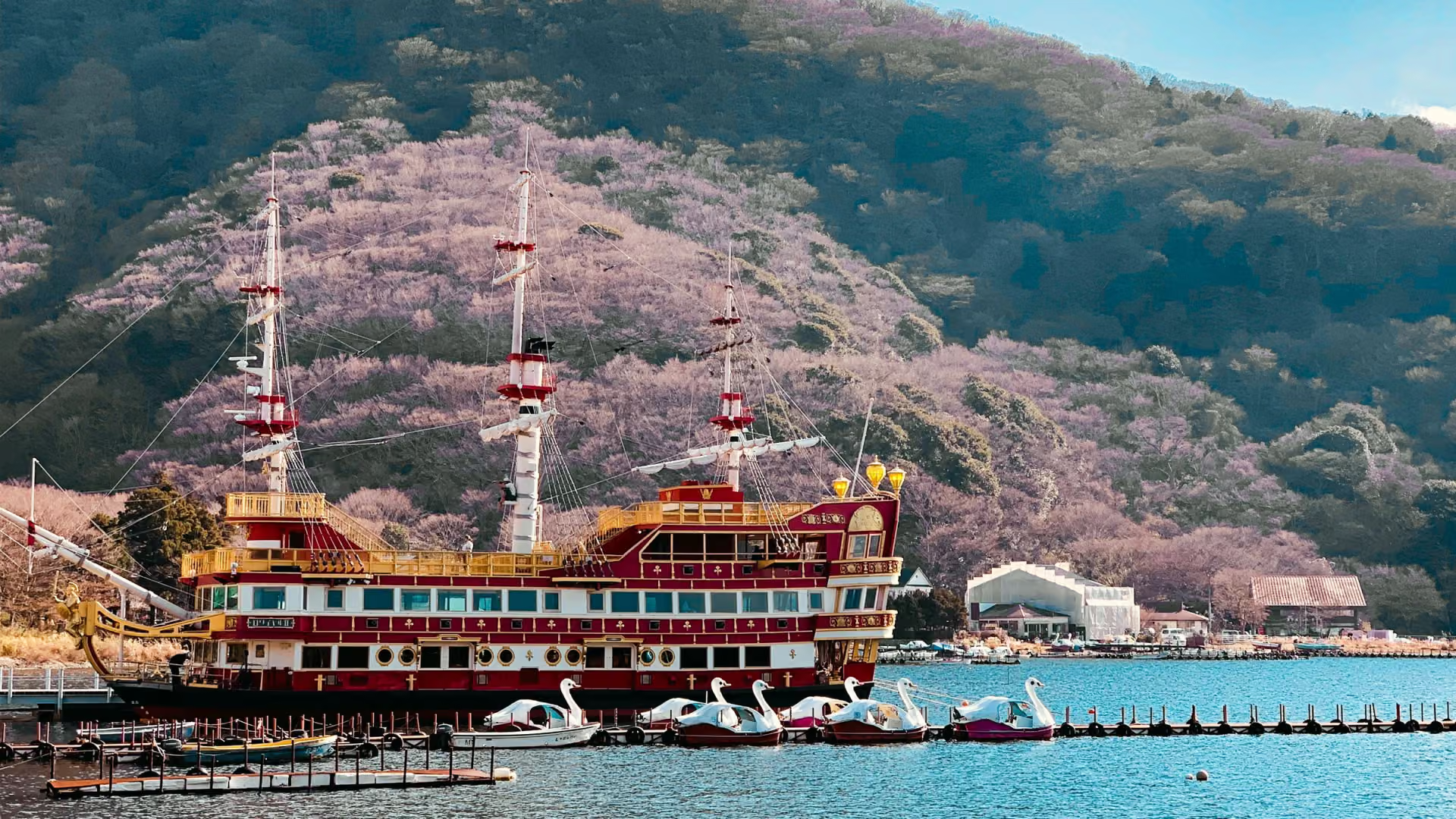
Pirate ship-styled boats crossing Lake Ashi in Hakone, Kanagawa, calling at Togendai, Moto-Hakone and Hakone-machi, with views of Mount Fuji.
Hakone · Kanagawa
Hakone-en Aquarium
Aquarium on Lake Ashi, Hakone, Kanagawa. At 723 metres it is the highest aquarium in Japan with a large seawater tank, with a Seal Plaza and penguins.
Hakone · KanagawaYou might also like
Kanamara Matsuri
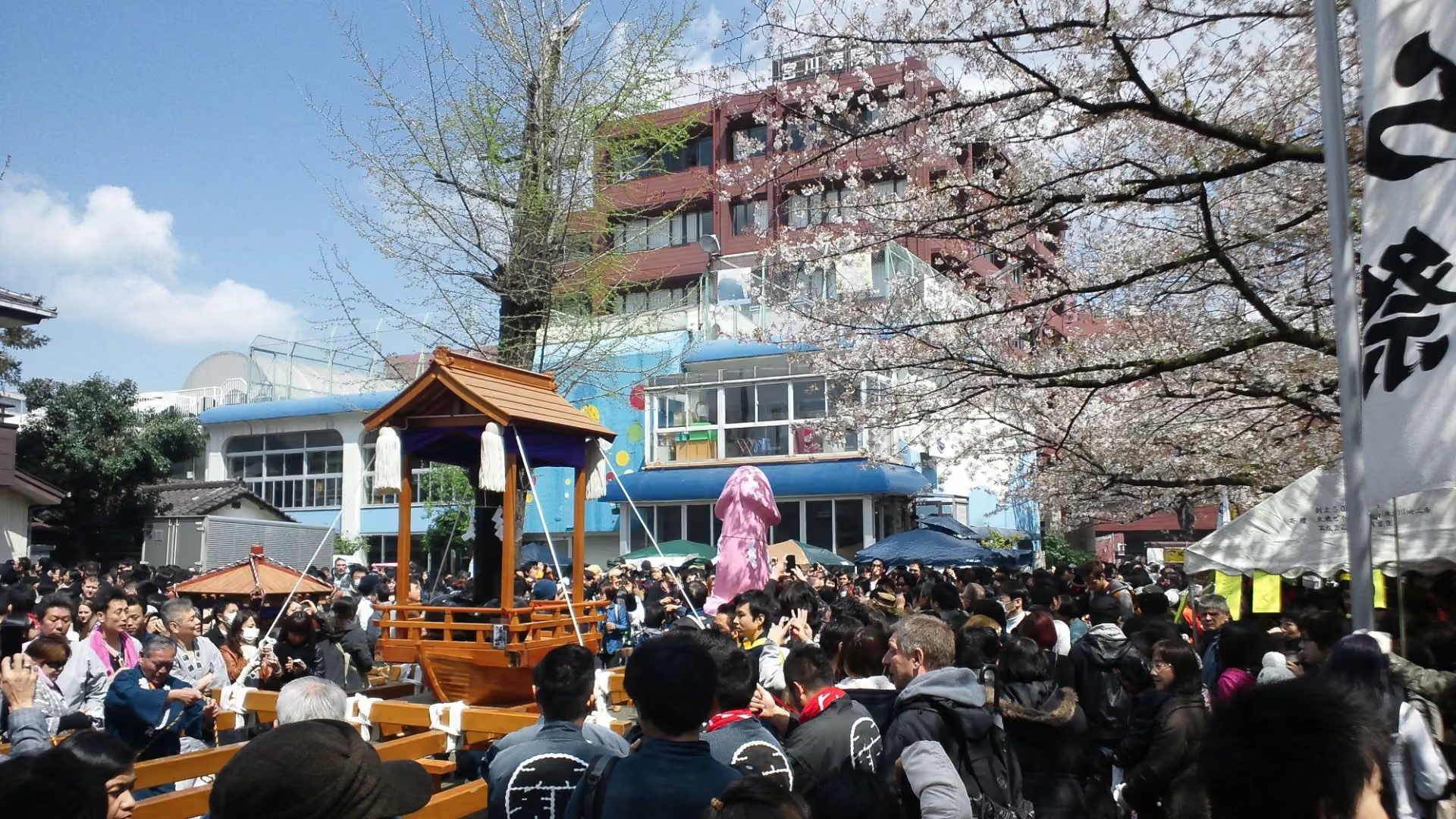
A spring festival at Kanayama Shrine in Kawasaki: three phallus-shaped mikoshi are carried out with prayers for children, marriage and protection from disease.
4 Apr 2027Exact date not confirmed yetKawasaki · Kanagawa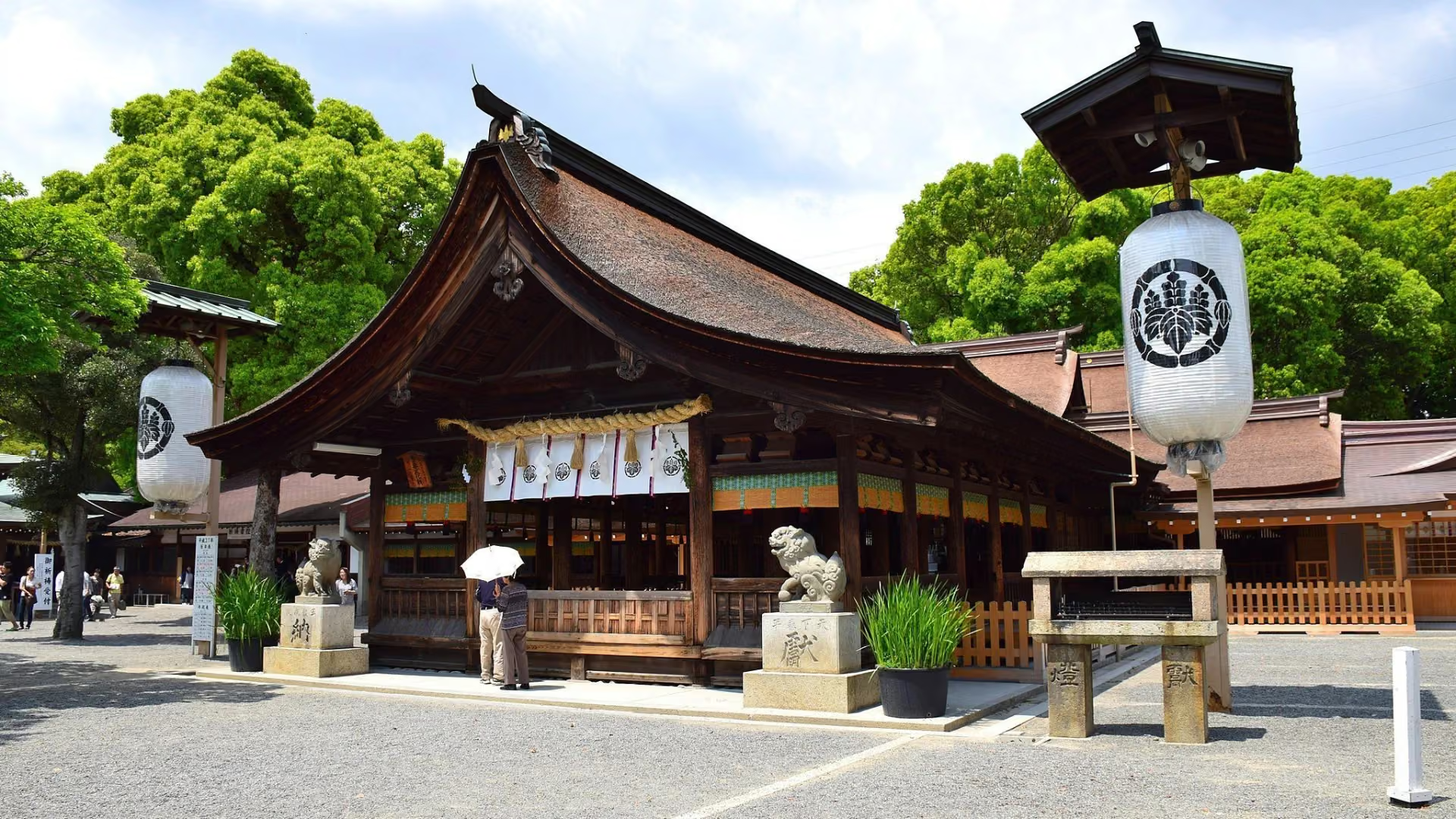
Owari Okunitama Shrine
Inazawa shrine that is the guardian of Owari Province, enshrining the land spirit revered for protecting agriculture and commerce since the Nara period.
Inazawa · Aichi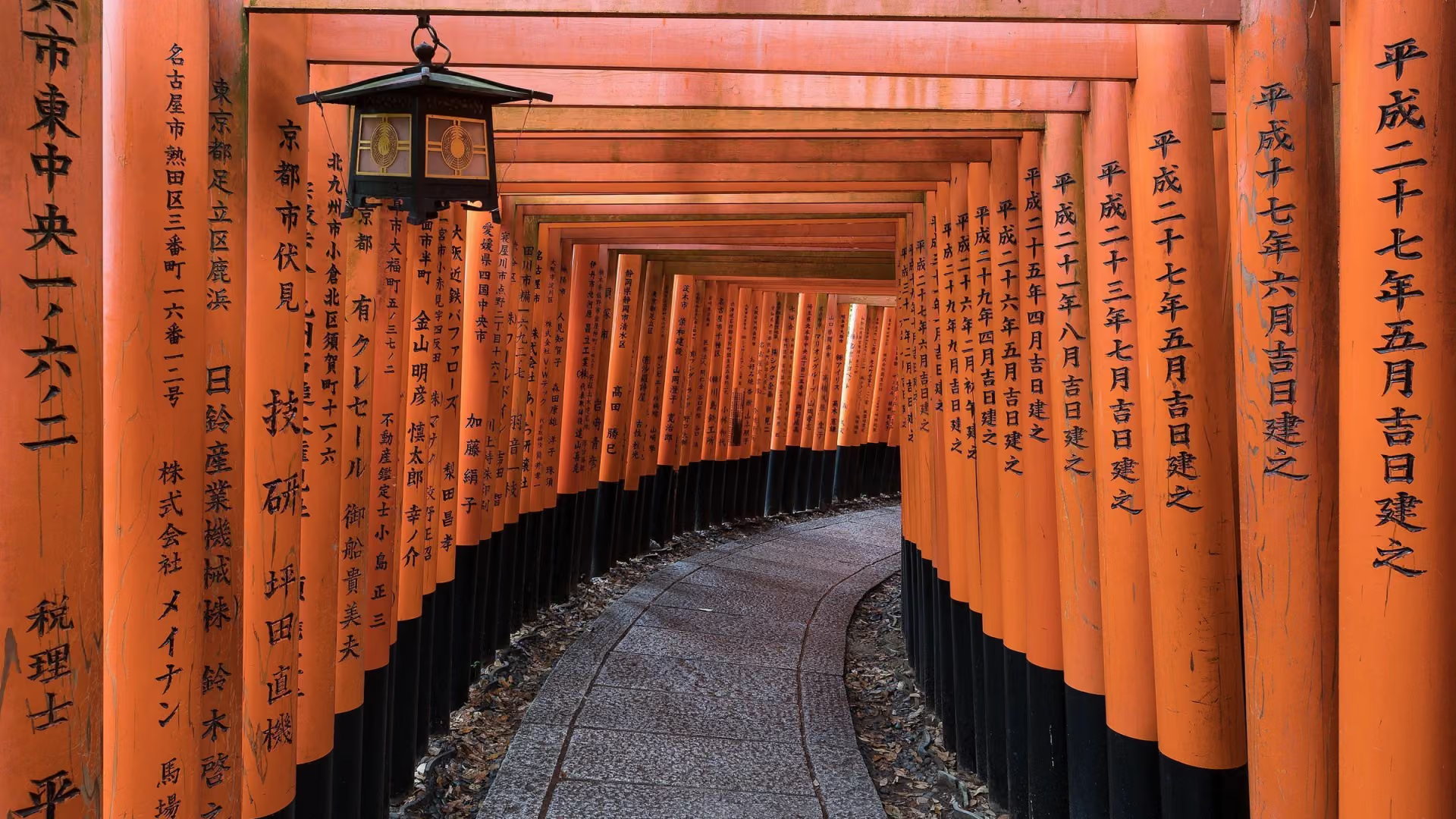
Fushimi Inari Taisha
The head shrine of Japan's Inari shrines, with about 10,000 torii, offered by worshippers in thanks for wishes granted, lining the paths over Mount Inari.
Kyoto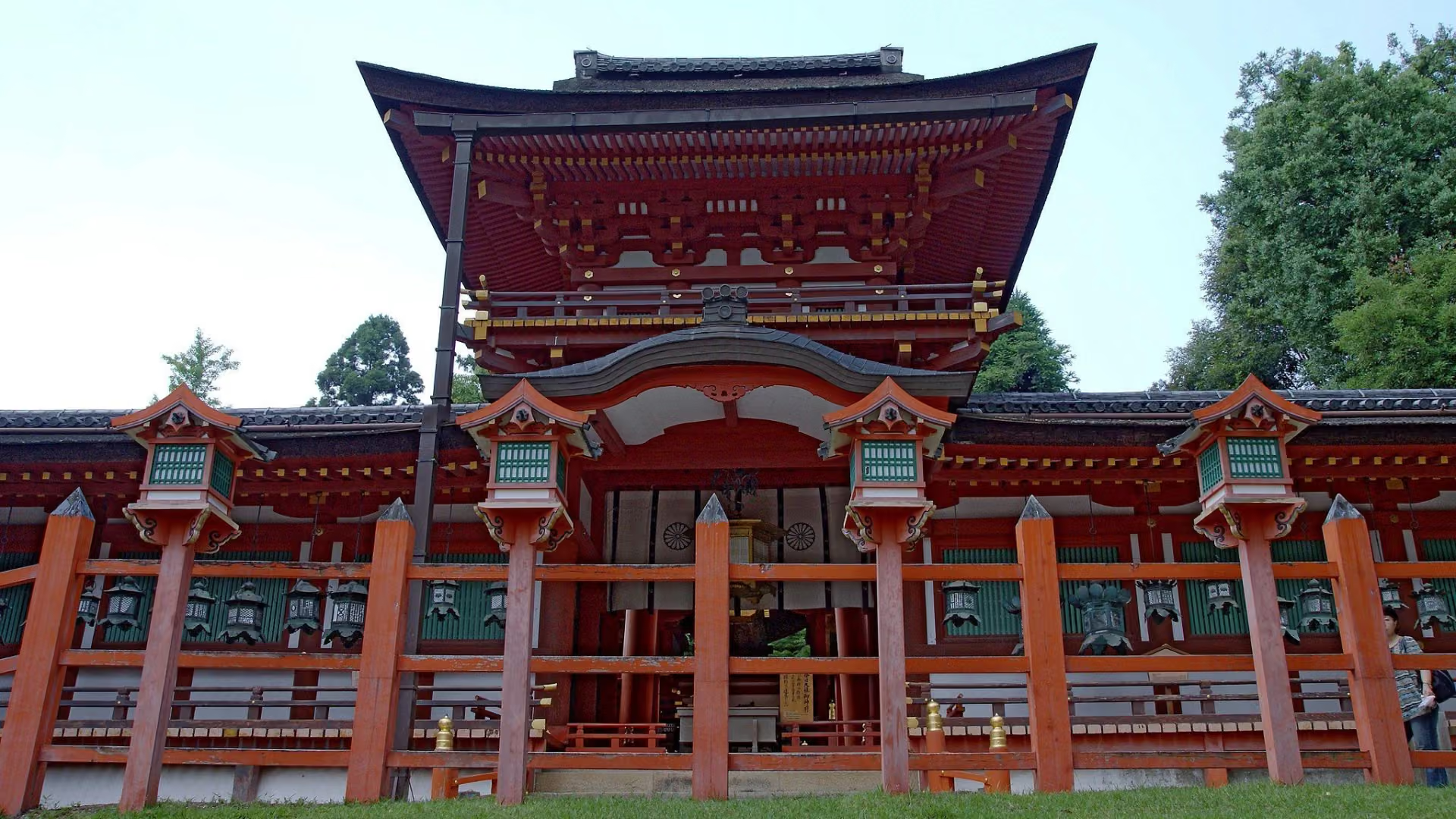
Kasuga-taisha
The head shrine of about 3,000 Kasuga shrines, founded in 768 at the foot of sacred Mount Mikasa in Nara, known for its 3,000 lanterns and vermilion halls.
Nara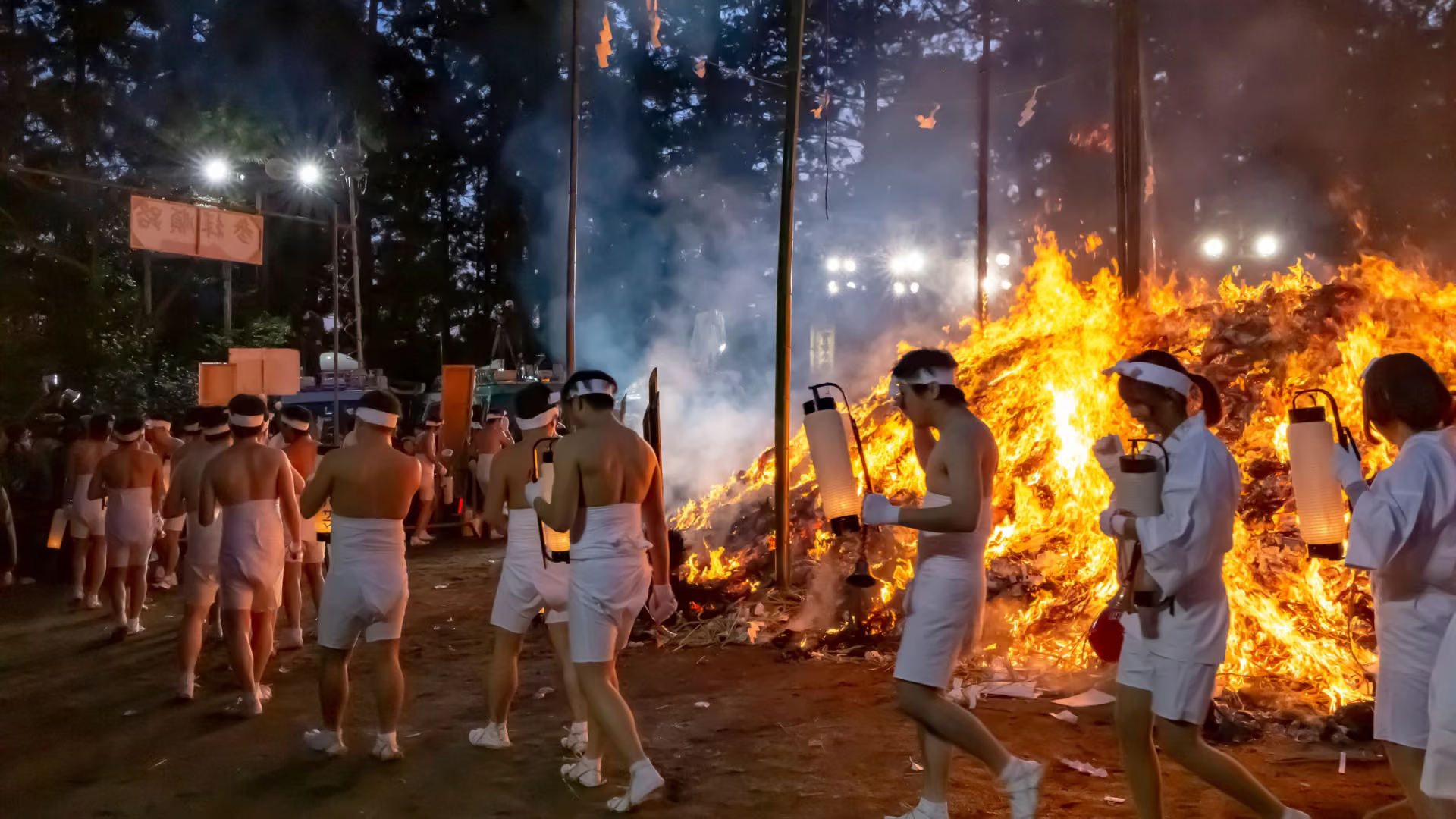
Dontosai Festival
An annual winter ritual in Sendai features the ceremonial burning of New Year decorations followed by a sacred pilgrimage procession in traditional attire.
14 Jan 2027Sendai · Miyagi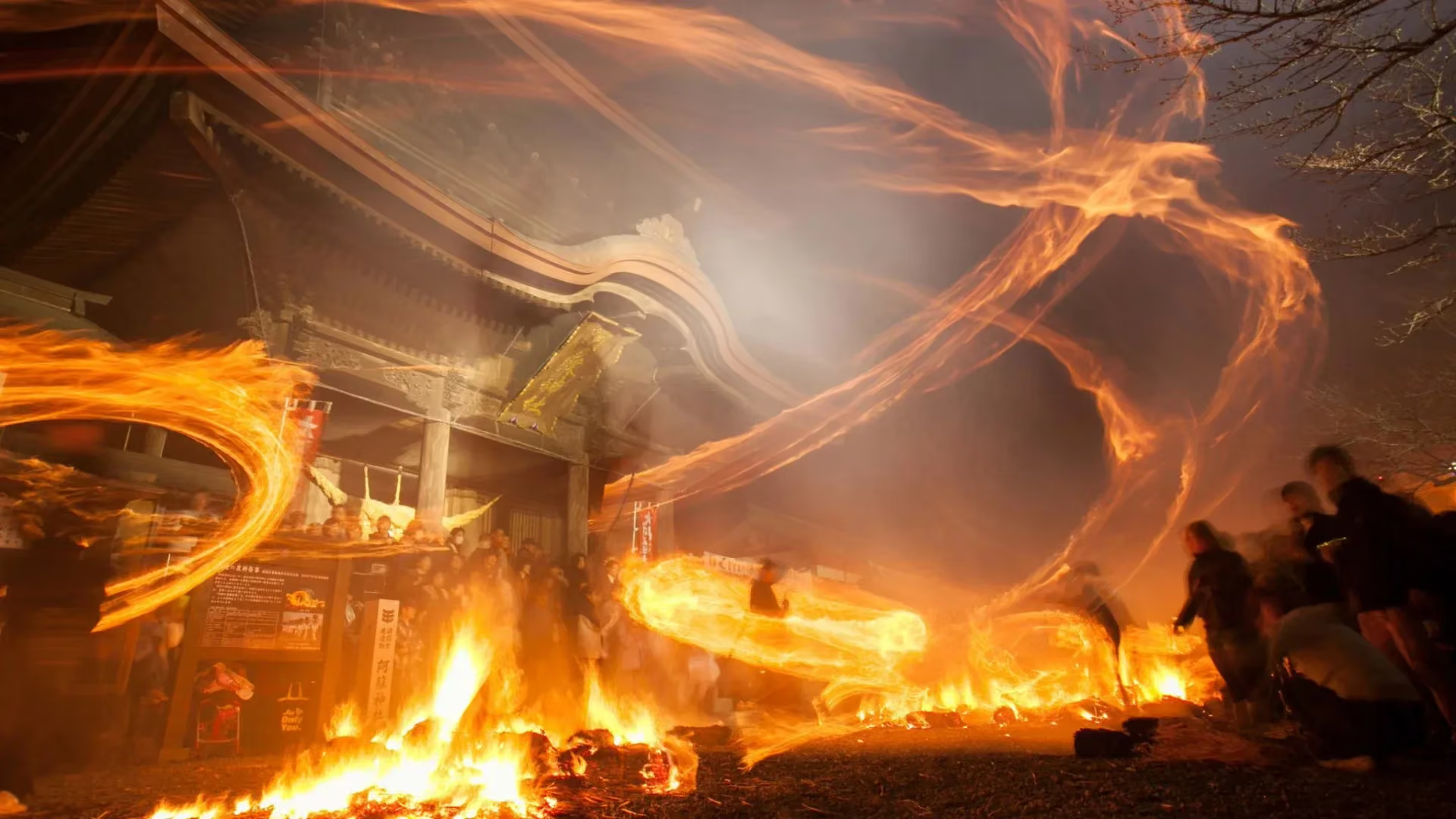
Hifuri Shinji Fire Swinging Ritual
During the Tatsukuri Festival at Aso Shrine, burning bundles of grass are swung on the shrine approach to welcome the bride of the deity Kunitatsu-no-Kami.
23 Mar 2027Exact date not confirmed yetAso · Kumamoto