Saijo Inari
最上稲荷
Saijo Inari is a 1,200-year-old Buddhist temple and one of Japan's three great Inari sites, preserving a rare form of Shinto-Buddhist syncretic worship.

〒 701-1331
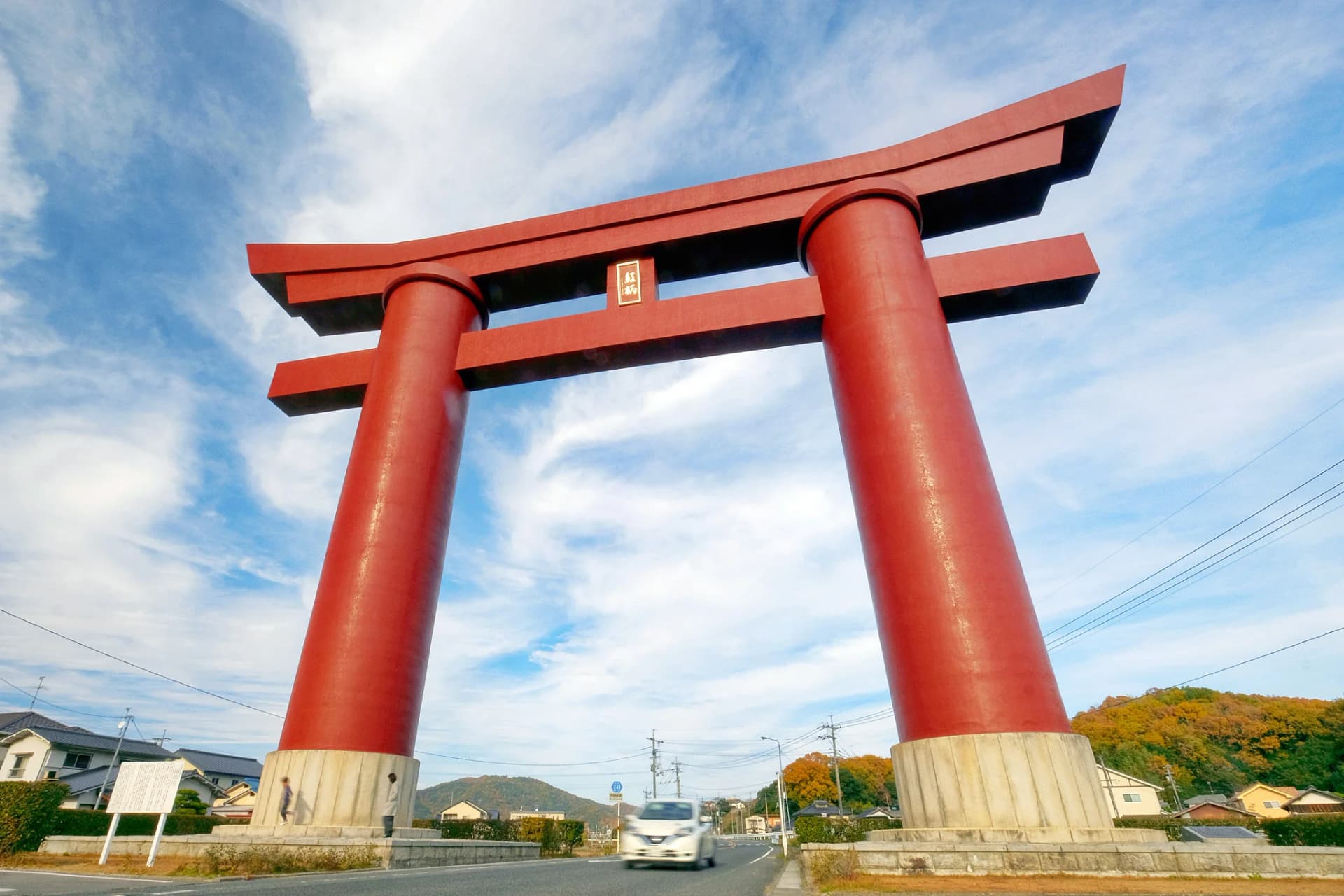
Saijo Inari, formally known as Saijo Inariyama Myokyo-ji, is a Nichiren Buddhist temple located in the Kibi Plain of Okayama Prefecture. With a history of more than 1,200 years, it is regarded as one of Japan’s Three Great Inari sites, alongside Fushimi and Toyokawa. Although officially a Buddhist temple, Saijo Inari preserves a rare form of Shinto–Buddhist syncretic worship that was exceptionally allowed to continue after the Meiji-era separation of Shinto and Buddhism. As a result, the complex includes both temple structures and shrine-style architecture, including a large torii gate and a shrine-form main hall.
Historical Background
The temple’s origins date to 752, when the monk Hōon Daishi prayed for the recovery of Empress Kōken at Hachijō-iwa, a sacred rock on Mt. Ryūō. According to tradition, the deity Saijōi-Kyōō Daibosatsu appeared riding a white fox. After further prayers led to additional imperial recoveries, a temple complex known as Ryūōzan Jingū-ji was established at the present site.
Although much of the complex was destroyed during the Sengoku-period conflicts surrounding Bitchū Takamatsu Castle, the principal image survived. In 1601 the site was restored under new patronage and renamed Inariyama Myōkyō-ji, forming the foundation of the present temple.
The principal object of worship, Saijōi-Kyōō Daibosatsu, is associated with blessings such as abundant harvests, business prosperity, and general good fortune. Enshrined together in the main hall are Hachidai Ryūō (a water deity) and Sanmen Daikokuten (a deity of fortune), collectively known as the “Three Deities of Saijo”.
Sacred Precincts and Worship Areas
The expansive grounds are divided into three main zones:
Prayer Zone (central plateau)
This area centres on the Main Hall, a large structure measuring 24 meters in width, depth, and height. Here visitors receive formal prayer rites (kitō) and obtain amulets. Nearby facilities include the prayer reception office, votive plaque displays, the vehicle blessing hall, and the temple shop offering protective charms and ritual items.
The Niō Gate, rebuilt after a mid-20th-century fire, features a distinctive stone design influenced by Indian temple architecture. Visitors traditionally purify their hands and mouth at the water pavilion before approaching the main hall.
Cultural Heritage Zone (upper right area)
This section preserves older structures and sacred sites, including the Old Main Hall in medieval shrine style, surrounded by seventy-seven subsidiary shrines dedicated to various guardian deities. The “En no Massha” area is devoted to prayers for forming beneficial relationships and severing harmful ones.
Sacred landmarks include: Hachijō-iwa, the rock where the founding revelation is said to have occurred; Daimoku-iwa, an inscribed rock associated with the Lotus Sutra; a waterfall training site used in annual summer rituals; Myōken-dō, dedicated to a deity once worshipped as protector of Bitchū Takamatsu Castle; the site traditionally identified as Toyotomi Hideyoshi’s first military encampment during the siege of the region, along with a statue of Nichiren.
Memorial Zone (lower right area)
The Konpon Daitō is used primarily for memorial services rather than prayer rites. The grounds include statues dedicated to remembrance, cemetery facilities, and landscaped gardens designed for quiet reflection.
Rituals and Religious Practice
Saijo Inari conducts both prayer ceremonies (for protection, prosperity, traffic safety, and other wishes) and memorial services. Vehicle blessing rites are a notable feature, reflecting contemporary devotional practice. Throughout the year, seasonal festivals are held, including a summer festival dedicated to the Eight Great Dragon Kings.
The temple emphasises the concept of anjin – spiritual peace and inner stability achieved through faith in the Lotus Sutra. This idea is often summarised in the phrase: “Peace of mind is the highest happiness”.
You might also like

Yuga Shrine
Sacred mountain shrine in Okayama with more than two thousand years of history, blending Shinto and Buddhist practices as a centre of pilgrimage.
Kurashiki · Okayama
Kongobu-ji (Koyasan)
Mount Koya is a sacred temple complex where the entire mountain is treated as one unified holy domain dedicated to Shingon Esoteric Buddhism.
Koya · Wakayama
Chuson-ji Temple
The head Tendai temple founded in 850, significantly expanded in the 12th century and designated a UNESCO World Cultural Heritage site.
Hiraizumi · Iwate
Morioka Fall Festival
One of Iwate's most enduring celebrations, this autumn festival originated as prayers for harvest, now featuring ornate floats and traditional parades.
14–16 Sep 2027Morioka · Iwate
Kanamara Matsuri "Festival of the Steel Phallus"
An annual Shinto festival at Kanayama Shrine in Kawasaki featuring distinctive phallic imagery in decorations and parades while raising funds for HIV research.
5 Apr 2027Kawasaki · Kanagawa
Kuji Autumn Festival
This over 650-year-old festival in a northern mountain town expresses gratitude for the harvest while praying for protection from disaster and the arrival of good fortune.
17–20 Sep 2027Kuji · Iwate