Togakuin
神木山 等覚院
A Tendai temple in the Kawasaki hills, known as the "azalea temple" for the 2,000 shrubs that colour its slopes each spring, and for its healing prayers.
〒 216-0031How to get there
宿河原Nambu Line20 min walk from the station
Togakuin is a Tendai-school temple, best known by its nickname Tsutsuji-dera – the "azalea temple". Its formal name is Shibokuzan Togakuin (the older temple name is Chotoku-ji), and it is a branch temple of Enryaku-ji, the great Tendai monastery on Mount Hiei. For most of the year it is a quiet neighbourhood temple; for a few weeks each spring it becomes one of the most striking flower spots in the city.
The temple traces its origins to a legend of Yamato Takeru, the semi-mythical prince. Worn out and desperately thirsty during his campaign in the eastern provinces, he is said to have followed a crane down to a spring and drunk from its cool water, at which his exhaustion instantly lifted. Believing the spring to be sacred, life-giving water, he planted a tree on the spot. Generations revered that tree as a shinboku, a "sacred tree", and it is from this that the surrounding district takes its name. Later, according to tradition, the Tendai patriarch Chisho Daishi Enchin carved the temple's principal image of Fudo Myoo from the wood of that same tree.
The images
Togakuin's principal image is a standing figure of Fudo Myoo, one of the fierce Wisdom Kings of esoteric Buddhism, kept as a hidden image and not normally shown to visitors; the Medicine Buddha, Yakushi Nyorai, is enshrined alongside it. The temple also holds a seated Yakushi Nyorai designated as a Kawasaki City Cultural Property, occasionally put on public view.
More visible are two large statues consecrated in recent years. A 3.6-metre image of Fudo Myoo was created to mark the 1,200th anniversary of the Tendai school and dedicated in 2007, with sutras hand-copied by worshippers enshrined inside its pedestal. A statue of Bishamonten followed in 2011, containing a small figure of the goddess Kisshoten carved from sandalwood.
A temple of healing
Togakuin is widely known as a place to pray against illness, and is particularly associated with warding off asthma and other respiratory complaints, as well as cancer. Worshippers come from beyond the local area to petition Fudo Myoo and Yakushi Nyorai for recovery, and the temple holds an annual asthma-healing prayer service. Prayer rites for health, safety, and other wishes are offered on set days each month, and the temple also runs zazen meditation gatherings and sutra-reading sessions through the year.
An affiliated hall, the Shiboku Kannon Hall, stands a short distance away at a separate address. It enshrines an Eleven-Headed Kannon and serves as the 28th station of the Jun-Saigoku Inage Thirty-Three Kannon Pilgrimage, whose images are unveiled once every twelve years, in the Year of the Horse.
The azaleas
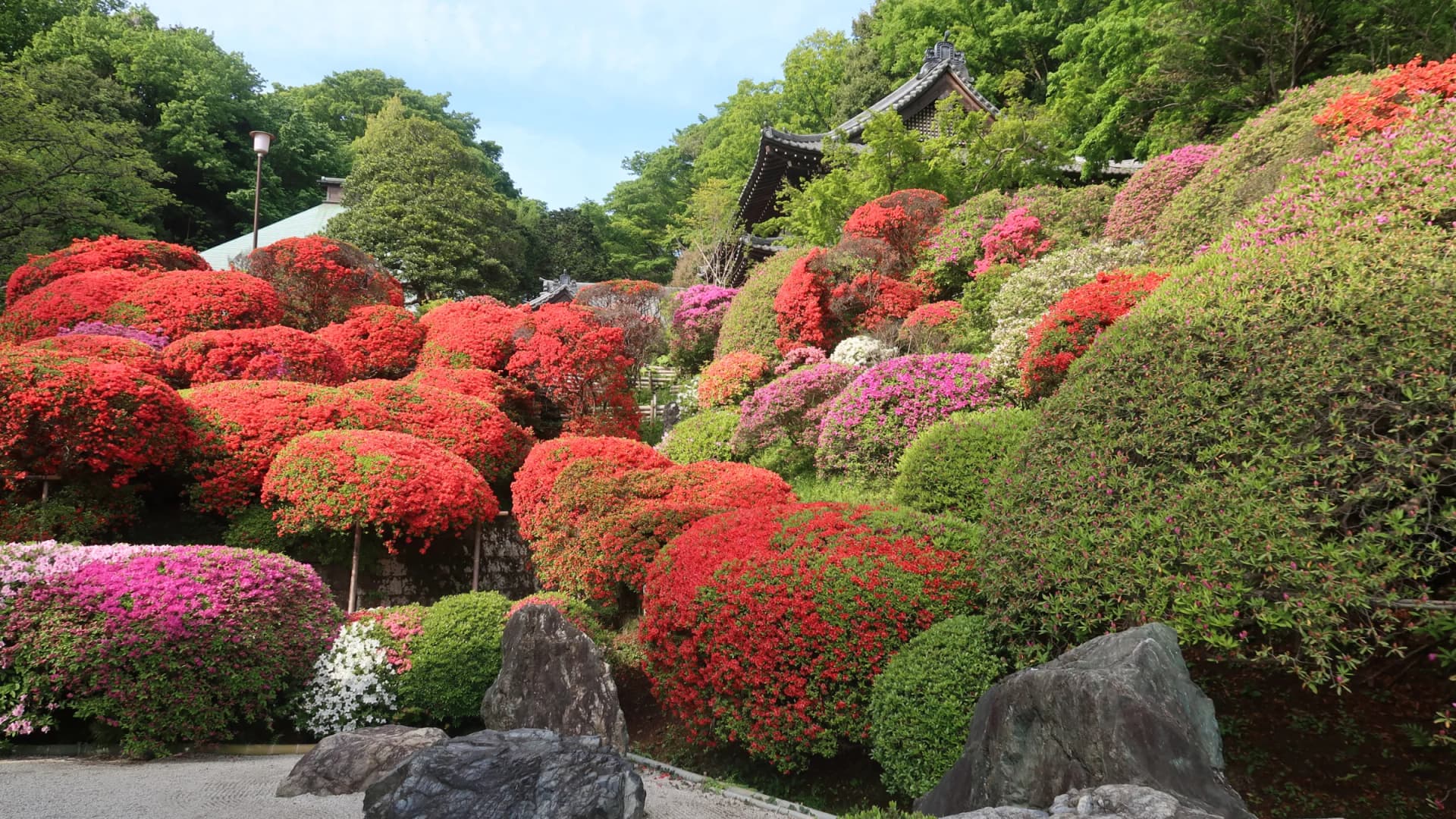
Around 2,000 azalea shrubs cover the temple's sloping grounds, and when they bloom – roughly mid-April to early May, over the Golden Week holidays – the hillside turns to sheets of red, pink, and white. The display is at its most impressive along the approach that climbs from the Niomon gate to the main hall, where clipped bushes rise in tiers like a carpet laid over the slope, set against the weathered temple gate. Several varieties grow here, including the vivid scarlet Kirishima azalea. During the flowering season the temple holds hana-seppo, or "flower sermons", among the blooms.
Getting There

Planning a trip? Fit this into a trip and Oni plans the rest around it.
Places nearby

Myorakuji Temple
A Tendai temple in the Nagao Hills of Kawasaki, known as the "hydrangea temple" for the 1,000 shrubs that fill its grounds each June, with a June festival.
Kawasaki · Kanagawa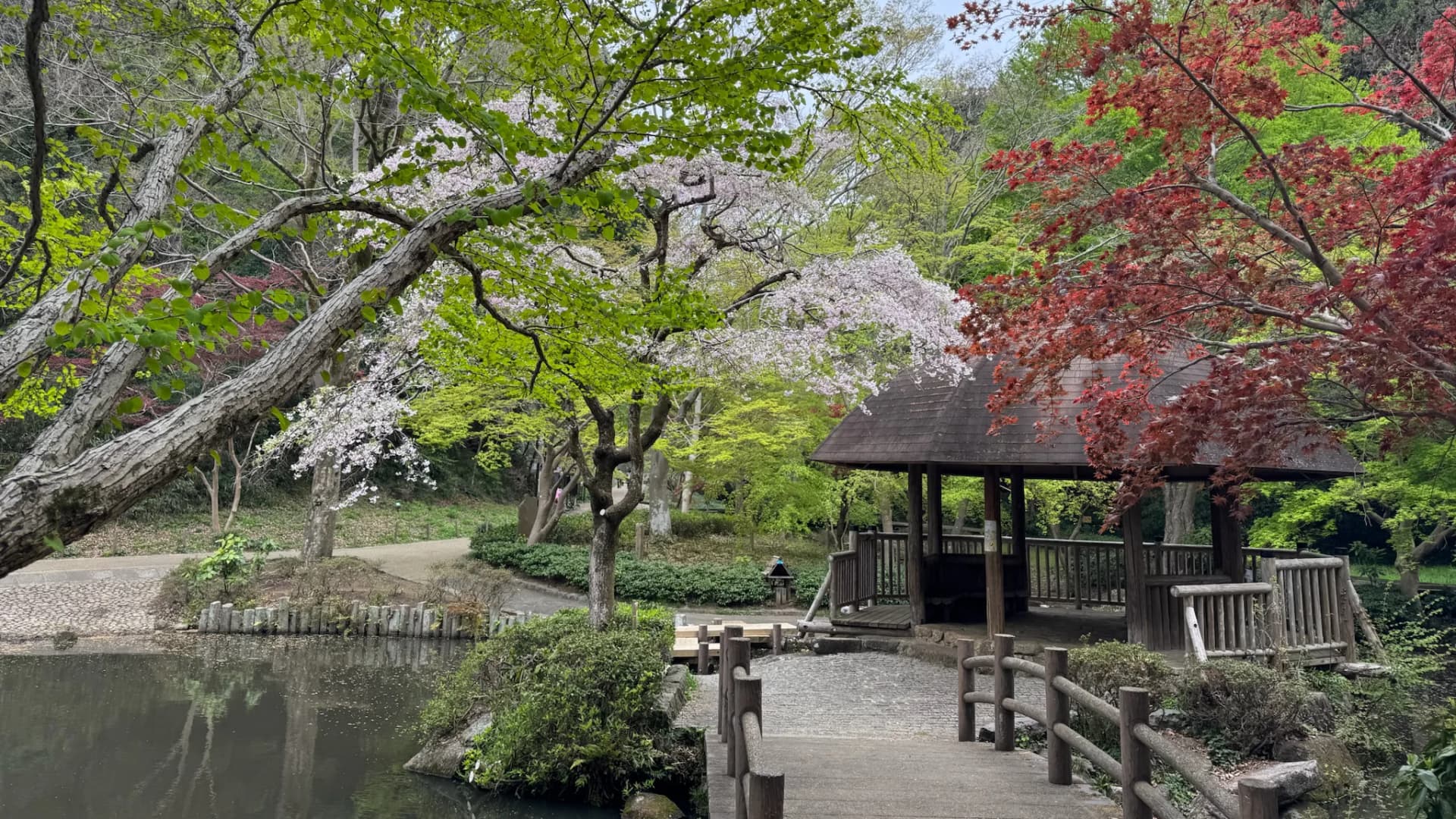
Higashitakane Forest Park
A forest park in central Kawasaki where a rare ancient oak wood, a working rice paddy, and a buried Yayoi settlement sit on top of one another.
Kawasaki · Kanagawa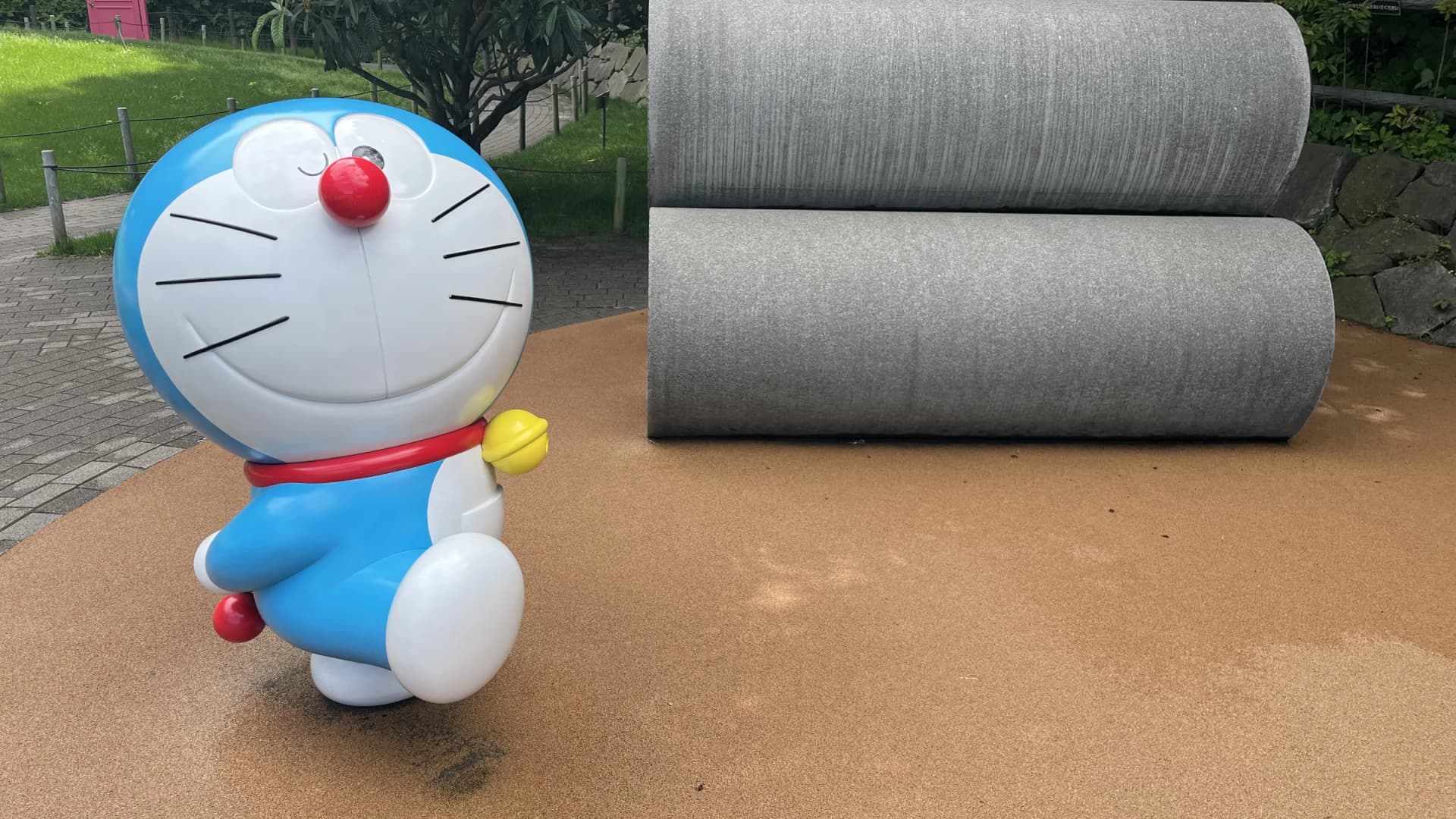
Fujiko・F・Fujio Museum
This museum celebrates Fujiko·F·Fujio, creator of Doraemon, displaying his original works, workspace, and interactive exhibits for manga fans.
Kawasaki · KanagawaYou might also like

Chuson-ji Temple
The head Tendai temple founded in 850, significantly expanded in the 12th century and designated a UNESCO World Cultural Heritage site.
Hiraizumi · Iwate
Kawasaki Daishi Heikenji Temple
A prominent Shingon Buddhist temple renowned for its spiritual power to dispel misfortune and grant various blessings to visitors.
Kawasaki · Kanagawa
Kotoku-in
A Buddhist temple in Kamakura housing the Great Buddha, a monumental copper statue of Amida Buddha cast in the 13th century.
Kamakura · Kanagawa
Hyakusaiji Temple and the Buddhist Art of Omi
An autumn exhibition in Shiga where the hidden image of Hyakusaiji, an eleven-headed Kannon of the 8th century, leaves the temple for the first time.
26 Sep – 6 Dec 2026Koka · Shiga
Urasa Bishamondo Naked Man Festival
A 1,200-year-old midwinter festival features bare-chested men competing to ascend to the temple and offer prayers to the protective deity Bishamonten.
7 Mar 2027Exact date not confirmed yetMinamiuonuma · Niigata
Sakura Autumn Festival
Each October the old castle town of Sakura fills with towering doll floats, portable shrines and Edo-descended music for three days of procession.
9–11 Oct 2027Exact date not confirmed yetSakura · Chiba