Futarasan Shrine
日光二荒山神社
Guardian shrine of Nikko from the 8th century, honoring three family deities and a prominent figure in mythology revered for love and matchmaking.

〒 321-1431How to get there
日光Nikko Line · Tobu Nikko Line39 min walk from the station
When you book through our affiliate links, we earn a commission, at no extra cost to you. This support helps us continue providing free, in-depth content about Japan.
Nikko Futarasan Shrine is one of the three religious sites that make up the "Shrines and Temples of Nikko", a UNESCO World Heritage Site inscribed in 1999. It is the oldest of the three, predating the neighbouring Toshogu, and remains the guardian shrine of the Nikko area. The shrine grew out of an ancient tradition of mountain worship centred on Mount Nantai, a 2,486-metre peak also known as Futarasan and revered as a sacred mountain. It was founded in the 8th century by the Buddhist monk Shodo Shonin, and enshrines three deities as a family: Onamuchi no Mikoto, his consort Tagorihime no Mikoto, and their child Ajisukitakahikone no Mikoto.
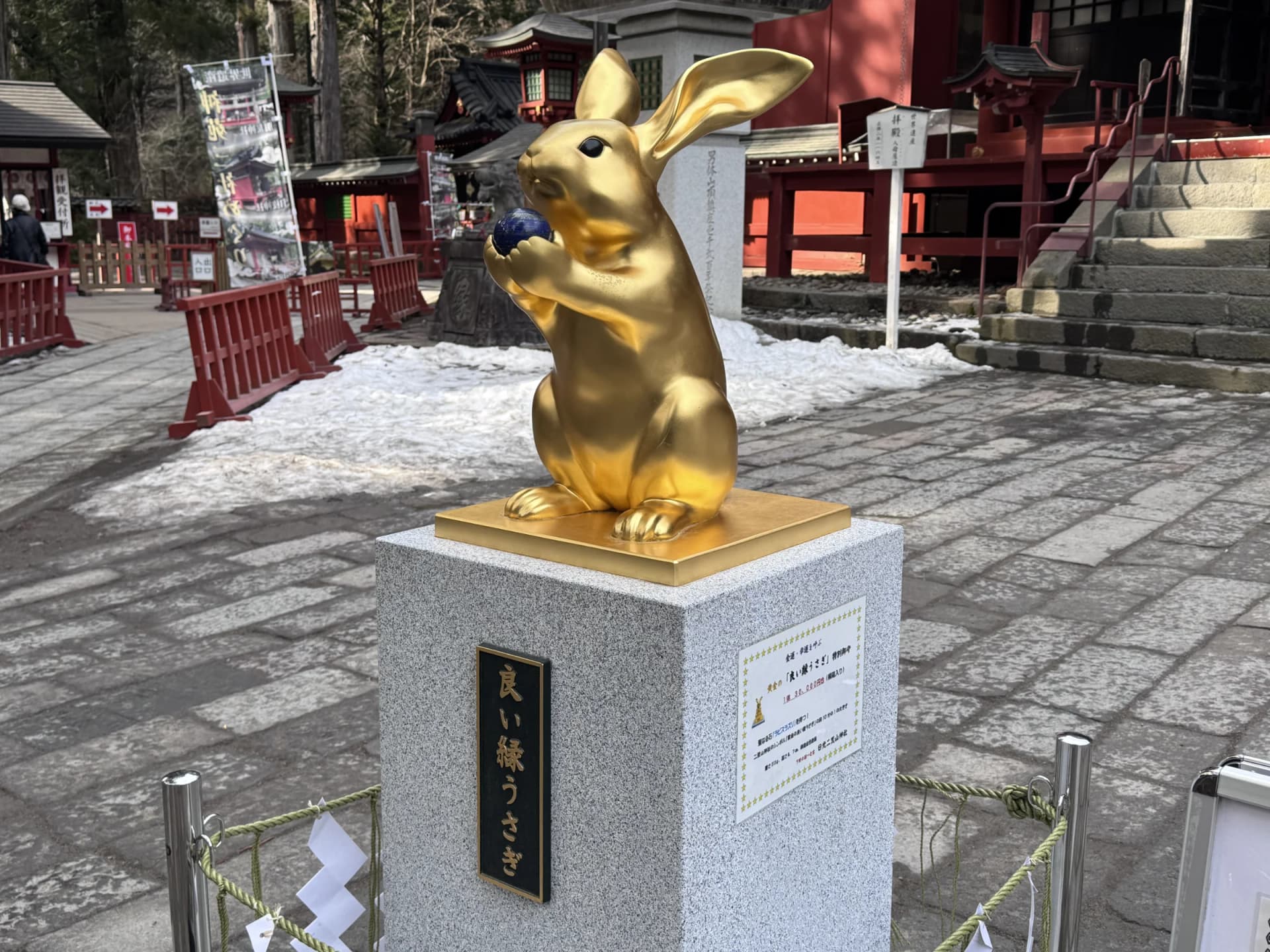
The father deity, Onamuchi, is better known by another of his names, Okuninushi – one of the most prominent figures in Japanese mythology and the central god of the Izumo tradition. Remembered as a god of nation-building, medicine, and agriculture, he is especially loved for his kindness in the tale of the White Hare of Inaba, and above all as a deity of love and matchmaking (en-musubi). A popular sight in front of the worship hall is the golden Yoi-en Usagi, or 'good match rabbit,' a modern statue referencing the White Hare of Inaba that has become a focus for visitors praying for good relationships.
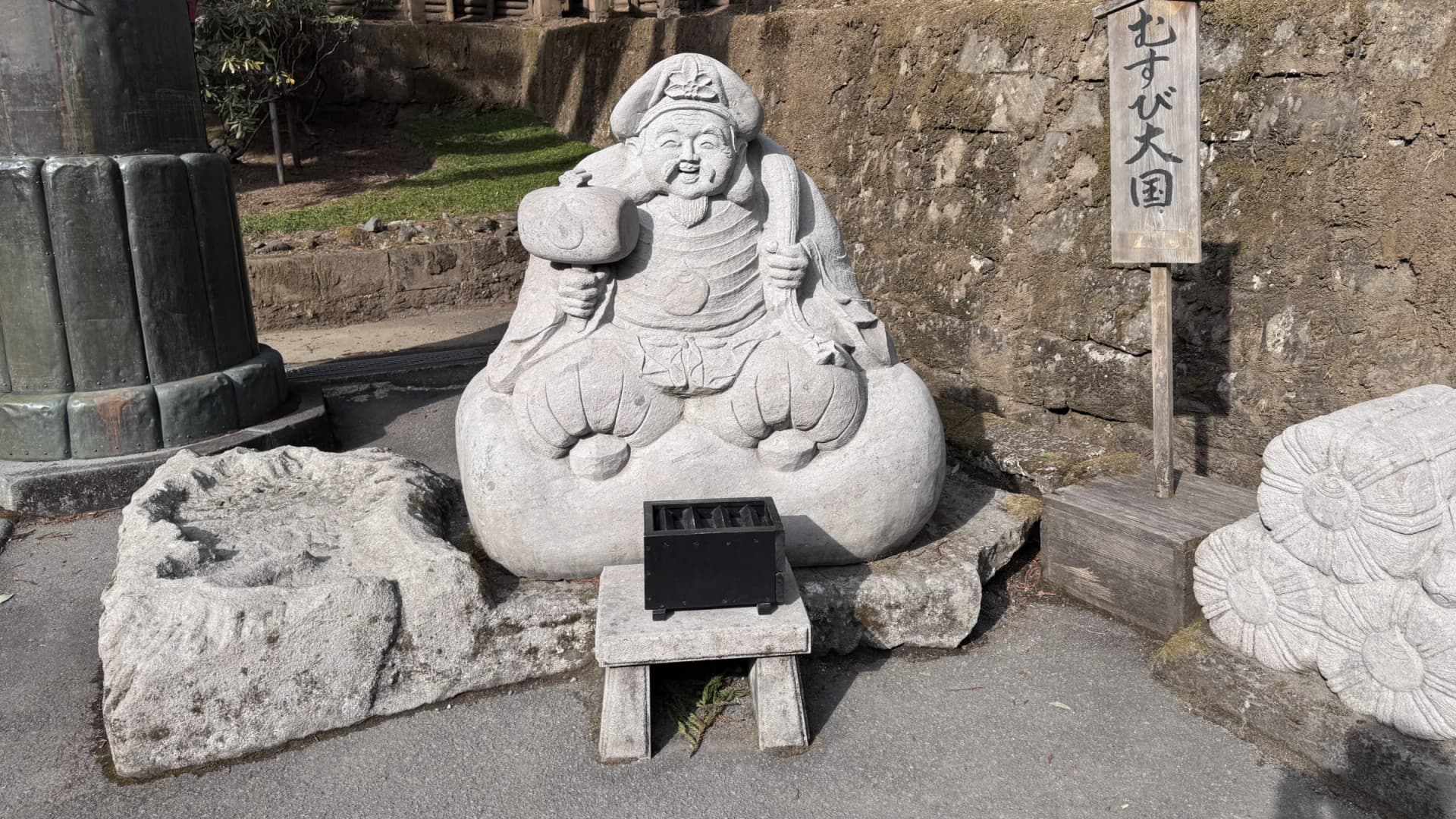
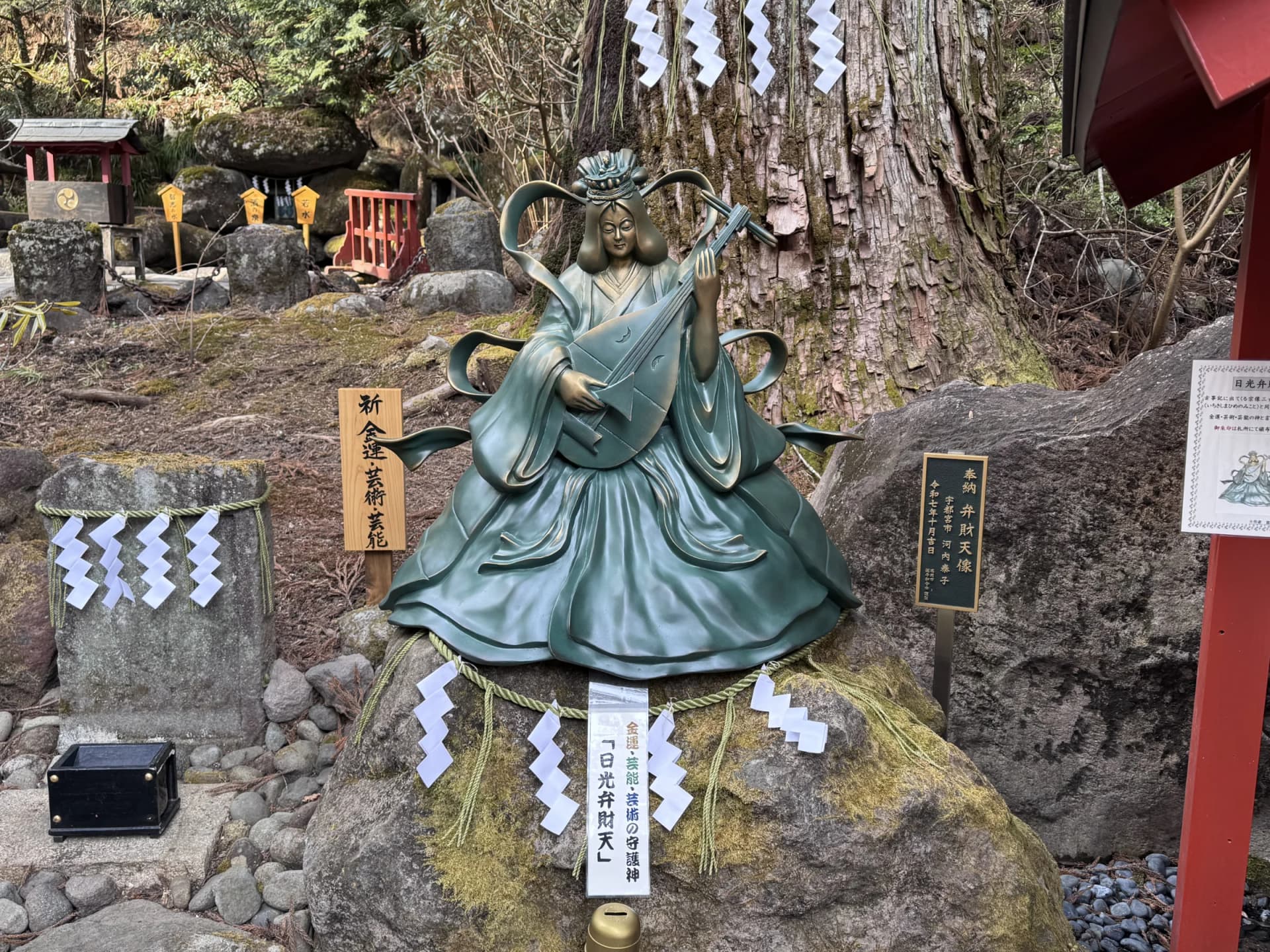
Because the characters for his name can also be read "Daikoku", he came to be identified with Daikokuten, one of the Seven Lucky Gods and a bringer of wealth and good fortune. This connection is reflected in the shrine's precincts, which contain a statue of Okuninushi as well as figures of the Seven Lucky Gods.
Futarasan Shrine is made up of three separate sites: the principal shrine in the Sannai district of Nikko town, a shrine on the shore of Lake Chuzenji, and a shrine at the summit of Mount Nantai. Its precincts are vast, covering some 3,400 hectares and taking in much of Nikko National Park, along with Kegon Falls and the vermilion Shinkyo Bridge that marks the entrance to the Nikko shrine district.
Today the shrine is especially popular with visitors praying for good fortune and success in marriage. Its main area is free to enter, with a small admission fee for the sacred garden, and it stands immediately beside the entrance to Toshogu.
Getting There

Places nearby

Nikko Tosho-gu
Shinto shrine established 1617 to enshrine Tokugawa Ieyasu, the first shogun who ended the Sengoku period and founded 260 years of Edo peace.
Nikko · Tochigi
Three Wise Monkeys
Relief carvings depicting the Three Wise Monkeys and seven other scenes that symbolize different life stages, based on the traditional proverb.
Nikko · Tochigi
Rinnoji Temple
Rinnoji is a Tendai Buddhist temple in Nikko and part of a UNESCO World Heritage Site, known for its Sanbutsudo hall and the National Treasure Taiyuin mausoleum.
Nikko · TochigiYou might also like

Kasuga-taisha
A major shrine with over 3,000 affiliated shrines nationwide, maintained through a tradition of structural renewal held every 20 years.
Nara
Kamigamo Shrine
One of Japan's oldest Shinto shrines, dedicated to the thunder deity and honored since 794 when Kyoto became the imperial capital.
Kyoto
Shimogamo Shrine
Dating to the 6th century, this Kyoto shrine dedicated to Tamayori-hime and her father was worshipped as protection against misfortune and a guardian of the capital.
Kyoto
Moka Summer Festival
Moka Summer Festival honors Kojin, the god of fire and hearth, with over 20 mikoshi and festival floats paraded through the city during a three-day summer celebration.
24–26 Jul 2027Moka · Tochigi
Kanamara Matsuri "Festival of the Steel Phallus"
An annual Shinto festival at Kanayama Shrine in Kawasaki featuring distinctive phallic imagery in decorations and parades while raising funds for HIV research.
5 Apr 2027Kawasaki · Kanagawa
Morioka Fall Festival
One of Iwate's most enduring celebrations, this autumn festival originated as prayers for harvest, now featuring ornate floats and traditional parades.
14–16 Sep 2027Morioka · Iwate