

Rinnoji Temple
輪王寺
Rinnoji is a Tendai Buddhist temple in Nikko and part of a UNESCO World Heritage Site, known for its Sanbutsudo hall and the National Treasure Taiyuin mausoleum.

Rinnoji Temple is a Tendai Buddhist temple located within the UNESCO World Heritage Site of Nikko. It is one of the three principal religious institutions of the area, alongside Tosho-gu Shrine and Futarasan Shrine, the three together making up the "Shrines and Temples of Nikko", inscribed on the World Heritage list in 1999 and known in Japanese as nisha ichiji, or "two shrines and one temple". Before the Meiji-era separation of Shinto and Buddhism divided them into distinct institutions, these sites were collectively known as "Nikkozan".
History
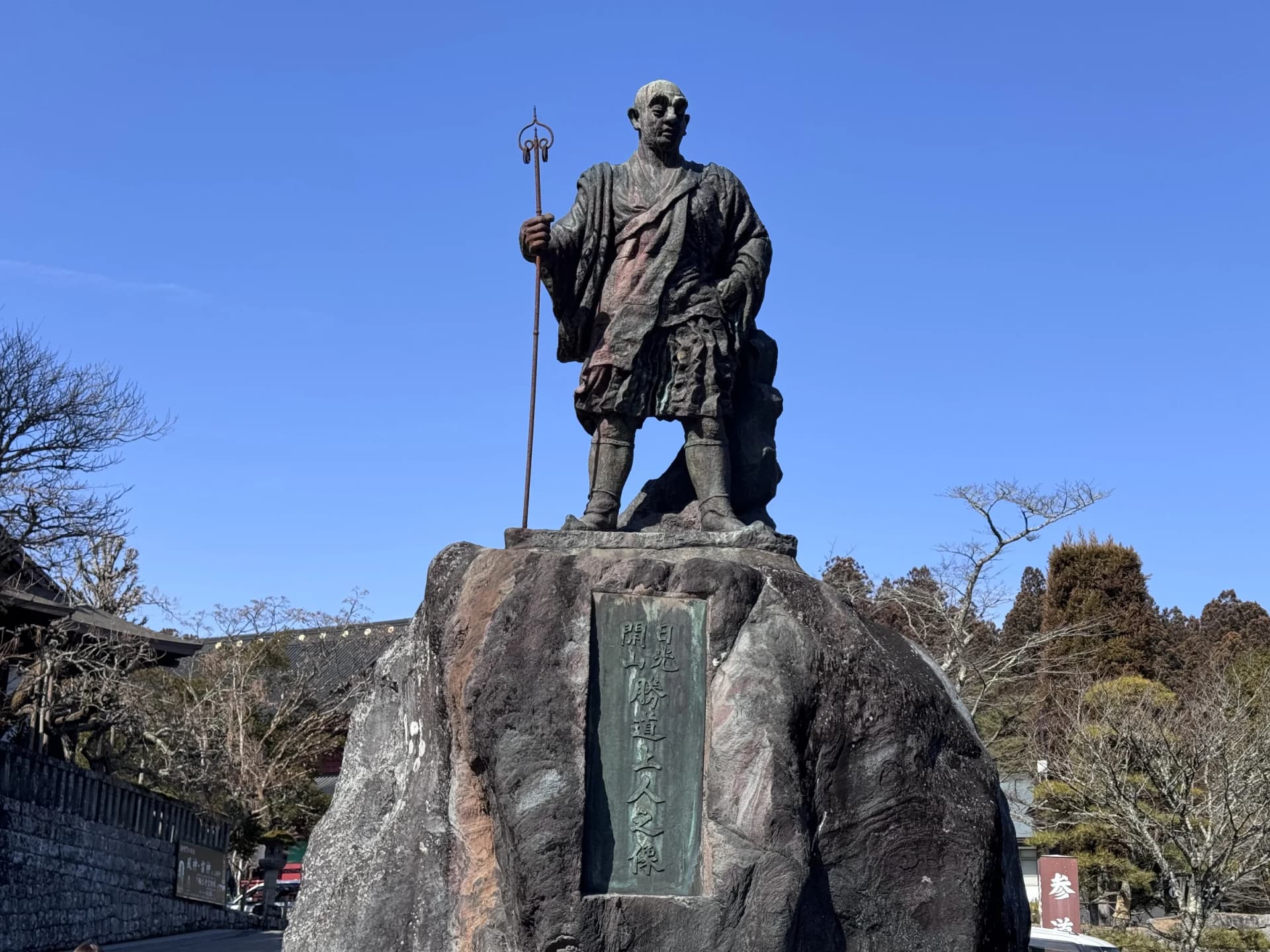
Nikkozan was founded in 766 by the monk Shodo Shonin, who established the site's first temple, Shihonryuji, after crossing the Daiya River and enshrining Kannon and a local deity at the location. Over the following centuries, the site grew in prominence, attracting visits from eminent monks including Kukai and Ennin during the Heian period, and receiving donations from Minamoto no Yoritomo during the Kamakura period. By the Muromachi period, the complex had reached the height of its prosperity.
During the Edo period, the great Tendai monk Tenkai (known posthumously as Jigen Daishi) became chief priest and played a central role in enshrining Tokugawa Ieyasu at Nikkozan as Tosho Daigongen. The imperial court granted the temple the title "Rinnoji," and a prince of imperial lineage holding Buddhist orders – known as the Rinnoji-no-miya Hosshin-no – came to reside here and govern its religious affairs. Fourteen successive princes held this position through to the end of the Edo period. The temple emerged in its present form following the upheavals of the Meiji-era separation of Shinto and Buddhism.
Structures and Buildings
Main Hall – Sanbutsudo
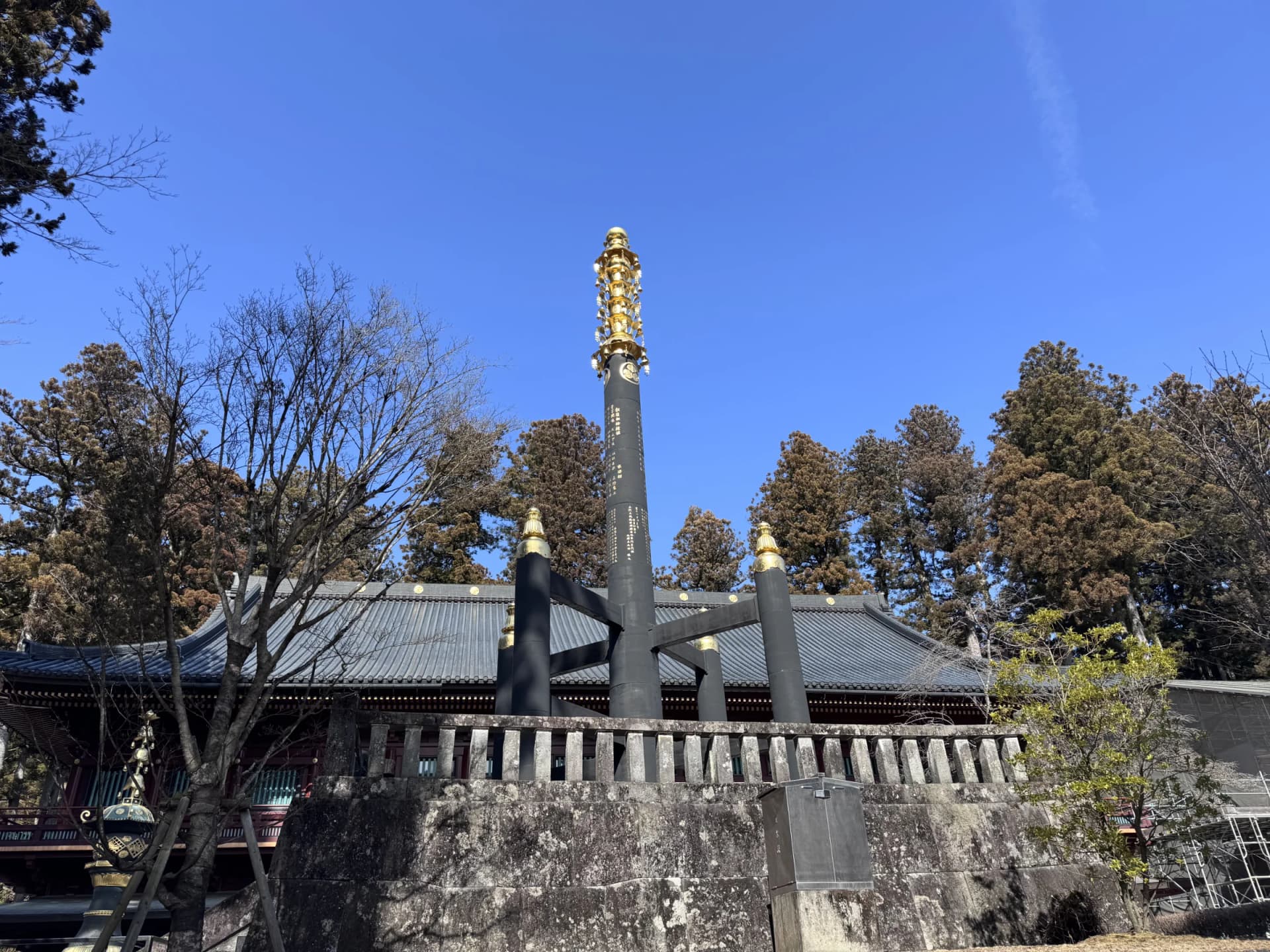
The Sanbutsudo (Hall of the Three Buddhas) is the main hall of Rinnoji and the largest wooden structure in eastern Japan. Founded in the Heian period and rebuilt in its current form in 1645 under the third shogun Tokugawa Iemitsu, it is one of the few surviving halls built in the Tendai esoteric Buddhist style. It is designated an Important Cultural Property and a World Heritage structure.
The inner sanctuary enshrines two sets of three principal Buddhist images. The first set comprises the Three Manifestation Buddhas of the Nikko Gongen: Senju Kannon, Amida Nyorai, and Bato Kannon, each standing 7.5 meters in height. The second set consists of the Three Manifestation Buddhas of the Tosho Gongen: Yakushi Nyorai, Amida Nyorai, and Shaka Nyorai, worshipped in the form of hanging paintings. In front of the hall stands the Kongo Cherry Tree, a nationally designated Natural Monument estimated to be approximately 500 years old.
Taiyuin Mausoleum
The Taiyuin is the mausoleum of the third shogun Tokugawa Iemitsu and is designated a National Treasure. The complex contains 22 buildings designated as National Treasures or Important Cultural Properties, and 315 stone and bronze lanterns line the approach. In accordance with Iemitsu's dying wish that his mausoleum should not surpass that of his grandfather Ieyasu, the structures employ black and gold in a restrained and dignified style.
The approach from the entrance to the innermost sanctuary passes through a series of gates, each of increasing significance. The Niomon Gate (Important Cultural Property) houses two Niō guardian figures at the entrance. The Nitenmon Gate (Important Cultural Property) is the largest gate within the World Heritage site at Nikko, with a plaque written by retired Emperor Go-Mizunoo. The Yashamon Gate (Important Cultural Property), also known as the Peony Gate for its floral carvings, is guarded by four yaksha figures. The central structures – the haiden (worship hall), ainoma (connecting chamber), and honden (main hall) – are designated a National Treasure and built in the gongen-zukuri architectural style. The interior features paintings by Kano Tan'yu and 140 dragon paintings on the ceiling. Beyond the Kokamon Gate (Important Cultural Property), built in the Chinese Ming-dynasty ryūgū style, lies the grave of Iemitsu.
Treasure Hall and Shoyoen Garden
The Rinnoji Treasure Hall, completed in 1982 and opened in 1983, houses approximately 30,000 artifacts relating to the 1,250-year history of Nikkozan, including 1 National Treasure, 51 Important Cultural Properties, and 4 Items of Important Art. Approximately 50 items are on permanent display. Since 2003, a permanent exhibition of treasures from the Tokugawa family has also been held in cooperation with the Tokugawa Memorial Foundation. Adjacent to the Treasure Hall is the Shoyoen, an Edo-period Japanese strolling garden, open to all Treasure Hall visitors, offering seasonal scenery throughout the year.
Other Structures on the Grounds
The Kaizando (Founder's Hall), designated an Important Cultural Property and World Heritage structure, enshrines wooden seated statues of Shodo Shonin and his ten principal disciples. Shodo Shonin passed away in 817 at the age of 83 and is buried at this site. The Jogyodo Hall, built in 848 by Jikaku Daishi Ennin and modeled on the Ninaido Hall of Enryakuji Temple on Mount Hiei, is one of only two halls of its kind surviving in Japan. It serves today as a place of ekō, the dedication of merit for the repose of ancestors. The Daigomado, built in 1998, is a hall dedicated to daily goma fire rituals performed before Fudo Myoo, open to all visitors without reservation.
Shihonryuji – Kannondo
Situated a short distance from the main Rinnoji precinct, Shihonryuji is the original founding site of what is now Rinnoji Temple, established by Shodō Shonin in 766. While no longer part of the main temple grounds, it remains within the broader Nikkozan complex and is administered by Rinnoji. The Kannondo, its main hall, was constructed in 807 and enshrines a thousand-armed Kannon. Built in unpainted white wood, it is one of the few structures of its kind within the Nikkozan complex. Both the Kannondo and the adjacent three-story pagoda are designated Important Cultural Properties and World Heritage structures. The site also serves as the third site on the Bando Thirty-Three Kannon Pilgrimage.
Branch Temples in Oku-Nikko
Rinnoji administers two branch temples located in Oku-Nikko, the mountainous area some 15 kilometres from the main temple complex. Both are institutionally affiliated with Rinnoji but are situated at considerable distance from its main precinct.
Chuzenji Temple (Tachiki Kannon) – Founded in 784 by Shodo Shonin on the shore of Lake Chuzenji, this branch temple enshrines as its principal image the Juichimen Senju Kannon Bosatsu (Eleven-Faced Thousand-Armed Kannon), an Important Cultural Property, said to have been carved by Shodo Shonin directly into a living katsura tree. The temple is also the 18th site on the Bando Thirty-Three Kannon Pilgrimage.
Onsenji Temple – Founded in 788 when Shodo Shonin discovered a hot spring at the site and enshrined Yakushi Ruriko Nyorai, this branch temple is one of the rare examples in Japan of a Buddhist temple where visitors can bathe in a hot spring. The spring is a sulfur-calcium-sodium sulfate-bicarbonate spring with a source temperature of 71.4°C.
Places nearby

Futarasan Shrine
Guardian shrine of Nikko from the 8th century, honoring three family deities and a prominent figure in mythology revered for love and matchmaking.
Nikko · Tochigi
Nikko Tosho-gu
Shinto shrine established 1617 to enshrine Tokugawa Ieyasu, the first shogun who ended the Sengoku period and founded 260 years of Edo peace.
Nikko · Tochigi
Three Wise Monkeys
Relief carvings depicting the Three Wise Monkeys and seven other scenes that symbolize different life stages, based on the traditional proverb.
Nikko · TochigiYou might also like

Miidera Temple
Head temple of the Tendai Jimon sect, Miidera was founded in the seventh century and has survived repeated destruction, earning the name Phoenix Temple.
Otsu · Shiga
Daigo-ji Temple
Over 1,100-year-old Buddhist temple complex and head temple of the Daigo branch of Shingon Buddhism, centered on an ancient natural spring.
Kyoto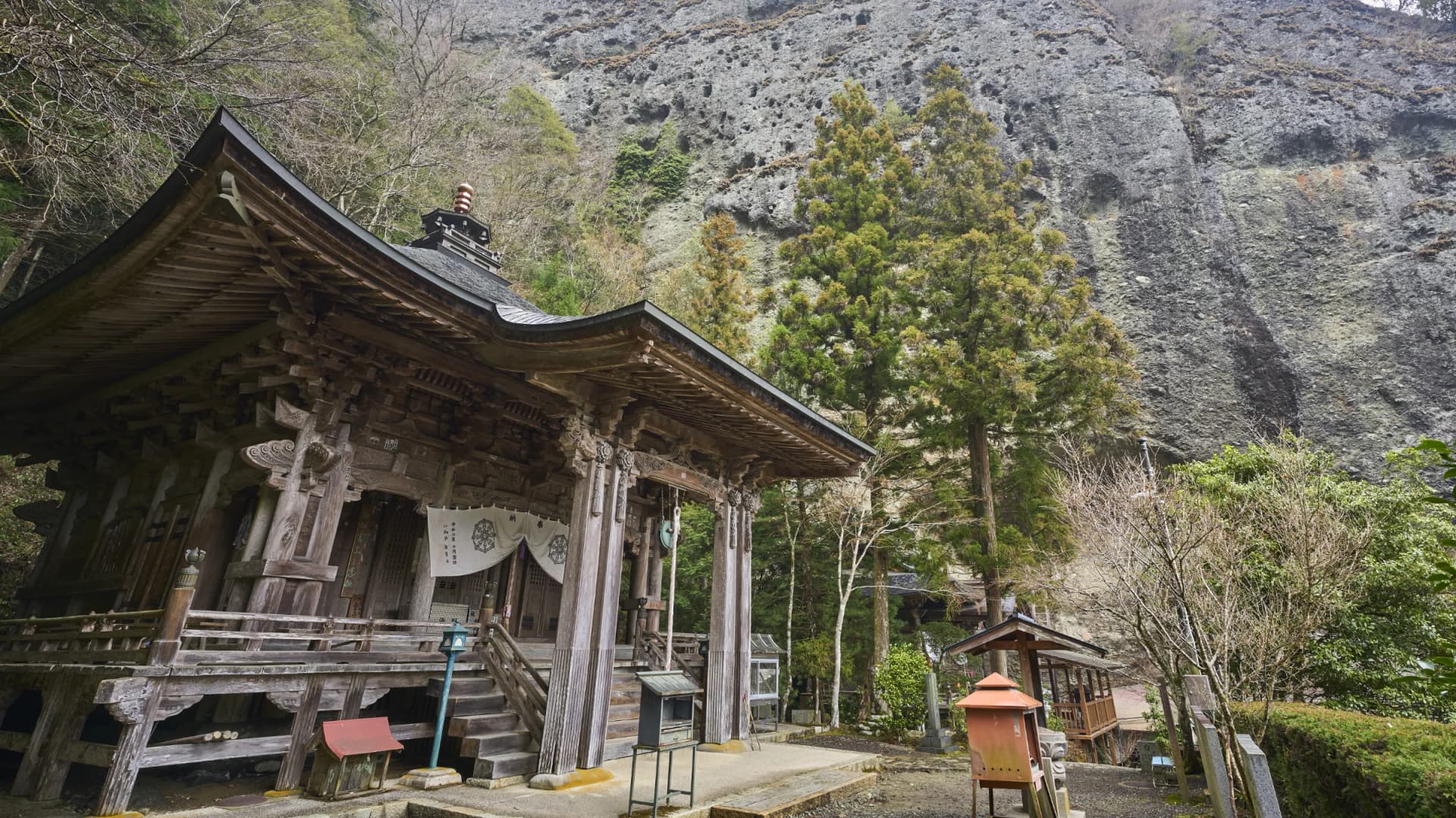
Iwayaji Temple
The forty-fifth temple of the Shikoku pilgrimage, built against cliffs in the mountains of Ehime, where the mountain itself is the object of worship.
Kumakogen · Ehime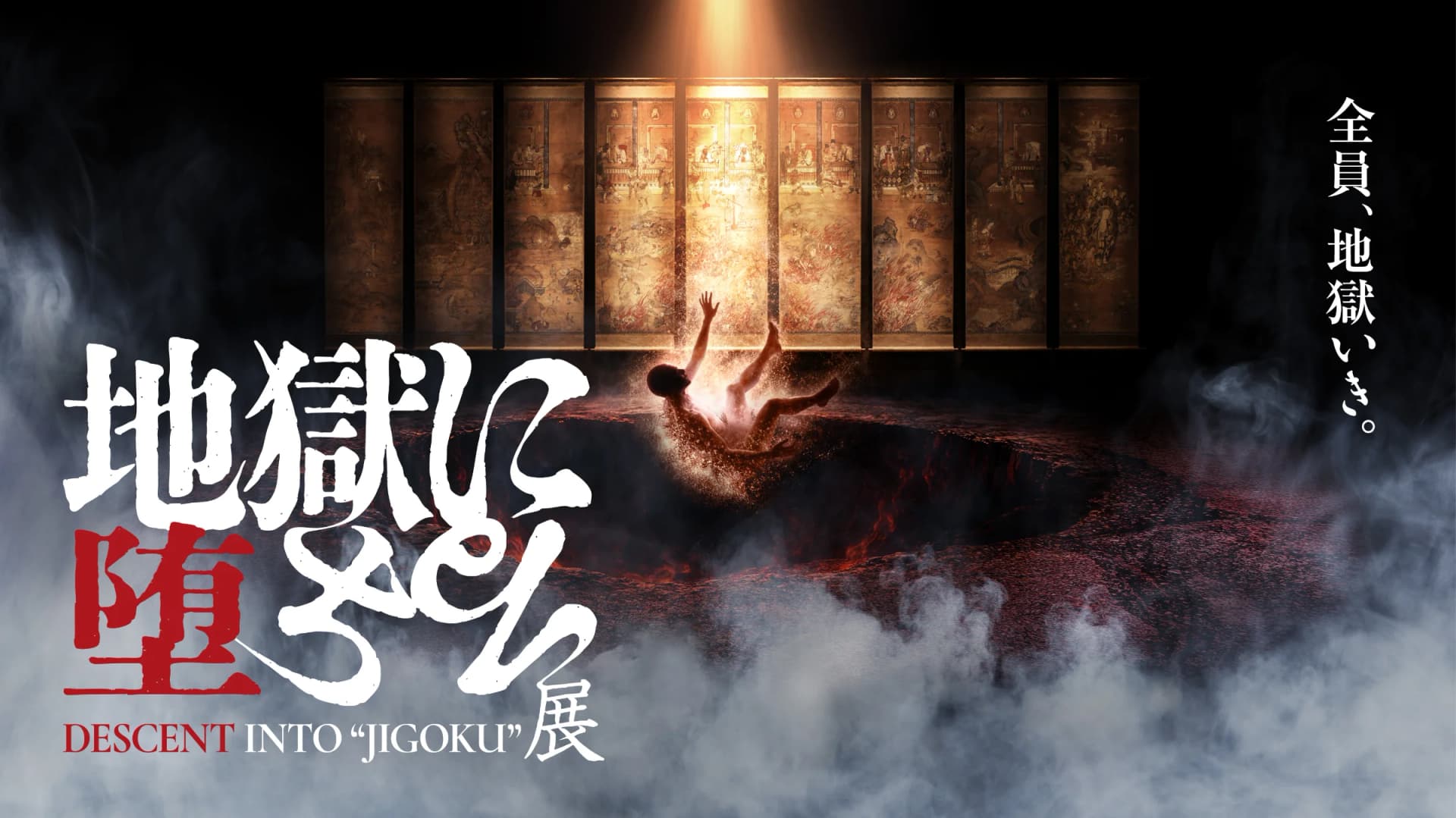
Descent into "Jigoku"
An exhibition in Osaka on the Japanese hell, following the path of the dead through full-size reproductions of painted scrolls and moving projections.
28 Nov – 27 Dec 2026Osaka
Zuiryuji Temple "Spring Light-up"
Colored lights and music illuminate this National Treasure temple in spring, accompanied by a market featuring local goods and specialties.
22 Apr – 5 May 2027Takaoka · Toyama
Motsu-ji Temple Hatsukayasai Festival
The final day of this week-long Buddhist observance at a UNESCO World Heritage temple features torchlit processions and prayers for good fortune.
14–20 Jan 2027Hiraizumi · Iwate