Okunoshima (Rabbit Island)
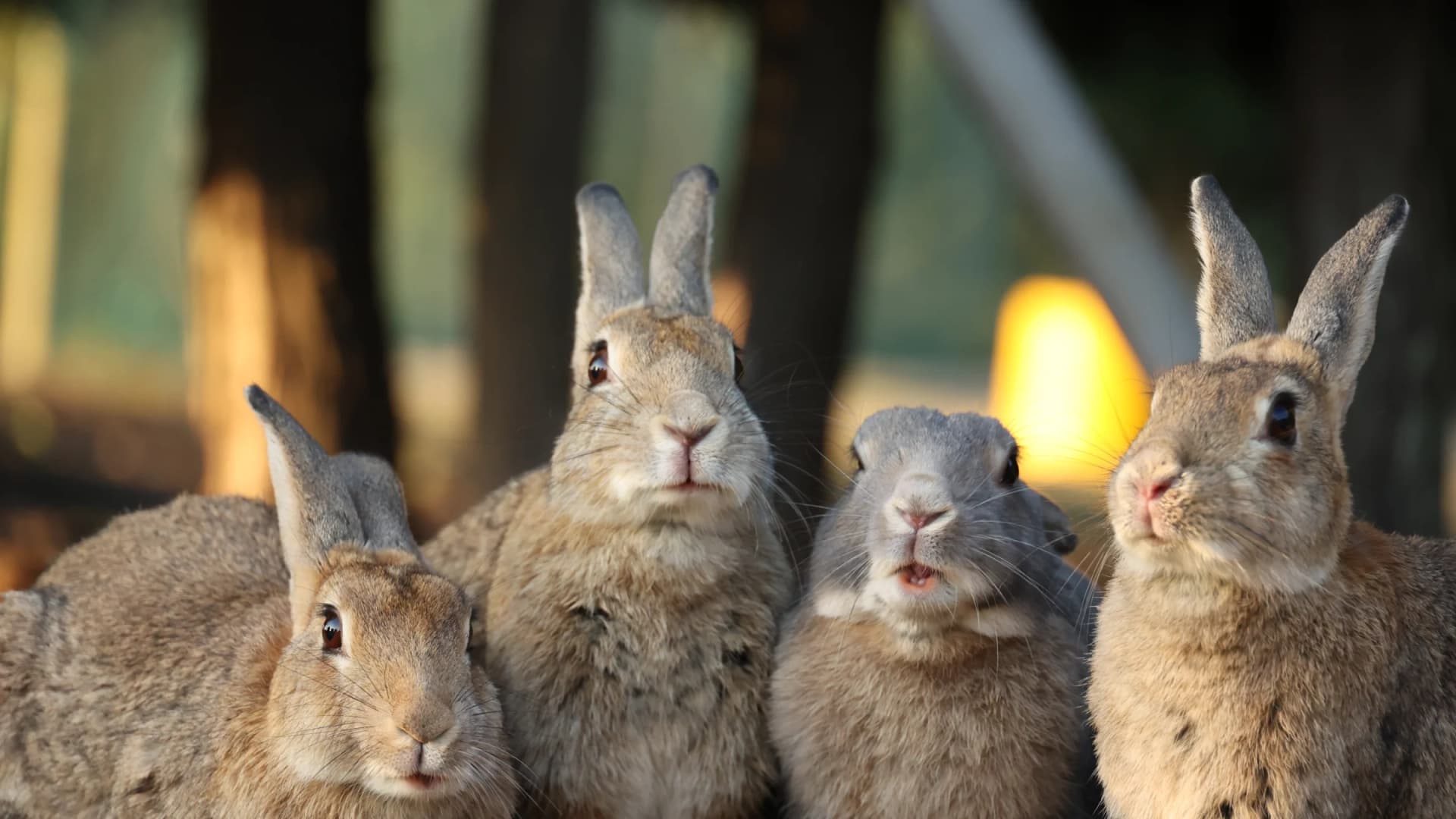
A small island in the Inland Sea with about a thousand wild rabbits on it, which was the Japanese army's poison gas works until 1945.
Takehara · Hiroshima

Shrines, museums, parks, and the spots in between, with the access details worked out.
A small island in the Inland Sea with about a thousand wild rabbits on it, which was the Japanese army's poison gas works until 1945.
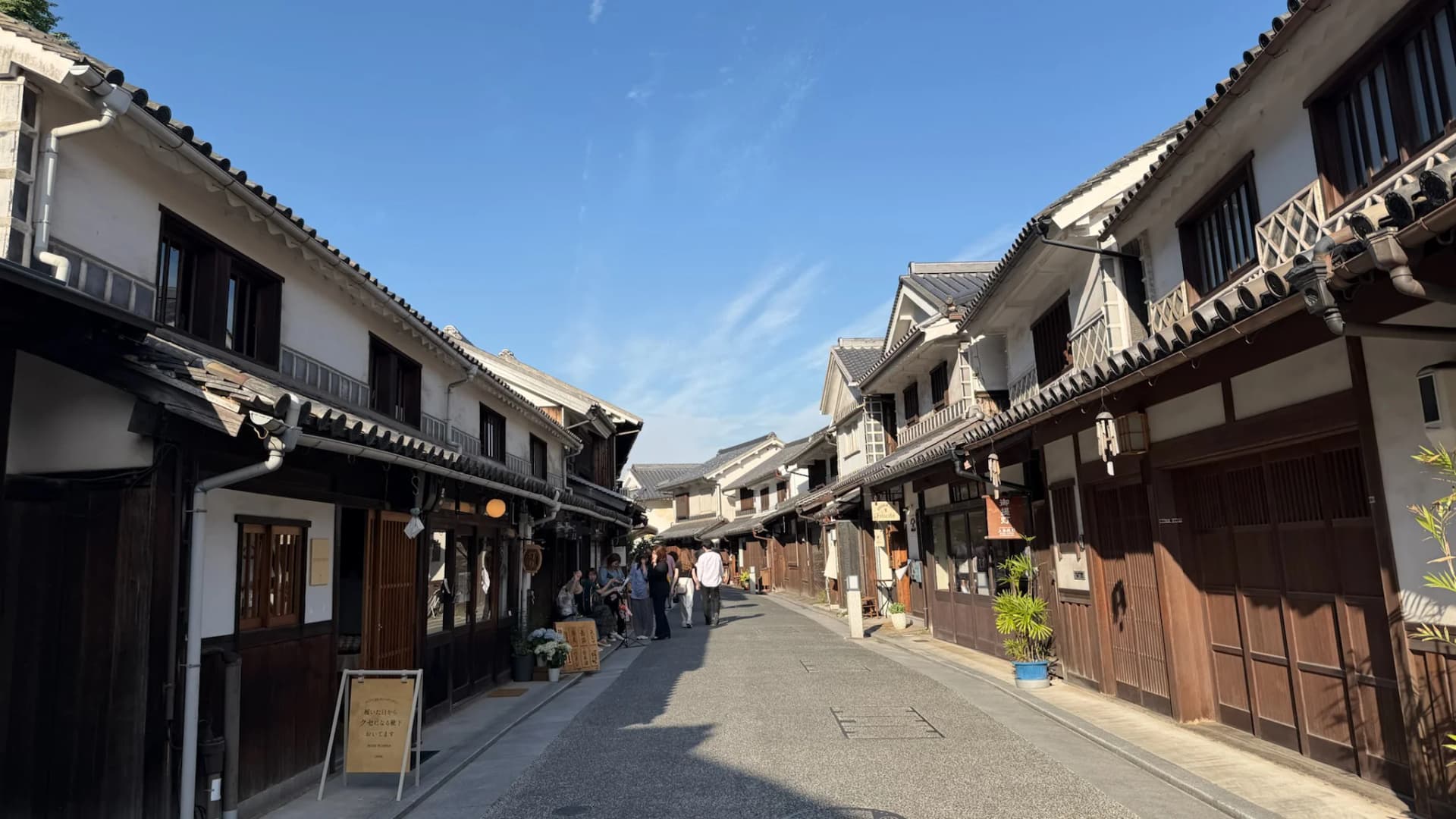
Takehara · HiroshimaA quarter of white-walled storehouses along a canal in Okayama, built on the rice trade and preserved since the 1960s.
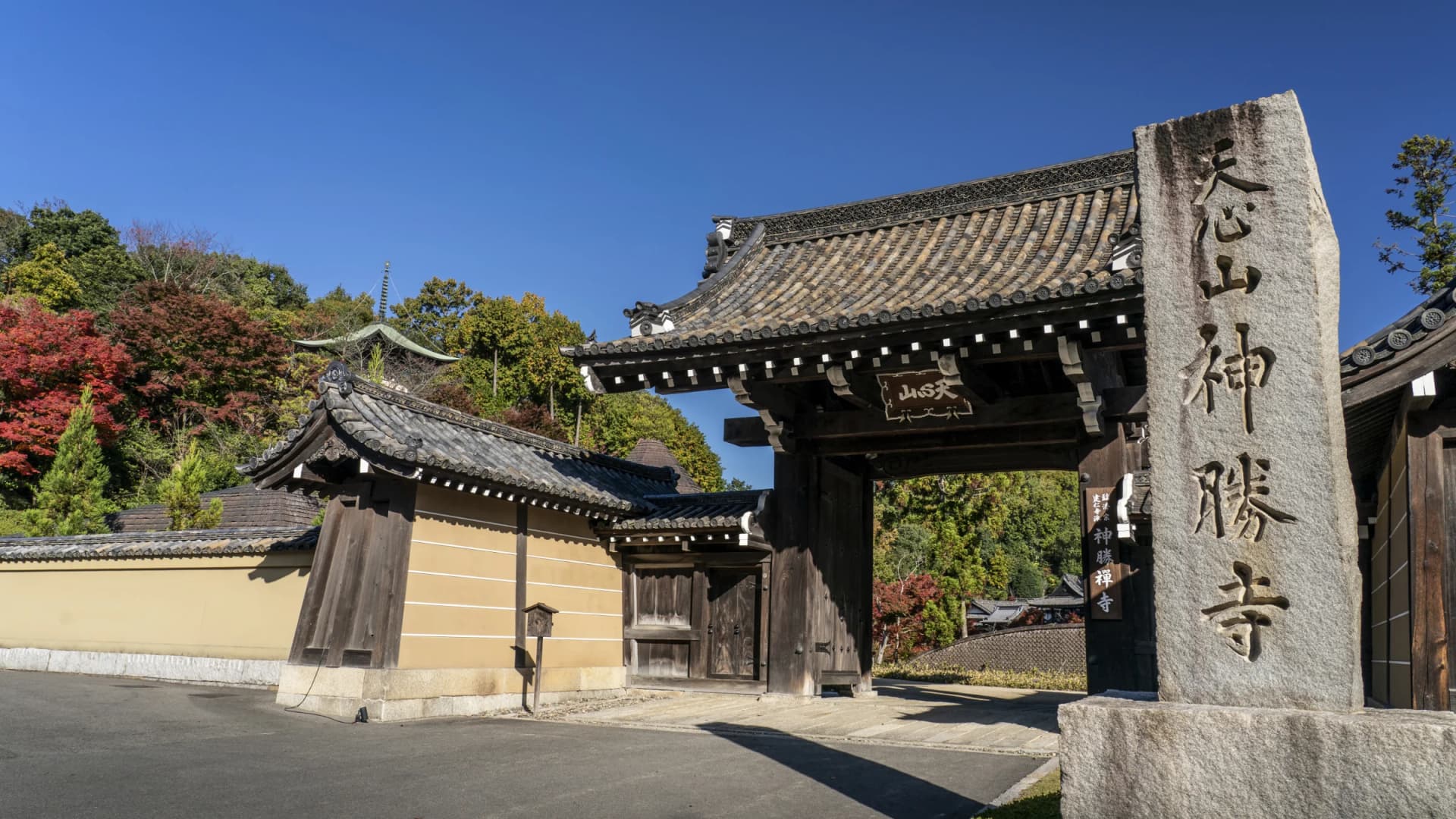
Kurashiki · OkayamaA Rinzai Zen temple at Fukuyama with tea houses, moved historic halls, gardens, and one of the largest collections of Hakuin's Zen painting.
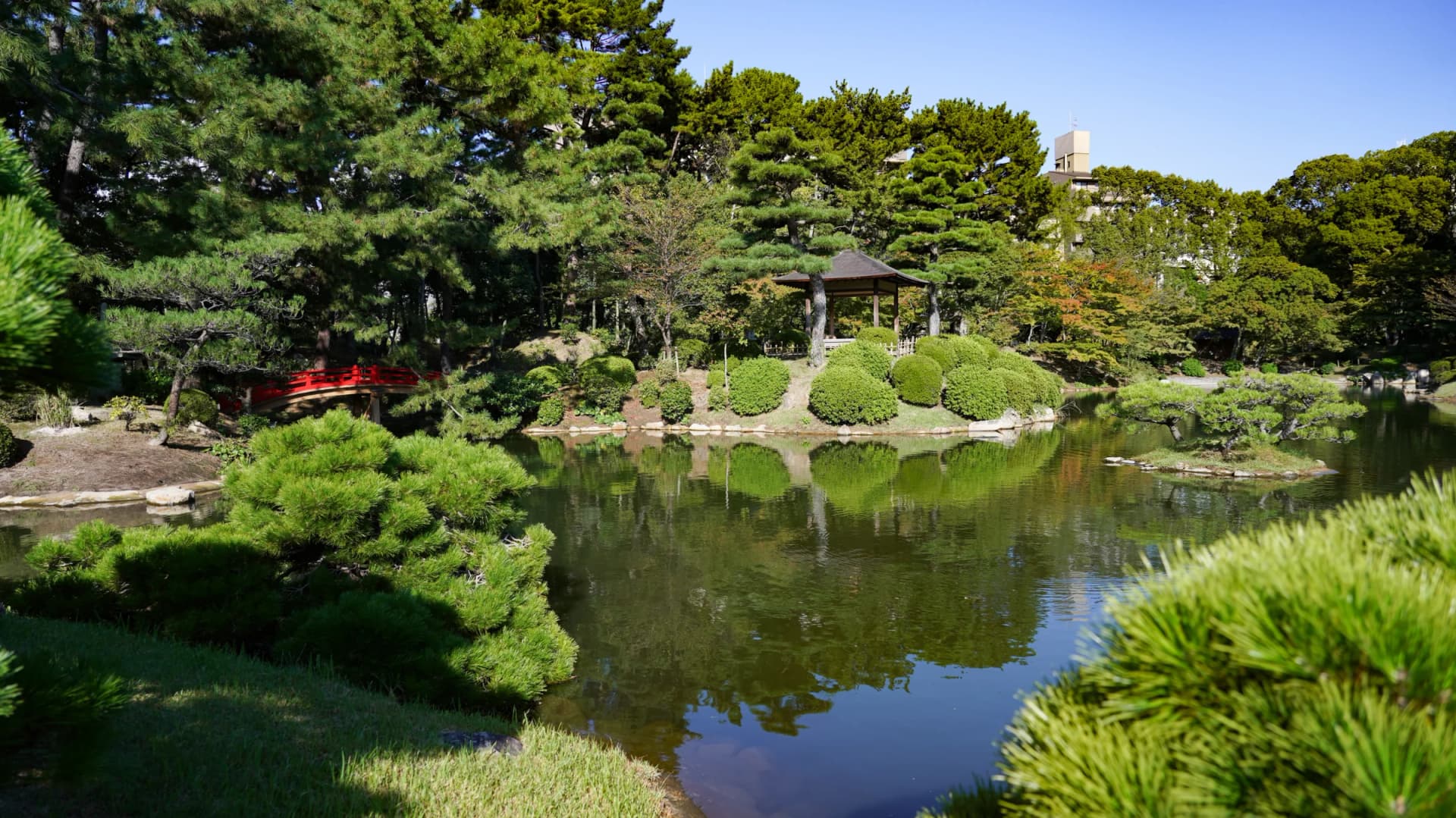
Fukuyama · HiroshimaA daimyo garden begun in 1620 in the centre of Hiroshima, destroyed by the atomic bomb and rebuilt over thirty years.
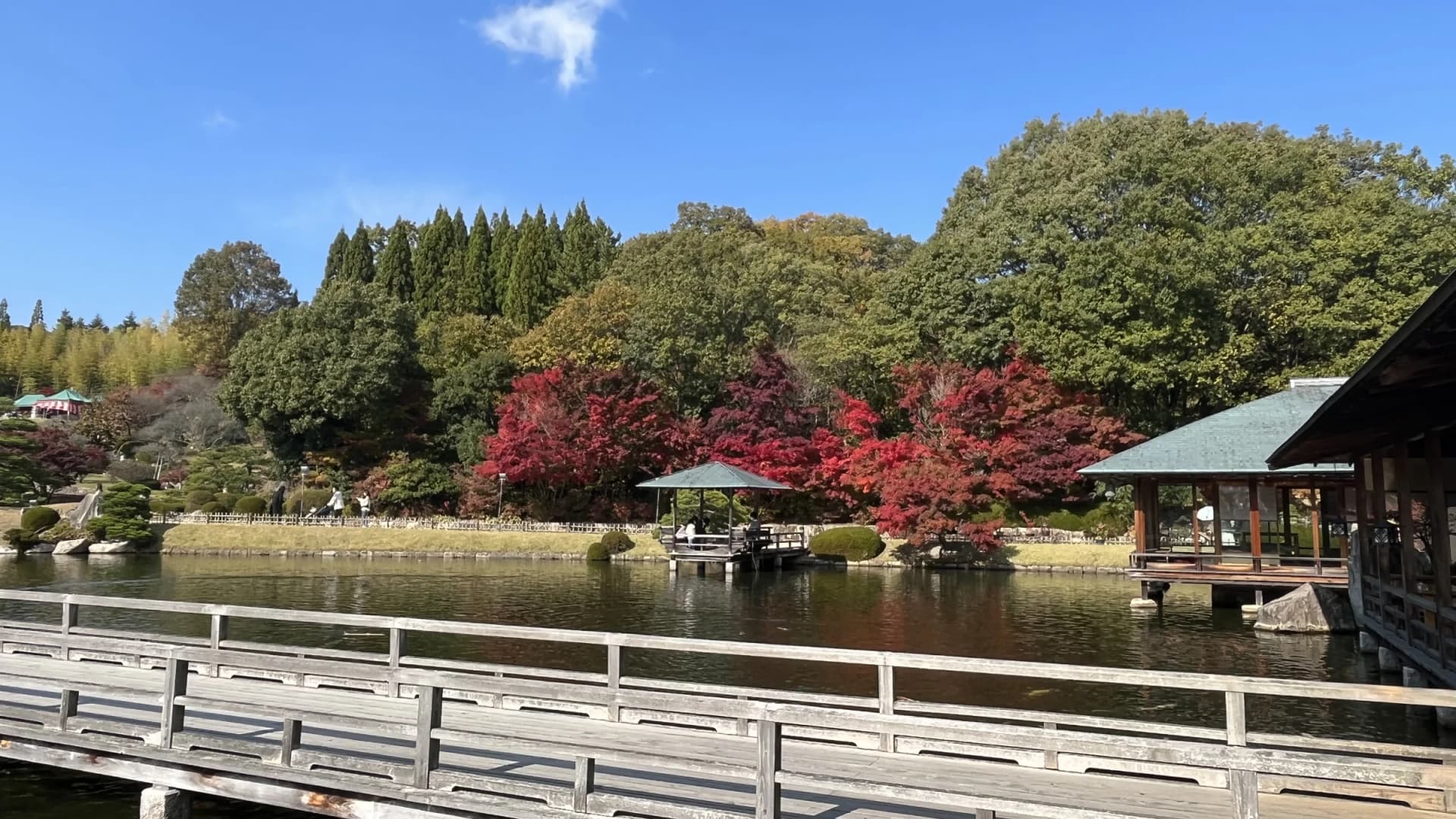
HiroshimaA six-hectare strolling garden beside Hiroshima Airport, laid out in three zones that stand for the mountains, the countryside and the sea of Hiroshima.
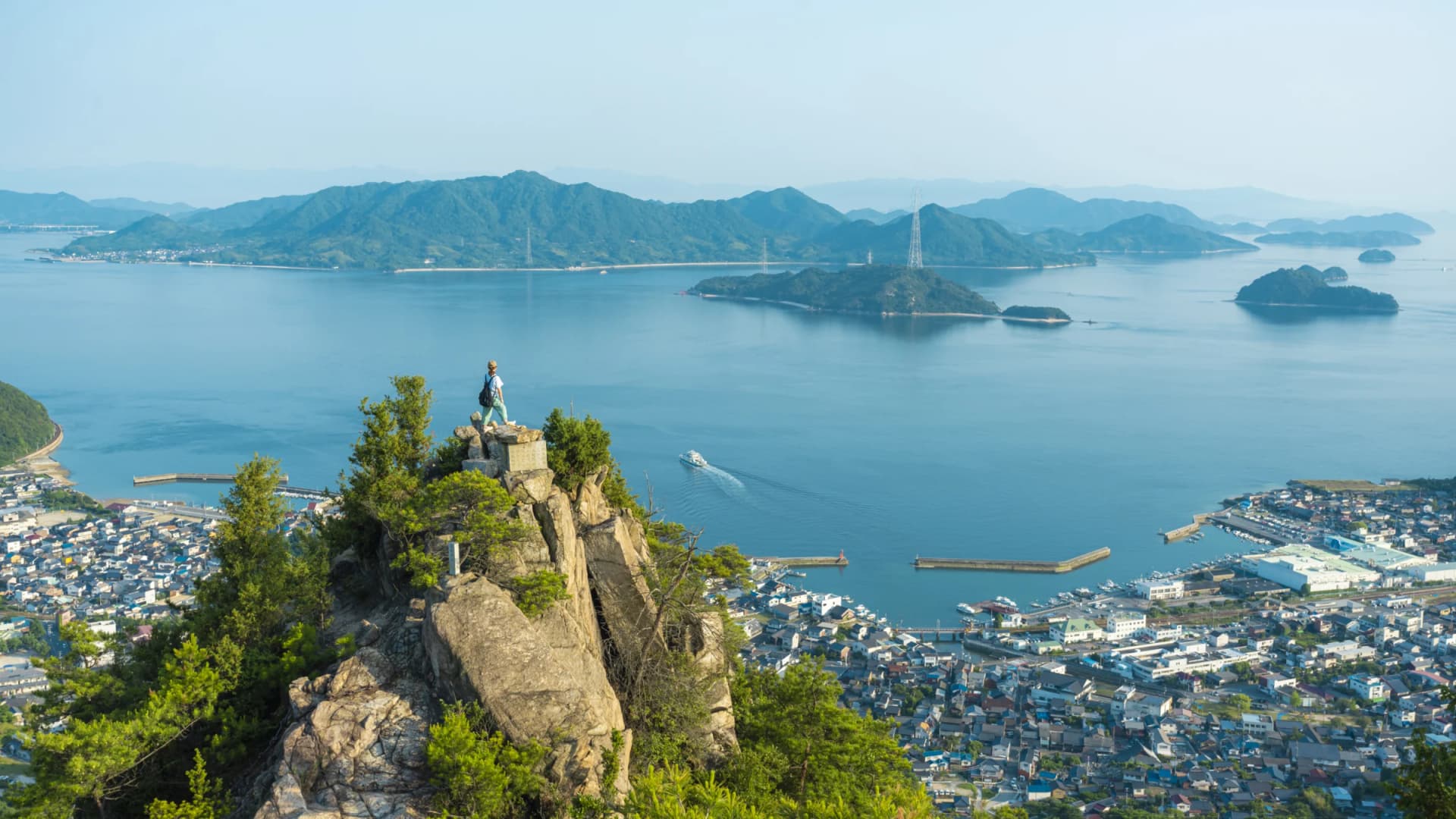
Mihara · HiroshimaA 266-metre hill above Tadanoumi in Takehara, half an hour's walk to a view over Okunoshima and the islands of the Seto Inland Sea.
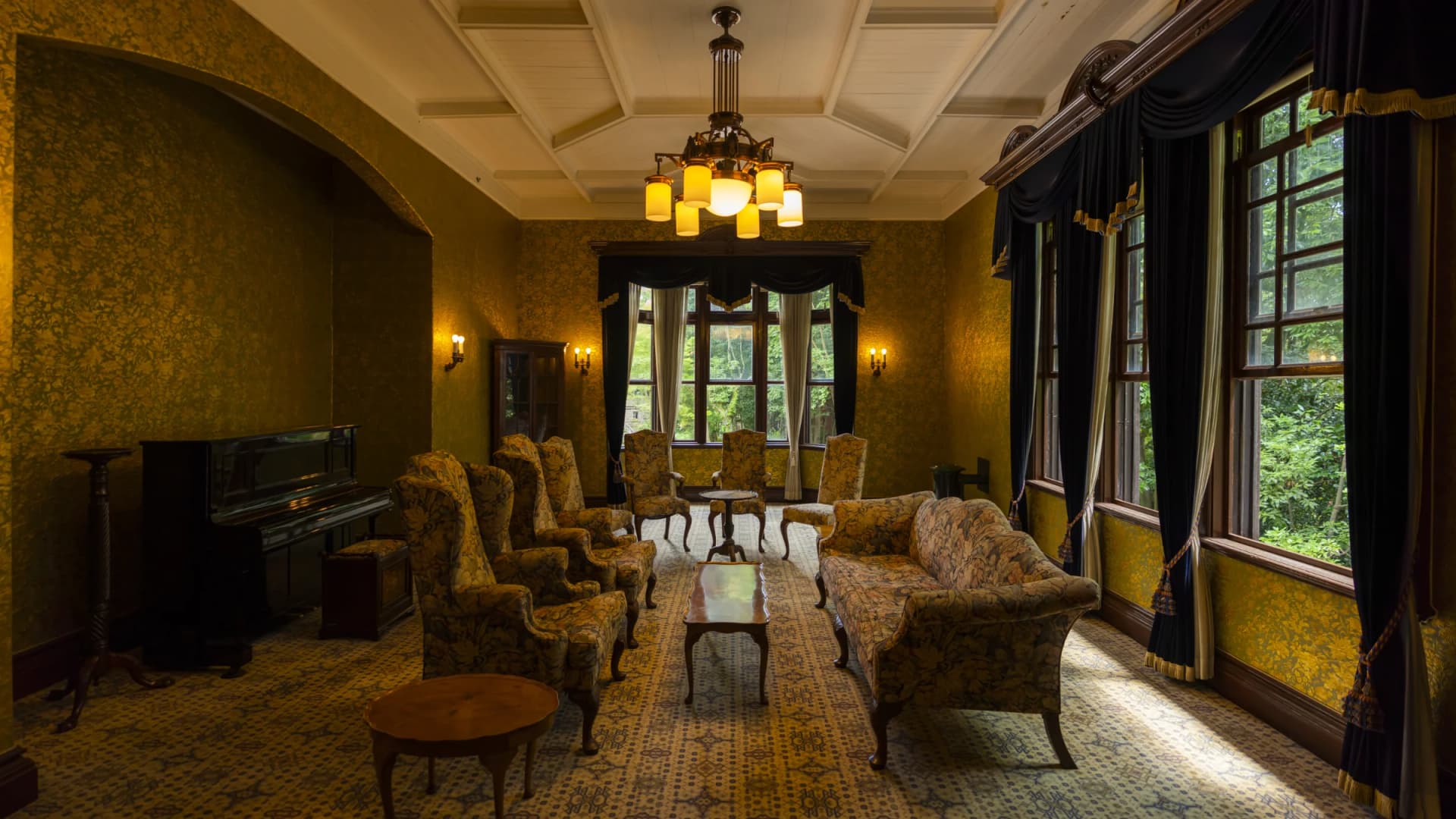
Takehara · HiroshimaThe restored 1905 residence of the commander of the Kure naval district, with rare gilded leather paper on its walls, and a naval arsenal clock tower.
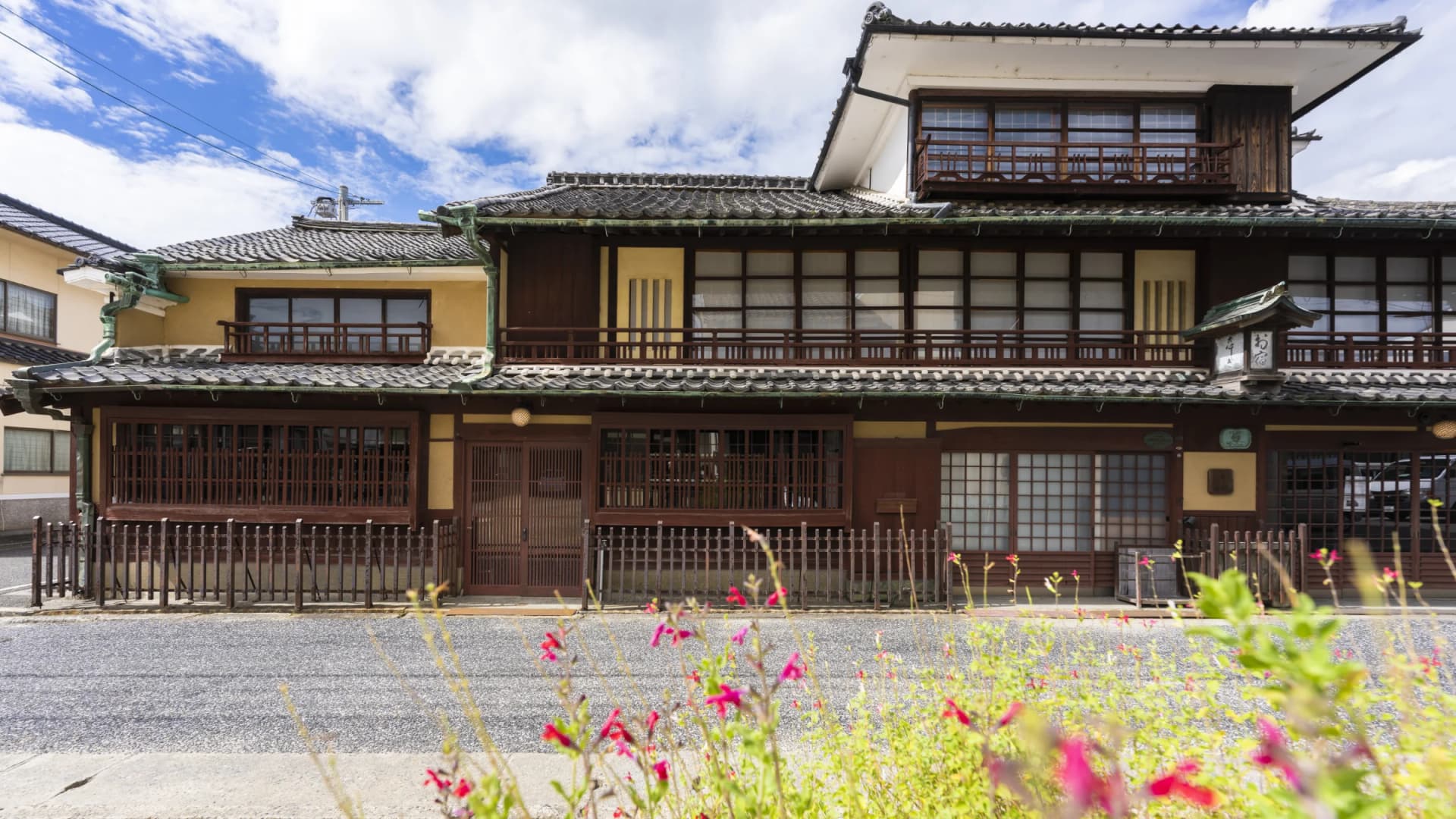
Kure · HiroshimaA restaurant inn of 1872 in Fuchu, Hiroshima, with a strolling garden of 1918, now on the national register and open to the public.
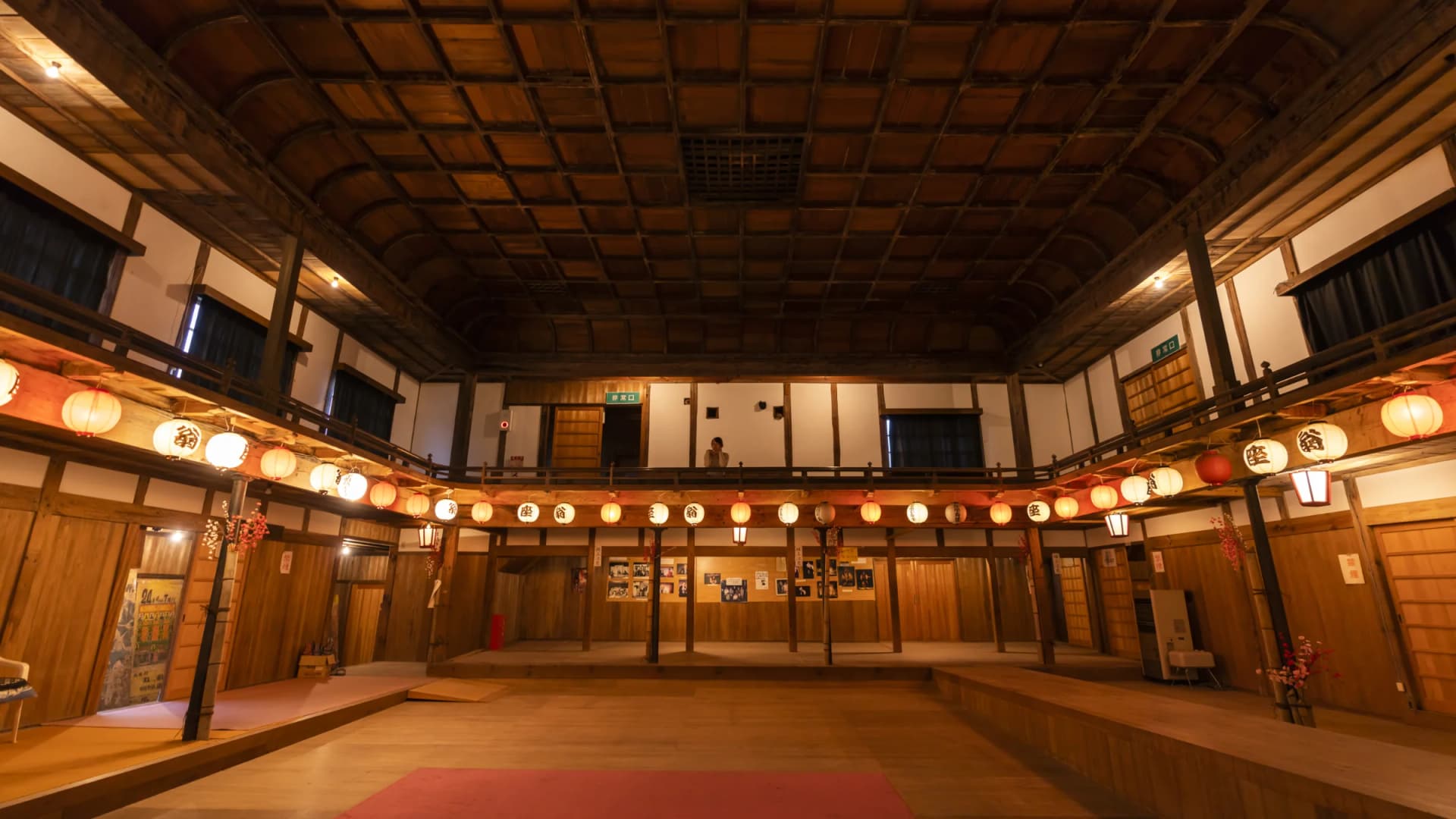
Fuchu · HiroshimaA wooden theatre of 1927 in the old post town of Joge, the only pre-war wooden playhouse still standing in the Chugoku region.
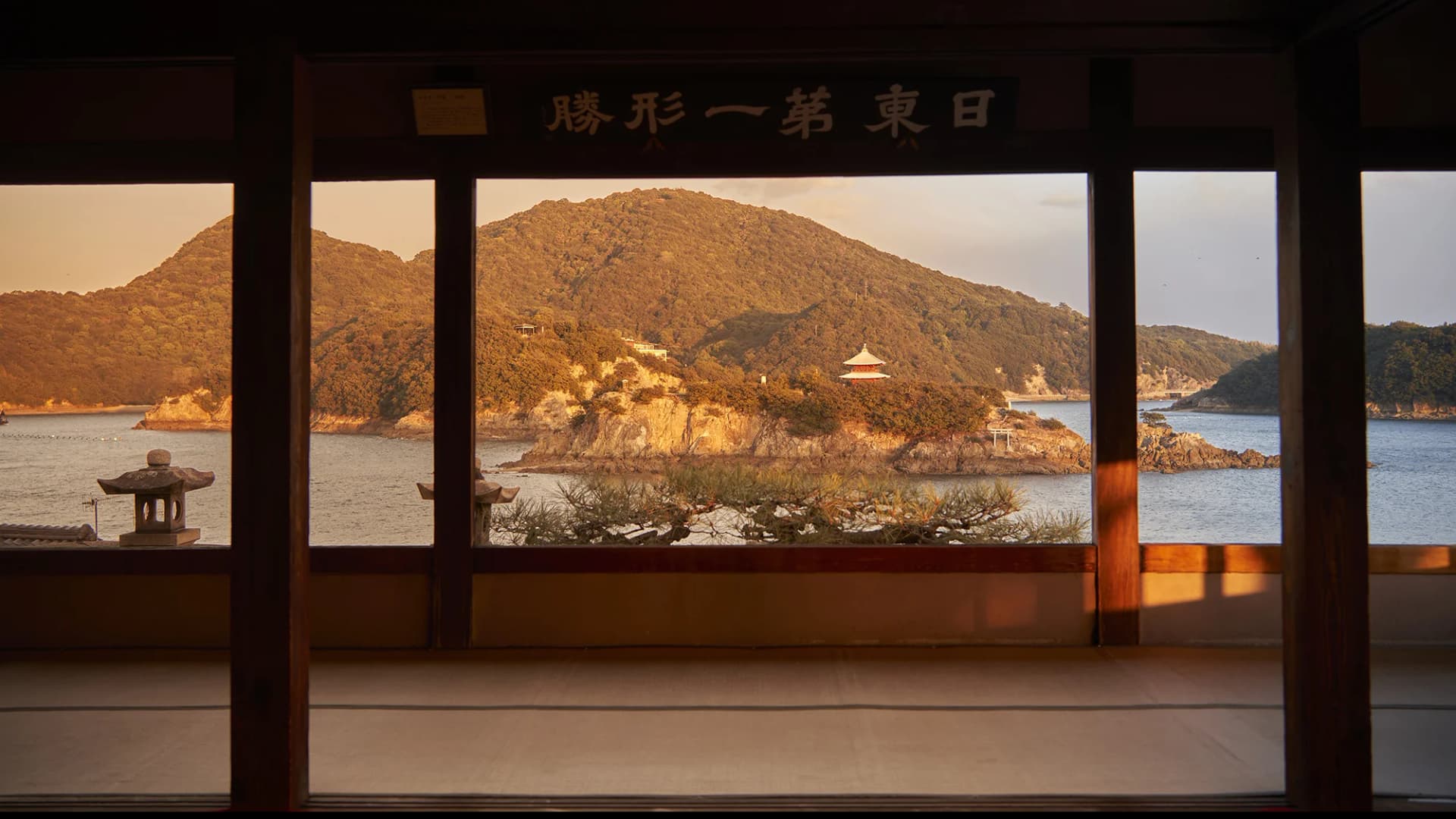
Fuchu · HiroshimaThe guest hall of a Shingon temple at Tomonoura, built around 1690, whose view over the Seto Inland Sea a Korean envoy called the finest in Japan.
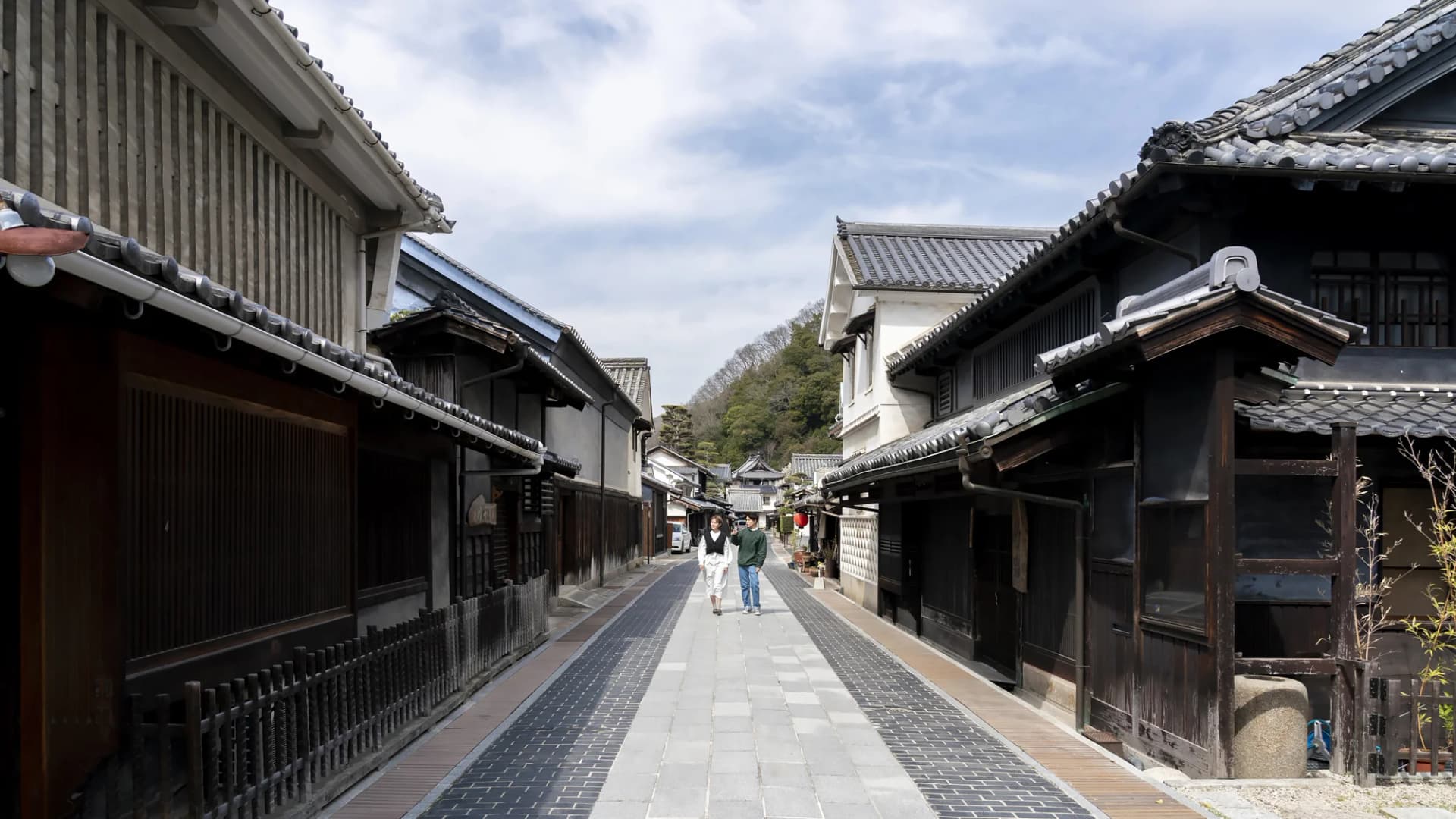
Fukuyama · HiroshimaA five-hectare quarter of Edo and Meiji merchant houses in Takehara, Hiroshima, built on the fortunes of salt and known as the Little Kyoto of Aki.
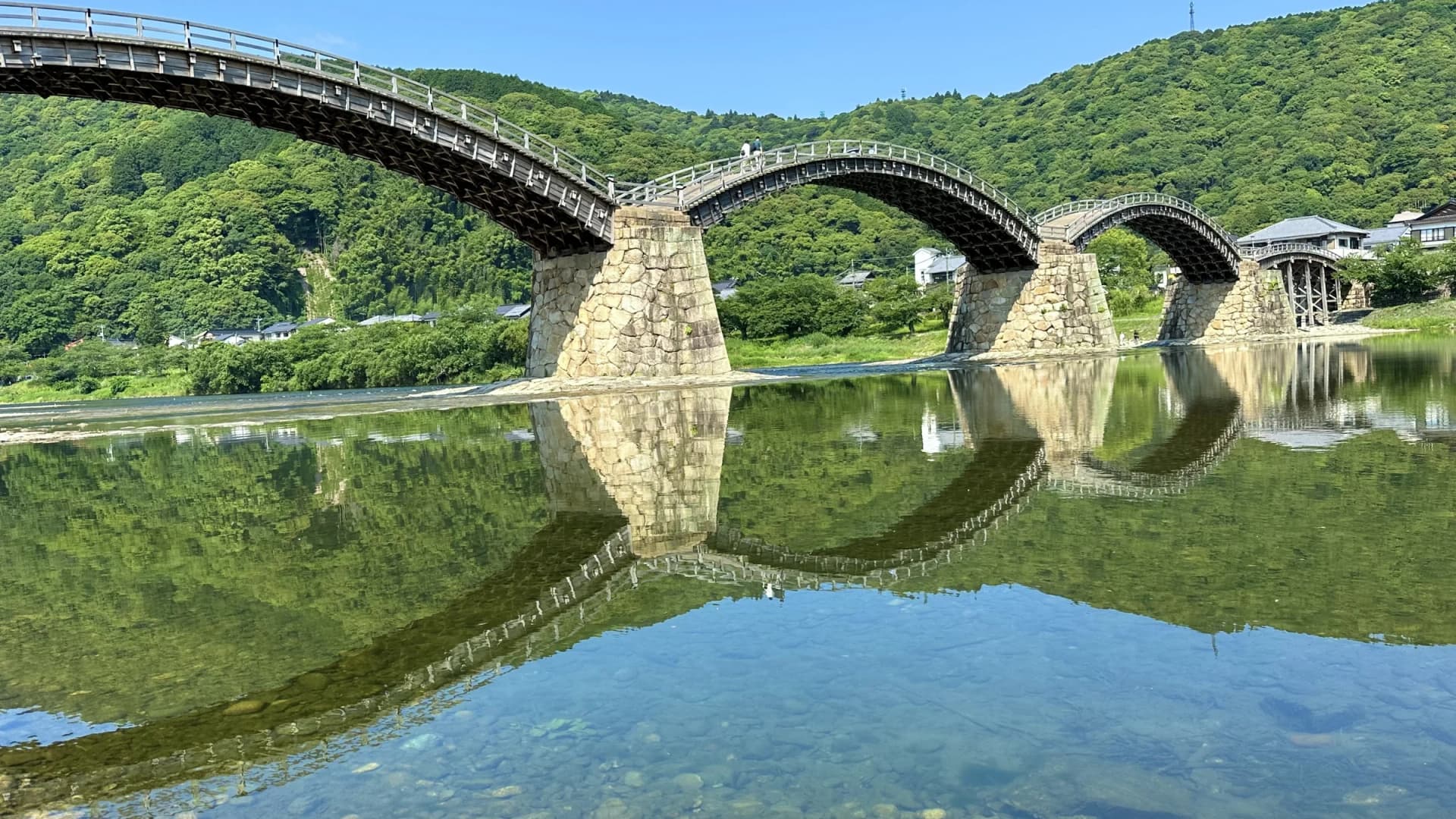
Takehara · HiroshimaA five-span wooden bridge over the Nishiki River at Iwakuni, its three middle spans arched, rebuilt in the same form since 1673.
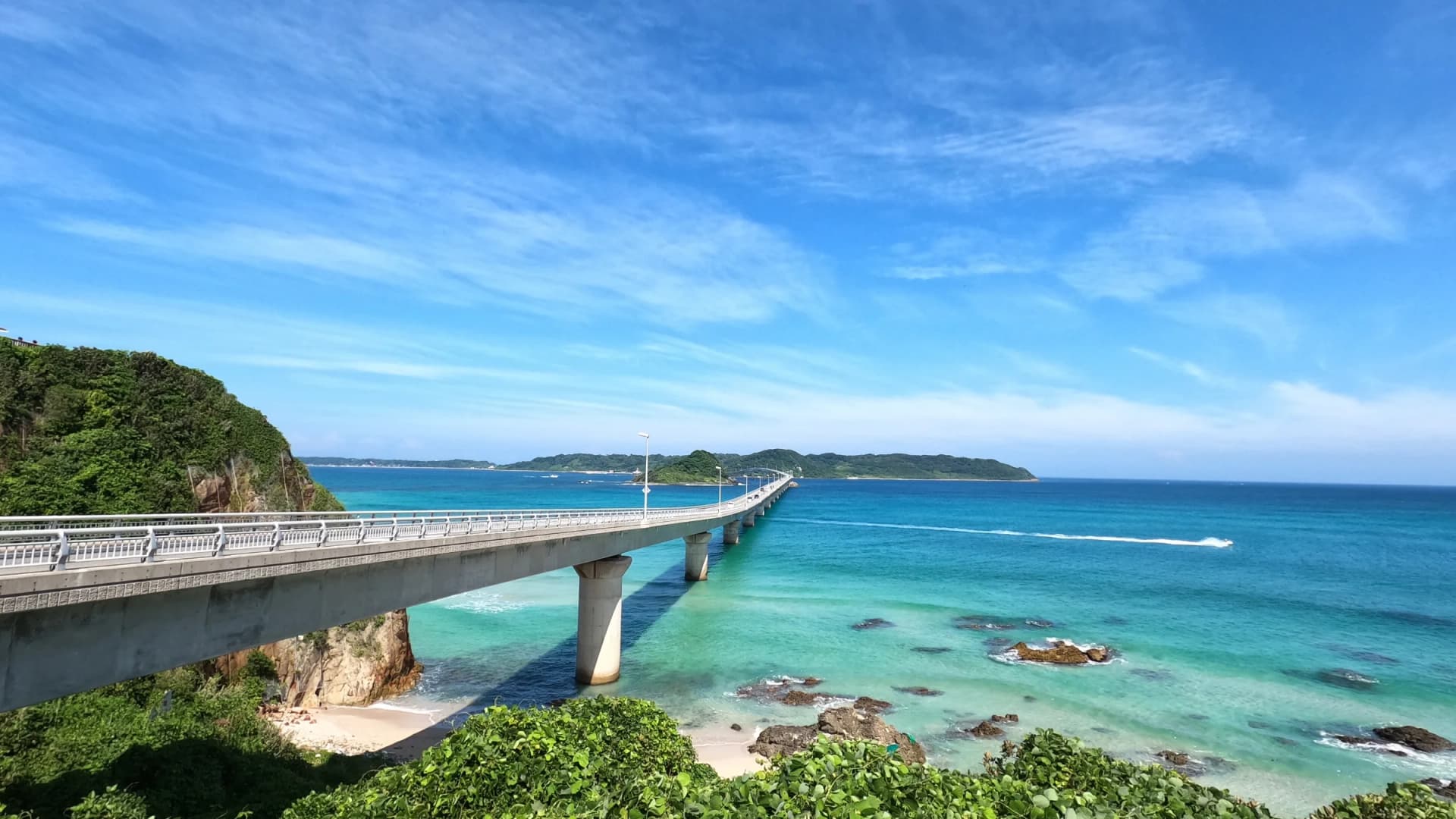
Iwakuni · YamaguchiA 1,780-metre toll-free bridge from Shimonoseki to the island of Tsunoshima, crossing cobalt blue water and white sand on the north Yamaguchi coast.
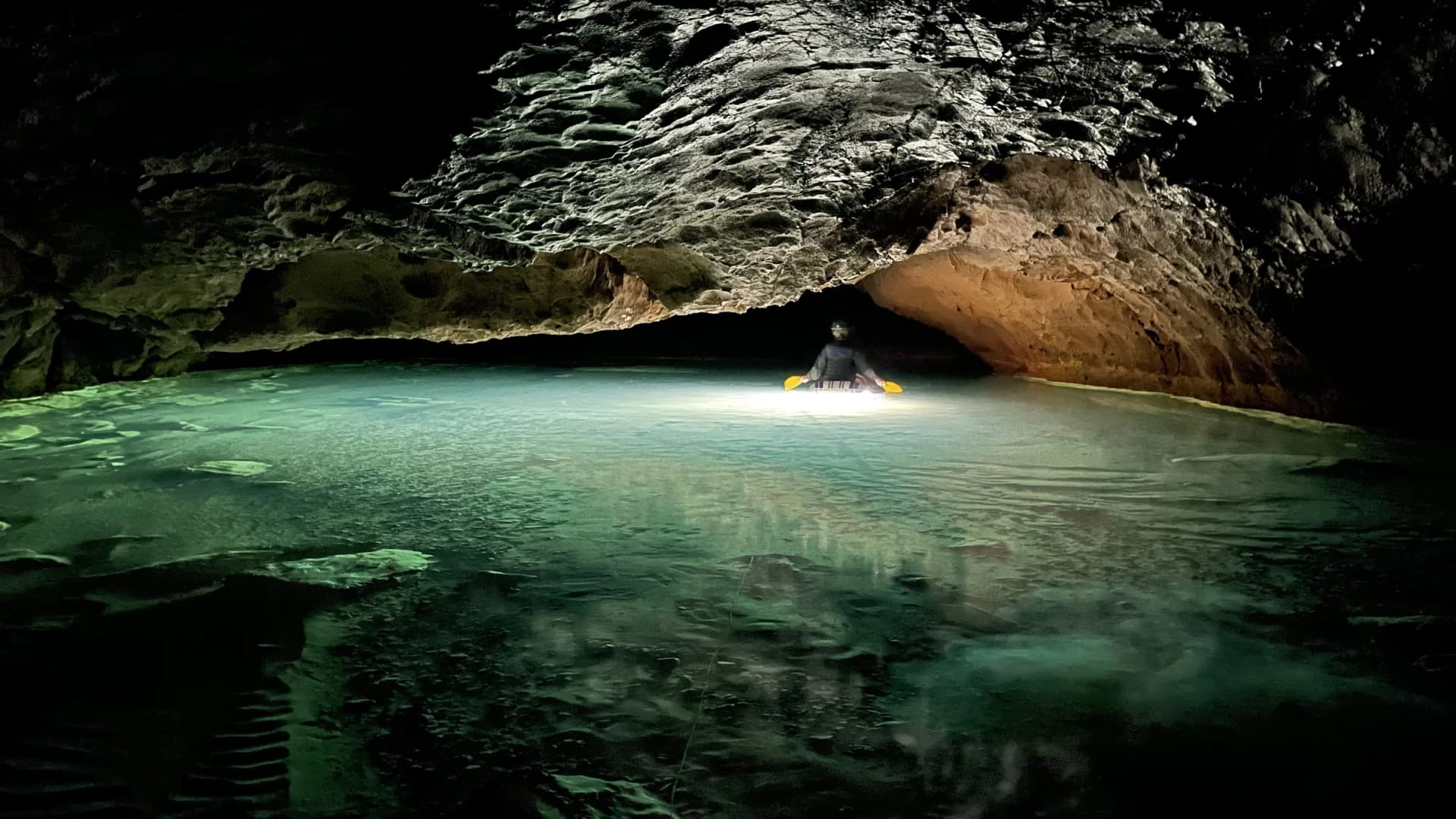
Shimonoseki · YamaguchiA limestone cave under the Akiyoshidai karst plateau in Yamaguchi, a Special Natural Monument with a one-kilometre route and a steady 17 degrees.
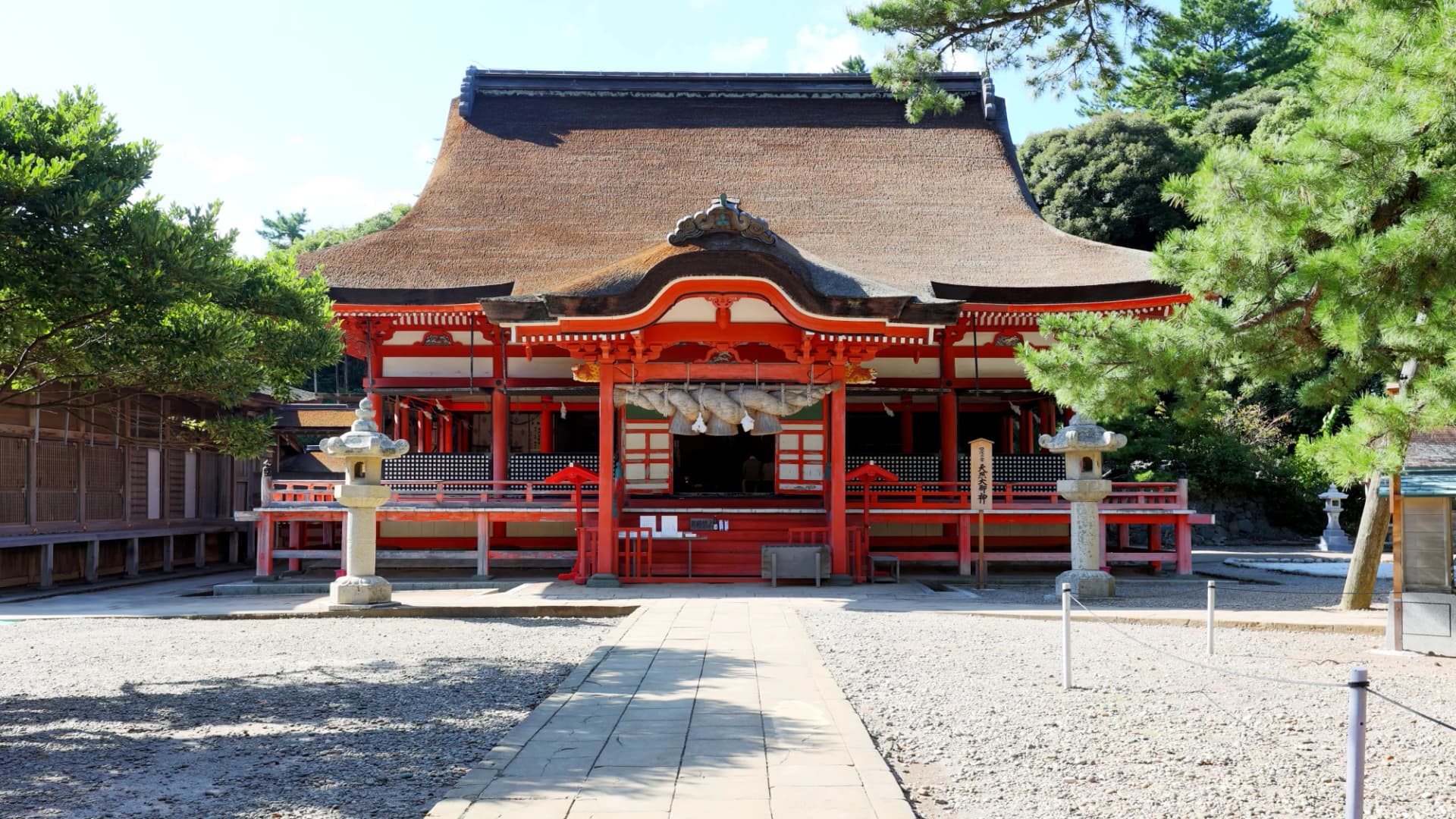
Mine · YamaguchiTwo shrines on one site at the western tip of the Shimane Peninsula, rebuilt in the 1630s and holding a National Treasure suit of armour.
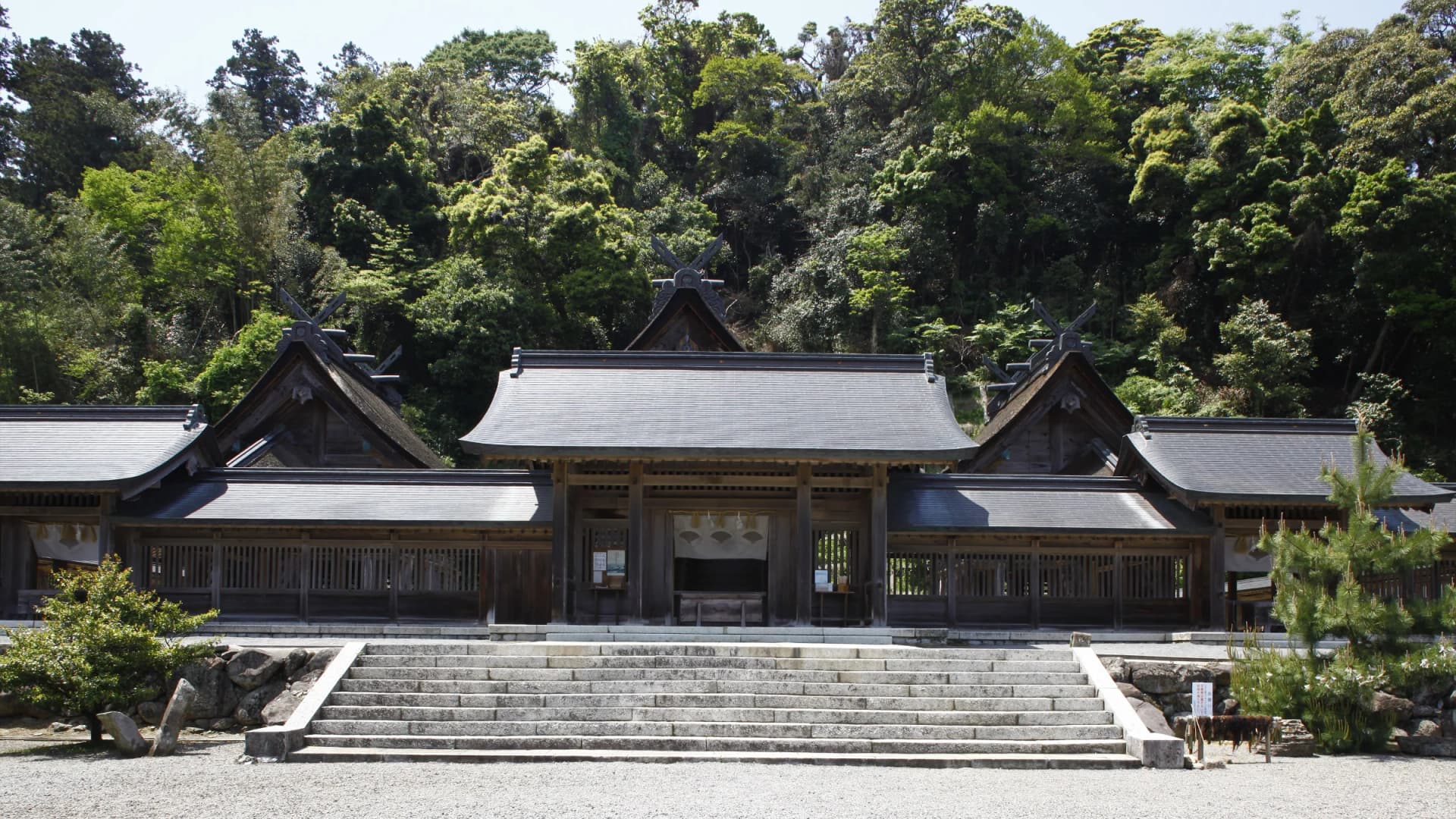
Izumo · ShimaneSada Shrine near Matsue: a rare sanctuary of three halls side by side, the gods gathering each November to remember Izanami, and the UNESCO-listed Sada Shinno dance.
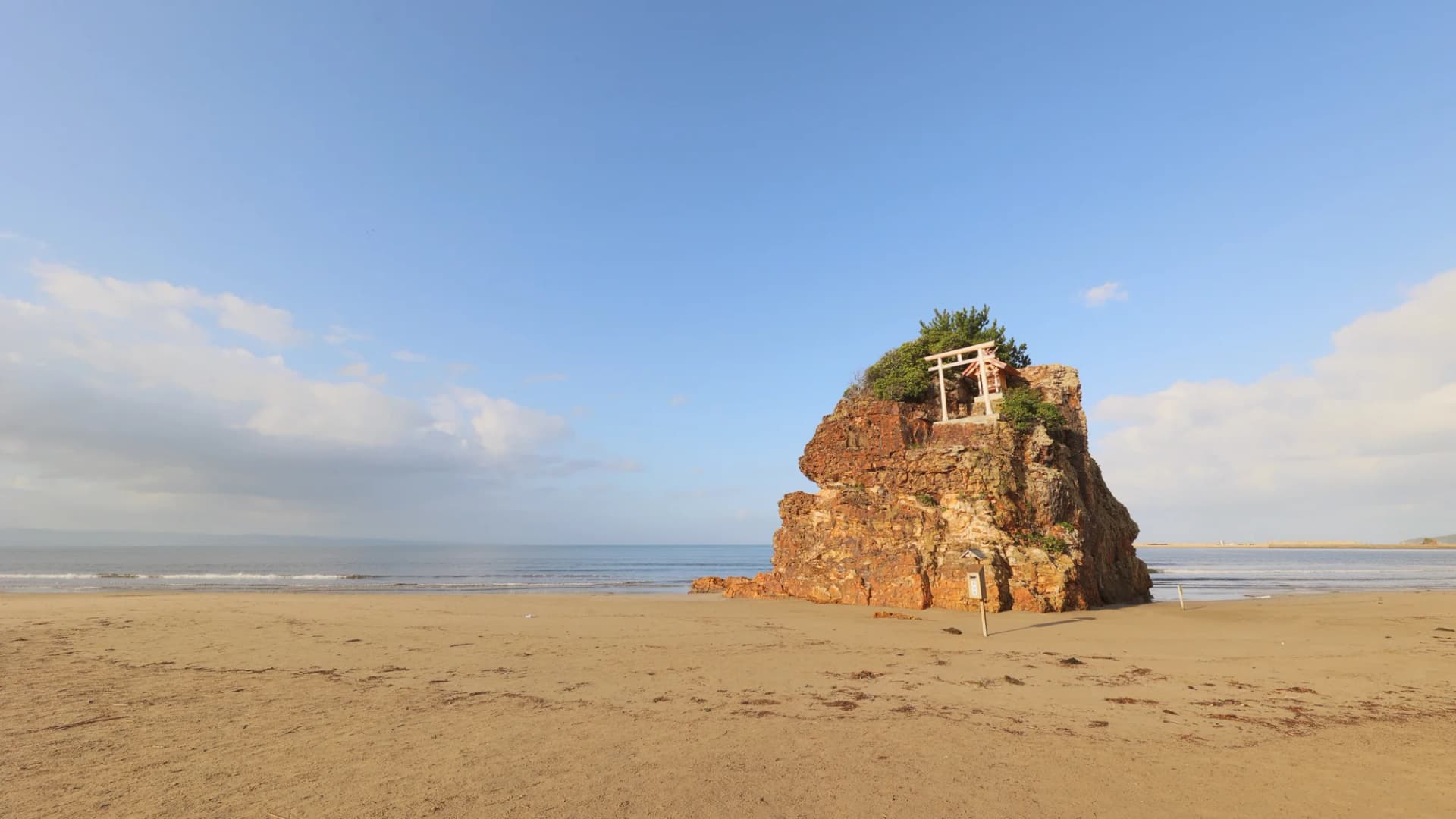
Matsue · ShimaneMankusen Shrine in Izumo is said to be the last stop for the gods of Japan before they return home.
Izumo · Shimane