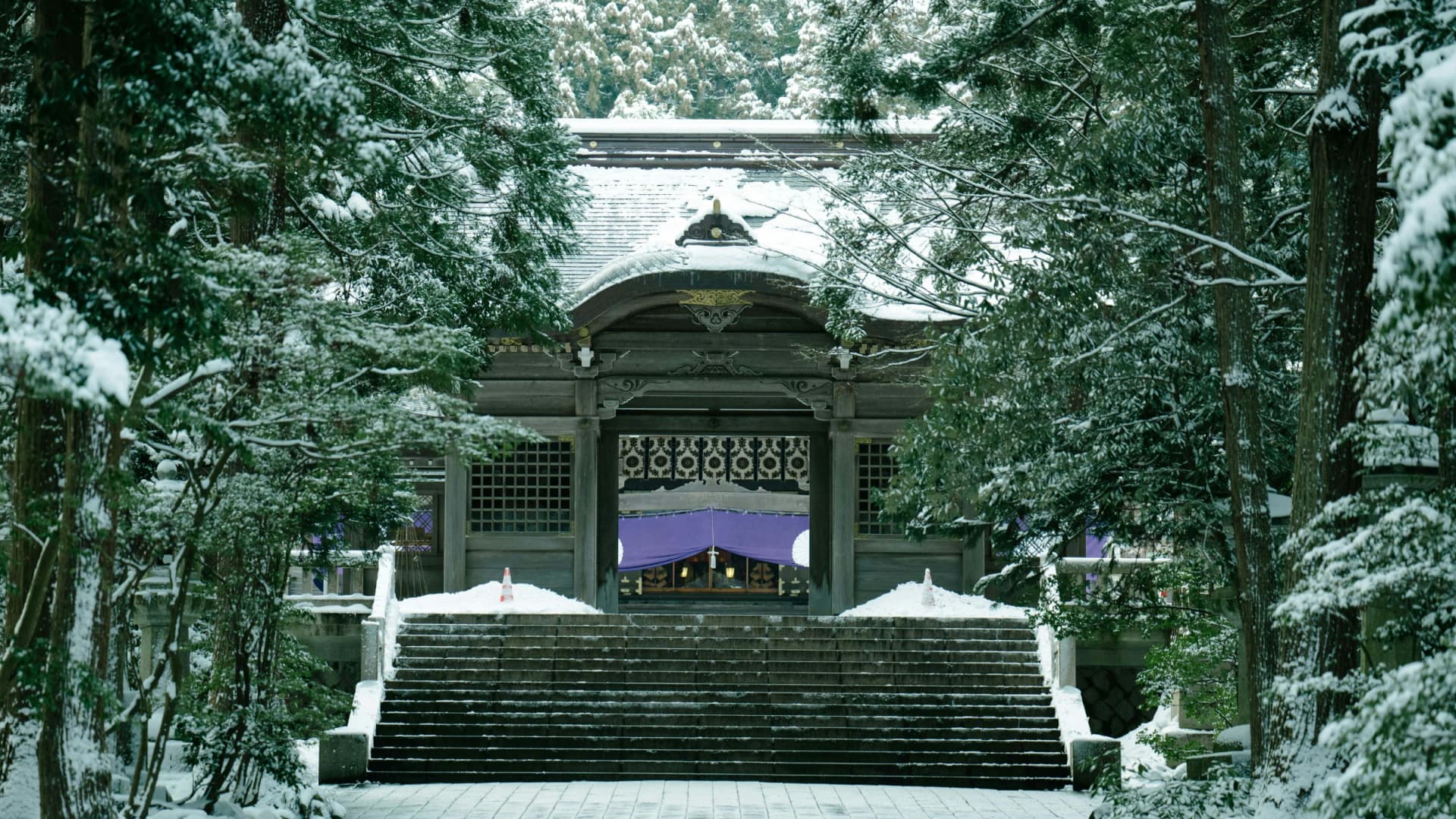
Kurumayama Shrine
車山神社
Mountain shrine at 1,925 meters dedicated to the Shinto deity of mountains, regarded as sacred since the Jōmon period and steeped in tengu folklore.

〒 391-0301How to get there
上諏訪Chuo Main Line157 min walk from the station
Perched at an elevation of 1,925 meters atop Mount Kurumayama — the highest peak of the Kirigamine Highlands and one of Japan’s 100 Famous Mountains — Kurumayama Shrine (Kurumayama Jinja) is revered as a place “close to the heavens”. Enshrined here is Ōyamatsumi-no-Kami, the Shinto deity of mountains, worshipped for blessings that include good fortune and prosperity, safe childbirth, longevity, harmonious relationships, business success, household safety, and the protection of vital water sources.
Although the shrine’s precise origins are unknown, the site has been regarded as sacred since the Jōmon period. Archaeological discoveries of ritual treasures and ceremonial tools suggest that this summit long served as a ritual ground where people offered prayers of gratitude to mountains across Japan. Sensing the mysterious power of nature and its life-giving blessings, ancient people are believed to have established the shrine out of deep reverence for the natural world.
The area is also steeped in folklore. According to local legend, tengu — supernatural mountain beings — once guided lost travellers by lighting “fires of guidance”, safely leading them through the mountains. Such stories further reinforce the shrine’s identity as a place of protection and spiritual guidance.
Annual Rituals and Festivals
Kurumayama Shrine hosts a series of seasonal rituals that reflect Japan’s ancient mountain worship and agricultural traditions.
National Snow Mountain Thanksgiving Festival
Held to express gratitude for snow-covered mountains, this ceremony prays for the safety of mountaineers and winter sports enthusiasts across Japan. From the shrine’s summit, participants can take in a sacred 360-degree panorama of the Northern, Southern, and Central Alps, as well as Mount Fuji. The ritual reconnects modern visitors with the Jōmon-era spirit of reverence for mountains as divine beings.
Shōwa Festival (April)
Observed around April 29, the birthday of Emperor Shōwa, this festival honours his virtues while offering prayers for the prosperity of the Imperial Household, the nation’s flourishing, and world peace.
Summer Mountain Opening Festival (May / October 2 in some years)
This ceremony marks the start of the summer mountain season, praying for the safety of hikers and travelers. Gratitude is offered to Ōyamatsumi-no-Kami for fresh greenery, growth, and continued prosperity.
Nagoshi no Ōharae – Midyear Purification Rite (June)
Held on June 30, this Shinto ritual cleanses spiritual impurities and misfortune accumulated during the first half of the year. It also gives thanks for safe passage through the past months and prays for purity and well-being in the remainder of the year.
Niiname-sai – Harvest Thanksgiving Festival (November)
A traditional ceremony expressing gratitude for an abundant harvest. At Kurumayama Shrine, it includes a unique ritual known as “Tenku no Omusubi” (Heavenly Rice Ball), in which rice offered to the deities is formed into rice balls. Omusubi symbolises human connection, encouraging prayers not only for oneself but also for others.
Kurumayama Onbashira Festival (September, once every seven years)
Held in the same years as Suwa Taisha’s famous Onbashira Festival, this ritual is exceptionally rare. While most Onbashira ceremonies involve dragging massive logs down from forests, Kurumayama’s festival uniquely hauls sacred pillars up steep slopes and rocky terrain toward the summit. Drawn together with unified prayers from around 1,800 meters to the 1,925-meter peak, the log is believed to "ascend the mountain and become a deity", earning the name "Onbashira of the Sky".
Getting There

You might also like

Nagano Gion Festival
The Nagano Gion Festival celebrates Susanoo-no-Mikoto, the deity of storms and protection, through mikoshi processions at Yasaka Shrine near historic Zenkoji temple.
6 Jun 2027Nagano
Okuma Kabuto Festival
Nanao's festival honors samurai heritage through a dramatic parade of locals dressed in full armor and helmets, accompanied by traditional music and dance performances.
20 Sep 2027Nanao · Ishikawa
Hie Shrine
A Shinto shrine in Takayama dedicated to Sanno Gongen and serving as the focal point of the Takayama Spring Festival, one of Japan's most beautiful festivals.
Takayama · Gifu
Abare Festival
Illuminated lanterns parade through coastal Ushitsu in a celebration rooted in legend, featuring frenzied rituals to honor spiritual protection from epidemics.
3–4 Jul 2027Noto · Ishikawa
Utasu Jinja Shrine
Kanazawa shrine founded over 1250 years ago and dedicated to Hachiman, serving as a place of prayer for local lords and counted among the city's five great shrines.
Kanazawa · Ishikawa
Owari Okunitama Shrine
Owari Okunitama Shrine is the regional guardian of Owari Province, enshrining the sacred land spirit revered for protection of agriculture and commerce since the Nara period.
Inazawa · Aichi