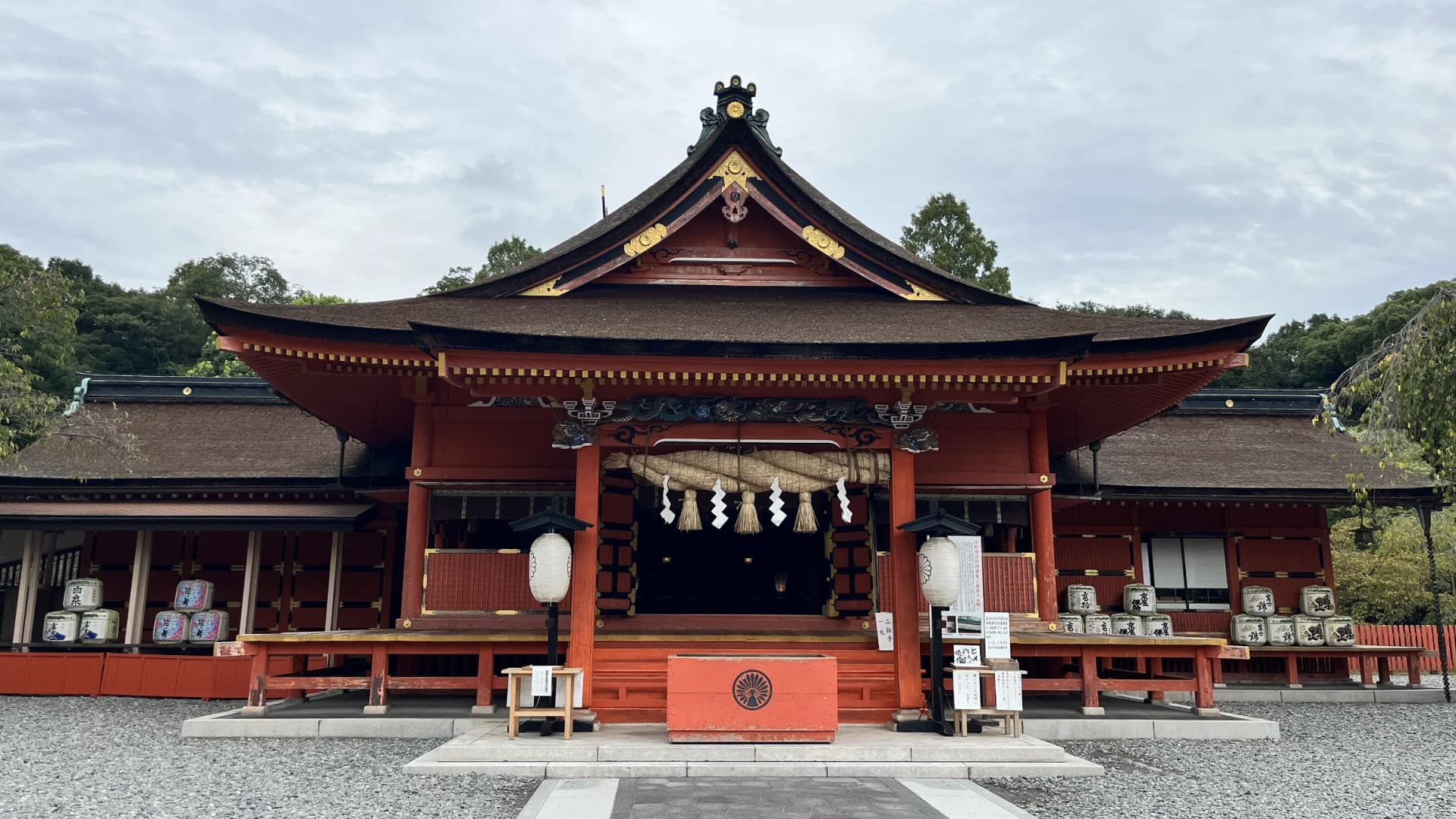
Fujisan Hongu Sengen Taisha
A shrine at the foot of Mount Fuji that worships the mountain itself, and the head of more than 1,300 Sengen shrines across Japan.
Fujinomiya · Shizuoka

A shrine at the foot of Mount Fuji that worships the mountain itself, and the head of more than 1,300 Sengen shrines across Japan.
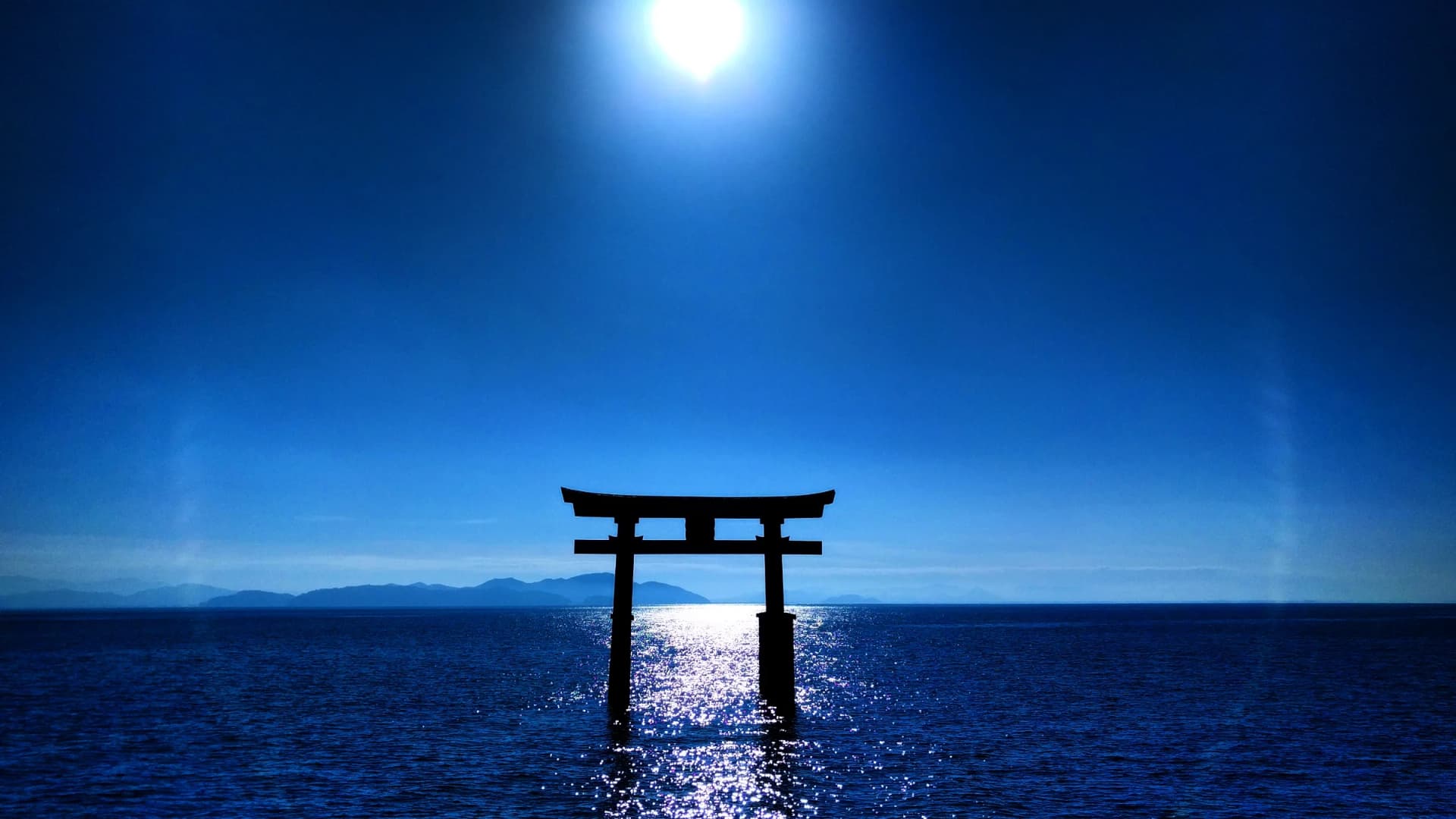
Fujinomiya · ShizuokaA shrine on the western shore of Lake Biwa with a torii standing in the water, dedicated to Sarutahiko and known as a shrine of long life.
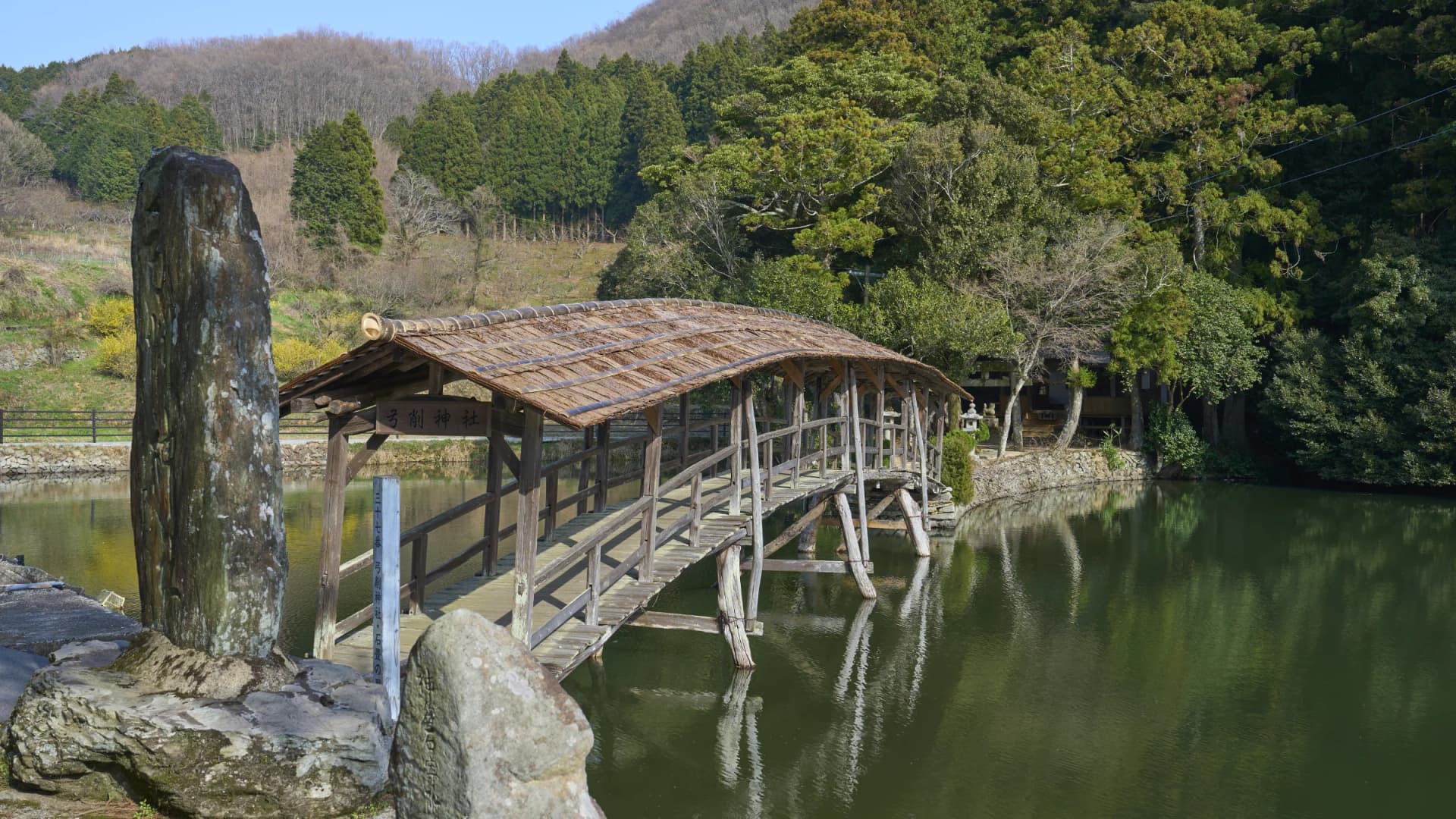
Takashima · ShigaA shrine on Yuge Island in the Inland Sea, founded by a branch of the Mononobe clan to their ancestor, with a pine grove and a shallow beach below it.
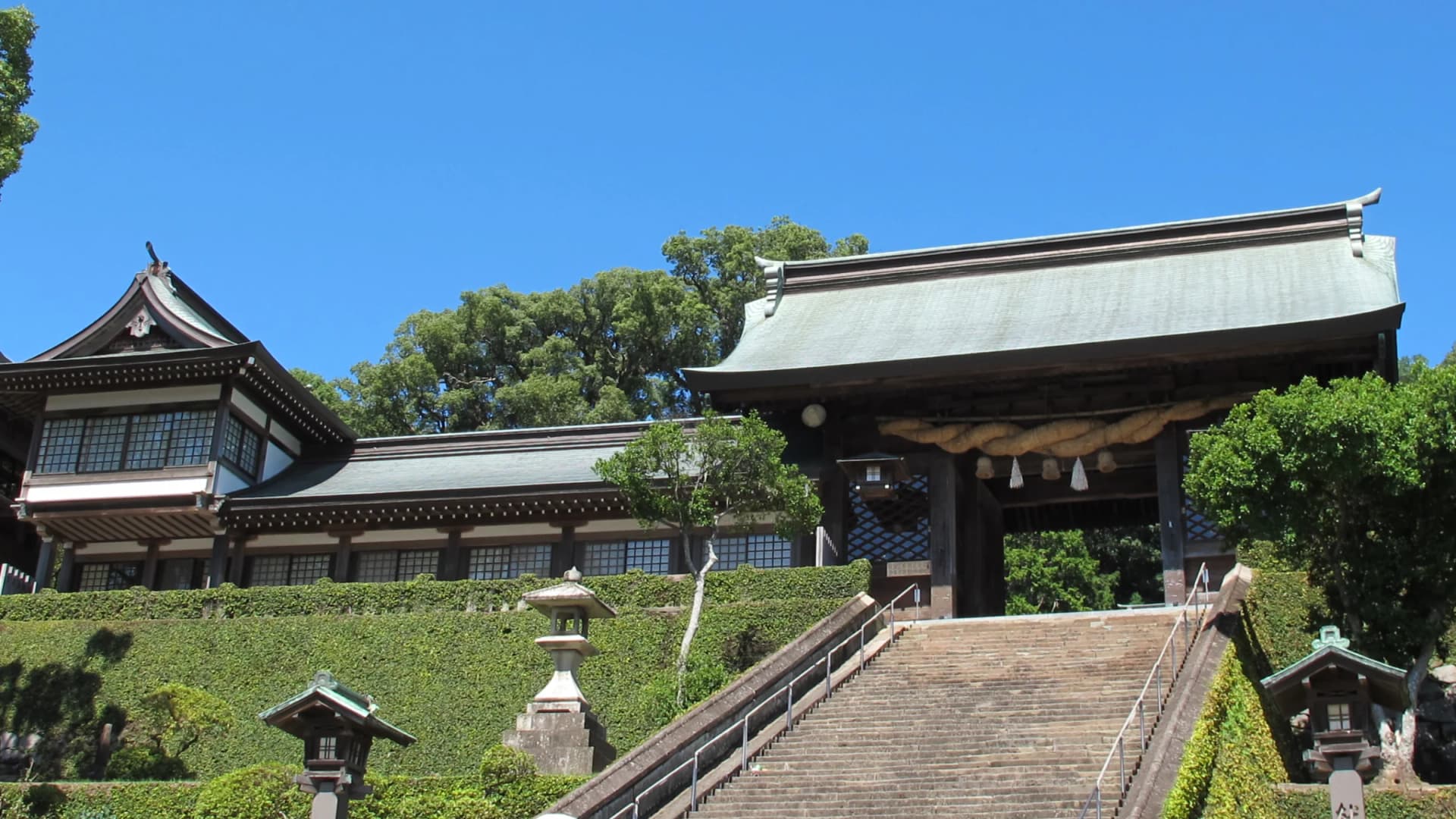
Kamijima · EhimeThe tutelary shrine of Nagasaki, re-established in 1625 after the city had been church land, and home of the Kunchi festival.
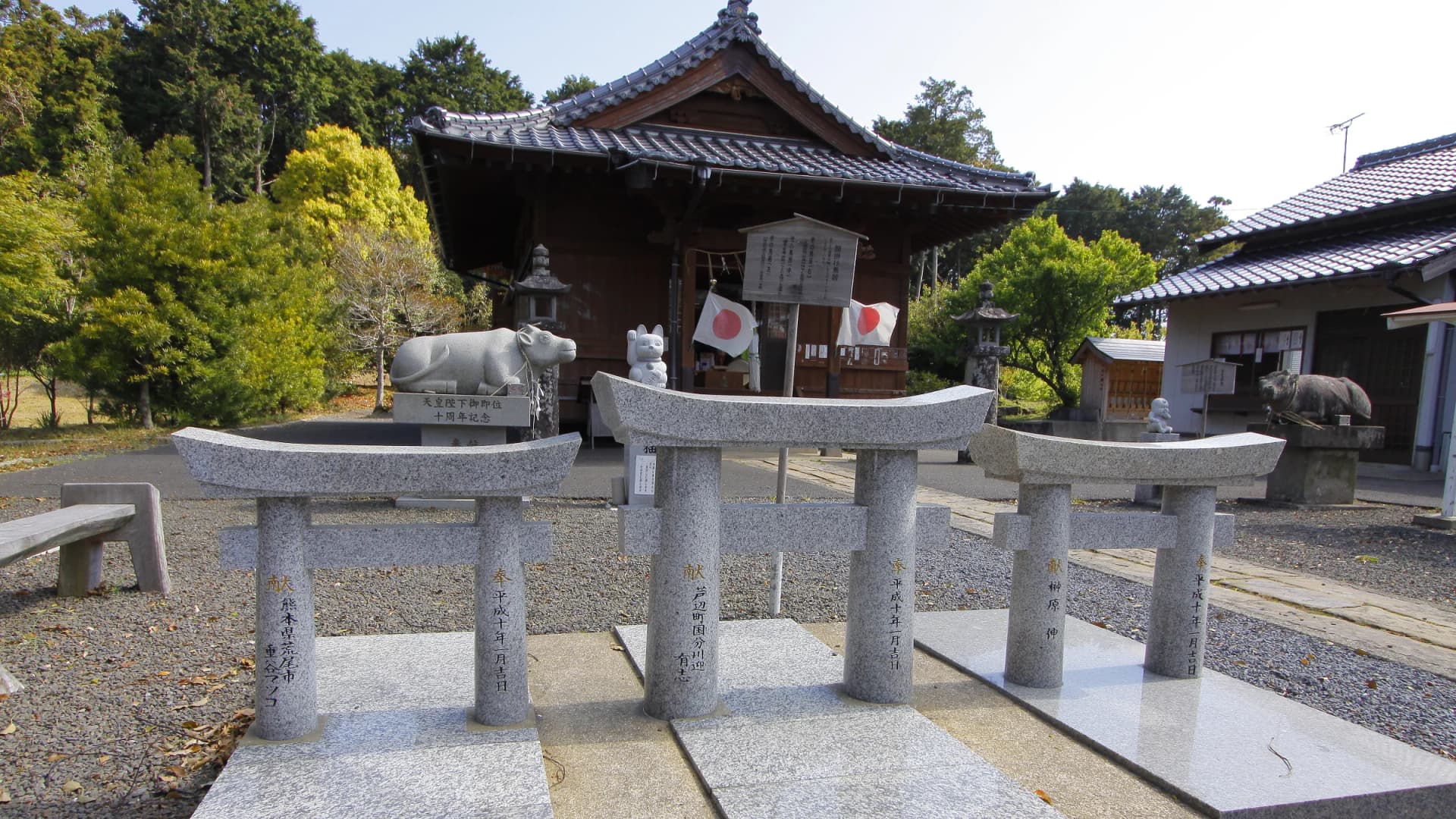
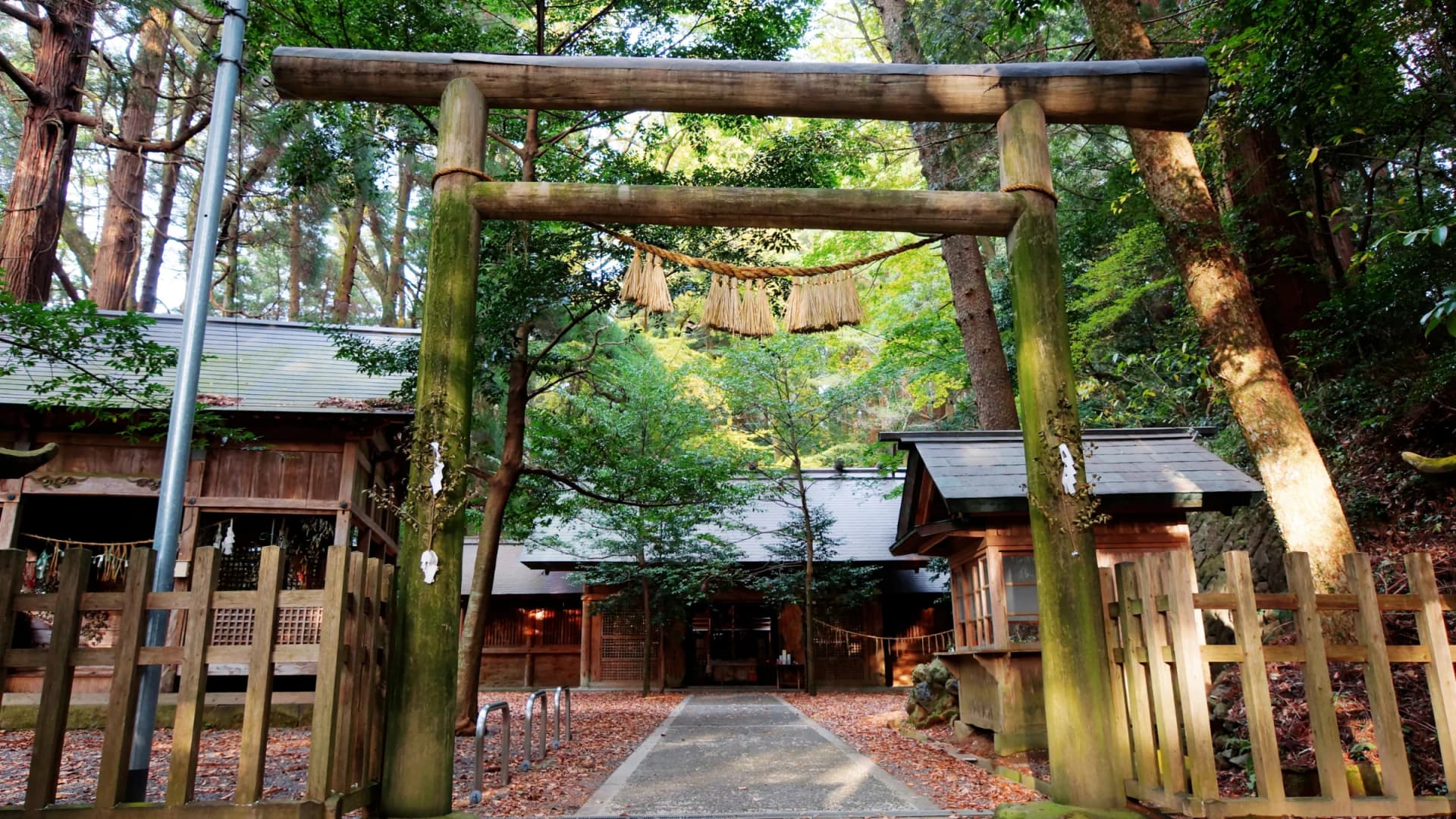
NagasakiA shrine at the centre of the island of Iki, founded in 811, to the small god Sukunahikona and to Sugawara no Michizane.
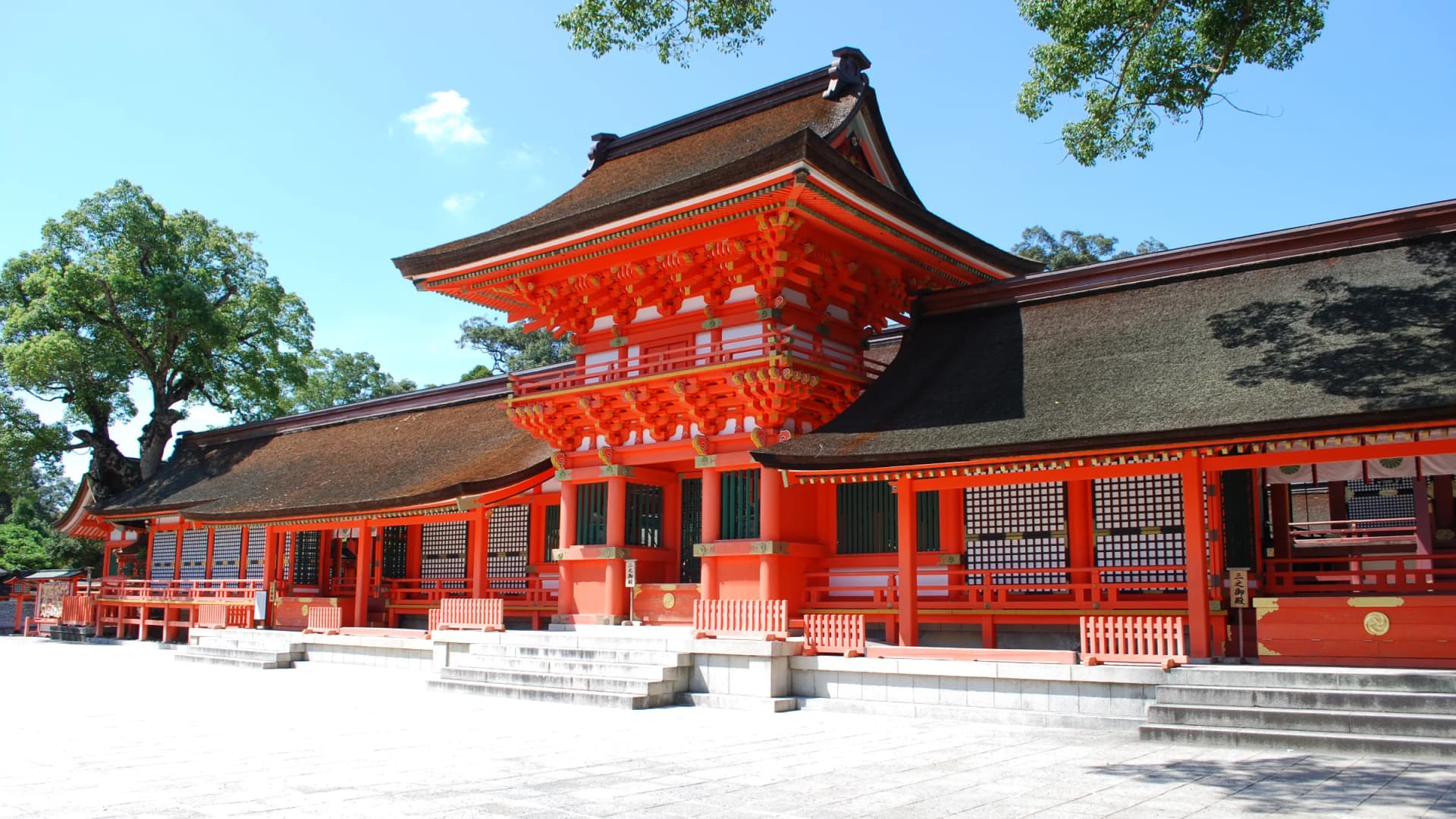
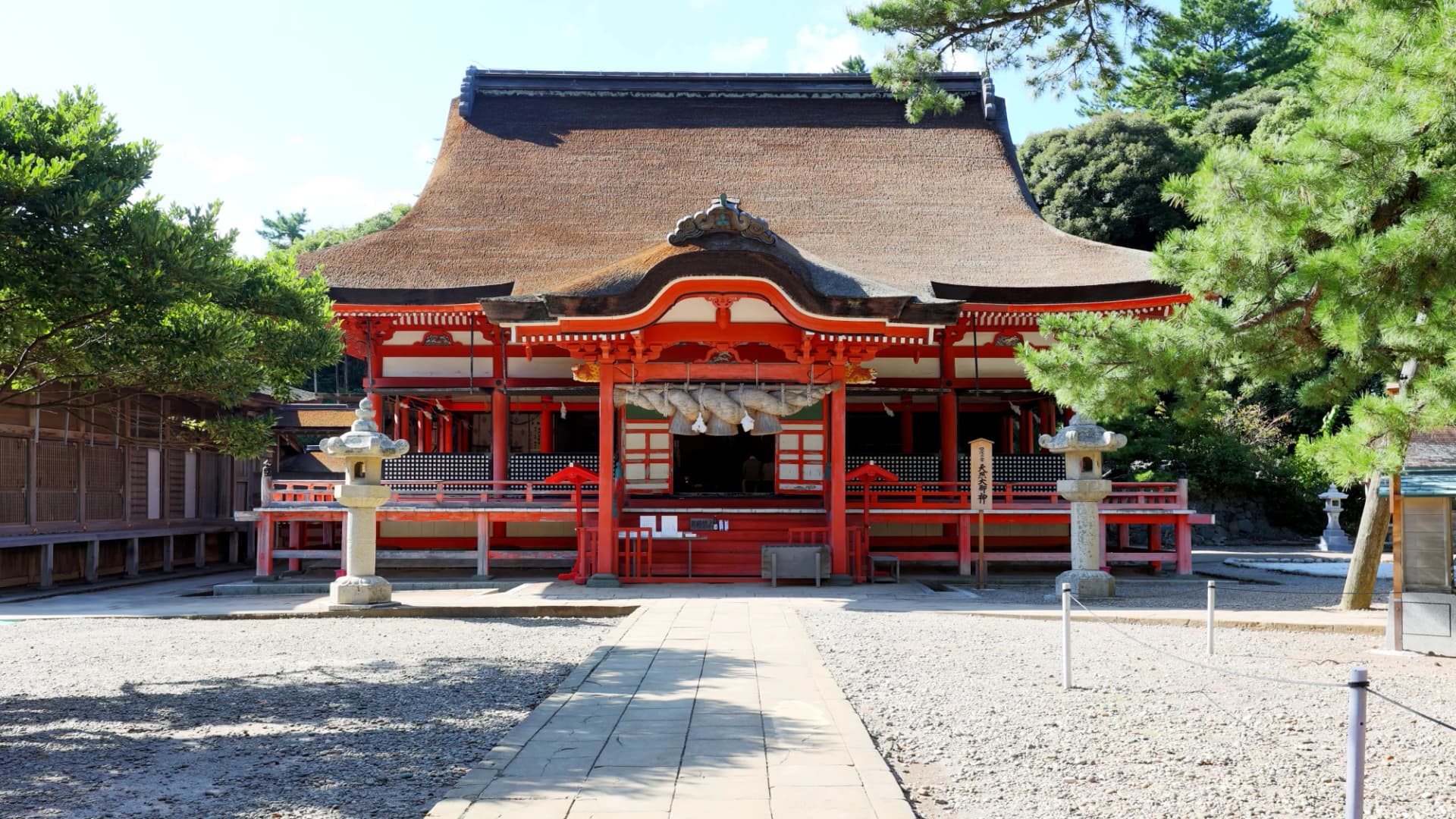
Iki · NagasakiThe head shrine of the forty thousand Hachiman shrines, founded at Usa in 725, with three halls that are a National Treasure.
Usa · OitaA shrine at Takachiho that worships the cave where the sun goddess is said to have hidden, leaving the world in darkness.
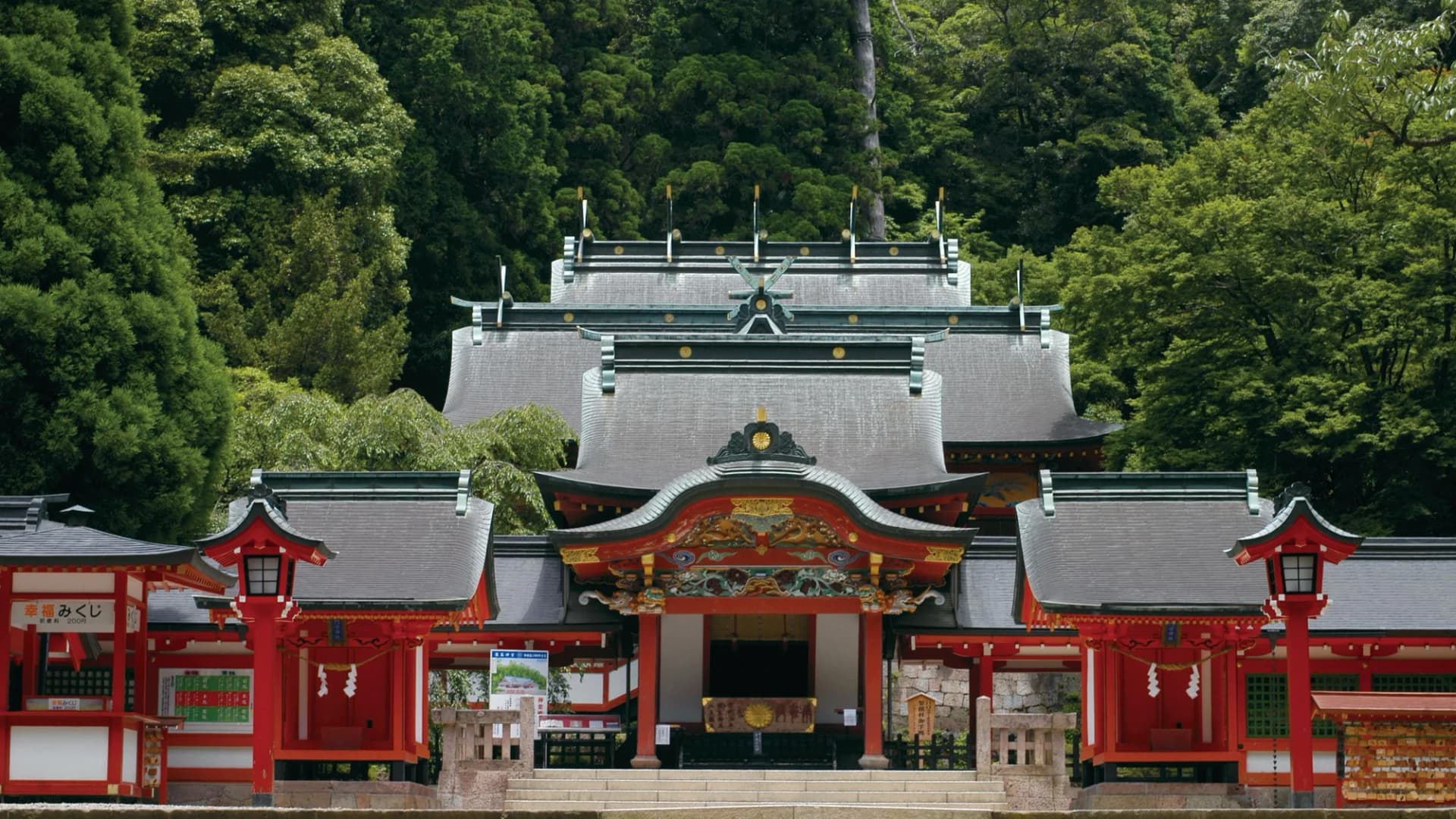
MiyazakiA shrine below the peak of Takachiho in Kagoshima, its vermilion halls of 1715 made a National Treasure in 2022.
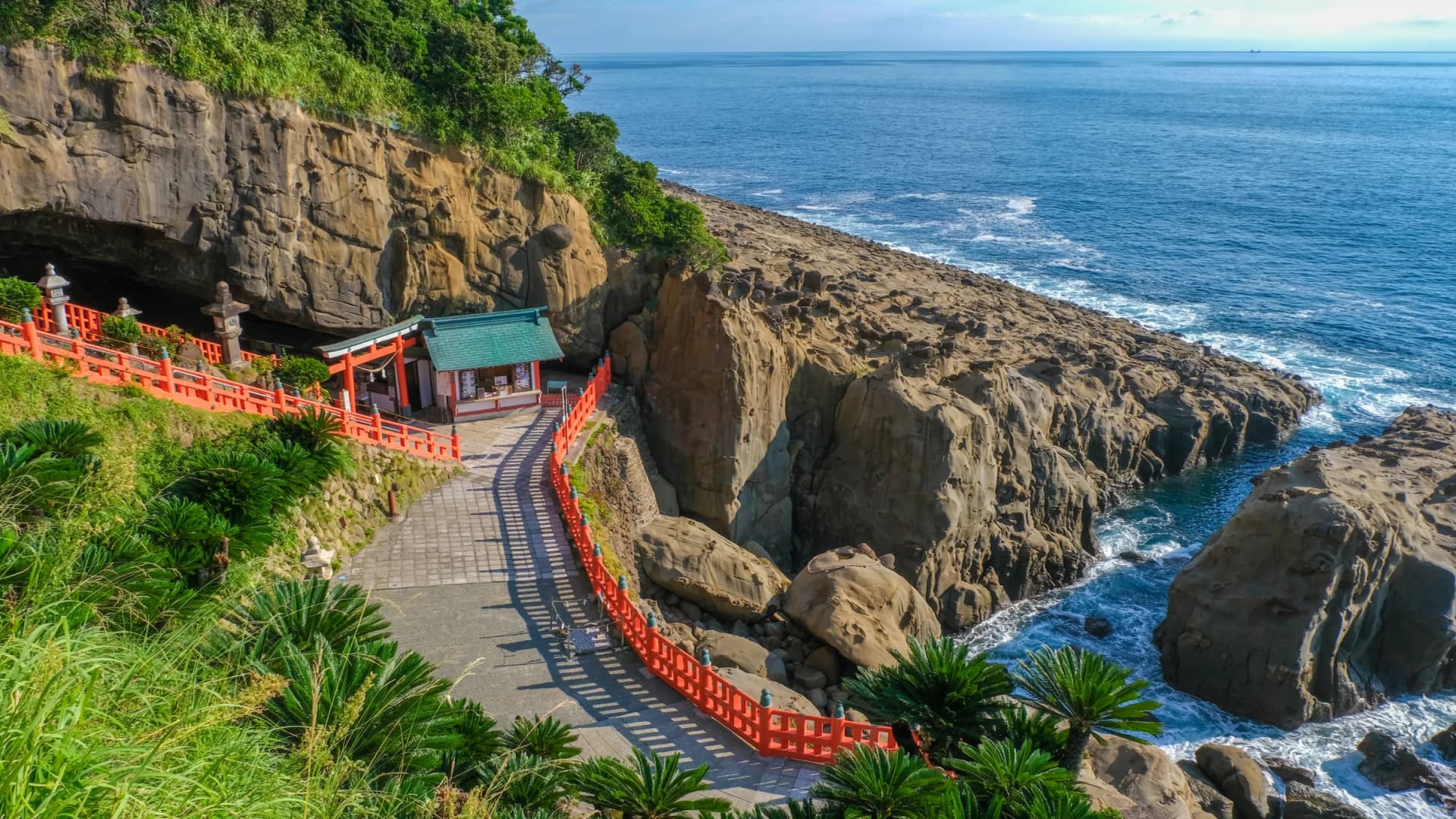
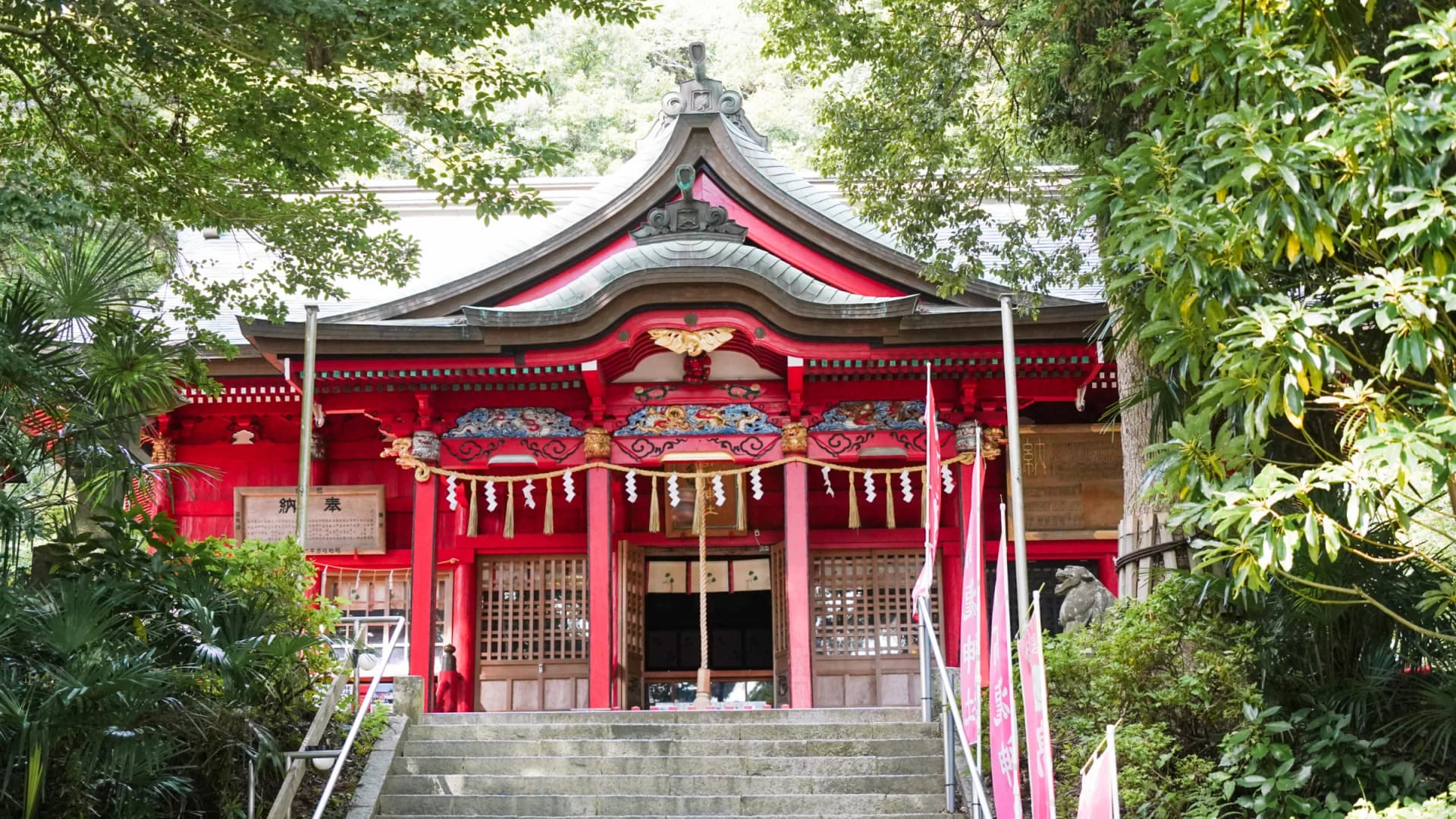
Kirishima · KagoshimaA shrine on the coast of Miyazaki whose vermilion hall stands inside a sea cave, with a rock said to have nursed the god born there.
Nichinan · MiyazakiTwo shrines on one site at the western tip of the Shimane Peninsula, rebuilt in the 1630s and holding a National Treasure suit of armour.
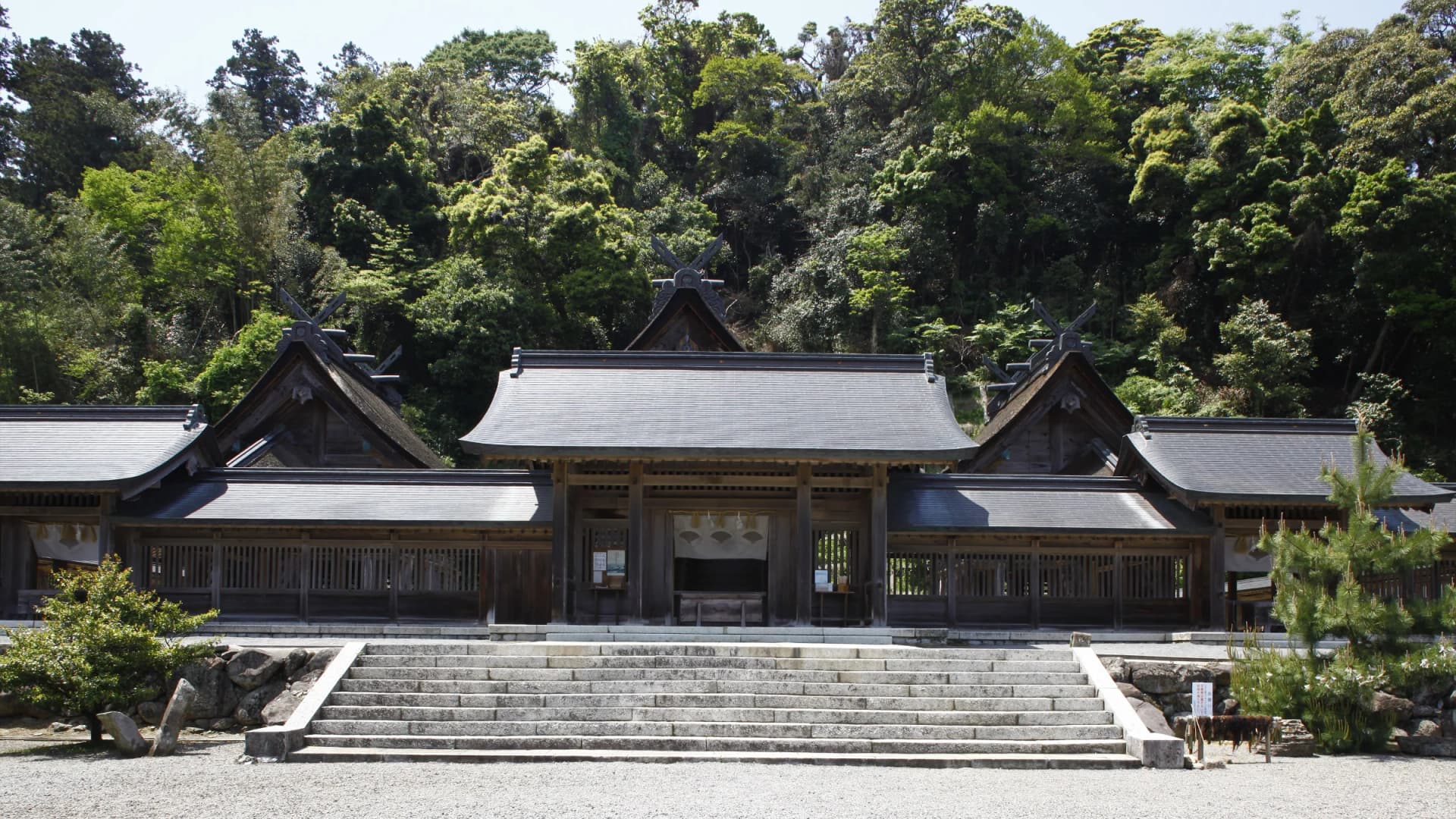
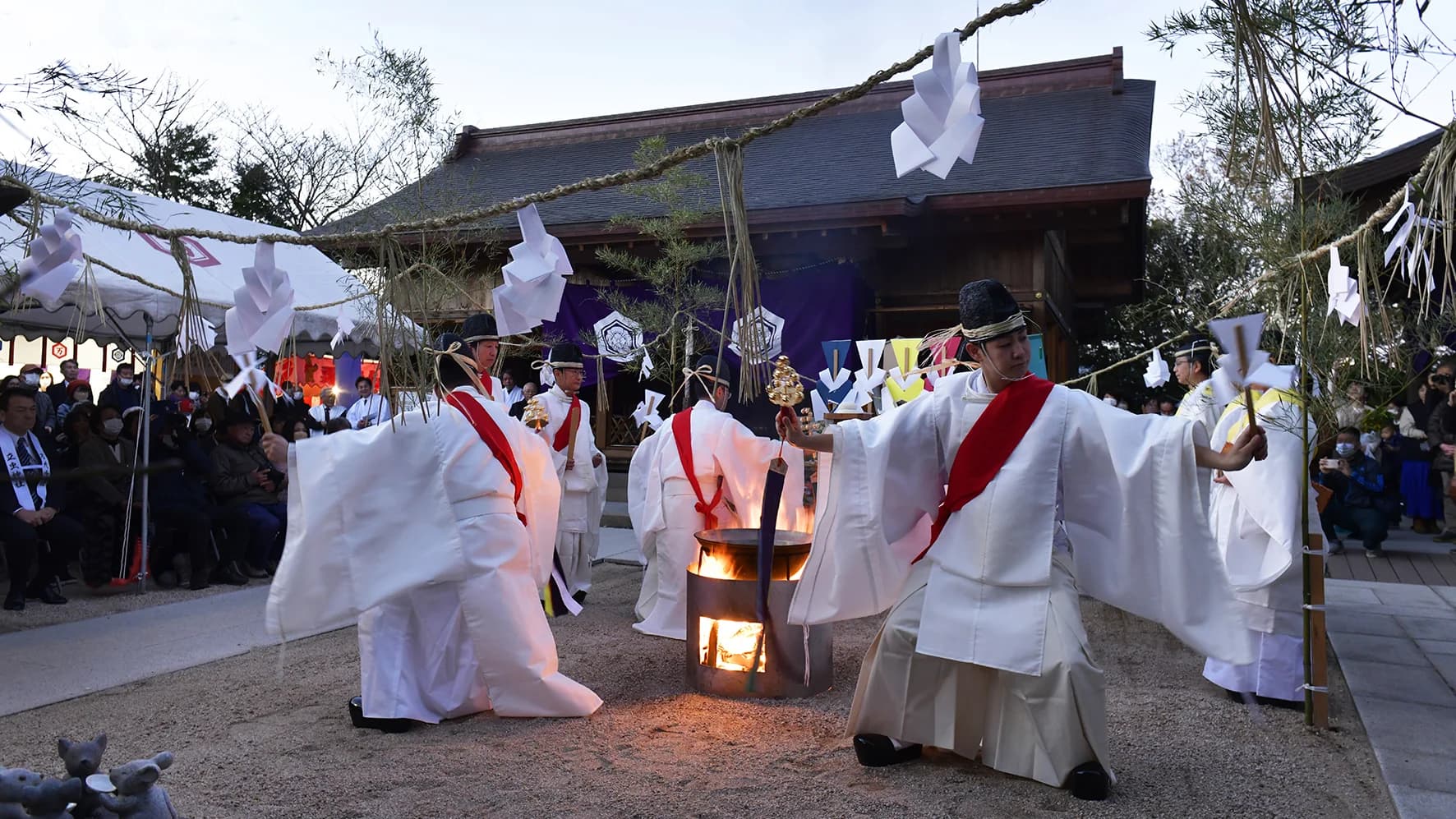
Izumo · ShimaneSada Shrine near Matsue: a rare sanctuary of three halls side by side, the gods gathering each November to remember Izanami, and the UNESCO-listed Sada Shinno dance.
Matsue · ShimaneMankusen Shrine in Izumo is said to be the last stop for the gods of Japan before they return home.
Izumo · ShimaneOne of three major Kumano shrines in Japan, Kumano Taisha was established in 806 and is known as the Ise Shrine of the North for its significance.
Nanyo · YamagataGuardian shrine of Aomori dedicated to the Three Goddesses of Munakata, featuring grounds with a sacred spring and historic remains including haiku stones by Matsuo Basho.
AomoriA Shinto shrine in Sapporo's Jozankei hot spring resort area, dedicated to the god of hot springs and healing, surrounded by nature and autumn foliage.
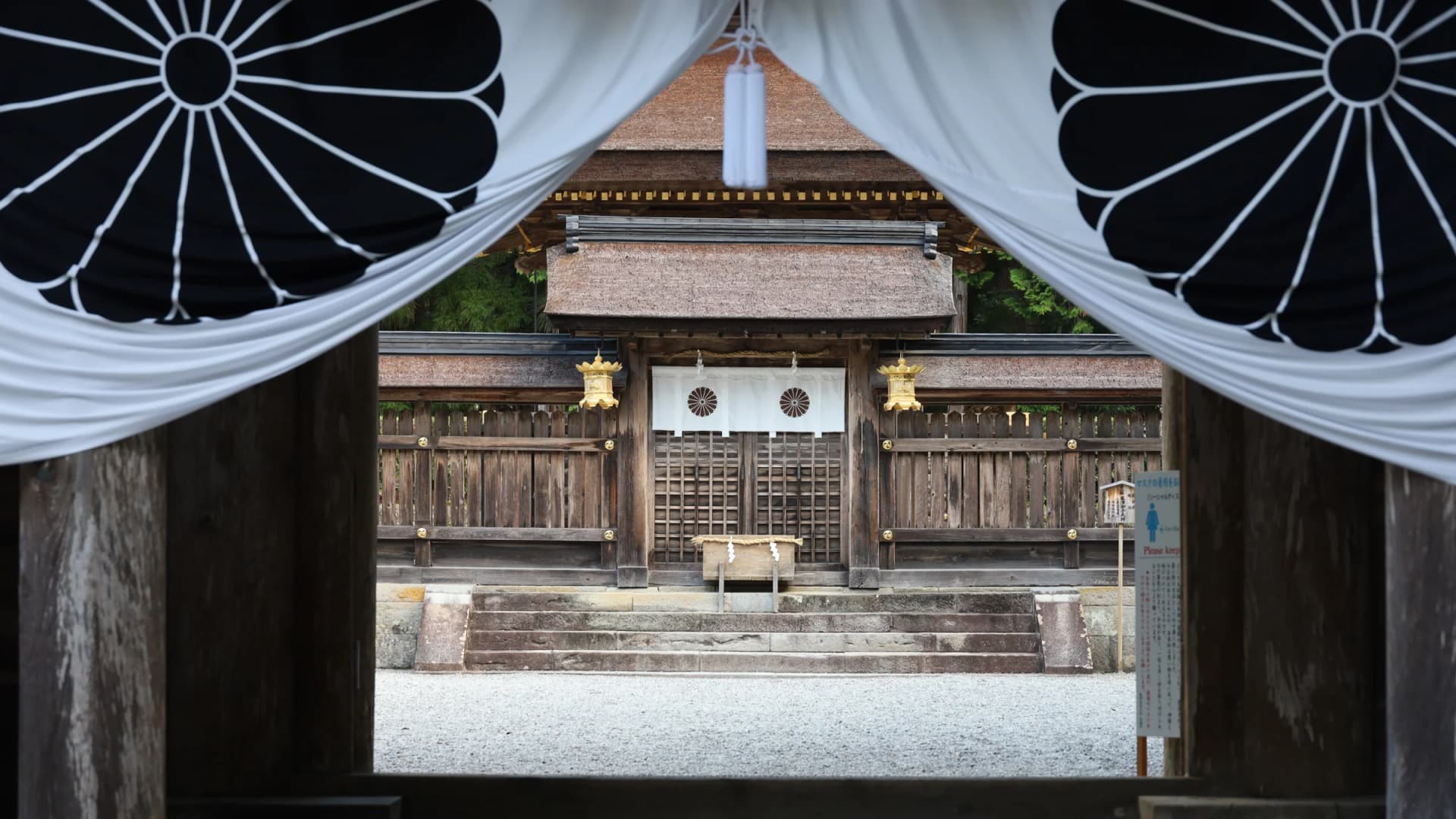
Sapporo · HokkaidoKumano Hongu Taisha, heart of the Kumano Sanzan, traces its origins to before Emperor Jinmu – where legend says three moons descended to found the shrine.
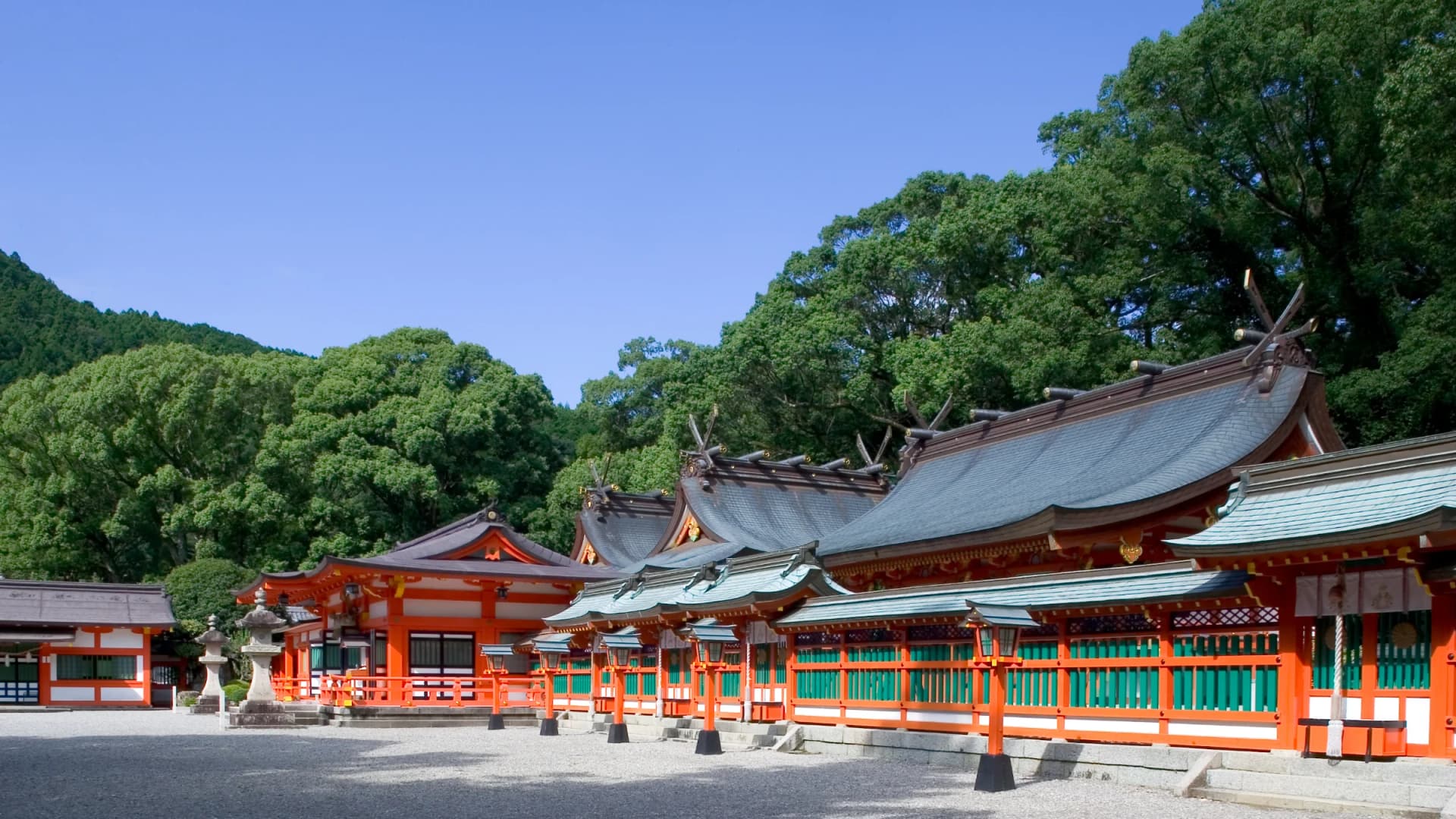
Tanabe · WakayamaIn Shingu, Wakayama, Kumano Hayatama Taisha stands as one of the three grand Kumano shrines – a "land of rebirth" where pilgrims have sought renewal for centuries.
Shingu · WakayamaA shrine in Ichihara with an unusual tradition: expectant mothers borrow a small purse left unstitched at the base, for an easy birth.
Ichihara · Chiba