Kongobu-ji (Koyasan)
Mount Koya is a sacred temple complex where the entire mountain is treated as one unified holy domain dedicated to Shingon Esoteric Buddhism.
Koya · Wakayama

Mount Koya is a sacred temple complex where the entire mountain is treated as one unified holy domain dedicated to Shingon Esoteric Buddhism.
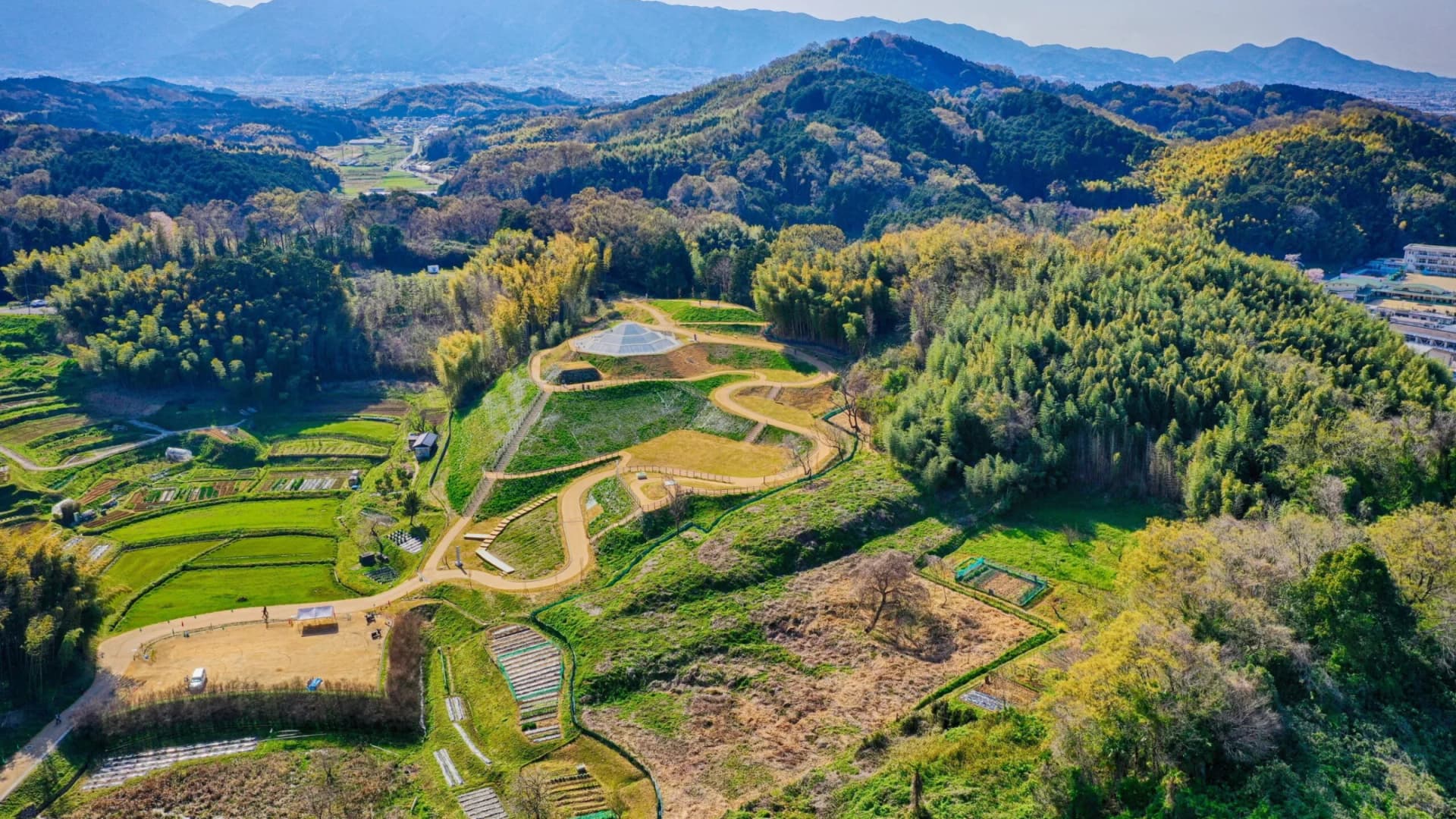
Koya · WakayamaThe Nara-Prefecture ruins where Japan's first centralised state took shape, newly inscribed as a UNESCO World Heritage Site in 2026.
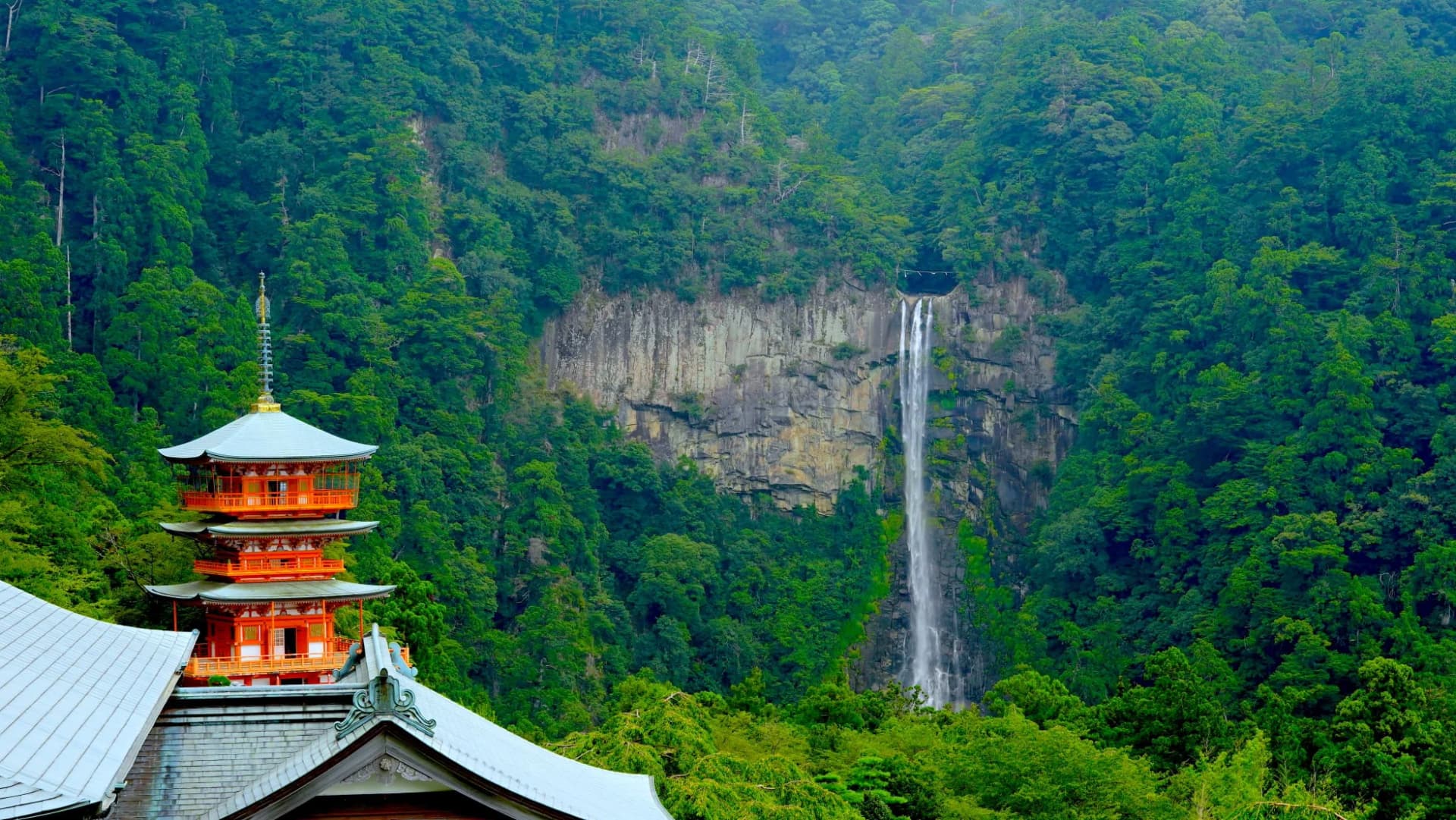
Kashihara · NaraOne of the three grand shrines of Kumano, beside Japan's tallest waterfall – and spiritual home of the Yatagarasu, the three-legged crow on Japan's football crest.
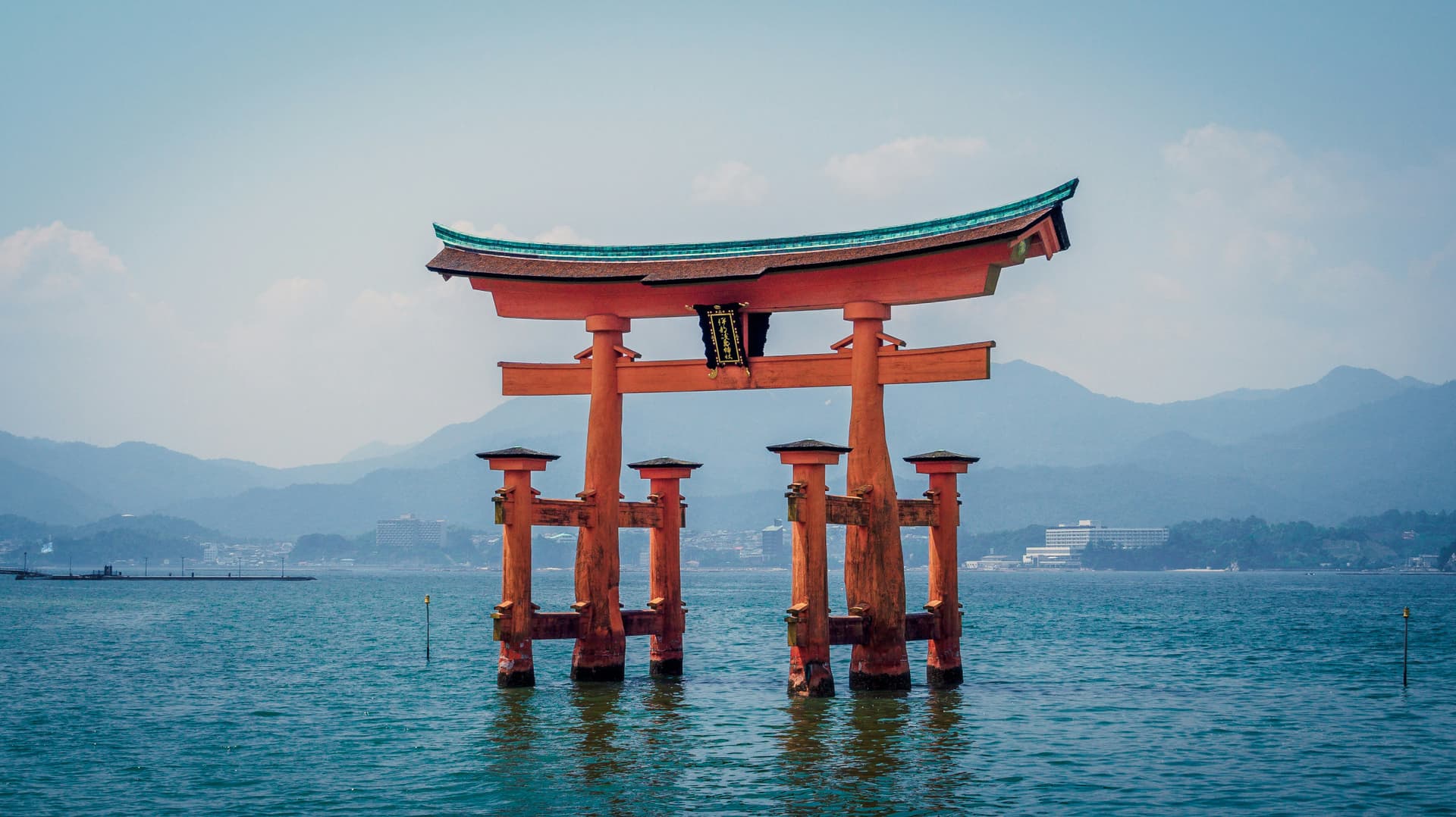
WakayamaThe floating shrine of Miyajima, built out over a tidal cove, with its great vermilion torii standing in the sea off the sacred island.
Hatsukaichi · HiroshimaIconic castle with brilliant white exterior, designated UNESCO World Heritage Site and National Treasure, fully restored to its original appearance in 2015.
Himeji · HyogoCastle in Okinawa symbolizing Ryukyu Kingdom history, featuring mixed Chinese and Japanese architecture and serving as royal residence and religious center.
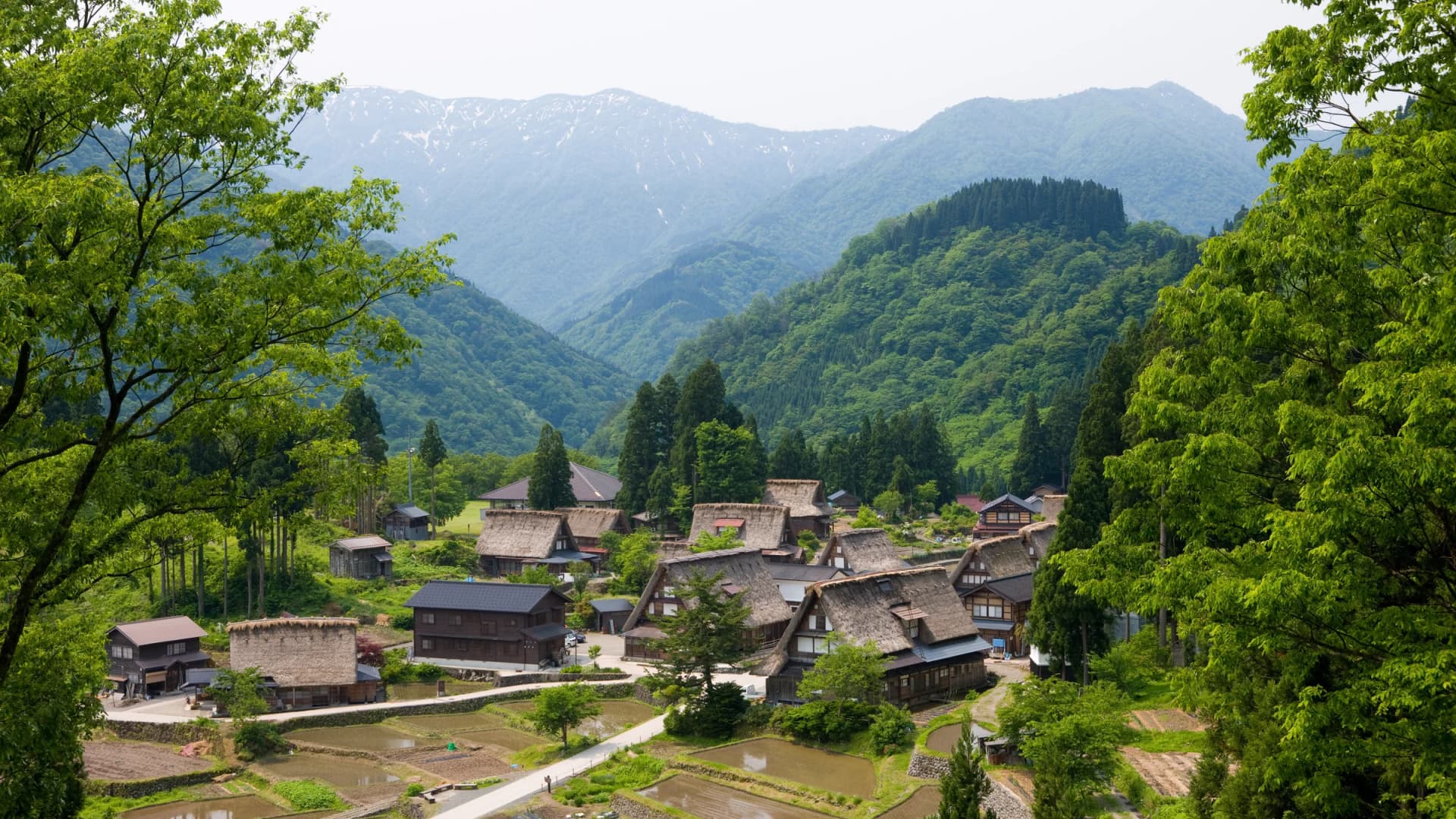
Naha · OkinawaAinokura village features 20 traditional gassho-style houses, some over 400 years old, with distinctive steep roofs designed to shed snow in the UNESCO-listed Gokayama region.
Nanto · ToyamaThis seventh-century Buddhist temple features some of the world's oldest wooden structures and several national treasures, including a five-story pagoda.
Ikaruga · NaraA historic silk mill built by the Japanese government in 1872 that transformed the country into the world's leading raw silk exporter.
Tomioka · GunmaA major shrine with over 3,000 affiliated shrines nationwide, maintained through a tradition of structural renewal held every 20 years.
NaraUNESCO-recognized villages showcasing gasshō-zukuri farmhouses with distinctive steep thatched roofs, maintained through collective community traditions.
Shirakawa · GifuJapan's highest peak and a UNESCO-designated sacred volcano, accessible to climbers during the official season from July to September.
Subtropical island with ancient cedar forests and moss-covered landscapes that inspired Hayao Miyazaki's Princess Mononoke, designated Japan's first UNESCO World Heritage Site.
Yakushima · KagoshimaDating to the 6th century, this Kyoto shrine dedicated to Tamayori-hime and her father was worshipped as protection against misfortune and a guardian of the capital.
KyotoFounded in 788 by Saichō, this Tendai Buddhist headquarters on Mount Hiei hosts the famous kaihōgyō practice and is part of a UNESCO World Heritage site.
Otsu · ShigaOne of Japan's oldest Shinto shrines, dedicated to the thunder deity and honored since 794 when Kyoto became the imperial capital.
KyotoJapan's largest silver mine, Iwami Ginzan operated from 1526 to 1923 and produced one-third of the world's silver at its peak, achieving UNESCO World Heritage status in 2007.
Oda · ShimaneThe head Tendai temple founded in 850, significantly expanded in the 12th century and designated a UNESCO World Cultural Heritage site.
Hiraizumi · Iwate