Kakunodate Festival
A traditional autumn festival with 400 years of history, held in September in Kakunodate, featuring large wooden floats decorated with samurai warrior dolls.
7–9 Sep 2026Akita · Tohoku

A traditional autumn festival with 400 years of history, held in September in Kakunodate, featuring large wooden floats decorated with samurai warrior dolls.
7–9 Sep 2026Akita · TohokuThis centuries-old festival features over 100 mikoshi shrines and floats, with the Shishi-Odori deer dance and sacred Kagura-Gongenmai performance.
11–13 Sep 2026Iwate · TohokuToei Kyoto Studio Park brings Japanese yokai legends to life with parades, interactive dance experiences, workshops, and exhibitions celebrating supernatural folklore.
The Johana Mugiya Festival celebrates Mugiya-bushi, a historic folk song and dance rooted in Gokayama's rural heritage, with costumed dancers and traditional instruments.
14 Sep 2026Toyama · ChubuOne of Iwate's most enduring celebrations, this autumn festival originated as prayers for harvest, now featuring ornate floats and traditional parades.
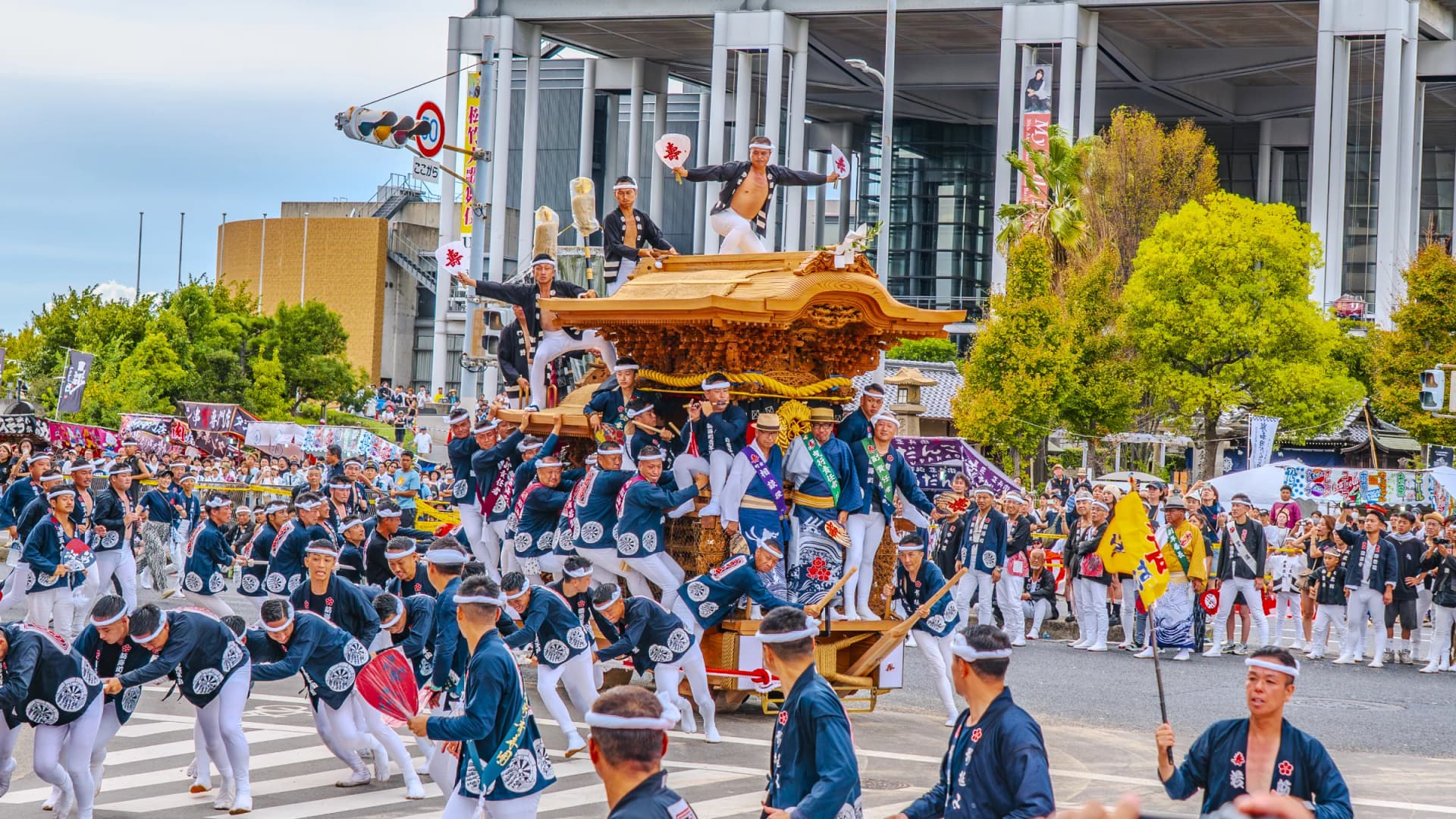
14–16 Sep 2026Iwate · TohokuOne of Japan's most dynamic float festivals with a 300-year history, known for its signature yarimawashi maneuver where massive floats are swung around corners.
18–20 Sep 2026Osaka · KansaiOne of Japan's largest jazz events transforms Kanazawa's historic streets, shrines, and public spaces into stages for world-class musicians each September.
19–21 Sep 2026Ishikawa · ChubuThis over 650-year-old festival in a northern mountain town expresses gratitude for the harvest while praying for protection from disaster and the arrival of good fortune.
19–21 Sep 2026Iwate · TohokuNanao's festival honors samurai heritage through a dramatic parade of locals dressed in full armor and helmets, accompanied by traditional music and dance performances.
20 Sep 2026Ishikawa · ChubuThe 'Naked Festival' features mikoshi carried into the sea, a boisterous parade through town, and shrines tossed high against fireworks and songs of joy.
23–24 Sep 2026Chiba · KantoThe Gokayama Mugiya Festival features Mugiya-bushi, a folk song and dance tradition rooted in the Heike clan, designated as Japan's Intangible Folk Cultural Property.
23 Sep 2026Toyama · ChubuStreets fill with folk songs, dances, and lion performances, culminating in a communal circle dance accompanied by the rhythmic playing of a bamboo whisk instrument.
25–26 Sep 2026Toyama · ChubuAncient shrine festival featuring portable shrines carried through Matsuyama's districts in ritual performances believed to enhance spiritual power.
5–7 Oct 2026Ehime · ShikokuThis 380-year-old shrine festival blends Japanese folk dances with dragon processions and Dutch-influenced performances held across four venues in Nagasaki.
7–9 Oct 2026Nagasaki · KyushuAn autumn festival held in October with origins tracing to a 1608 rainmaking ritual, featuring 27 ornately carved musical floats from the Edo period.
10–11 Oct 2026Tochigi · KantoAn autumn parade brings the Warring States period to life with over 250 participants in samurai and historical costumes, honoring the Sanada clan.
11–12 Oct 2026Nagano · ChubuAn October festival features a grand procession with a portable shrine led by samurai-clad participants, with local residents bowing in reverence along the streets.
15 Oct 2026Okayama · ChugokuTowering drum-bearing floats parade through Niihama in this October celebration, drawing nearly 200,000 spectators each year.
16–18 Oct 2026Ehime · ShikokuSumiyoshi Taisha has served maritime travelers for two millennia, enshrining three sea deities and Empress Jingū, who founded the shrine and is revered as a protective deity.
OsakaOwari Okunitama Shrine is the regional guardian of Owari Province, enshrining the sacred land spirit revered for protection of agriculture and commerce since the Nara period.
Inazawa · AichiTsuma Shrine is dedicated to Konohanasakuya-hime, whose name is believed to reflect her role as the spouse of Ninigi no Mikoto in Japanese mythology.
Saito · MiyazakiSuwa Shrine sits on a hillside overlooking Toyama Bay, enshrining three deities revered by maritime workers for protection and prosperity in fishing.
Uozu · ToyamaWestern Japan's oldest shrine with an 1,800-year legacy, built where Emperor Chūai's palace stood and his spirit was enshrined by Empress Jingū.
Shimonoseki · YamaguchiShrine dedicated to metalworking deities, famous for the annual Kanamara Matsuri celebrating fertility and well-being, with origins in the Edo period.
Kawasaki · KanagawaShrine on the Sendai Castle site honoring over 56,000 spirits of those who died in national service, with a main hall from Ise Grand Shrine.
Sendai · MiyagiShinto shrine at the northern base of Mount Fuji dating to the 2nd century, serving as the traditional departure point for Mount Fuji pilgrimages.
Fujiyoshida · YamanashiBuilt in 1760 to protect an ancient shrine dating to 1502, this structure in Gokayama shelters Toyama's oldest surviving wooden building, now designated an Important Cultural Property.
Nanto · ToyamaWith origins dating 1,270 years ago, this Tokyo shrine in Akihabara held significance for warriors and citizens during the Edo period and was visited by shogun Tokugawa Ieyasu.
TokyoDedicated to Mount Fuji's volcano goddess, this shrine has led 1,300 Sengen shrines nationwide for 1,100 years and was designated a UNESCO World Heritage site in 2013.
Fujinomiya · ShizuokaFounded as a guardian shrine in 650 AD and rededicated in 949, Osaka Tenmangū honors the deified scholar Sugawara no Michizane, revered as a deity of academics and learning.
OsakaA venerable shrine dating over 2,000 years, Aso Shrine honors the grandson of Emperor Jimmu and fuses Shinto practice with worship of Mount Aso's sacred volcanic crater.
Aso · KumamotoDating to the 6th century, this Kyoto shrine dedicated to Tamayori-hime and her father was worshipped as protection against misfortune and a guardian of the capital.
KyotoHie Shrine was established in 1335 near Toyama Castle and hosts the Sanno Festival in June, which attracts 200,000 visitors to the approach streets lined with food stalls.
ToyamaOne of Japan's oldest Shinto shrines, dedicated to the thunder deity and honored since 794 when Kyoto became the imperial capital.
KyotoFamed for its mossy gardens, Heisenji Hakusan Shrine is designated a National Place of Scenic Beauty and Historic Site, with origins as a Buddhist temple built in 717.
Katsuyama · FukuiThis 1,300-year-old shrine hosts a Snake Festival on May 5 with seven giant snakes exceeding 15 meters in length, a designated National Important Intangible Folk Cultural Property.
Oyama · Tochigi